Hotel Champlain Burlington, Curio Collection by Hilton
Burlington, near Waterfront Park
Steps from Waterfront Park and the bike path access; its listing includes free bicycle rentals.
Check ratesVermont sorts e-bikes into three classes, treats them as bicycles, and opens most rail trails to them while keeping natural-surface trails on state land off limits. Here is what that means for your next ride.
Short answer
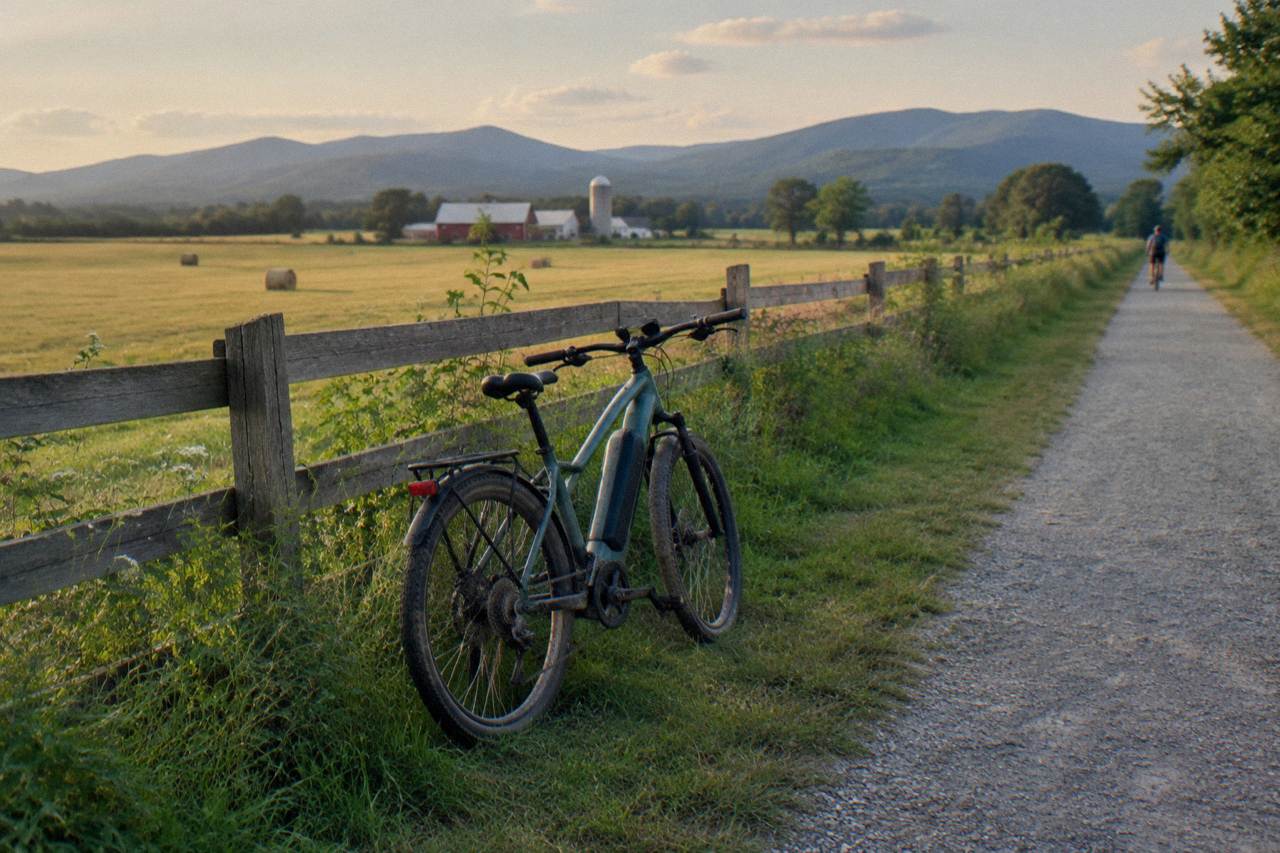
Vermont treats e-bikes as bicycles: Class 1 and 2 assist to 20 mph, Class 3 to 28 mph, no license or registration. Class 1 bikes are allowed on the Burlington Greenway, the 95 mile Lamoille Valley Rail Trail and most Kingdom Trails singletrack, while natural-surface trails on state land stay closed.
Vermont treats an e-bike as a bicycle, not a motor vehicle, and that single decision shapes almost every rule that follows. Riders on pedal-assist bikes use bike paths, rail trails and roads under the same framework as conventional cyclists, with no license, registration or insurance. The details sit in three places: the state's class system, the access policies of individual trail networks, and the restrictions that still apply on state-owned land. This guide lays out all three, plus the helmet and road rules that apply to every rider, e-bike or not. For a closer look at where you can legally ride, the guide to e-bike access on Vermont roads, rail trails and state land explains the rules in plain terms.
Understanding the class system first makes everything else fall into place. A Class 1 bike, the kind most rental fleets in Vermont carry, goes far more places than a throttle model or a Class 3 speed pedelec. Trail managers, including the Kingdom Trails Association and the state's rail trail program, write their access rules around those classes, so knowing which bike you are riding tells you where you can take it. Once you know where your bike is allowed, the 3-Day Vermont Fall Itinerary With A Bike Day Built In helps you slot a ride into a bigger leaf-peeping trip.
Vermont sorts e-bikes into three classes: Class 1 pedal-assist tops out at 20 mph, Class 2 throttle-assist also caps at 20 mph, and Class 3 pedal-assist reaches 28 mph with a speedometer and label required. Motors must stay under 750 watts. All three classes are treated as bicycles, so no license, registration or insurance applies.
The class system follows the framework many states have adopted, and Vermont law puts it in straightforward terms. A Class 1 e-bike only assists while you pedal and stops helping at 20 mph. Class 2 adds a throttle that can propel the bike without pedaling, at the same 20 mph ceiling. Class 3 keeps the pedal-assist mechanic but raises the assisted ceiling to 28 mph, and it must carry an operating speedometer and a manufacturer label stating its class.
Two practical consequences matter for riders planning trips. First, because e-bikes count as bicycles, you may ride them on roads, in bike lanes and on paths where bicycles are generally allowed, subject to any local or trail-specific policy. Second, the faster the class, the fewer places welcome it. Some shared-use paths and trail networks admit only Class 1 machines, and Class 3 bikes carry a minimum operator age of 16, with younger riders allowed only as passengers on bikes designed to carry them.
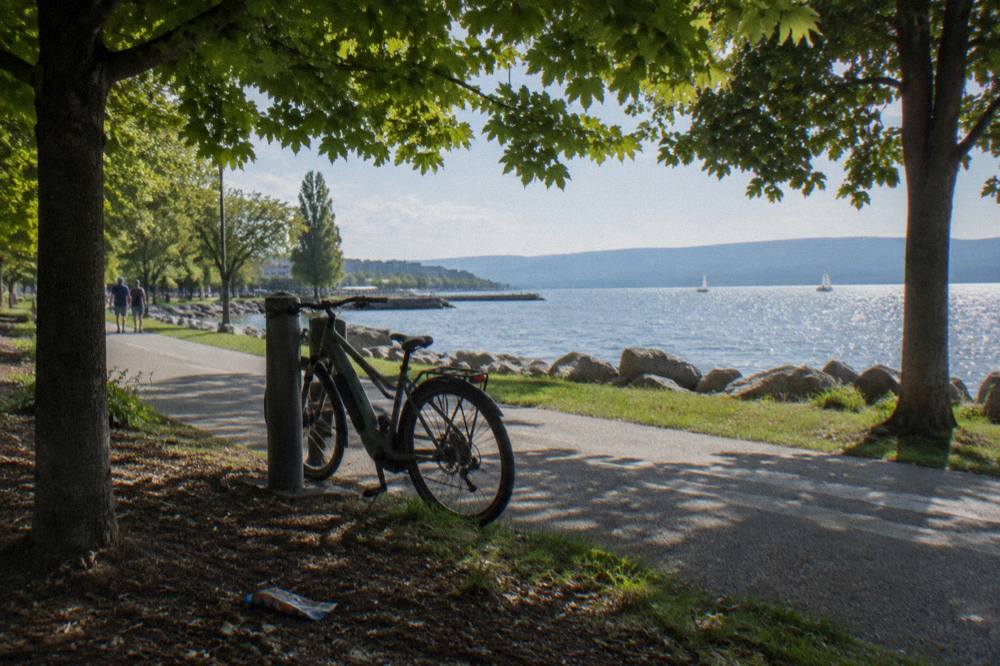
When you rent, ask which class the shop's fleet uses. Most Vermont rental operations stock Class 1 pedal-assist bikes precisely because that class enjoys the widest trail access, which keeps planning simple. If you own a Class 2 or Class 3 bike, expect to check access rules more carefully before each ride.
| Class | How it assists | Assisted top speed | Extra requirements | Typical trail access |
|---|---|---|---|---|
| Class 1 | Pedal assist only | 20 mph | None beyond bicycle rules | Widest, including most rail trails and many singletrack networks |
| Class 2 | Throttle or pedal assist | 20 mph | None beyond bicycle rules | Good on roads and paths, narrower on natural-surface trails |
| Class 3 | Pedal assist only | 28 mph | Speedometer, class label, rider 16 or older | Roads and many multi-use paths; often excluded from singletrack |
In practice, Class 1 e-bikes are welcome on Vermont's paved bike paths, its rail trails and most of the Kingdom Trails network, while natural-surface trails on state land remain closed to e-bikes. Class 2 and Class 3 bikes have narrower access. The trail manager's own page is always the final word on any specific route.
Access breaks down by who manages the land. Paved urban paths such as the Burlington Greenway follow municipal rules that generally mirror the state framework: bicycles allowed, so Class 1 pedal-assist allowed, with motorized scooters and e-motorcycles prohibited. The state's rail trail program states plainly that e-bikes are allowed on the Lamoille Valley Rail Trail, alongside walking, horses and, in winter, snowmobiles on the designated corridor. If you're planning to ride that corridor, our guide to e-bike rules on the Lamoille Valley Rail Trail covers which classes are permitted and where motorized machines are off limits.

At Kingdom Trails in East Burke, the Kingdom Trails Association allows Class 1 pedal-assist eMTBs on most trails and directs riders to the trail map for landowner exclusions, since individual landowners can opt particular pieces out. On state forests and parks, the opposite rule holds: the Department of Forests, Parks and Recreation currently prohibits e-bikes on non-motorized natural-surface trails, while allowing them on roads and designated multi-use paths. A proposed policy would widen Class 1 access, but until it is adopted, treat state-land singletrack as closed.
That leaves a simple planning heuristic. Rail trail or pavement: ride your e-bike. Private or association-managed trail network: check the map, and expect Class 1 to be the accepted class. State-land singletrack: leave the motor at home and ride a conventional mountain bike.
Yes. The official trail rules from the state rail trail program state that e-bikes are allowed on the Lamoille Rail Trail, which treats all e-bike classes like bicycles on this corridor. Motorized recreation such as ATVs, dirt bikes, motorized scooters and segways is prohibited, and snowmobiles use the trail only within the winter season set by the statewide network.
The LVRT is the anchor of flat, long-distance riding in Vermont: 95 miles on compacted crushed stone between St. Johnsbury and Swanton, passing through 18 towns, with a gentle grade that suits every kind of bike and rider. The surface runs about 10 feet wide with grass shoulders, and grades stay under 3 percent, which is why the trail works as well for an e-bike family cruise as for a centuries-long endurance ride.
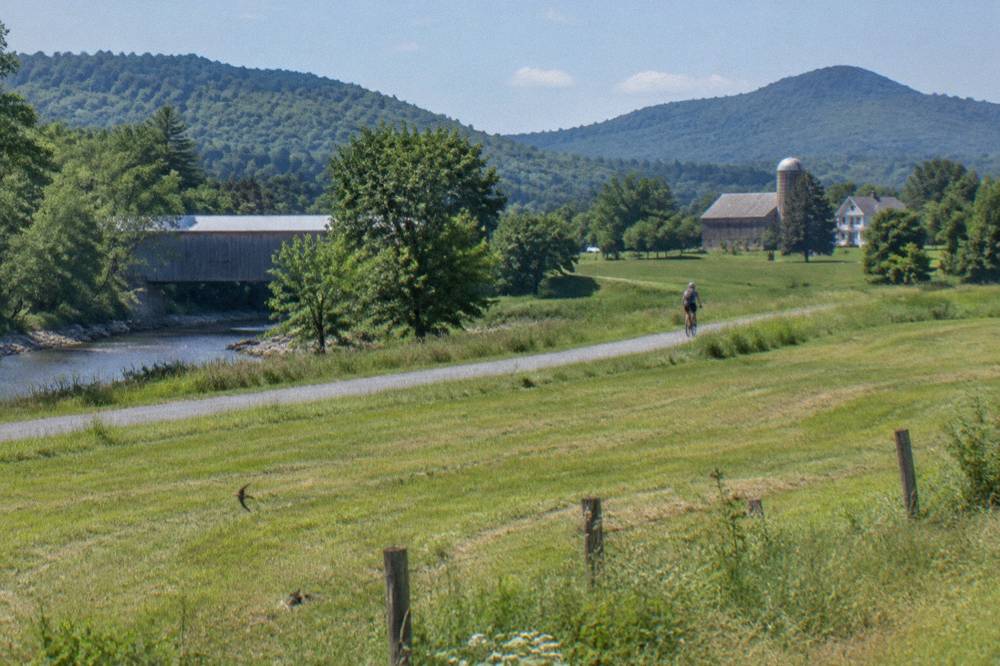
For e-bike riders the appeal is battery economy. Rail trail grades barely dent a charge, so a full battery comfortably covers distances that would demand planning on Vermont's hillier roads. Charging stops are easy to arrange too, since the trail threads through town centers where cafes and bike-friendly businesses sit within a block or two of the path.
One habit worth building: check trail status before a long ride. The state trail updates page carries closure and maintenance notes, and a single trailhead detour can reshuffle a day's plan. That advice holds for any Vermont trail, and it is the only reliable way to know conditions on the day.
Riders comparing surfaces can pair the LVRT with the Missisquoi Valley Rail Trail, 26.4 miles from St. Albans to Richford, which joins the LVRT near Sheldon. ## Can You Ride An E-Bike At Kingdom Trails?
Yes, with a class restriction. The Kingdom Trails Association allows Class 1 pedal-assist eMTBs on most of the network, and directs riders to the trail map for trails excluded by landowners. Throttle bikes and higher classes are not part of the accepted access, so a Class 1 machine is the one to bring or rent for East Burke.
Kingdom Trails is the best known mountain biking destination in Vermont, more than 100 miles of non-motorized singletrack and multi-use trail built on private land with landowner agreements, which is exactly why the class rules exist. The network's Ride With Gratitude framework asks riders to respect the land, the towns and each other, and the e-bike policy sits inside that same arrangement: quiet, pedal-assist riding fits the agreements, throttles do not. If you're wondering how Vermont stacks up as a biking destination beyond this one network, our guide to mountain biking across the state covers the other trail systems and what a trip there actually looks like.
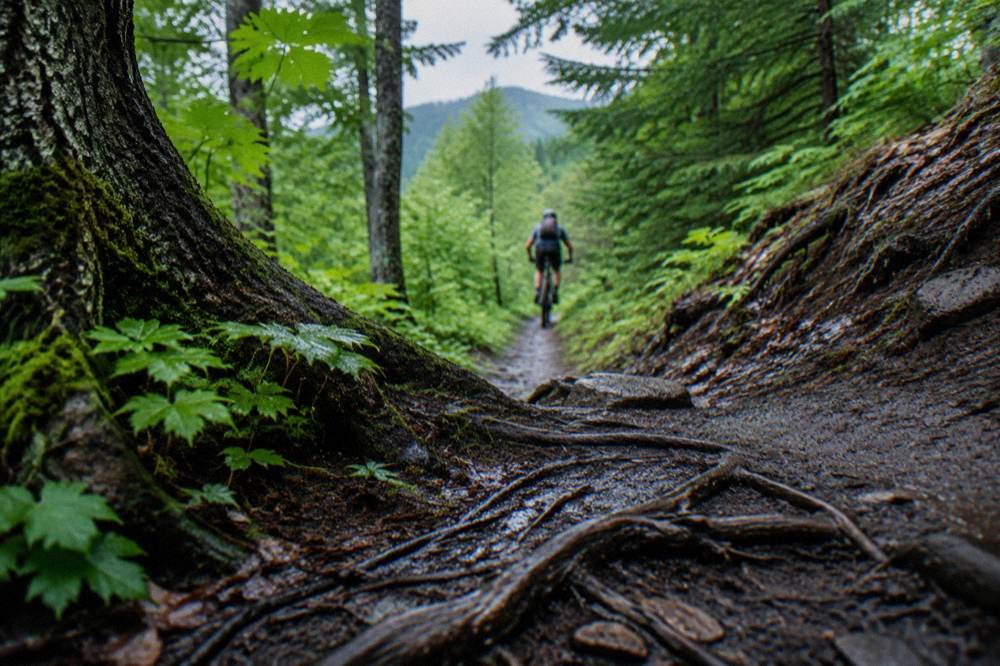
Access requires a pass, bought online through the Kingdom Trails Association store or in person at the Welcome Center on VT Route 114 in East Burke. Pass pricing changes, so check the association's store for current figures rather than relying on secondhand numbers. The summer season typically runs from May into late October, then the network closes for deer season before the groomed winter fat bike and Nordic setup opens as conditions allow.
If you want to ride an eMTB here without hauling one, the rental scene around Burke covers it. East Burke Sports sits at the trailhead, Kingdom Bike Rentals runs a delivery-focused fleet with an e-MTB emphasis, Village Sport Shop serves the Darling Hill area, and Rifugio Darling Hill offers eMTB options. None publishes prices we can verify, so ask directly. Riders planning a longer stay in the Northeast Kingdom can base at The Wildflower Inn near Lyndonville, which sits 2.3 miles from Kingdom Trails and runs bike rentals plus a bicycle shuttle for guests.
Planning the wider Northeast Kingdom trip, including where to sleep between ride days, is covered in our Kingdom Trails mountain biking guide, and the same terrain features in our piece on mountain biking in Vermont.
No, not on natural-surface trails. Current policy from Vermont's Department of Forests, Parks and Recreation prohibits e-bikes on non-motorized natural-surface trails on state land, while permitting them on roads and designated multi-use paths where bicycles are allowed. A proposal to expand Class 1 access has not been confirmed as adopted, so the restriction stands.
The practical effect is a split map of Vermont mountain biking. Private networks and association-managed land, set their own e-bike policies and generally admit Class 1 eMTBs. State forests and state parks hold the line: singletrack and other natural-surface trail on state land is conventional-bike territory, and e-bike riders should plan around it. The rest of the planning pages sit on Vermont Biking Tours.
The Vermont Mountain Bike Association publishes the clearest summary of where pedal-assist riding stands, including the state land question, and its page is worth a read before any trip that mixes public and private trail. Local chapters maintain much of the state's singletrack, and chapter websites usually state their e-bike position for each network, which matters because a single ride can cross several ownerships.
For riders, the rule of thumb is simple. Rail trail, paved path or road: your e-bike is fine. State-land singletrack: ride pedal power only. Association or private network: check the map for your class before rolling out.
Helmet requirements in Vermont vary by rider age and are set in state statute, and since the exact age threshold and wording are easy to get secondhand wrong, we do not restate a number here. The safe and standard advice is stronger than the law: wear a helmet on every ride, on every trail, whatever the bike. Mountain biking and road riding in Vermont reward the habit.
Vermont's cycling statute covers equipment and riding position, and summary pages disagree about the precise helmet age threshold, which is a good reason to read the statute itself rather than a blog paraphrase. What no source disputes is the practical picture: helmets are standard equipment among Vermont's riding community, rental shops hand them out with every bike, and organized rides and events require them.
The riding conditions argue for it regardless of law. Rural roads are narrow with limited or no shoulders, descents on mountain trails can be loose and fast, and weather swings quickly, from crisp October mornings near freezing to afternoon rain. An e-bike adds weight and speed relative to a conventional bike, which makes the case for a well-fitted helmet stronger, not weaker.
Helmets also interact with e-bike classes. Class 3 riders move at speeds where helmet effectiveness is uncontroversial, and many riders choose helmets with more coverage for assisted riding. Whatever you pick, check the fit before the trip, not in the parking lot.
Cyclists in Vermont ride with the rights and duties of vehicle drivers: keep right as far as practicable when moving slower than traffic, signal turns, use lights after dark, and ride no more than two abreast where safe. Drivers must pass cyclists with wide clearance, and the state's vulnerable user framework raises penalties for careless passing. We avoid printing a specific passing distance, since sources conflict.
The keep-right rule shapes riding on Vermont's characteristic backroads. Many secondary roads have minimal shoulder, so cyclists position themselves as far right as is safe, which sometimes means taking more of the lane around blind curves or at intersections. That judgment call belongs to the rider, and Vermont law supports it.
For e-bike riders the road rules are identical, because the law treats all three classes as bicycles. That means stop signs and red lights apply fully, lights are required after dark, and riding on sidewalks is governed locally. Two abreast is permitted but should collapse to single file when traffic approaches, a courtesy that keeps rural drivers patient during foliage season when cars are many and shoulders are few.
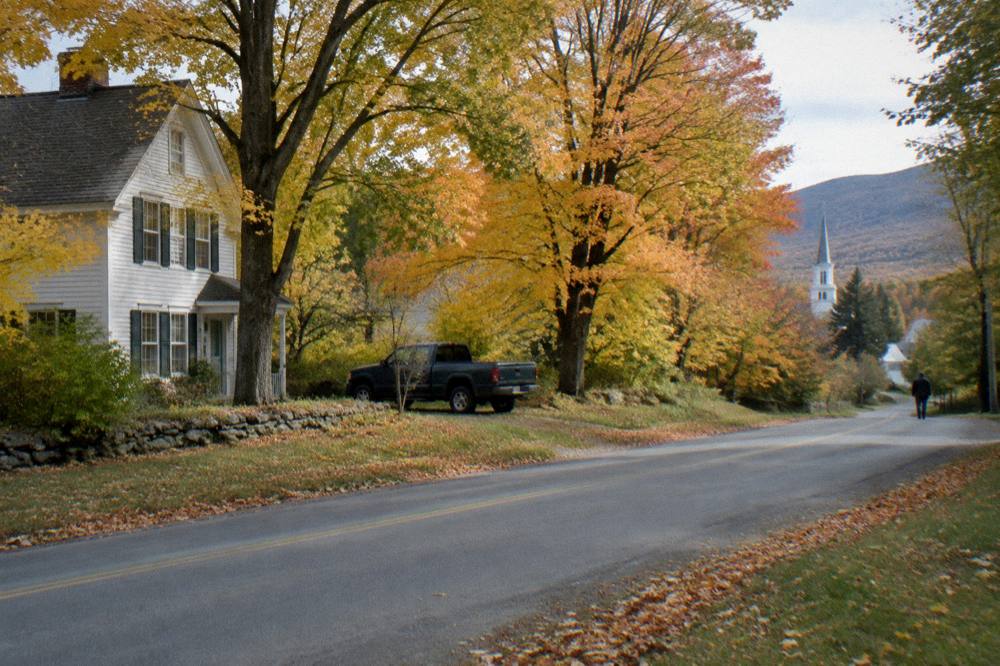
Group riders and anyone planning a longer road itinerary should also think about daylight. In early to mid October the sun rises near 7:00 and sets near 6:20, so a 60 mile day wants an early pedal. Lights front and rear are cheap insurance for the ride that runs long.
| Rule area | What applies | E-bike difference |
|---|---|---|
| Position on road | Ride as far right as safe, take the lane when justified | None |
| Passing by drivers | Wide clearance required, vulnerable user penalties for careless passing | None |
| Lights | Required after dark, front and rear | None |
| Licensing | Not required for bicycles | Not required, all three classes |
| Trails | Follow the managing network's policy | Access depends on class and landowner |
Local Motion's Trailside Center at 1 Steele Street in Burlington rents conventional, Class 1 pedal-assist e-bikes, adaptive cycles and kids' bikes, open daily through the main season with reservations recommended. Rental proceeds support the nonprofit's trail advocacy, and the shop sits directly on the waterfront path system, so a rental becomes a ride within minutes.
The Trailside Center is the practical answer for visitors without a bike, and its fleet composition matters: Class 1 only, which means every rental is legal on the Burlington Greenway, the Island Line Trail and the Colchester Causeway. Reservations are recommended, especially on foliage weekends when the waterfront fills up.
Burlington itself is built around path riding. The Greenway runs about 8 paved miles along the lake, and the Island Line continues toward South Hero across the causeway's crushed gravel, about 14.4 miles end to end from the waterfront. Class 1 e-bikes are permitted on the whole stretch, while e-motorcycles and motorized scooters are not. Riders planning an overnight can stay at Hotel Champlain Burlington, steps from Waterwater Park with its bike path access and a free bicycle rental listed for guests.
Burlington, near Waterfront Park
Steps from Waterfront Park and the bike path access; its listing includes free bicycle rentals.
Check ratesOne quirk of the Island Line deserves its own paragraph: the Local Motion bike ferry that carries riders across the gap in the Colchester Causeway. It runs a donation-based seasonal service, roughly late May to mid October, and it is closed outside that window. Check the ferry page before any causeway ride, because the crossing is the only way through without a long detour. Our Colchester Causeway and Champlain Islands ride guide covers the full route, and the Burlington bike path guide handles the city segment.
Match the hotel to the riding surface. Burlington puts you on paved waterfront paths, Stowe pairs a recreation path with road climbs, and the Lyndonville area puts you minutes from Kingdom Trails' singletrack. Because charging and trailheads matter more than proximity to attractions, pick the town whose riding you will actually do most of, then verify the hotel's bike storage or rental options.
E-bike trips live or die on logistics. A Class 1 rental near the trailhead beats a fancier room an hour's drive away, and a hotel that stores bikes indoors saves the nightly disassembly ritual. The list of riding bases in Vermont is short and clear, and each pairs with a distinct style of riding.
| Base town | Riding on the doorstep | Best for |
|---|---|---|
| Burlington | Waterfront Greenway and Island Line Trail, paved and gravel | Flat path rides, families, ferry crossings |
| Stowe | Recreation Path plus Mountain Road road loops | Mixed path and road days, village amenities |
| East Burke / Lyndonville | Kingdom Trails singletrack network | Mountain biking and eMTB riding |
| Middlebury | Trail Around Middlebury loop | Inn-based loop riding |
| Woodstock | Gravel loops and Mount Tom carriage roads | Gravel and carriage road touring |
| Manchester | Southern Vermont road rides | Road climbing and resort comfort |
In Stowe, the recreation path anchors easy family riding while the road loops around the village and up Mountain Road suit stronger pedal-assist riders who want climbs. The Sun & Ski Inn and Suites in Stowe markets itself as exactly that kind of base, sitting for the path and the village loops. Our Stowe Recreation Path and Lamoille County biking guide maps the riding in detail.
Charging deserves a sentence of its own. Class 1 batteries charge overnight from a standard outlet, so a hotel room doubles as a charging station. Ask at check-in whether outdoor outlets are available if you prefer to charge the bike outside your room, and carry your charger on any ride longer than the bike's comfortable range, since cafes will usually let you top up over lunch.
Ask the managing organization four things: whether your e-bike class is admitted, whether any sections are closed for maintenance or weather, what the surface is, and where passes or parking are handled. Every Vermont trail network publishes at least some of this, and a two-minute check prevents the classic mistakes, arriving with the wrong bike class or finding a trailhead detour mid-route.
Trail status is volatile in Vermont, where frost heave, rain and seasonal maintenance all reshape the calendar. The LVRT updates page, the Kingdom Trails conditions page and the Local Motion ferry page are the three most useful bookmarks for a Vermont biking trip, and each states its own scope. Riders who check status the morning of a long ride report fewer surprises, which is why we repeat the advice here rather than burying it.
For e-bike riders, one more question belongs on the list: charging and range. Know your bike's realistic range on rolling terrain, not its lab figure, and plan the turnaround point so the return trip lands inside the battery. Vermont's hills are modest by alpine standards but relentless, and assist levels climb quickly when the road tilts upward.
Lyndonville, 2.3 miles to Kingdom Trails
Offers bike rentals and a bicycle shuttle, and sits 2.3 miles from Kingdom Trails.
Check ratesFinally, pair the rules with the season. Foliage season, roughly late September to mid October, brings the year's best riding colors and the year's thickest leaf-peeping traffic on popular roads, so favor midweek rides and rail trails where cars cannot follow. Winter riding is its own discipline, fat bikes on groomed trails at Kingdom Trails and Nordic networks elsewhere, and the e-bike rules largely step aside for conventional bikes with wide tires.
Yes. Vermont treats all three e-bike classes as bicycles, with no license, registration or insurance required. Class 1 and Class 2 assist up to 20 mph and Class 3 up to 28 mph, with Class 3 requiring a speedometer, a label and a rider aged 16 or older.
On roads, in bike lanes, on paved paths like the Burlington Greenway, on the state's rail trails including the Lamoille Valley Rail Trail, and on most Kingdom Trails singletrack if the bike is Class 1. Natural-surface trails on state land are the main exclusion.
Yes, the official trail rules state that e-bikes are allowed on the full 95 mile corridor alongside other non-motorized uses. ATVs, dirt bikes, motorized scooters and segways are prohibited, and snowmobiles use the trail only in the winter season.
Class 1 pedal-assist eMTBs are allowed on most Kingdom Trails trails per the Kingdom Trails Association, with the trail map listing landowner exclusions. A pass is required, bought online through the association's store or at the Welcome Center in East Burke.
Helmet law in Vermont applies by rider age under state statute, and because summaries of the threshold conflict, we point you to the statute rather than quoting a number. In practice, helmets are universal among Vermont riders and are provided with every rental.
The Local Motion bike ferry across the Island Line gap runs seasonally, roughly late May to mid October, on a donation basis. Outside that window the causeway crossing is closed, so check the ferry page before riding the Island Line toward South Hero.
Before you go, the pick for this guide:
Hotel Vermont
About 0.2 miles from the Burlington Bike Path in the lake-side downtown.
Check rates →