The Wildflower Inn
Lyndonville, 2.3 miles to Kingdom Trails
Offers bike rentals and a bicycle shuttle, and sits 2.3 miles from Kingdom Trails.
Check ratesKingdom Trails in East Burke is the network most riders picture when they think of mountain biking in Vermont: 213 numbered trails and more than 100 miles of non-motorized singletrack and multi-use path spread across working farmland and forest. This guide covers how the pass system works, which trails to start on, where to rent a bike, who teaches and guides, and where to sleep at the end of the day.
Short answer
Kingdom Trails is a 213-trail, 100-plus-mile non-motorized network around East Burke in Vermont's Northeast Kingdom, open roughly May through October plus a groomed winter fat bike network. Every rider needs a pass, bought online or at the Welcome Center on VT Route 114; current pass prices are on the Kingdom Trails Association store, not printed here.
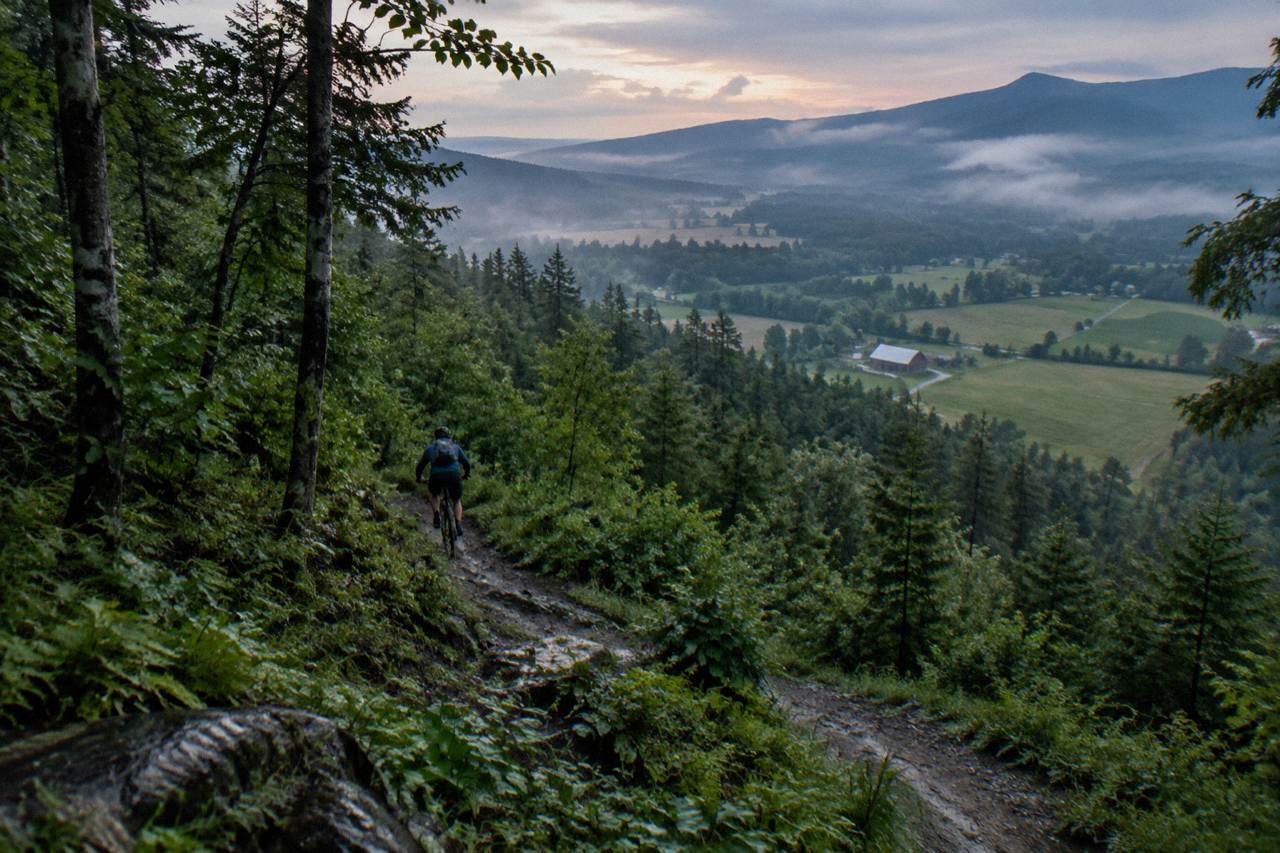
The number that defines Kingdom Trails is 213. That is how many individual trails the network's mapped system now carries, according to the current Trailforks inventory, spread over more than 100 miles of non-motorized singletrack and multi-use path across the hills around East Burke, a village in Vermont's Northeast Kingdom small enough that the Welcome Center sits on a state route and everything else is a short pedal away. Riders plan whole weeks around this place. This guide lays out how the pass system works, which trails suit which ability level, where to rent a bike or book a guide, and where to base a trip, in the order a first-time visitor actually needs the answers. If you're wondering how this network stacks up against the rest of the state, our guide to where Vermont's best mountain biking actually is puts East Burke at the top of the list and explains what else to ride nearby.
Kingdom Trails is a 213-trail, 100-plus-mile network of non-motorized singletrack and multi-use trail centered on East Burke, Vermont, built on agreements with private landowners and run by a nonprofit association. It is not a bike park and has no lifts, yet riders travel here because its scale, flow, and farm-and-forest setting have no real equal in the region.
The network exists because dozens of landowners allow the trails to cross their fields and woods, and the Kingdom Trails Association manages access, mapping and maintenance in exchange. That arrangement explains several things a visitor notices quickly. Trails close for deer season in late autumn. Conditions, not calendars, decide openings in spring. And the land itself, working farms, sugarbushes and timber stands, is part of what you are riding through, which is why the association asks riders to stay on mapped trail and treat the region as a shared backyard. The association publishes its ride-with-gratitude guidelines on its own site, and reading them before arrival is the single best preparation a first-timer can do.
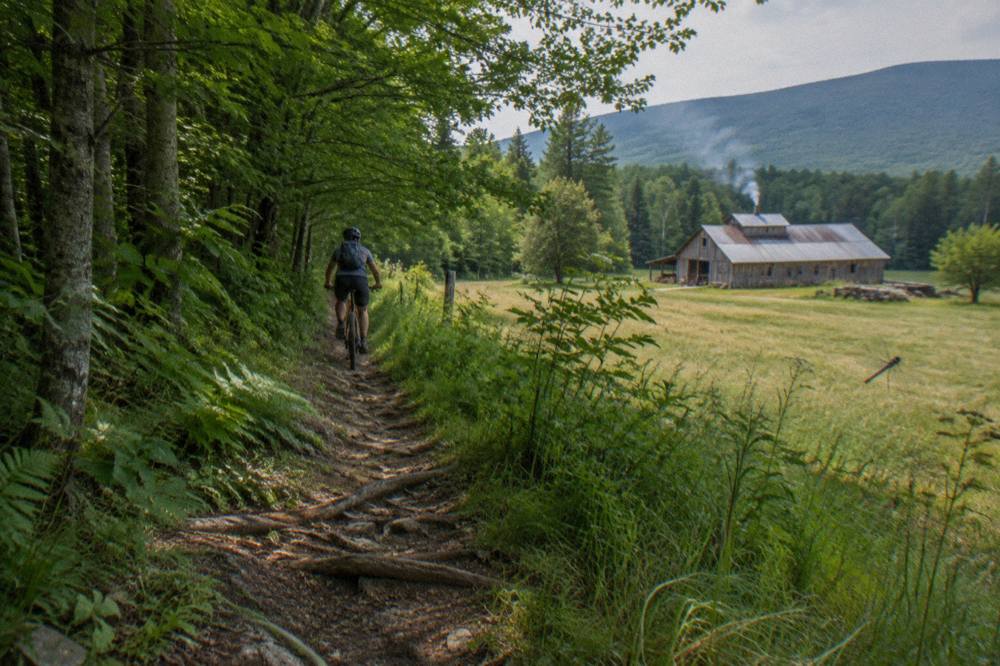
The riding itself spans everything from gentle doubletrack a family can share to steep technical descents with mandatory moves. Because the trails thread between villages rather than radiating from one base area, a day of riding here often becomes a tour of the landscape: a climb through pasture, a ridgeline traverse, a descent into a river valley, then a gravel road link back to the start. For a broader picture of how this network fits into the state's riding scene, the mountain biking in Vermont overview covers the other regions worth a trip.
Every rider at Kingdom Trails needs a pass, bought either online through the Kingdom Trails Association store or in person at the Welcome Center at 478 VT Route 114 in East Burke. Passes are required for trail access; current pricing appears on the association store page appears only on the association's store page, so buy before you park rather than at the trailhead sign.
The association does not publish pass prices on its main web pages, and the store's dynamic listings mean any dollar figure quoted here could be stale by the time you read it, so the honest instruction is to check the Kingdom Trails Association store directly for current day, season and youth pricing. In practice most visitors buy a day pass per riding day or a season pass if the trip stretches past a handful of days. The Welcome Center on Route 114 sells passes in person during posted hours, typically about 8 AM through late afternoon, and its staff can also point you at trailhead parking, which matters because lots fill on peak weekends.
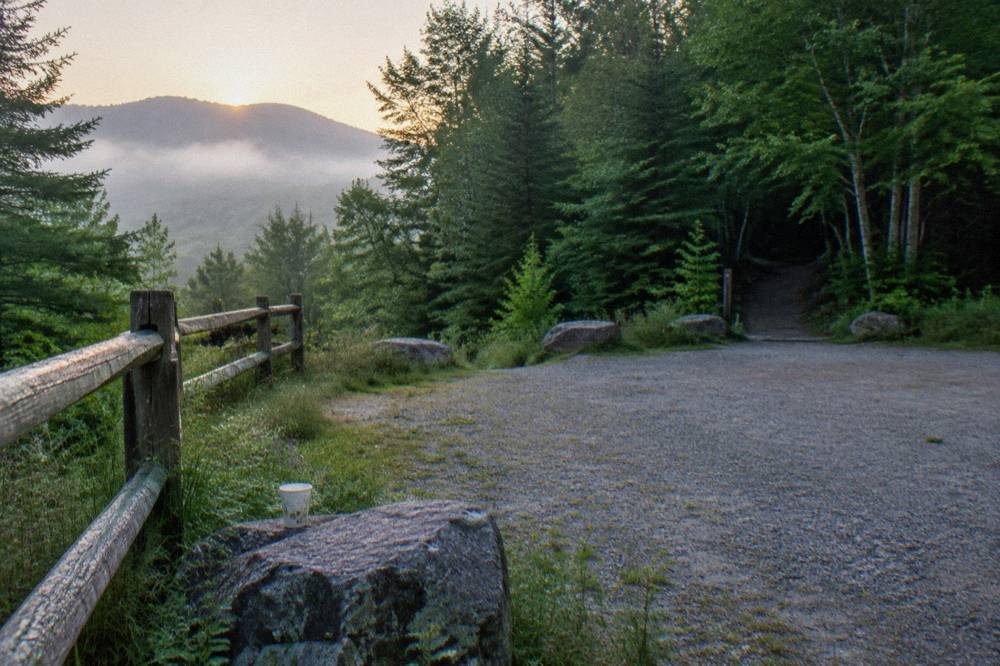
Two practical notes shape pass planning. First, the summer season runs from when conditions allow, typically in May, through October 31, after which the network closes for deer season before the groomed winter operation opens. Second, the money is not decorative: passes are the revenue that pays crews, mowers and landowner thank-you payments across a 100-plus-mile system. Riding without one is not a shortcut, it is free-riding on the arrangement that keeps the whole place open.
| Pass question | How it works | Where to handle it |
|---|---|---|
| Day pass | Required per rider per riding day | Kingdom Trails Association online store or Welcome Center |
| Season pass | Cheaper past a handful of visit days for most riders | Same store, same in-person option |
| Youth passes | Sold at a lower rate for children | Check the store for current age brackets and prices |
| In-person purchase | Welcome Center, 478 VT Route 114, East Burke | Hours vary, typically around 8 AM to 4 or 5 PM |
| Winter riding | Separate season, groomed fat bike trails, tires over 3.5 inches on designated trails only | Check trail conditions page before going |

Beginners should ride the gentle, green-rated multi-use corridors closest to the East Burke village trailheads first, since the network's easiest terrain sits near the center and difficulty climbs as you head outward. Build a short rolling loop of ten to fifteen miles with escape points back to the road, staying within sight of the village before committing to the far side of the network.
The honest framing is that Kingdom Trails earned its reputation on flow, and flow trails are where cautious riders often surprise themselves. A machine-built flow trail with rollers and berms is more forgiving than it looks from the chairlift-free base area, because the features are designed to be carried, not hucked. The standard progression visitors describe goes like this: a warm-up on the riverside multi-use path, a lap of the mellow singletrack loops near the village, then one flow trail with a bail-out at the halfway point. Riders who want the same idea with more structure can book a lesson, covered below under guided rides, and coaches generally start clients on exactly this progression.
Two cautions keep first days pleasant. Mud is the enemy here: northern Vermont soils hold moisture, and riding soft trail damages it and earns the region's irritation, so check the trail conditions page after rain and take a gravel-road day instead. And distance compounds: the network is big enough that a wrong turn two valleys from the car can turn a two-hour ride into a four-hour one, so carry the Trailforks app or a paper map, and note where the snowmobile corridor links back toward East Burke.
| Ability signpost | What to look for on the map | How to use it |
|---|---|---|
| First-ever singletrack | Green-rated loops near the village, wide tread, gentle grade | Warm up, learn the trail signage, bail out to the road anytime |
| Confident novice | Longer green corridors linking valleys | Build a loop of 10 to 15 miles with a food stop |
| Flow introduction | Machine-built flow trails with berms and rollers | Ride one, walk anything that looks fast, repeat |
| Ready for more | Blue singletrack climbing away from the village | Check descent exits before committing to the climb |
| Not yet | Steep tech and jump lines | They will still be there next trip |
For riders sizing whether this network suits their level at all, the Vermont bike trails by difficulty guide places Kingdom Trails against the state's other options, and the beginner and senior bike tour primer covers fitness and pacing for riders new to multi-day trips.
Expert riders come for the steep, technical and high-consequence terrain on the network's outer reaches, plus the signature flow descents that drop hundreds of feet through hardwood forest, and for the sheer linking potential: with 213 trails and no lift lines, a strong rider can string a full day that never repeats a mile. The draw is variety at scale, natural tech one hour, built flow the next, all reachable by pedal.
The specifics are best left to the map rather than to a route list that ages badly, but the geography is stable. Climbs follow old roads and purpose-built ascent trails toward the ridges north and east of the village, and the descents fall away through steep pitch, rock and root, with the boldest lines marked as such and built for riders who already know how they crash. Jump lines and technical rock gardens sit alongside, so a group of mixed ambition can converge on the same trailhead and scatter by preference. What distinguishes the network from a bike park is that every descent must be re-earned, which is precisely the appeal for riders who want fitness and skill in the same day.
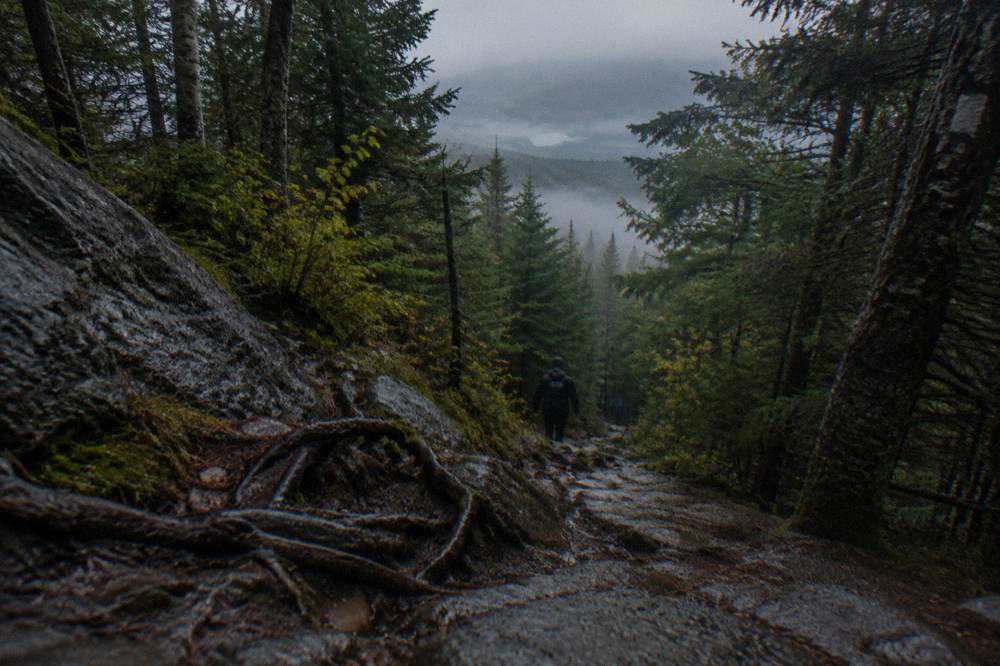
Conditions shape expert trips more than beginner ones. Spring opens the low trails first while the upper network dries, late summer adds dust to the sightlines, and the fall window from late September to mid October puts peak foliage under the canopy, with the region's color typically arriving ahead of the southern valleys. Tire and setup choices matter on the tech: riders on short-travel bikes walk the odd move, and riders on big bikes pay for it on the climbs. Renting locally, covered below, lets you match the bike to the day rather than the other way round.
Class 1 pedal-assist eMTBs are allowed on most Kingdom Trails trails per the Kingdom Trails Association, with specific landowner exclusions marked on the official trail map, and throttle or higher-class bikes are not part of that permission. The rule is landowner-driven rather than ideology-driven, which is why it is trail-by-trail rather than blanket, and why checking the current map matters more than memorizing forum summaries.
The distinction that counts is Class 1: pedal-assist only, assistance cutting out at 20 miles per hour, no throttle. The association's ride-with-gratitude page states the permission and points riders to the map for the exclusions, and the practical habit is to glance at the map each visit, since landowner terms can shift. This matters beyond Burke, too, because rules diverge sharply by land type across the state. On Vermont state land, e-bikes are currently prohibited on non-motorized natural-surface trails, allowed on roads and multi-use paths, with a proposed policy to expand Class 1 access not yet confirmed, per the Vermont Mountain Bike Association's write-up of the situation.
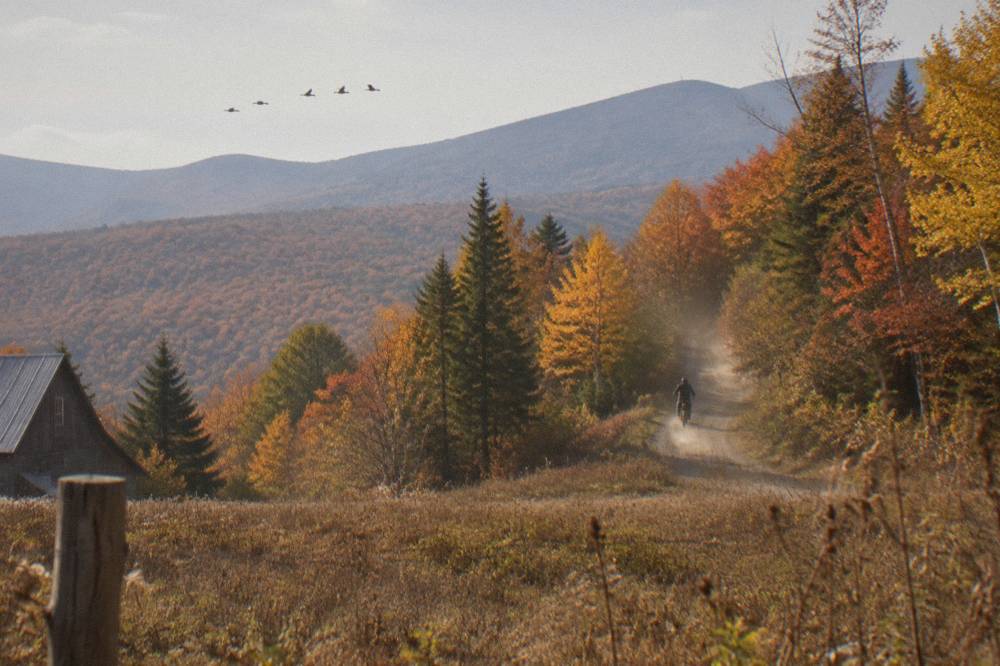
For trip planning, the short version is that a Class 1 eMTB is a legitimate way to ride this network, and several local rental fleets reflect that. The deeper rules picture, including the state's three-class e-bike framework and where pedal-assist bikes are welcome beyond Burke, is covered in the dedicated e-bikes at Kingdom Trails article and the Vermont e-bike and helmet rules guide.
The best bike rental options near Kingdom Trails are concentrated in and around East Burke: East Burke Sports at the trailhead area, Kingdom Bike Rentals with mobile delivery focused on e-MTBs, Village Sport Shop in the Lyndonville area, and Rifugio Darling Hill up on the hill itself. Verified pricing is not published online, so check each shop's own page or counter, and reserve early for peak foliage weekends when fleets thin out.
Each shop has a distinct shape. East Burke Sports is the full-service shop closest to the action, the natural first call for a standard mountain bike, a tune or a spare tube. Kingdom Bike Rentals brings bikes to you, with an e-MTB emphasis that pairs well with the Class 1 permission described above. Village Sport Shop serves the Lyndonville side and the wider Northeast Kingdom. Rifugio Darling Hill rents from the hill, including electric and full-suspension options, and doubles as lodging. What no one should do is arrive on a fall Saturday without a reservation and expect the ideal size to be waiting; the Kingdom Trails rentals and guided rides guide goes deeper on choosing between these shops.
| Shop | Where it sits | What it is known for |
|---|---|---|
| East Burke Sports | East Burke, near the trailhead | Full-service shop, standard mountain bike rentals, repairs |
| Kingdom Bike Rentals | Mobile, serving the Burke area | Delivery rentals with an e-MTB focus |
| Village Sport Shop | Lyndonville area | Wider regional shop serving the Northeast Kingdom |
| Rifugio Darling Hill | On Darling Hill | Lodging plus eMTB and full-suspension rentals |
Bring your own helmet or rent one with the bike; either way, wear one, this site's standing advice regardless of what any statute requires. And check trail conditions before committing to a rental day after rain, since soft trails close riding faster than they close shops.
Yes, guided rides and coaching are both available around the Kingdom Trails network through local shops and independent instructors. East Burke Sports, Kingdom Bike Rentals, Village Sport Shop and Rifugio Darling Hill are the practical starting points for arranging either, and Vermont Mountain Bike Tours is the named local operator offering guided riding. You book directly with the shop or operator, never through this site.
Guided riding here splits into two products. A guide is routing plus local knowledge, valuable for visitors who want the best current loop without studying Trailforks the night before, and for groups with mixed fitness where someone needs to own the plan. Coaching is skill instruction, valuable for riders confronting their first berms or their first technical climbs, and it is the fastest route from nervous to capable on flow terrain. The shops broker both, and Vermont Mountain Bike Tours runs guided riding in the state; contact any of them directly for current availability and pricing, which this site does not quote.
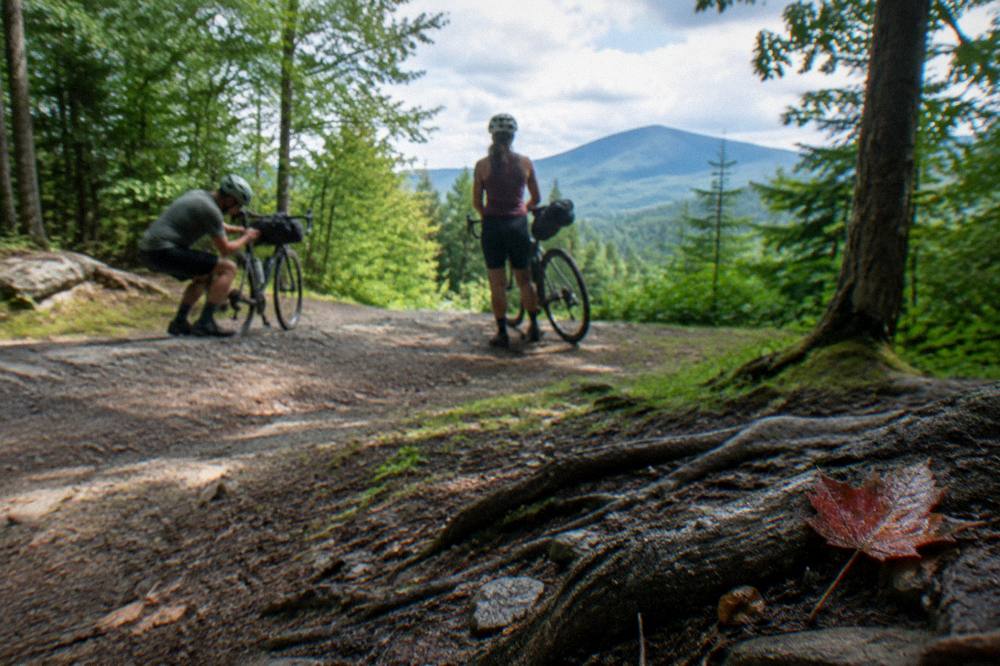
The case for booking a guide on day one is simple arithmetic: a network of 213 trails punishes guesswork, and one well-routed afternoon teaches the geography that a week of hesitant self-navigation would not. Beyond Burke, riders planning a fuller trip can compare the formats in guided versus self-guided bike tours in Vermont and the process in how to choose a Vermont bike tour, both of which explain what to ask an operator before paying anyone.
The closest full riding base is The Wildflower Inn in Lyndonville, 2.3 miles from Kingdom Trails, which offers bike rentals and a bicycle shuttle for guests, making it the most ride-ready stay in the area. Other nearby options include the lodging on and around Darling Hill itself and budget motel stays in St. Johnsbury or Lyndonville, while riders combining Burke with a second region often split the trip with a stay in Stowe or Woodstock.
Proximity changes the shape of a Burke trip more than at most destinations, because riding from your door means a second lap when the legs allow and a dry base when the weather turns. The Wildflower Inn sits 2.3 miles from the trails, rents bikes and runs a bicycle shuttle, which removes both the rack and the parking scramble from the day. Rifugio Darling Hill adds a stay on the hill itself for riders who want to roll onto trail from breakfast.
Lyndonville, 2.3 miles to Kingdom Trails
Offers bike rentals and a bicycle shuttle, and sits 2.3 miles from Kingdom Trails.
Check ratesFor a two-region week, the pattern that works is Burke first, then a shift south or west. Sun & Ski Inn And Suites in Stowe pairs with the Stowe Recreation Path and the road loops around that village for a calmer second half, while Woodstock Inn & Resort bases riders in Woodstock for the gravel loops and the Mount Tom carriage roads. Both are road-and-gravel country rather than mountain bike terrain, which is exactly the point of splitting the week.
Stowe
A Stowe base for the Stowe Recreation Path and the road loops around the village.
Check ratesA note on seasons and beds: foliage weekends from late September to mid October book the region solid, and trailhead parking can fill early on weekends. Reserve early for that window, or aim midweek, when the same trails carry a fraction of the traffic and the color is no quieter.
The best time to ride Kingdom Trails is late September through mid October, when the Northeast Kingdom's foliage peaks ahead of the rest of Vermont and cool air makes climbing comfortable, though the season generally runs from May, when conditions allow, through October 31. Late spring is muddy with partial closures, midsummer rides dry and fast, and the trails close for deer season before groomed winter fat biking opens.
The seasonal logic goes like this. May opens the lower network as it dries, and patience is part of the etiquette: a trail ridden soft in spring can stay damaged for months, so the conditions page genuinely governs. June through August delivers long days, dust and the busiest trailhead energy, tempered by the bugs of early summer. September quiets the crowds after Labor Day. Then comes the window most riders rank first: the Northeast Kingdom's color typically turns from late September into early October, earlier than the southern valleys, and riding singletrack through that canopy in crisp air is the region's signature experience. After October 31 the summer network shuts for deer season, and the winter side takes over, grooming designated singletrack for fat bikes with tires wider than 3.5 inches while Nordic ski trails close to bikes entirely.
Daylight matters more than visitors expect: early to mid October sunrise sits near 7:00 and sunset near 6:20, and October temperatures average roughly a high in the mid 50s and a low in the mid 30s Fahrenheit, which means warm layers at the car, a vest in the pack, and lights if the loop runs long. Riders chasing the full color picture can cross-reference the Vermont fall foliage peak dates by region guide and the best time to bike in Vermont overview.
| Window | Trail character | What to plan around |
|---|---|---|
| May into early June | Lower trails open first, upper network drying | Mud etiquette, bugs, check conditions page before driving |
| July and August | Dry, fast, full network, longest days | Trailhead crowds on weekends, dust on sightlines |
| September | Quieter after Labor Day, cooling air | Prime touring weather, easier lodging |
| Late September to mid October | Peak color region-wide, crisp riding | Reserve lodging early, midweek if possible, lights for late laps |
| November into winter | Summer network closed for deer season | Groomed fat bike network opens as conditions permit |
Five things carry most of the weight: buy your pass before you ride, check the trail conditions page after any rain and take no muddy trail personally, carry a map or the Trailforks app because 213 trails punish guesswork, plan parking around full lots on weekends, and treat the land as a guest on it because private landowners make the whole network possible. None of it is complicated, and all of it is why the place still exists.
The pass and the conditions check are the two habits. Beyond them, pack for Vermont weather even on a bright forecast: a rain shell, a spare tube and a pump or plugs, more water than feels necessary on the climbs, and layers for a summit stop. Cell coverage in the hills is inconsistent, so tell someone your rough loop. If you are renting, reserve ahead, and if you are bringing your own bike, give it a mechanical once-over before the drive, because the nearest full-service shop is also the busiest on peak days.
Etiquette rounds it out. Ride open trail only, respect the landowner boundaries the map marks, yield sensibly on the multi-use corridors where walkers and horses share the tread, and leave the gate as you found it. The region's riding economy, shops, shuttles, inns and guiding, all rests on access that is granted rather than owed, and every visitor is part of keeping it that way. Riders who want the full packing list can find it in what to bring on a Vermont bike tour.
For everything this site covers across the state, from Vermont Biking Tours as a homepage index of regions and ride types, start there and work outward: the Northeast Kingdom is the loudest chapter, but it is one of many.
Yes, every rider needs a pass. Buy it online through the Kingdom Trails Association store or in person at the Welcome Center at 478 VT Route 114 in East Burke, and check the store for current day, season and youth pricing.
Class 1 pedal-assist eMTBs are allowed on most trails per the Kingdom Trails Association, with landowner exclusions marked on the official trail map. Throttle and higher-class bikes are not covered by that permission, so check the map before you ride.
The summer network opens as conditions allow, typically in May, and runs through October 31, then closes for deer season. A groomed winter network for fat bikes with tires wider than 3.5 inches opens as conditions permit on designated trails only.
East Burke Sports, Kingdom Bike Rentals, Village Sport Shop and Rifugio Darling Hill all rent around the Burke area, several with e-MTB options. Reserve ahead for foliage weekends, and check each shop directly for current rental pricing.
Yes. The easiest terrain sits closest to the village, green-rated loops build naturally into longer routes, and the flow trails are more forgiving than they look. A lesson through a local shop accelerates the progression if you want structure.
The Wildflower Inn in Lyndonville sits 2.3 miles from the trails with bike rentals and a bicycle shuttle for guests, and Rifugio Darling Hill offers a stay on the hill itself. Book well ahead for the late September to mid October foliage window.
Before you go, the pick for this guide:
The Wildflower Inn
Offers bike rentals and a bicycle shuttle, and sits 2.3 miles from Kingdom Trails.
Check rates →