Hotel Champlain Burlington, Curio Collection by Hilton
Burlington, near Waterfront Park
Steps from Waterfront Park and the bike path access; its listing includes free bicycle rentals.
Check ratesVermont has hills, but it also has the longest rail trail in New England, lakeside paths under three percent grade, and Class 1 e-bikes allowed nearly everywhere cars are not. That combination makes the state a genuinely comfortable place to ride for beginners and seniors.
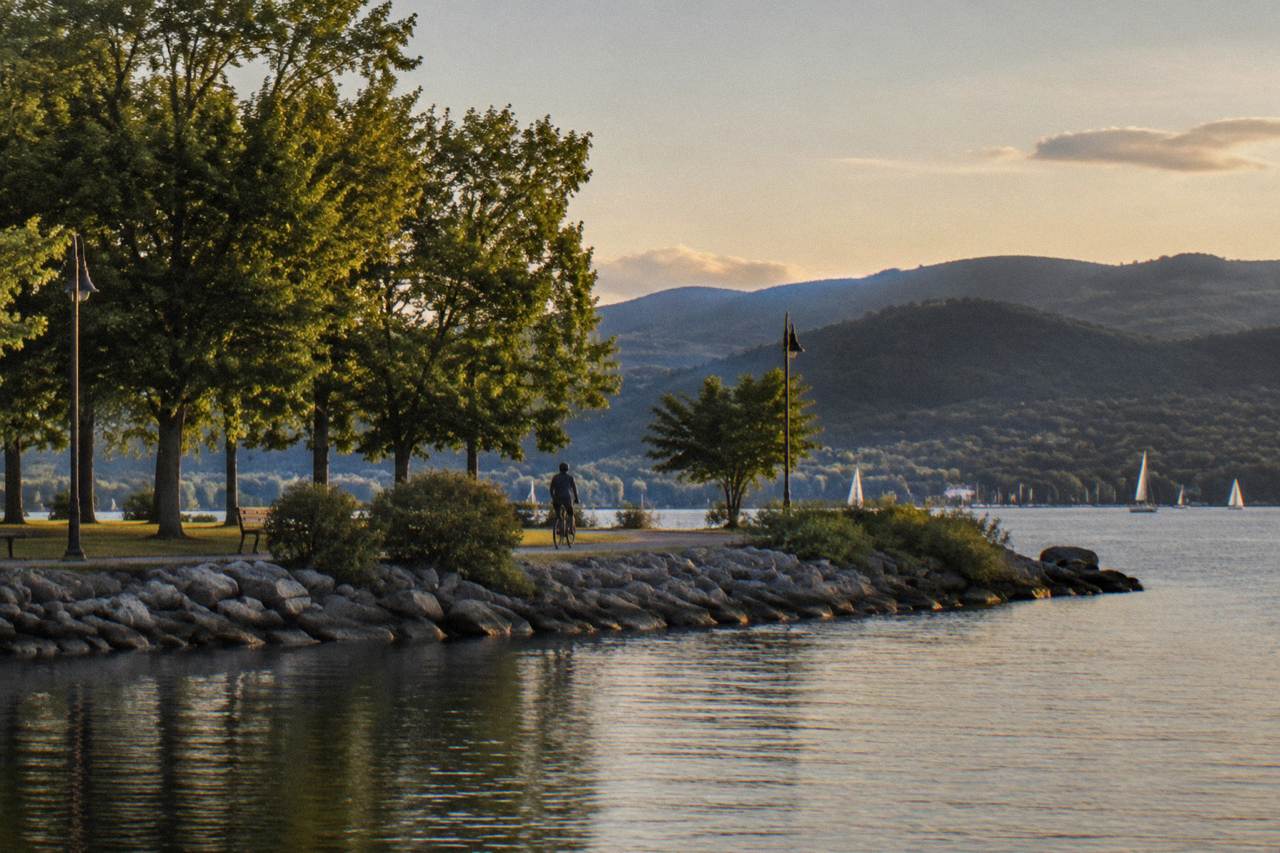
Short answer
Yes. Vermont suits beginners and seniors who pick the right terrain: the Lamoille Valley Rail Trail runs about 95 miles at under three percent grade, the Burlington Greenway offers about 8 paved lakeside miles, and Class 1 pedal-assist e-bikes are allowed on both. Guided operators such as VBT Bicycling Vacations add support vans and luggage moving.
Riding in Vermont does not have to mean climbing. The state's rail trail network alone covers well over a hundred miles of former railroad bed, and railroad beds are flat by design: the Lamoille Valley Rail Trail is about 95 miles end to end at grades under three percent, the longest rail trail in New England. Add lakeside paths in Burlington, a firm crushed-stone surface wide enough for two riders abreast, and a statewide rule that treats Class 1 pedal-assist e-bikes as bicycles, and the picture changes completely. This guide lays out what beginners and seniors actually need for a comfortable Vermont bike trip: which trails are flattest, how many miles a day is realistic, what e-bike assist does on Vermont terrain, and where to sleep next to the riding.
Yes, with terrain chosen deliberately. Vermont's easiest riding sits on converted rail beds and lakeside paths that stay under about a three percent grade, not on the mountain roads the state is famous for. The Lamoille Valley Rail Trail alone offers about 95 miles of that gentle surface, and Class 1 pedal-assist e-bikes are permitted on it, which flattens the few hills that remain.
The gap between Vermont's reputation and its beginner-friendly reality is mostly a map problem. The state's celebrated road riding, the notch climbs and the Route 100 ridgelines, is genuinely hard. But rail corridors were engineered never to exceed the grade a loaded freight train could climb, so the trails built on them inherit that flatness. A first-time rider on the Lamoille Valley Rail Trail experiences wide, firm, compacted crushed stone with grass shoulders and almost no pitch to speak of.
Age and fitness matter less than surface and mileage. Seniors who have not ridden in years tend to do well on rail trails because there are no cars, no intersections at speed, and no surprise descents. The same logic applies to the Burlington Greenway, about eight paved miles along Lake Champlain, where the view does the entertaining and the legs mostly cruise. The Local Motion Trailside Center at 1 Steele Street in Burlington rents conventional bikes, Class 1 e-bikes, adaptive cycles and kids' options right on the path, which means a cautious rider can test the format for a few hours before committing to a multi-day trip.
For readers weighing guided against independent options, the guided and self-guided formats compared matters here: guided trips move your luggage and add a support van, while self-guided rail trail trips let you shorten any day by simply stopping in the next town.
The flattest riding in Vermont is the Lamoille Valley Rail Trail, about 95 miles from St. Johnsbury to Swanton at under three percent grade; the Missisquoi Valley Rail Trail, 26.4 miles from St. Albans to Richford; and the Burlington Greenway and Island Line corridor, about 14.4 miles from the Burlington waterfront toward South Hero.
These three corridors carry almost all of the state's true beginner mileage, and they connect. The Missisquoi trail joins the LVRT near Sheldon, so a rider based in the Champlain Valley can stitch together long, flat days without ever touching a mountain road. The Island Line splits its surface: about eight paved miles on the Burlington Greenway, then roughly five miles of crushed gravel on the Colchester Causeway out over the lake.
| Trail | Length | Surface | Grade | Best For |
|---|---|---|---|---|
| Lamoille Valley Rail Trail | About 95 miles | Compacted crushed stone, about 10 feet wide | Under 3 percent | Multi-day flat trips, e-bikes, adaptive cycles |
| Missisquoi Valley Rail Trail | 26.4 miles | Stone dust | Rail grade | Quiet farm-country day rides near Richford |
| Burlington Greenway | About 8 miles | Paved | Nearly level | First rides, rentals, riders who want zero navigation |
| Colchester Causeway | About 5 miles | Crushed gravel | Nearly level | Water views, short out-and-backs |
| Stowe Recreation Path | Village loop | Paved | Gentle | Families and cautious riders based in Stowe |
Two practical notes keep these trails honest. The causeway route depends on the seasonal bike ferry across the gap in the Colchester Causeway: the ferry is closed for the 2026 season and returns in May 2027, and the season generally runs late May to mid October, so riders planning that crossing should confirm status before rolling out. And on any long rail trail, check trail status before the ride; the LVRT had a minor trailhead closure at Hyde Park in September 2026 with a posted detour, exactly the kind of small change worth knowing about in advance. More detail on surfaces, access points and town stops is in the Lamoille Valley Rail Trail riding guide.
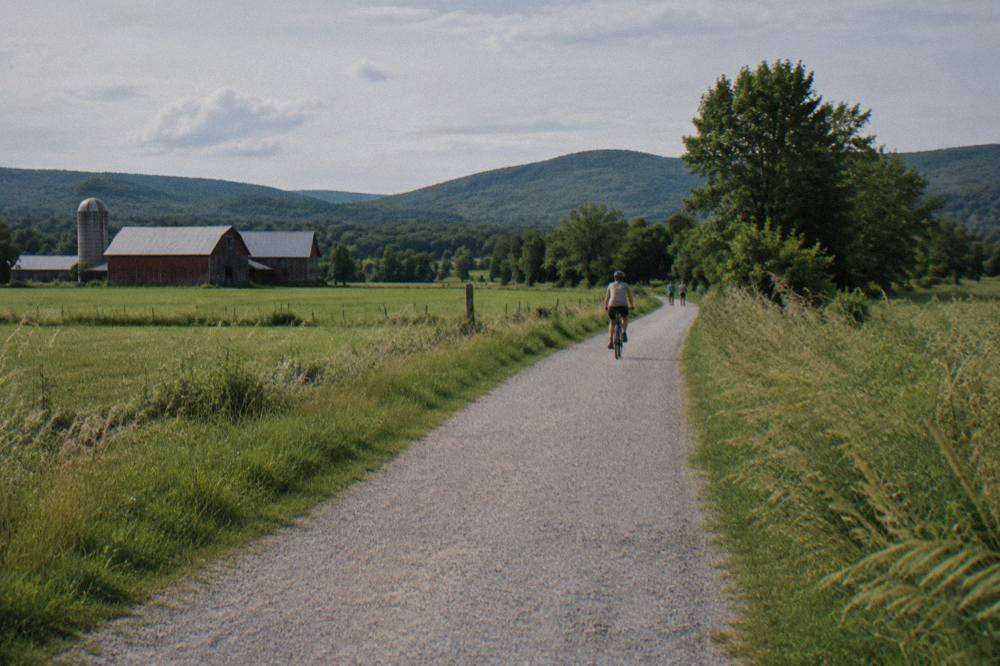
A comfortable range for a newer adult rider is 10 to 20 miles a day on flat terrain; for a reasonably active senior on an e-bike, the assisted range typically stretches to roughly 20 to 30 miles because the motor removes the fatigue that usually shortens a day. On guided trips, operators typically set daily distances of roughly 20 to 40 miles with shortcuts and van options.
Mileage is where beginner trips are won and lost, and the honest answer is that most first-time riders overplan. Ten flat miles on a rail trail takes a casual rider about an hour and a half with stops, which leaves an entire afternoon for a bakery, a swim or a nap. That pace feels indulgent on paper and perfect in practice. Doubling it on day one, by contrast, is the classic way to end a bike trip early.
| Rider Profile | Comfortable Daily Range (Flat) | With E-Bike Assist | Suggested Trip Shape |
|---|---|---|---|
| First-time adult | 10 to 20 miles | 15 to 25 miles | 2 to 3 nights, one base |
| Returning senior cyclist | 15 to 25 miles | 20 to 30 miles | 3 to 5 nights, two bases |
| Regularly active senior | 25 to 40 miles | 30 to 50 miles | Multi-day, point to point |
| Guided tour guest | Set by operator, often 20 to 40 | Same, with assist | Van shortcut available |
Two Vermont-specific adjustments matter. First, plan mileage by town spacing, not by ambition: rail trail towns sit every few miles, and a day that ends somewhere with dinner beats a day that ends two miles short of anywhere. Second, treat daylight as a budget in autumn; in early to mid October the sun rises near 7:00 and sets near 6:20, so a 30-mile day wants a morning start, not a post-lunch rollout. October temperatures average roughly a high of 56 and a low of 36 degrees Fahrenheit, which means gloves and layers for the first hour.

Yes, and the rules favor them. Vermont treats e-bikes as bicycles under its three-class system, and Class 1 pedal-assist bikes are allowed on the state's rail trails, including the full Lamoille Valley Rail Trail and the Burlington Greenway. Assist caps at 20 miles per hour for Class 1, which preserves the relaxed feel of a trail day.
The practical effect on Vermont terrain is larger than most newcomers expect. A Class 1 motor under 750 watts does not ride the bike for you; it multiplies your effort, so a hill that would demand a stand-up grind becomes a seated spin. On the short rolling sections between rail trail towns, that difference is often the difference between a 12-mile day and a 25-mile day for a rider in their seventies.
| E-Bike Class | Assist Type | Speed Cap | Where Allowed In Vermont |
|---|---|---|---|
| Class 1 | Pedal assist only | 20 mph | Rail trails, greenways, roads; most Kingdom Trails singletrack |
| Class 2 | Throttle | 20 mph | Where bicycles are allowed, subject to local trail rules |
| Class 3 | Pedal assist | 28 mph | Roads; operator minimum age 16 |
There are two carve-outs worth knowing before renting. On state land, e-bikes are currently prohibited on non-motorized natural-surface trails, though allowed on roads and multi-use paths, per the Vermont Mountain Bike Association, whose policy page tracks a possible expansion that has not been confirmed. And at Kingdom Trails in East Burke, Class 1 pedal-assist eMTBs are allowed on most trails per the Kingdom Trails Association, with the trail map marking landowner exclusions, so check the map at kingdomtrails.org before assuming a given loop is open. Rentals reflect the same rules: Local Motion's Trailside Center rents Class 1 e-bikes only, with riders needing to be 18 or older, or 16 with a guardian. The full rule picture, including what the state does and does not require of cyclists, is covered in the Vermont e-bike and helmet rules guide.
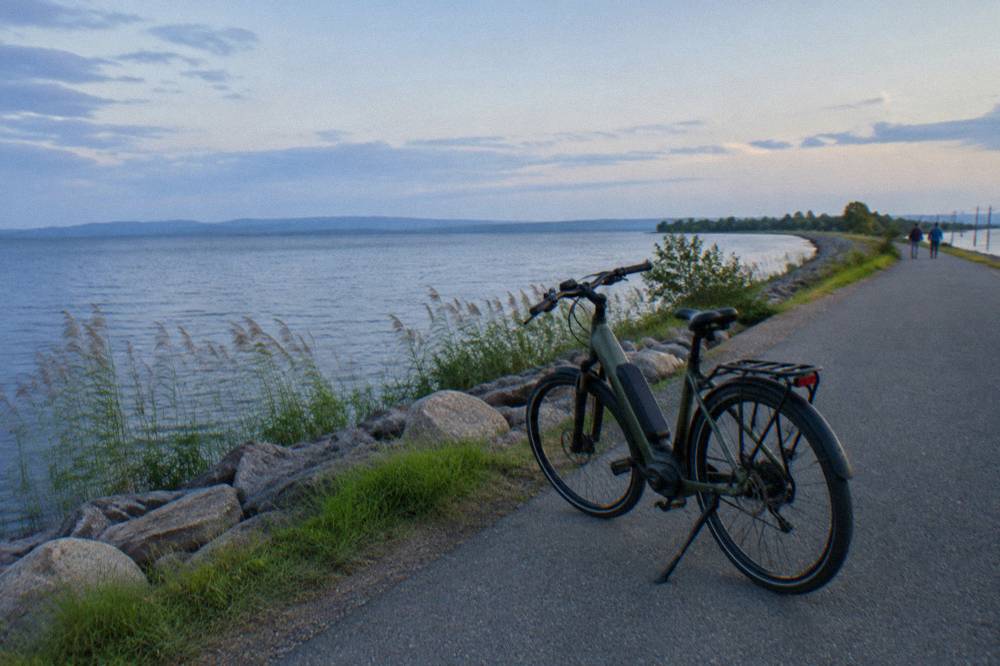
The simplest beginner base in Vermont is downtown Burlington, near the waterfront: the Greenway starts at Waterfront Park, rentals sit on the path at the Local Motion Trailside Center, and everything from coffee to dinner is walkable, so the day's ride requires zero driving. Hotel Champlain Burlington, Curio Collection by Hilton sits steps from Waterfront Park and the bike path access, and its listing includes free bicycle rentals.
Burlington works for tentative riders because every decision point is removed. You wake up, walk to the path, ride as far as feels good toward the causeway, and turn around whenever you like. The paved Greenway segment is about eight miles, so even a conservative out-and-back stays on pavement the whole way, and the lake is on your right the entire time, which does a lot for morale. Riders who want the causeway's gravel miles can continue onto the crushed stone and treat the surface change as the day's adventure. More of these guides are collected on Vermont Biking Tours.
Staying close also solves the e-bike question neatly. If a rider is unsure whether assist is needed, a base near the path makes it easy to rent one from the Trailside Center, with a reservation recommended, and swap plans on the spot. The Hotel Champlain Burlington puts you within a short stroll of all of this, and the Burlington bike path guide covers segment details, access points and where the causeway begins.
Burlington, near Waterfront Park
Steps from Waterfront Park and the bike path access; its listing includes free bicycle rentals.
Check ratesA second Burlington consideration is timing around the ferry. Riders hoping to cross the causeway gap by bike ferry should plan around the late May to mid October operating window and confirm the current schedule before the trip, since the crossing is what connects the causeway to South Hero's quiet island roads.
Guided operators in Vermont, chiefly VBT Bicycling Vacations and smaller regional outfits, typically supply a route designed in daily stages, a support van that carries riders who opt out of a stretch, luggage transferred between inns, and rental bikes including e-bikes. Trips are booked directly with the operator, and prices live on each operator's own site.
This site does not sell or list tours, so the honest framing is what to ask an operator before booking. VBT Bicycling Vacations runs guided trips with van support and self-guided versions with luggage moved ahead of you; its itineraries and prices are on vbt.com. Great Bike Tours, Lamoille Valley Bike Tours and Vermont Mountain Bike Tours also operate in the state; request their current trip sheets directly. The questions that matter for a cautious rider are concrete ones.
| Question To Ask An Operator | Why It Matters For Seniors |
|---|---|
| What is the shortest rideable version of each day? | Determines your real floor, not the brochure average |
| Is an e-bike available for every guest who wants one? | Assist demand outstrips supply on some departures |
| Where does the support van meet the route? | Sets how often you can bail out mid-hill |
| Are the routes on rail trail, quiet roads, or both? | Surface and traffic, the two biggest comfort factors |
| What is the daily mileage on the longest day? | One hard day shapes the whole trip's memory |
For riders comparing the market's shapes and trade-offs rather than specific companies, the how to choose a Vermont bike trip guide walks through the decision, and the inn-to-inn format explained covers the luggage-and-lodging model that suits riders who no longer want to carry a load. A useful rule of thumb from the operator market: if a trip's average day exceeds what you would happily ride alone, the van is doing the work of making that day possible, and you should want to know exactly how the van works before paying.
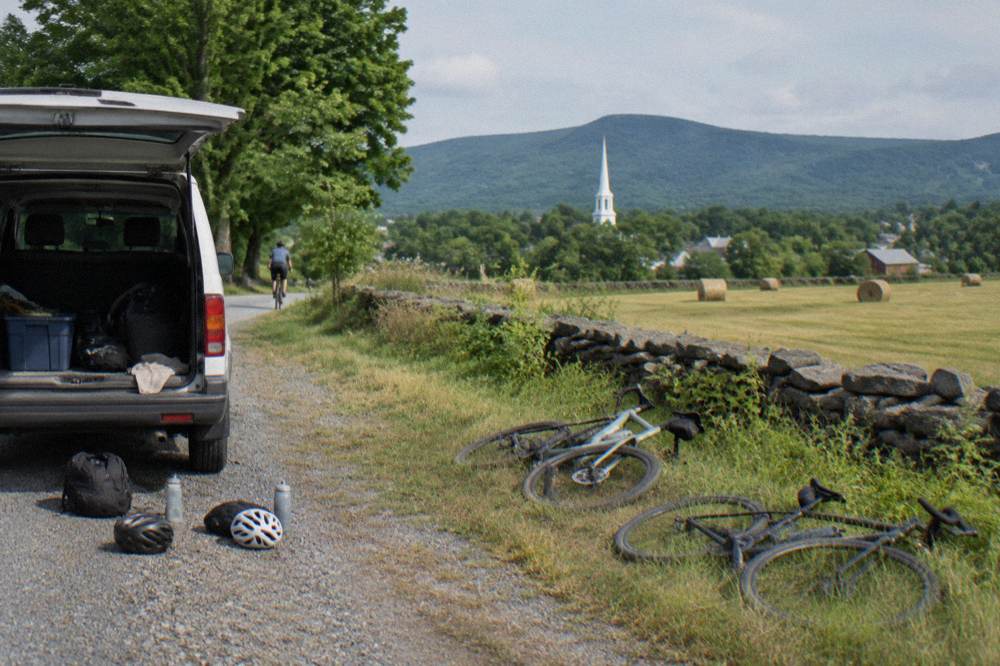
Pack for variable weather and small repairs: layered clothing for mornings near 36 degrees in October, gloves, rain shell, lights for late-day returns, a basic flat kit, and any daily medications carried on the bike rather than in luggage that travels ahead. Nothing on Vermont's easy trails requires technical equipment beyond that.
The packing list for a flat rail trail trip is shorter than the list for mountain riding, and that is the point. The two items seniors most often regret omitting are gloves, because chilled hands reduce braking confidence, and lights, because an autumn ride that starts after a long lunch can finish near sunset. A phone battery bank earns its place too, since the rail trail corridors cross areas with thin coverage and navigation defaults to the device.
Hydration deserves a specific note: rail trail towns are frequent but their water fountains are seasonal, and several are shut off after mid October. Carry more water than the map implies. For a fuller checklist organized by season and ride type, see what to bring on a Vermont bike trip. Riders extending a trip into the Kingdom Trails area will find rental shops clustered right at the riding, including East Burke Sports at the trailhead, Kingdom Bike Rentals with an e-MTB focus, Village Sport Shop and Rifugio Darling Hill; none of their prices are published in a form this site can verify, so ask each shop directly.
The most comfortable window for beginners and seniors is late May through mid October, with September and early October offering the combination of warm afternoons, light backroad traffic and foliage color. Peak color generally runs late September to mid October, arriving first on the northern ridgelines and last in the southern valleys.
Each part of the season trades something. June brings long days and green everything, plus the year's most reliable ferry service on the causeway. July and August are warmest, ideal for riders who want lake swims at the turnaround point, though popular roads carry more vacation traffic then. September quiets the roads and cools the mornings. Early October is the famous window, and it deserves its reputation: the foliage peak across most of the state lands within about the first week and a half of the month, with the Northeast Kingdom's high ground turning roughly a week ahead of the southern valleys.
| Period | Conditions For Easy Riding | Trade-Off |
|---|---|---|
| Late May to June | Long days, green landscape, ferry running | Some mud on lower trails early on |
| July to August | Warmest afternoons, swimming weather | More traffic near destination towns |
| September | Quiet roads, cool mornings | Foliage not yet at peak |
| Late September to mid October | Peak color statewide | Cool mornings, shorter days, book lodging early |
| November | Almost no crowds | Trail season ends about Oct 31 at Kingdom Trails, cold |
Timing notes for the mountain biking side: Kingdom Trails closes its summer network around the end of October and stays closed into early December for deer hunting before the groomed winter fat-bike season opens, so an October trip there should ride earlier in the month. Riders chasing color specifically can compare regions in the foliage peak dates by region guide and the broader best time to bike in Vermont overview.
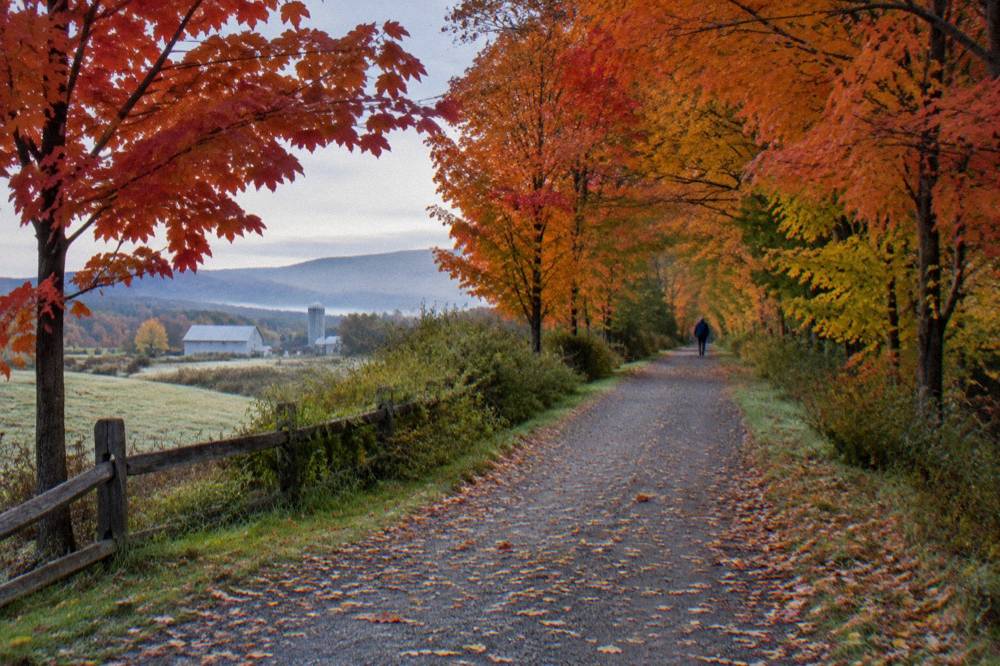
For the Northeast Kingdom, base in Lyndonville or East Burke: The Wildflower Inn sits 2.3 miles from Kingdom Trails, offers bike rentals and a bicycle shuttle, and removes both the driving and the hauling. For a gentler Stowe stay, properties near the Stowe Recreation Path put a paved village trail at the door and the road loops of Mountain Road beyond it.
These two areas bracket the range of easy-adjacent riding in Vermont. Kingdom Trails is a mountain biking destination, more than a hundred miles of singletrack and multi-use trail across 213 named routes, and it is not a beginner rail trail; but the network includes multi-use corridors suitable for cautious riders, the shuttle-and-rental setup at nearby inns lowers the effort barrier, and Class 1 pedal-assist eMTBs are allowed on most trails. The Wildflower Inn in Lyndonville was built around exactly this visit: rentals on site, a shuttle, and 2.3 miles to the trail network. Passes are required and bought through the Kingdom Trails Association store or the Welcome Center on VT Route 114 in East Burke; pass prices are not published in a verifiable form, so check the association's store for current rates.
Stowe is the softer option. The Recreation Path is paved, village-level and family-friendly, and riders who graduate to quiet road loops can extend along Mountain Road. The Sun & Ski Inn And Suites positions you for the path and the loops around the village without needing the car each morning. For surface and terrain comparisons across the whole state, the Vermont trails by difficulty guide ranks options from first-ride to expert.
Lyndonville, 2.3 miles to Kingdom Trails
Offers bike rentals and a bicycle shuttle, and sits 2.3 miles from Kingdom Trails.
Check ratesYes. A workable week pairs two or three bases with short daily legs: two or three nights in Burlington for the Greenway and causeway, two near the LVRT corridor for flat rail trail days, and one or two in Stowe or the Kingdom for a paved path or assisted trail day. Keeping each day under 25 miles leaves room for the dinners, swims and maple stops that make the trip.
The structure matters more than the specific towns, because the mistake most first Vermont itineraries make is driving too much between rides. Anchoring to two or three bases with riding out the door beats four bases with daily car shuttles, especially for seniors who would rather spend morning energy on the bike than on loading it. A sample shape looks like this.
| Nights | Base | Riding From The Door | Daily Miles |
|---|---|---|---|
| 2 | Burlington waterfront | Greenway out-and-back, causeway extension if the ferry runs | 8 to 18 |
| 2 | LVRT corridor town | Flat rail trail in both directions on crushed stone | 10 to 25 |
| 2 | Stowe | Recreation Path plus quiet village loops | 5 to 20 |
| 1 to 2 | Lyndonville or East Burke | Assisted multi-use trails at Kingdom Trails with a shuttle | 5 to 15 |
Flexibility is the real luxury. Every leg of this shape can shrink without breaking: a tired day becomes a shorter out-and-back on the same trail, and a strong day extends by simply not turning around. Riders who want the fully supported version of this idea can hand the logistics to an operator and follow the questions in the operator section above; riders who prefer independence will find the state's trail network forgiving of modest ambition. Either way, the pairing of flat corridors and pedal assist has quietly turned Vermont into one of the more beginner-friendly riding states in the East, a fact that surprises people who have only seen its mountains.
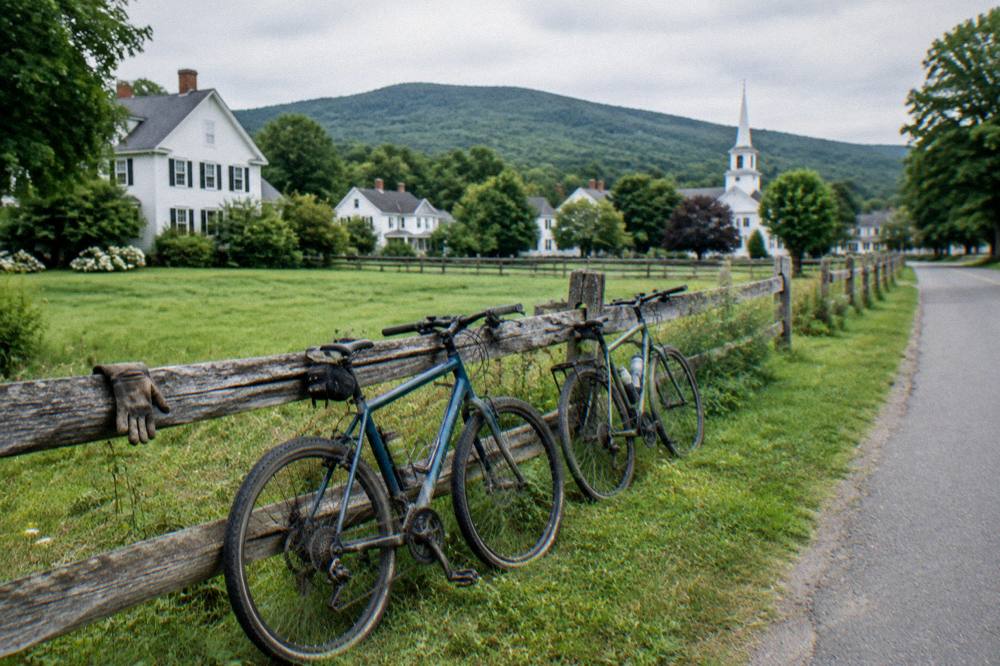
More route ideas across every ability level are collected in some of the best bike rides in Vermont, and the terrain question is compared directly in the road versus gravel versus e-bike breakdown.
Yes, when the terrain is chosen with care. Vermont's rail trails, chiefly the about 95 mile Lamoille Valley Rail Trail, stay under a three percent grade, and Class 1 pedal-assist e-bikes are allowed on them. Guided operators add support vans and luggage transfer for riders who want a backup.
Most newer riders are comfortable at 10 to 20 flat miles a day, roughly an hour and a half of casual pedaling with stops. With a Class 1 e-bike that range typically extends to 15 to 25 miles, and regularly active seniors often manage 20 to 30 assisted miles on gentle terrain.
Yes. The Lamoille Valley Rail Trail is open year-round to non-motorized uses, and e-bikes are explicitly allowed, while ATVs, dirt bikes, motorized scooters and segways are not. The Burlington Greenway likewise permits Class 1 pedal-assist e-bikes where bicycles are allowed.
The Burlington Greenway segment is about eight paved, nearly level lakeside miles, which is about as low-stress as riding gets. Rentals, including Class 1 e-bikes, adaptive cycles and kids' options, are available at the Local Motion Trailside Center right on the path, and reservations are recommended.
Guided trips generally include a support van that riders can board mid-route, daily stages with shortcut options, luggage transfer between inns and rental e-bikes. Trips are booked directly with operators such as VBT Bicycling Vacations, and current prices live on each operator's own site.
September through mid October offers quiet roads, comfortable afternoons and foliage color, with peak color generally arriving between late September and mid October, ridgelines first and valleys last. Late May through June is the other strong window, with long days and the causeway bike ferry in service.
Before you go, the pick for this guide:
Hotel Vermont
About 0.2 miles from the Burlington Bike Path in the lake-side downtown.
Check rates →