The Wildflower Inn
Lyndonville, 2.3 miles to Kingdom Trails
Offers bike rentals and a bicycle shuttle, and sits 2.3 miles from Kingdom Trails.
Check ratesAt 95 miles, the Lamoille Valley Rail Trail is the longest rail trail in New England, running from St. Johnsbury to Swanton through 18 towns on firm compacted crushed stone. Here is how to plan a bike trip on it: which sections to ride, what the surface does to your tires, where e-bikes are allowed, and where to sleep along the way.
Short answer
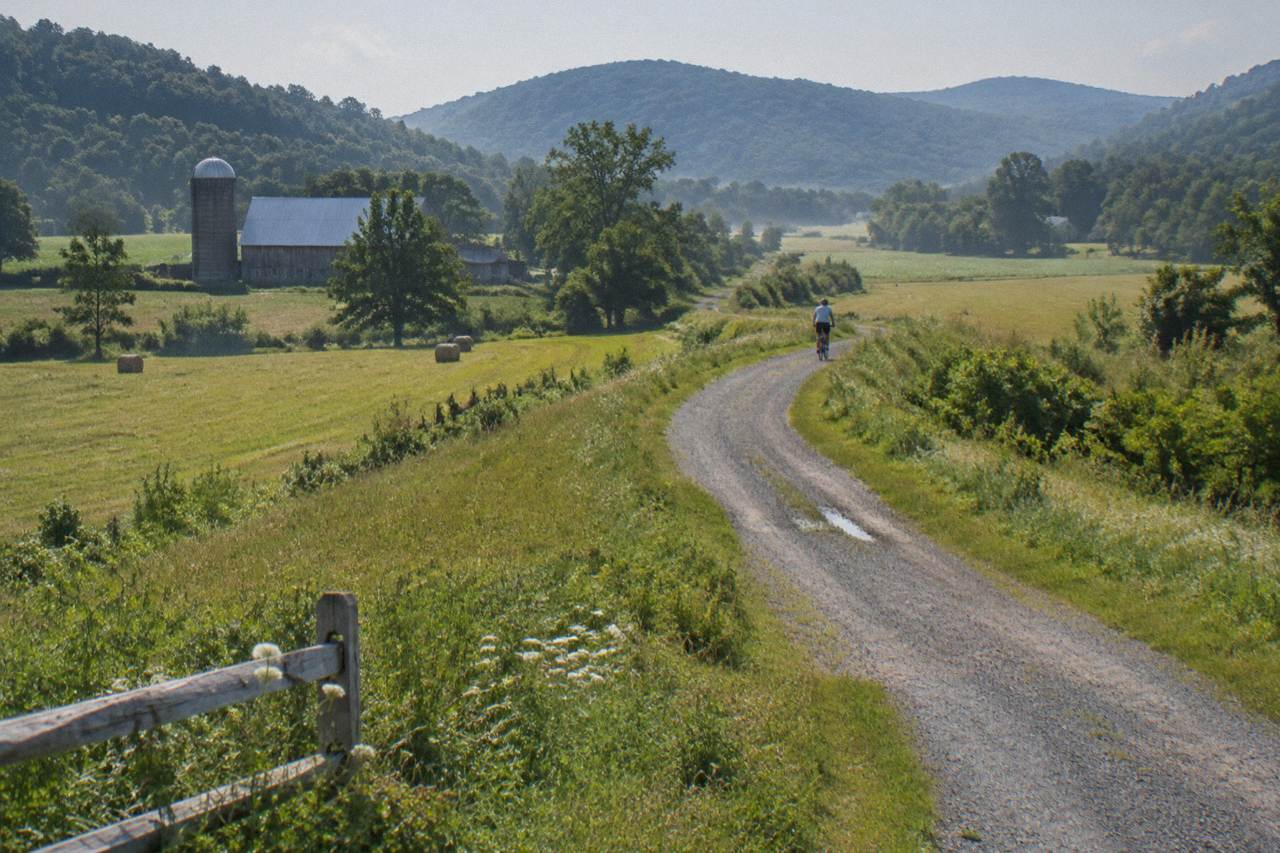
The Lamoille Valley Rail Trail runs 95 miles from St. Johnsbury to Swanton across 18 Vermont towns, on a 10-foot-wide surface of firm compacted crushed stone with grades under 3 percent. E-bikes are allowed, the trail is open year-round to non-motorized use, and the best riding splits into two to four day-stages anchored on towns like Cambridge Junction and Morrisville.
Ninety-five miles of uninterrupted rail trail connect St. Johnsbury in Vermont's Northeast Kingdom to Swanton near the Canadian border, making the Lamoille Valley Rail Trail the longest rail trail in New England. It passes through 18 towns, crosses the Lamoille River repeatedly, and never climbs a grade steeper than what a freight train could manage, which means under 3 percent the whole way. For bikers, that combination of length, gentle gradient and firm crushed stone surface is close to unique in the region. If you want the full story on how the trail earned that title and how to plan a ride across it, our guide to the longest bike trail in Vermont covers everything you need.
The trail is managed as a state rail trail, open year-round to non-motorized uses, with e-bikes expressly permitted. Riders on everything from fat bikes to gravel rigs to Class 1 pedal-assist e-bikes share the corridor with walkers, horseback riders and, in the winter snowmobile season, VAST sleds. This guide lays out the trail section by section, explains what the surface and the rules mean for planning, and suggests where to sleep and which operators run supported trips along or near the route.
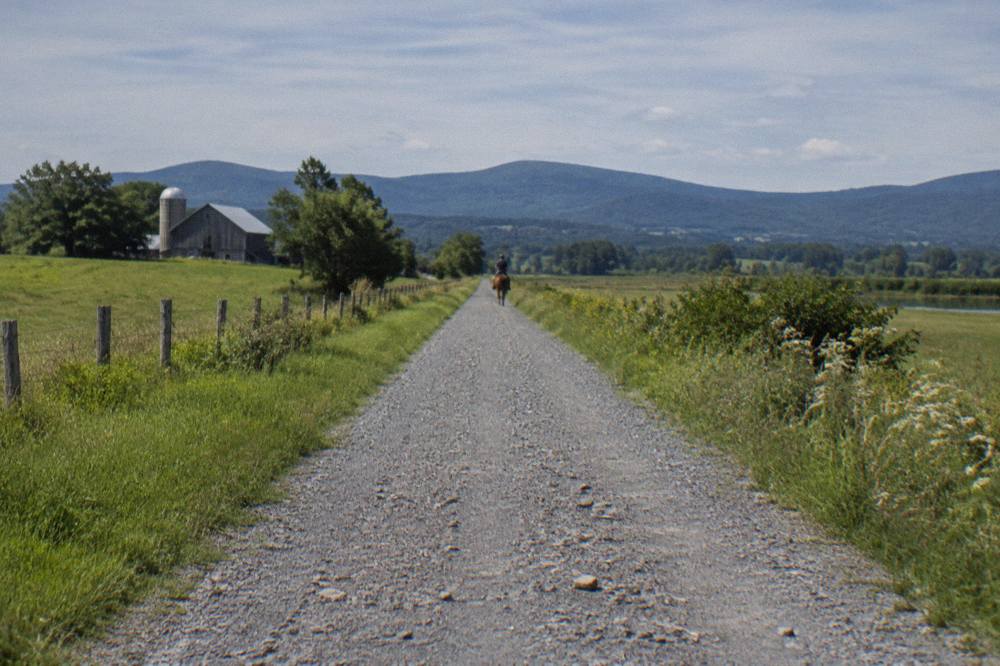
The Lamoille Valley Rail Trail is a 95-mile multi-use rail trail in northern Vermont, running from St. Johnsbury to Swanton through 18 towns, which makes it the longest rail trail in New England. It is open year-round to non-motorized users, including bikers and e-bikes, on a corridor built on a former railroad bed, so grades stay under 3 percent for the entire length. The state's official rail trail page states plainly that the trail is open to walking, biking, horseback riding and other non-motorized uses in every season, with snowmobiles permitted only during the state snowmobile season, mid December to mid April. If you're curious about the e-bike rules in more detail, our guide on which e-bike classes are permitted on the trail covers exactly what riders need to know.
For a biking trip, the trail's size changes the planning conversation. This is not a two-hour path but a multi-day corridor, and most riders treat it as a series of day rides stitched together by towns. The rail bed geometry is the selling point: rail trails follow the contours a train needed, so the LVRT rolls gently where Vermont roads pitch and dive. Riders who find road biking in Vermont punishing on the climbs will find the rail trail almost flat by comparison.
Because it is a state facility, the rules are written down and stable. The official Vermont rail trails site publishes the trail map, surface details, the e-bike and motor rules, and a trail updates page for closures and maintenance work. Checking that page before a long ride is the single most useful planning step, because minor trailhead closures and flood repairs do happen season to season.
The trail runs 95 miles between St. Johnsbury in the east and Swanton in the far northwest, crossing 18 towns through the Lamoille River valley: St. Johnsbury, Lyndon, Burke, Sutton, West Burke, Greensboro, Hardwick, Wolcott, Morrisville, Hyde Park, Johnson, Cambridge, Jeffersonville, Fairfax, Fletcher, Bakersfield, Enosburg and Swanton. Riders can join at any trailhead, and most trips are planned as point-to-point stages or out-and-back day rides from a single town.
The eastern end at St. Johnsbury sits in the Northeast Kingdom, the least populated and most forested part of the state, and the trail there feels remote: river crossings, long wooded stretches and small villages. The middle of the trail around Morrisville, Hyde Park and Johnson is the most developed for services, with cafes, bike-friendly inns and easy access from the Stowe area. The western end between Cambridge Junction and Swanton opens into dairy farmland and, at Swanton, connections toward Lake Champlain.
Two practical points shape the ends of a ride. First, there is no bike-specific transit along the corridor, so point-to-point riders need a shuttle, a second car or a supported operator. Second, the trail connects to other networks worth knowing about: the Missisquoi Valley Rail Trail, 26.4 miles from St. Albans to Richford, joins the LVRT near Sheldon, which lets a rider string together an even longer northern loop. Our companion piece on the best section of the Lamoille Valley Rail Trail goes deeper on that question.
The surface is a 10-foot-wide bed of firm compacted crushed stone with roughly 2-foot grass shoulders, and the grade stays under 3 percent for all 95 miles, per the state's trail page. That surface rolls well on any bike with gravel-width or wider tires, is fully wheelchair accessible, and turns soft and slow only after sustained rain or in the early spring thaw. Riders on road bikes with narrow racing tires will feel the stone; riders on gravel, hybrid, touring or fat bikes will not.
The practical tire advice is simple. Gravel-width and wider tires are comfortable at cruising speed, and wider is better on the western half, where the stone can sit a little looser on freshly graded sections. E-bikes, hybrids and hardtail mountain bikes are the most common sights on the trail, and a reader deciding between bike types for a Vermont trip can compare the options in our guide to road, gravel and e-bike riding in Vermont.
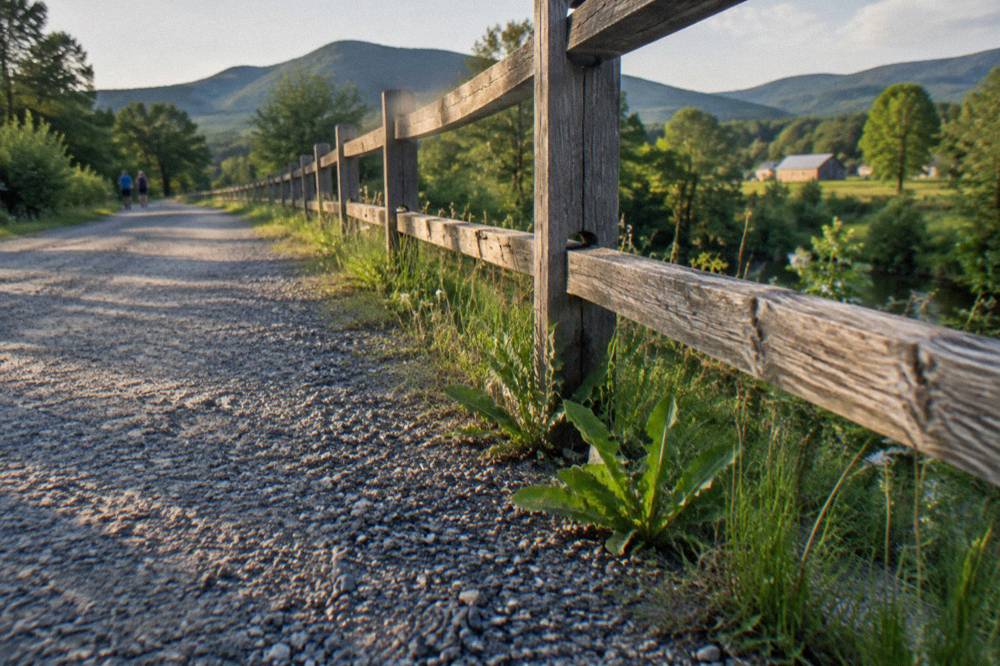
The table below summarizes what the surface means for different setups:
| Bike setup | How the crushed stone feels | Verdict |
|---|---|---|
| Road bike with narrow racing tires | Buzzing, slow, puncture risk on loose patches | Possible but not fun |
| Gravel or cyclocross bike | Fast and comfortable, the trail's native format | Ideal |
| Hybrid or hardtail mountain bike | Comfortable at touring pace, slightly slower on pavement-quality stone | Very good |
| Class 1 e-bike | Effortless on the grades, fully permitted | Ideal for day stages |
| Fat bike | Overkill on firm stone, useful in mud or early season | Fine |
Maintenance matters as much as tire choice. The state grades and repairs the surface season to season, and the trail updates page carries notices such as the minor trailhead closures that have occurred at Hyde Park and elsewhere. The standing advice for any long ride holds: check trail status before you roll, and after heavy rain expect soft spots and washboard in the travelled line.
The strongest riding splits into three chunks: the remote, river-hugging eastern stretch from St. Johnsbury through Lyndon and West Burke; the service-rich middle around Morrisville, Hyde Park and Johnson; and the pastoral western run from Cambridge Junction through Enosburg to Swanton. Each has a different character, and the best choice depends on whether a rider wants solitude, cafes and lodging, or open farmland and long sightlines.
The eastern section is the quietest. It passes near Burke, which matters to mountain bikers because Kingdom Trails, with more than 100 miles of singletrack across 213 trails, sits minutes off the corridor; our Kingdom Trails mountain biking guide covers that network separately. A rider can spend mornings on flowy singletrack in East Burke and afternoons rolling the rail trail toward Lyndon, a pairing few trail systems anywhere can match.
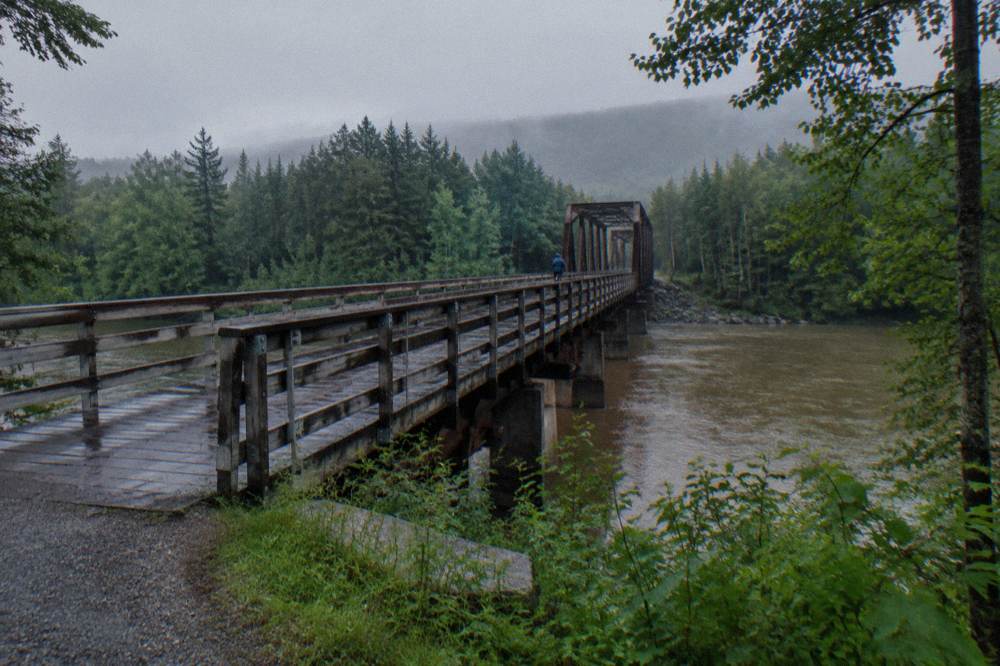
The middle section is where most first-time visitors base themselves. Morrisville and Johnson have the deepest bench of food, lodging and bike services, and the riding along the Lamoille River between them is classic Vermont: swimming holes, dairy farms and covered-bridge detours just off the corridor. Johnson to Cambridge Junction is a favorite half-day ride.
The western section is the longest uninterrupted pastoral stretch, and it is also where the Missisquoi Valley Rail Trail branches north near Sheldon toward Richford. Riders chasing miles rather than villages like it most.
| Section | Distance character | Terrain feel | Services |
|---|---|---|---|
| St. Johnsbury to West Burke | Remote eastern forest and river | Wooded, quiet, few road crossings | Sparse, plan food in Lyndon |
| Lyndon to Hardwick | Kingdom-adjacent, rolling | Farms and woods, near Burke singletrack | Lyndon and Hardwick towns |
| Morrisville to Johnson (via Hyde Park) | Popular middle day ride | River valley, swimming holes | Best cafe and inn coverage |
| Johnson to Cambridge Junction | Classic half-day ride | Lamoille River, covered bridges nearby | Jeffersonville and Cambridge |
| Cambridge Junction to Swanton | Pastoral western run | Open dairy farmland, long sightlines | Small towns, Enosburg and Swanton |
Yes, the state trail page states that e-bikes are allowed on the Lamoille Valley Rail Trail, which is open to all non-motorized uses year-round; the same page bars ATVs, dirt bikes, motorized scooters and segways, and permits snowmobiles only during the state snowmobile season from mid December to mid April. That makes the LVRT one of the friendliest long corridors in Vermont for pedal-assist riding, and the gentle grades mean battery range stretches further than it does on road routes.
Vermont treats e-bikes under a three-class system, with Class 1 and Class 2 capped at 20 mph and Class 3 at 28 mph, all with motors under 750 watts, and they are regulated as bicycles rather than motor vehicles. Riders who want the full legal picture can read our guide to Vermont e-bike and helmet rules, including where e-bikes are and are not allowed on other public land in the state.
The distinction that trips people up is state land, not state rail trails. On non-motorized natural-surface trails in Vermont state forests and parks, e-bikes are currently prohibited, per the Vermont Mountain Bike Association, though a policy change to expand Class 1 access has been proposed and its adoption is unconfirmed. Rail trails like the LVRT are multi-use paths, not natural-surface singletrack, which is why the e-bike permission is clear there. Riders combining the LVRT with singletrack, for example at Kingdom Trails, should know the Kingdom Trails Association allows Class 1 pedal-assist eMTBs on most of its trails, with exclusions marked on the trail map.
Battery planning is the real e-bike question on a 95-mile corridor. Even on gentle grades, a full east-to-west ride exceeds the range of most pedal-assist batteries, so multi-day e-bike riders either plan midday charging stops at cafes in the towns along the way or carry a charger and top up overnight at lodging. Both work; neither needs guessing, because the towns are close enough together that a dead battery means a short walk, not a rescue. The rest of the planning pages sit on Vermont Biking Tours.
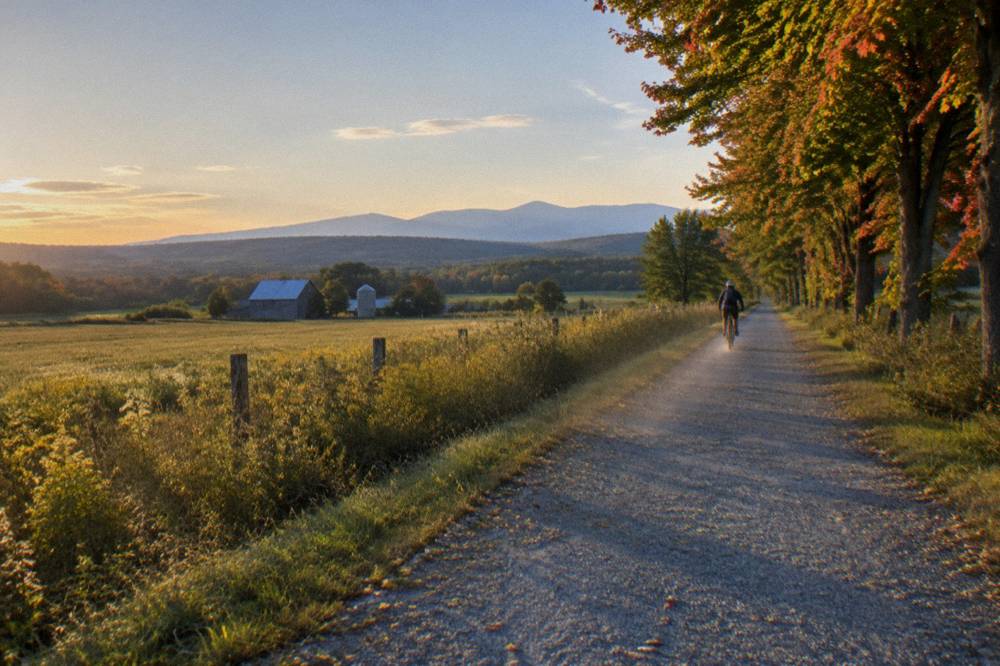
The best overnight bases are the trail towns themselves: Lyndonville in the east puts riders 2.3 miles from Kingdom Trails, Morrisville and Johnson anchor the middle section's services, and Cambridge or Jeffersonville sit at the midpoint for a two-stage ride. Because there is no transit along the corridor, the standard plan is a single base with out-and-back day rides, or two bases with a shuttle between them.
In Lyndonville, The Wildflower Inn offers bike rentals and a bicycle shuttle and sits 2.3 miles from Kingdom Trails, which makes it a rare base that serves both the rail trail and the singletrack in one stay. Riders on a split rail-trail-and-singletrack trip, or families who want an easier day when legs are tired, get a lot out of that combination.
The middle section works well from the Stowe side, too. The Stowe Recreation Path and the road loops around the village are covered in our guide to Stowe recreation path biking, and Stowe is a reasonable drive to the Morrisville and Johnson trailheads for riders who want a fuller town at night. Sun & Ski Inn And Suites is one such Stowe base for the path and the village loops.
Lyndonville, 2.3 miles to Kingdom Trails
Offers bike rentals and a bicycle shuttle, and sits 2.3 miles from Kingdom Trails.
Check ratesA simple way to think about staging the whole corridor: east-based riders sleep in Lyndonville or St. Johnsbury, middle-based riders in Morrisville, Hyde Park or Johnson, and west-based riders near Cambridge or Swanton. Two nights per base covers about 30 to 40 miles of rail trail per day at a touring pace with stops, which is how most riders actually experience the LVRT rather than racing it end to end.
| Base town | Section covered | Best for | Notes |
|---|---|---|---|
| Lyndonville | Eastern, St. Johnsbury to Hardwick | Combining rail trail with Kingdom Trails singletrack | Bike rentals and shuttle at the inn |
| Morrisville | Middle, Wolcott to Johnson | Services, cafes, easiest logistics | Central trailhead parking |
| Johnson | Middle, Morrisville to Cambridge | College-town food, river swimming | Good half-day rides both directions |
| Cambridge or Jeffersonville | West half, Johnson to Fairfax | Two-stage midpoint sleeping | Covered bridge detours nearby |
| Swanton | Far west, Enosburg to Swanton | Linking to the Missisquoi Valley Rail Trail | Connects toward Lake Champlain |
Strong riders do cover the full 95 miles in a day, but the crushed stone surface costs roughly 10 to 20 percent speed versus pavement, so a one-day through-ride is a serious endurance effort, typically six to nine hours of moving time depending on fitness, tires and wind. Most visitors should treat the trail as a two to four day bike trip, riding 25 to 40 mile stages and sleeping in the towns along the way.
The math is worth writing down before committing. At a pavement pace of 15 mph, 95 miles is about six and a quarter hours of pedaling; on compacted stone at 12 mph, it is nearly eight. Add food stops, a flat-tire margin and the fact that the western half can funnel a headwind down the open valley, and the day grows. Gravel and touring riders used to long endurance days will be fine; casual riders will not, and there is no shame in the stage plan, which is genuinely the better trip anyway.
Logistics are the second constraint. There is no bike shuttle service operated by the state, so one-day through-riders need a car spotted at the far end, a willing driver, or a supported trip with an operator. Fitness and logistics solved, the remaining risk is simply daylight in the shoulder seasons: October days in Vermont run sunrise near 7:00 to sunset near 6:20 early in the month, shortening fast, so an early start is not optional.
Pack for remoteness more than for distance: at least two water bottles or a reservoir, spare tubes matched to your tire size, a pump or inflator, a basic multi-tool, layered clothing for a swing of 20 degrees between morning and afternoon, and lights if any part of the ride touches dusk. The full checklist lives in our guide on what to bring on a Vermont bike trip, and the rail trail adds a few trail-specific items.
The two items gravel riders underweight are tire volume and sealant. The crushed stone is firm but not glassy, and loose patches after grading invite pinch flats on narrow tires. Tubeless setups with sealant nearly eliminate the problem; riders on inner tubes should carry two spares rather than one, because trailside help in the eastern section can mean a long walk to a town.
| Item | Why it matters on the LVRT | Priority |
|---|---|---|
| Gravel-width or wider tires, with sealant | Loose stone patches cause pinch flats | High |
| Two spare tubes and pump | Remote eastern sections have no bike shops nearby | High |
| Water, two bottles minimum | Long stretches between towns in the east and west | High |
| Wind or vest layer | Open valleys funnel wind, mornings are cool | Medium |
| Lights | Late-season sunset near 6:20, shaded valleys darken early | Medium |
| Offline map or GPS file | Cell coverage is patchy in the Northeast Kingdom | Medium |
| Snacks | Cafe hours in small towns vary by day of week | Medium |
Clothing follows Vermont's swing rather than any season-specific list. Even in October, midday can feel warm in the sun while river valleys sit cold at 8 a.m. Layers that zip off beat one heavy jacket, and a dry bag for electronics covers the summer thunderstorm case. Riders combining the trail with singletrack days should add knee or elbow protection for the East Burke riding, which is a different discipline than the rail corridor.
Yes, but riders book with operators directly, since this site sells and lists no tours. VBT Bicycling Vacations and Local Motion are the named outfits with a public presence connected to the region's cycling; Lamoille Valley Bike Tours, Great Bike Tours and Vermont Mountain Bike Tours also operate in the state, and each should be contacted through its own channels for current itineraries and prices. None of those operators' prices are verified here, so treat any figure only as what the operator's own site states on the day.
Supported trips solve the LVRT's one hard problem, which is logistics rather than terrain. An operator that moves luggage between inns turns the 95 miles into a civilized three or four day tour with no car spotting, and inn-to-inn trips are a well-developed format in Vermont, as covered in our guide to inn to inn bike tours in Vermont. Riders comparing that format against a self-guided version of the same route can read our breakdown of guided versus self-guided bike trips.
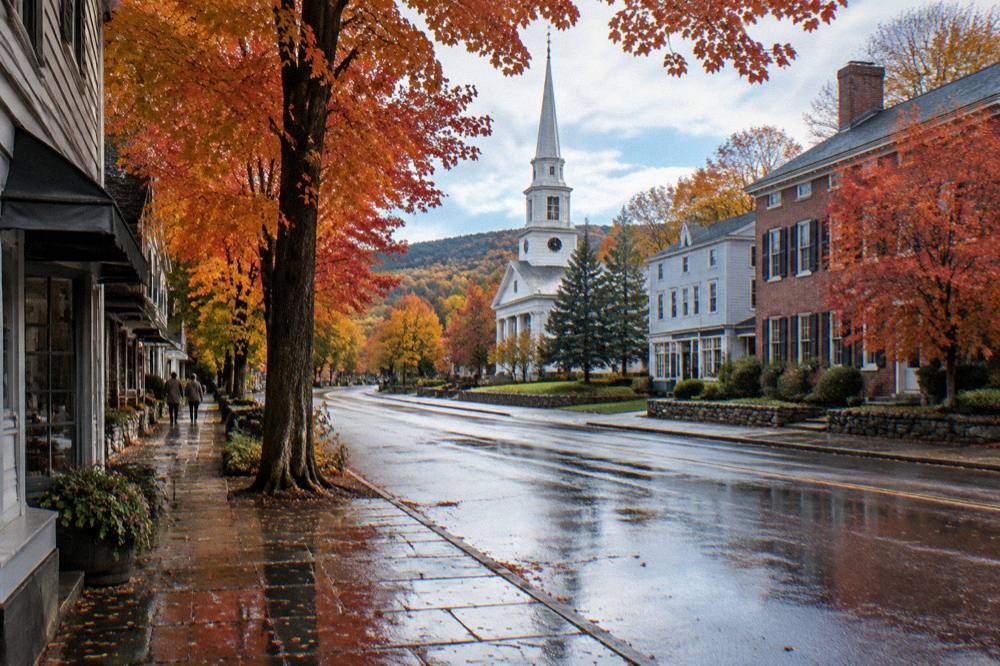
For rentals rather than guided weeks, Local Motion runs the Trailside Center at 1 Steele Street in Burlington, renting conventional, Class 1 e-bike, adaptive and kids bikes right on the path there, with reservations recommended; riders starting from Hotel Champlain Burlington, steps from Waterfront Park and its bike path access, are close to that option when a Burlington start makes sense. Near Burke, the shops to know are East Burke Sports at the trailhead, Kingdom Bike Rentals with delivery and an e-MTB focus, Village Sport Shop and Rifugio Darling Hill; rental prices are unverified, so ask each shop directly. Booking any of it means going to the operator, full stop.
Late May through mid October is the riding season, with the sweet spots in June for long daylight and green valley scenery, September for dry surfaces and quiet trails, and late September to mid October for fall foliage, when the Northeast Kingdom end peaks first and the western valleys hold color latest. The trail itself is open year-round, and fat bikers and skiers use the corridor-adjacent networks in winter, but the crushed stone holds moisture in early spring and under snow.
Foliage season deserves its own note because the LVRT crosses regions that peak on different clocks. Ridgelines color one to two weeks ahead of the valleys, and the Northeast Kingdom, at the trail's eastern end, runs roughly a week ahead of the southern and western lowlands. A rider heading east to west in the first week of October can, in a good year, ride through peak color for several consecutive days as the color retreats ahead of them. Riders weighing the calendar against the weather can compare options in our guide to the best time to bike in Vermont.
October riding has two costs. Daylight shrinks to roughly sunrise near 7:00 and sunset near 6:20 early in the month, and average temperatures sit around a high of 56 and a low of 36, so mornings start frosty and layers earn their place. The compensation is that rural road traffic, which matters on any road links to and from trailheads, thins out after foliage crowds go home.

Burlington, near Waterfront Park
Steps from Waterfront Park and the bike path access; its listing includes free bicycle rentals.
Check ratesThe trail runs 95 miles from St. Johnsbury to Swanton across 18 towns, which the state's rail trail page describes as the longest rail trail in New England.
Yes. The official trail rules permit e-bikes along with all other non-motorized uses year-round, while barring ATVs, dirt bikes, motorized scooters and segways. Snowmobiles are allowed only in the state snowmobile season, mid December to mid April.
Firm compacted crushed stone, 10 feet wide with roughly 2-foot grass shoulders and grades under 3 percent. It is comfortable on gravel-width or wider tires and wheelchair accessible.
Most riders plan two to four days, covering 25 to 40 mile stages between towns. Strong riders can finish the 95 miles in one long day, but the stone surface costs speed compared with pavement.
The Missisquoi Valley Rail Trail, 26.4 miles from St. Albans to Richford, joins the LVRT near Sheldon on the western end. The eastern end sits close to the Kingdom Trails singletrack network around Burke.
Yes, the corridor is open year-round to non-motorized users, and snowmobiles use it during the state season from mid December to mid April. Fat biking and skiing are the realistic winter uses.
Before you go, the pick for this guide:
Sun & Ski Inn And Suites
A Stowe base for the Stowe Recreation Path and the road loops around the village.
Check rates →