What Is The Longest Bike Trail In Vermont?
The Lamoille Valley Rail Trail is the longest bike trail in Vermont at 95 miles from St. Johnsbury to Swanton, and the longest rail trail in New England. Here is how to ride it.
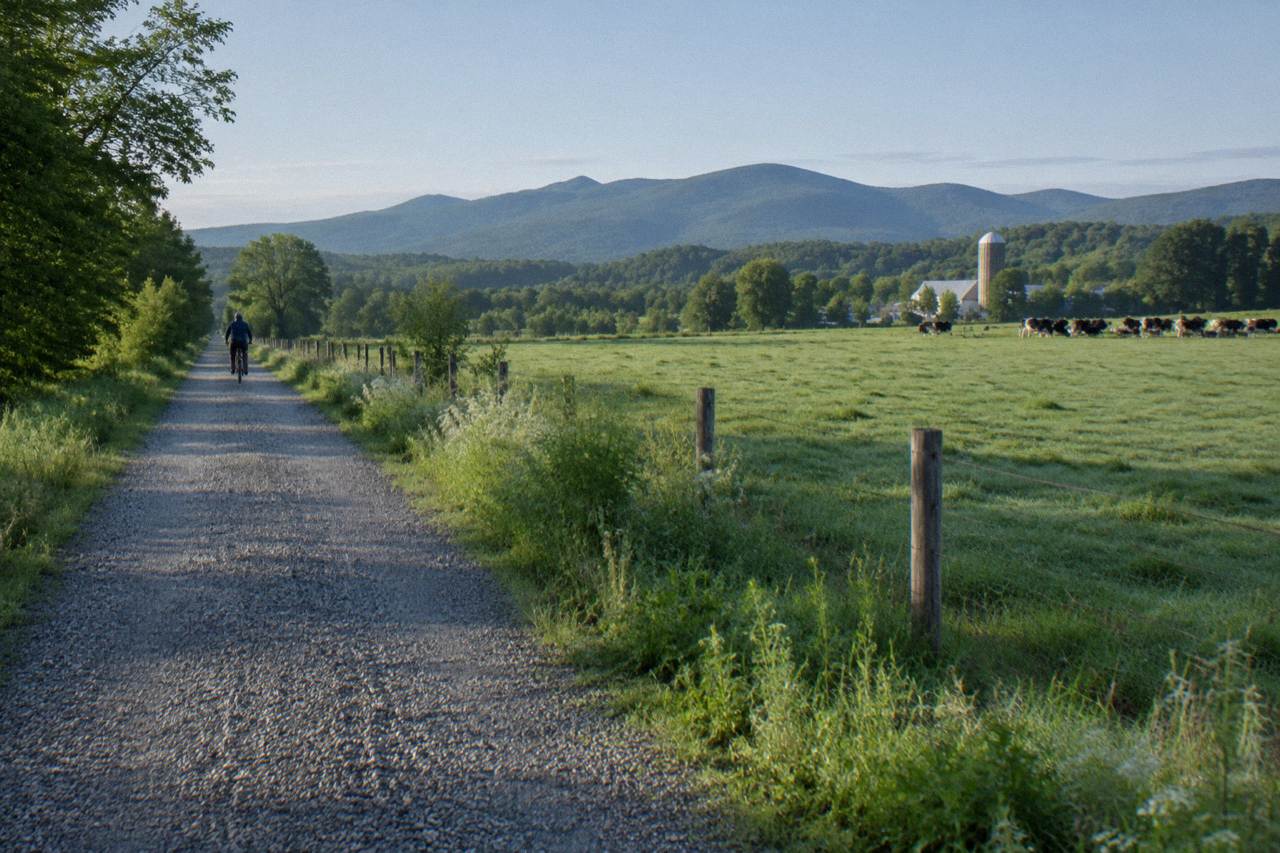
At 95 miles from St. Johnsbury to Swanton, the Lamoille Valley Rail Trail is the longest bike trail in Vermont, and the state's own rail trail program calls it the longest rail trail in New England. The route runs through 18 towns on a former railroad bed, with a surface of firm compacted crushed stone about ten feet wide and grades that never exceed three percent. It is open year-round to non-motorized uses, and e-bikes are allowed. For riders curious about the details, our guide to e-bike rules on the Lamoille Valley Rail Trail explains which classes are fine and how to plan the trip.
That combination of length, surface and gentle gradient is rare in New England. Vermont has excellent mountain biking at Kingdom Trails and a celebrated waterfront path in Burlington, but for a single, continuous, car-free biking route nothing else in the state comes close. Riders can cover the whole distance in two or three days, or sample a town-to-town slice in an afternoon.
Trail Length And Basics
The Lamoille Valley Rail Trail is the longest bike trail in Vermont at 95 miles, running from St. Johnsbury in the east to Swanton in the northwest, and it is also the longest rail trail in New England. The trail passes through 18 towns on a ten-foot-wide bed of compacted crushed stone, with grades under three percent, making it ridable on almost any bike.
The length is the headline, but the character of the riding is what keeps people coming back. Because the trail follows the Lamoille River valley, it never climbs hard. Former rail corridors were engineered for trains, so the gradient stays gentle and predictable, which suits touring bikes, hybrids, e-bikes and anyone riding with children or loaded panniers. The surface is compacted crushed stone with grass shoulders, firm enough that a road bike with wider tires can handle it, though most riders prefer something with at least some tread.
The trail became fully continuous in 2023, and its first complete summer of end-to-end riding came after that, so this is still a relatively new asset even by Vermont standards. The state's rail trail program manages it as part of a growing network of converted corridors, and the full route had no closed segments as of late summer, with only a minor trailhead closure at Hyde Park reported in September. The standing advice for any long ride on it: check trail status before you set out, since flood repairs and maintenance happen across the season.
For riders planning a multi-day trip, the 18 towns along the route are the practical structure. Cambridge, Jeffersonville, Morrisville, Hardwick, West Danville, Danville and St. Johnsbury sit along the eastern half, while the western half threads through Fairfield, Sheldon and Swanton farm country toward Lake Champlain. Each town is a potential water stop, lunch stop or overnight.
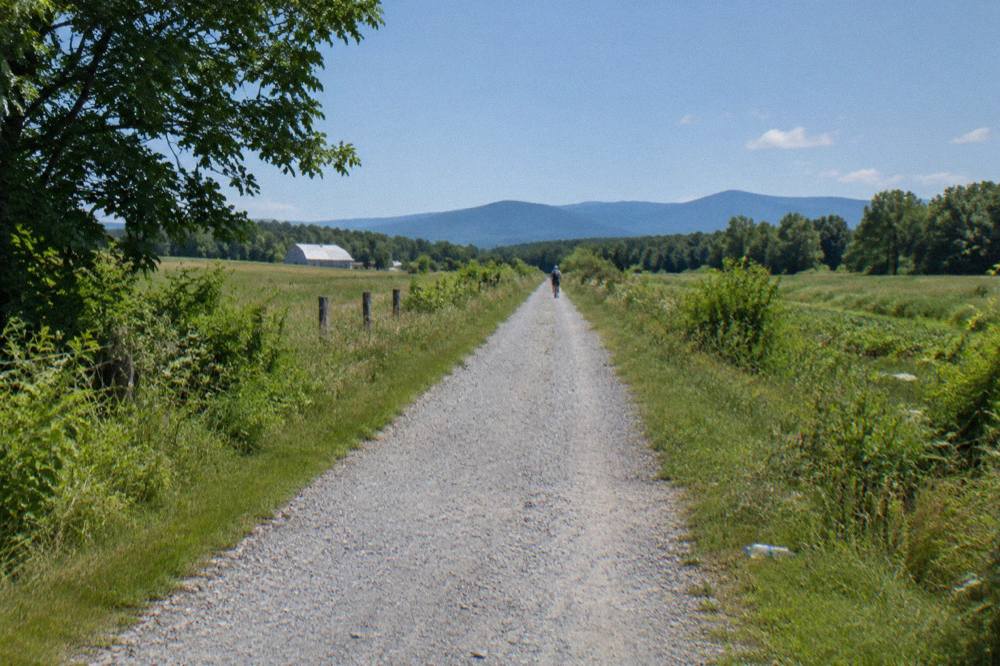
The full trail guide on this site goes deeper on access points and surface conditions; see the Lamoille Valley Rail Trail biking guide for a town-by-town breakdown, and the question of the best section of the trail is covered in its own article.
How Long Is The Lamoille Valley Rail Trail?
The Lamoille Valley Rail Trail is 95 miles long, running between St. Johnsbury and Swanton, and it crosses 18 towns along the way. The state's official rail trail page states the length plainly, and riders who complete the whole route typically split it over two to four days of cycling, depending on fitness and how much stopping they want to do.
Distances matter for planning, so here is how the trail's length compares with the other long, named bike routes in Vermont. The table uses figures from the official rail trail pages and the trail managers' own published lengths.
| Trail | Length | Type | Surface notes |
|---|---|---|---|
| Lamoille Valley Rail Trail | 95 miles | Rail trail, St. Johnsbury to Swanton | 10-foot-wide compacted crushed stone, under 3 percent grade |
| Missisquoi Valley Rail Trail | 26.4 miles | Rail trail, St. Albans to Richford | Connects to the LVRT near Sheldon |
| Island Line Trail | About 14.4 miles | Rail trail and causeway, Burlington to South Hero | 8 miles paved greenway, then about 5 miles crushed gravel causeway |
| Delaware & Hudson Rail Trail | 19.8 miles in two Vermont sections | Rail trail, Castleton to Poultney and West Pawlet to Rupert | Multi-use, open year-round |
Two things stand out. First, nothing else in the state is in the same distance class as the LVRT; the next longest rail trail is barely a quarter of its length. Second, the trails connect. The Missisquoi Valley Rail Trail joins the Lamoille Valley Rail Trail near Sheldon, which opens a loop option for riders who want to extend a northern Vermont biking trip beyond the main corridor. With a trail this long, picking where to start can feel daunting, so a section by section comparison of the Lamoille Valley Rail Trail can help you find the stretch that fits your time and energy.
The official state source for length, rules and trip planning is the Vermont rail trails page, which covers the LVRT and the other corridors in the network.
Where Does The Trail Start And End?
The Lamoille Valley Rail Trail starts in St. Johnsbury in Vermont's Northeast Kingdom and ends in Swanton near the Canadian border and Lake Champlain, covering 95 miles diagonally across the northern part of the state. Trailheads with parking sit at intervals along the route, and the two terminus towns are both practical places to begin a ride in either direction. If you want scenery as good as the riding, our guide to Vermont's most beautiful regions for cycling ranks the state's prettiest places to pedal.
St. Johnsbury is the eastern gateway. It sits close to the Kingdom Trails mountain biking area around East Burke, which makes it possible to combine a rail trail touring day with a singletrack day in a single trip. The Wildflower Inn in Lyndonville sits about 2.3 miles from Kingdom Trails, offers bike rentals and a bicycle shuttle, and works as a base for riders who want both networks in one stay. For a rail trail focused trip, though, the practical starting logic is simpler: pick the end closer to your lodging, and ride with the prevailing wind if the forecast is strong. If you want to line up more options beyond the rail trail, this guide to Vermont's best bike rides by style covers road loops, gravel routes, and singletrack with lodging suggestions.
Swanton, at the western end, is a short distance from the Champlain Islands and the Missisquoi Valley Rail Trail. Riders finishing in Swanton in the afternoon can extend toward Lake Champlain or simply stop, and the flat terrain near the lake makes the final miles the easiest of the whole route.
The middle of the trail is where the scenery concentrates. The corridor follows the Lamoille River for long stretches, crossing wetlands, farmland and wooded sections, and passing through small villages with general stores. The Vermont bike trails by difficulty guide places the LVRT at the easy end of the spectrum, which is accurate: the challenge here is distance, never gradient.
Can You Ride The Whole Trail In One Day?
A fit rider on a light bike can cover the 95-mile Lamoille Valley Rail Trail in one long day, since the grades never exceed three percent, but most cyclists split it into two to four days. Towns appear every few miles along the route, so food, water and lodging stops are never far apart, which makes multi-day riding straightforward.
The single-day question comes down to surface and daylight more than climbing. Crushed stone rolls slower than pavement, typically costing a mile or two per hour against road speeds, so a rider who averages 16 miles per hour on asphalt might see 12 to 14 on the LVRT. That puts a full through-ride at seven to nine hours of pedaling. It is done, and riders report doing it, but it leaves little time for the villages, swimming holes and bakery stops that are half the point of the corridor.
A more common plan is a two-day ride with an overnight near the midpoint, or a three-day ride that breaks at towns with good lodging. Because the trail passes through 18 towns, riders can build itineraries around inns rather than campsites; note that the state's rules prohibit overnight camping along the trail itself.
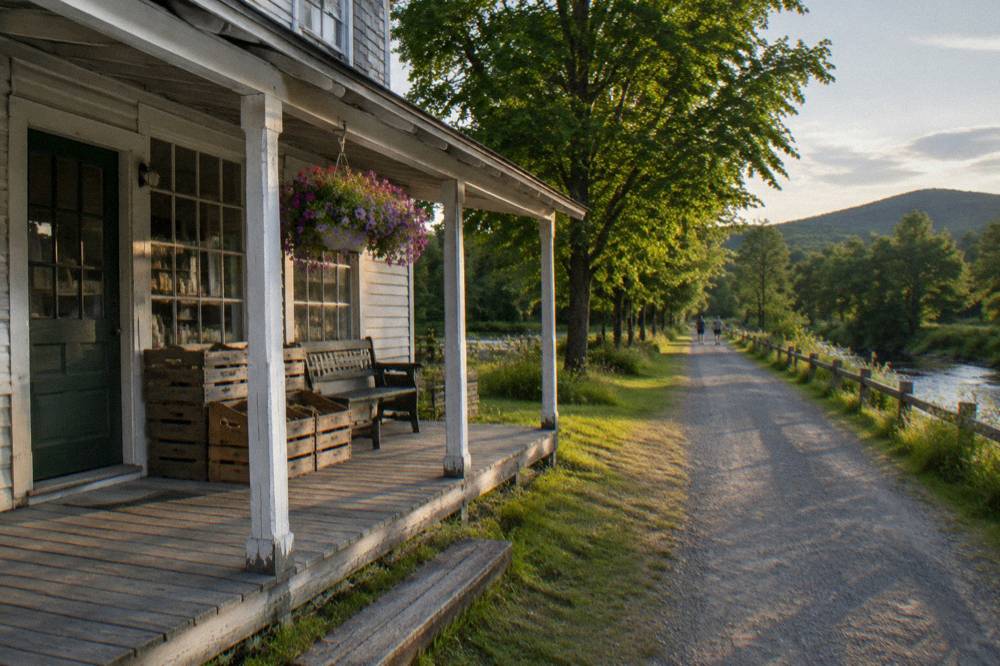
Day length matters in fall. In early to mid October, sunrise comes near 7:00 and sunset near 6:20 in northern Vermont, so a one-day attempt needs an early start and a realistic sense of how long crushed stone takes. October temperatures average a high around 56 and a low around 36, crisp conditions that suit biking but demand layers for the first and last hours.
What Bikes And E-Bikes Are Allowed On The Trail?
E-bikes are allowed on the Lamoille Valley Rail Trail, and the trail is open year-round to all non-motorized uses, including walking, horseback riding, skiing and snowshoeing. Motorized vehicles are prohibited: no ATVs, dirt bikes, motorized scooters or segways. Snowmobiles are the one exception, permitted during the VAST season from December 16 to April 15.
The e-bike allowance is what makes the trail genuinely accessible to a wide range of riders. Vermont treats e-bikes under a three-class system, with Class 1 and Class 2 capped at 20 miles per hour and Class 3 at 28, and on the LVRT e-bikes ride as bicycles. A rider who cannot comfortably pedal 95 miles, or a family with mixed fitness, can use pedal assistance to close the gap, and rental options exist in the towns along the route. The rules on other state land are different: on natural-surface mountain bike trails in state forests and parks, e-bikes are currently prohibited, a distinction worth knowing if your trip mixes rail trail and singletrack.
| Use | Allowed on the LVRT? | Notes |
|---|---|---|
| Bicycles | Yes, year-round | Surface suits tires with some tread |
| E-bikes | Yes | Treated as bicycles on this trail |
| Walking and running | Yes, year-round | Multi-use, keep right |
| Horseback riding | Yes, year-round | Yield conventions apply |
| ATVs, dirt bikes, segways, motorized scooters | No | Prohibited on the trail |
| Snowmobiles | Yes, in season | December 16 to April 15, via VAST |
| Overnight camping | No | Not permitted along the trail |
For mountain bikers tempted to compare: Kingdom Trails near East Burke offers more than 100 miles of singletrack and multi-use trail across 213 named trails, and its rules differ, with Class 1 pedal-assist eMTBs allowed on most trails there per the Kingdom Trails Association. The Kingdom Trails site carries the current trail map and pass information. The two networks are complements, not competitors: one is flowy forest singletrack, the other a 95-mile valley corridor.
How Does The LVRT Compare With Vermont's Other Long Rides?
Beyond the rail trail network, Vermont's longest continuous rides include the Island Line Trail's 14.4 miles from Burlington across the Colchester Causeway, and the Cross Vermont Trail, a patchwork of roughly 30 off-road miles plus 60 on-road miles still under construction. Kingdom Trails offers over 100 miles of singletrack, but as a network of loops rather than one continuous route.
The comparison depends on what "longest" means. As a single signed, continuous, car-free corridor, the LVRT wins outright at 95 miles. The Cross Vermont Trail is an ambitious project aiming to cross the state, but it currently mixes off-road sections with on-road routing, and new sections are still opening in stages. Riders looking for a pure off-road crossing should treat the LVRT as the finished version of that idea.
The Island Line Trail plays a different role. Its 14 miles include one of the most dramatic biking moments in the state, the causeway across Lake Champlain, where the trail narrows to a strip of crushed gravel with open water on both sides. The seasonal bike ferry that carries riders across the gap in the causeway runs roughly late May to mid October; it finished its 2026 season in mid October and returns in May 2027, so anyone planning a causeway crossing should check the schedule rather than assume service. The ferry page carries current status.
When Is The Best Time Of Year To Ride It?
The trail is open year-round, but the best biking months are May through October, with fall offering the strongest scenery: Vermont foliage peaks from late September to mid October, ridgelines turning earlier and valleys later. Winter converts the corridor to snowmobile use in season, and spring thaw can leave soft, wet sections before the surface firms up.
Fall is the marquee season, and the LVRT's valley routing has a specific advantage: because the trail follows the river at low elevation, riders move through valley foliage while the hills above them peak on their own schedule. The general pattern across Vermont is that the northern Northeast Kingdom turns first, typically around the start of October, and the southern valleys hold color into mid October. A rider on the St. Johnsbury end in the season's first week is riding through the earliest color in the state.
The trade-offs of fall are daylight and temperature. With sunrise near 7:00 and sunset near 6:20 in early October, a 50-mile day wants a prompt start. Morning frost is possible when lows sit in the mid 30s, and a rainy day on crushed stone is a slower, grittier ride than the same day on pavement. Summer gives long days and green shade along the river, at the cost of more bugs in the wetland stretches; late spring and early fall are the compromise many riders settle on.
Midweek riding is noticeably quieter than weekends, particularly during foliage season when leaf-season drivers add traffic to the roads that cross the trail. The trail itself never carries cars, but the parking lots at popular trailheads fill earlier on autumn Saturdays.
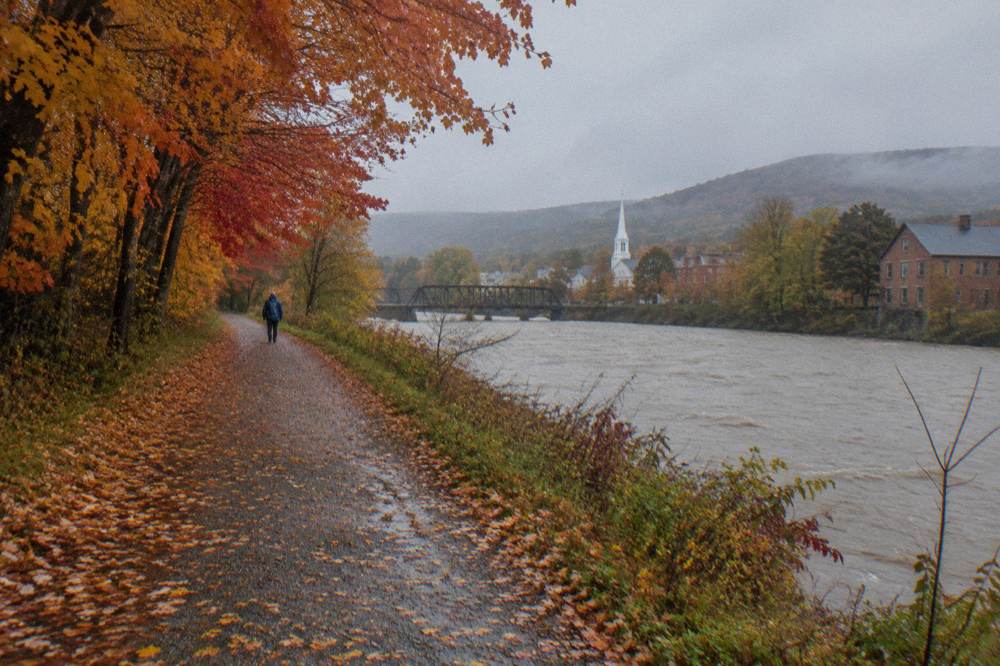
Where Should You Stay Along The Route?
Lodging along the LVRT clusters in the towns the trail passes through and in nearby bases like St. Johnsbury, Morrisville and Swanton, with inns and small hotels within reach of trailheads. Riders combining the rail trail with Kingdom Trails singletrack often stay near Lyndonville or East Burke, about 2.3 miles from the mountain bike network, where some lodgings offer bike rentals and shuttles.
The planning decision is whether to sleep on the trail or beside two trails. A pure LVRT itinerary strings inns along the corridor and moves west or east each day. A mixed itinerary bases in one place and rides different networks on different days, which suits riders who want mountain bike singletrack one morning and a 40-mile valley cruise the next. That second approach is where a lodging like The Wildflower Inn in Lyndonville earns its place: it sits 2.3 miles from Kingdom Trails, offers bike rentals and a bicycle shuttle, and sits a short drive from the LVRT's St. Johnsbury end.
For riders structuring the trip around the western end, Swanton and St. Albans put you near both the LVRT and the Missisquoi Valley Rail Trail. Burlington works as a lake-and-trail base for riders who want the Island Line Trail, the waterfront and a good choice of food in the same stay; Hotel Champlain Burlington sits steps from Waterfront Park and the bike path access there. Stowe is another option, pairing the Stowe Recreation Path with rides in the Lamoille County countryside that the rail trail also serves.
The Wildflower Inn
Lyndonville, 2.3 miles to Kingdom Trails
Offers bike rentals and a bicycle shuttle, and sits 2.3 miles from Kingdom Trails.
Check ratesWherever you base, the rule of thumb for a long ride on the trail is to plan each day between towns with services rather than between arbitrary mileage marks. A day that ends in a village with a general store and a hot meal reads very differently from one that ends at a remote trailhead.
What Should You Bring For A Long Ride On The Trail?
Bring a bike with tires suited to crushed stone, spare tubes, a pump, water for the gaps between towns, layered clothing for cool mornings, and lights if any part of the ride will run near dusk. Cell coverage varies along the corridor, and services cluster in the 18 towns rather than along the trail itself, so self-sufficiency between towns matters more than on a paved urban path.
The surface is the main gear driver. Compacted crushed stone at ten feet wide rides firm in dry conditions, but it punishes narrow tires after rain and can grab a front wheel in loose patches at the edges. Wider tires with some tread, a hybrid, or a mountain bike all match the trail well. E-bike riders should note that charging opportunities are limited to towns, so plan battery range per day segment rather than assuming top-ups.
Weather shifts fast in northern Vermont, particularly in October when the swing from morning lows in the 30s to afternoon highs in the 50s can happen in a few hours. Gloves, a wind layer and something warm for stops cover most of it. The packing question is covered in full in the what to bring on a Vermont bike trip guide, which applies to rail trail touring as much as to any guided riding.
Navigation on the LVRT is simple: the corridor is signed and there are few junctions. The volatile item is trail status. Maintenance and flood repair happen across the season, and the September Hyde Park trailhead closure is a recent example of the kind of short-notice change worth checking before a long ride.
Is The Trail Good For Beginners And Families?
Yes. Grades under three percent, a wide stone surface, and towns every few miles make the LVRT one of the most beginner-friendly long biking routes in Vermont, and the distance is entirely under the rider's control since every town is a place to shorten the day. Families ride short segments between adjacent trailheads and loop back by car or ride out and back.
The rail trail format removes the two things that intimidate new cyclists: traffic and hills. Children can ride the corridor without sharing it with cars, and an adult who has never ridden more than ten miles can do a village-to-village segment with a lunch stop and finish tired but unhurt. E-bikes widen the range further, and rental options in Burlington and along the trail towns mean nobody needs to own a bike to try it.
The honest caveats are surface and season. Loose gravel at the edges demands attention from small wheels, and a rainy-day ride is harder work than it looks on the map. In foliage season the popular trailhead lots fill early on weekends, so families arriving mid-morning on a Saturday in early October may need the next lot down the road.
For riders who want a longer progression, the LVRT is also the natural training ground for bigger projects: the full 95-mile through-ride, or a connected route that picks up the Missisquoi Valley Rail Trail near Sheldon and adds its 26.4 miles toward Richford. Few states offer a car-free corridor this long with services this evenly spaced, which is exactly why the answer to the length question matters beyond trivia.
Biking in Vermont spans everything from causeway crossings on Lake Champlain to singletrack in the Northeast Kingdom, and this site exists to help riders of every kind find their route. Whether the 95-mile corridor becomes your first multi-day ride or just a favorite afternoon segment, the Vermont Biking Tours guide library covers the rest of the state's trails, rentals and seasons.
Hotel Champlain Burlington, Curio Collection by Hilton
Burlington, near Waterfront Park
Steps from Waterfront Park and the bike path access; its listing includes free bicycle rentals.
Check ratesCommon Questions About The Longest Bike Trail In Vermont
What Is The Longest Bike Trail In Vermont?
The Lamoille Valley Rail Trail, at 95 miles from St. Johnsbury to Swanton. It is also the longest rail trail in New England, passing through 18 towns on compacted crushed stone with grades under three percent.
Can You Bike The Entire Lamoille Valley Rail Trail?
Yes. The full route has been continuous since 2023 and open end to end since then, with no closed segments reported apart from a minor trailhead closure at Hyde Park in September. Fit riders complete it in one long day; most split it over two to four days.
Are E-Bikes Allowed On The Lamoille Valley Rail Trail?
Yes, e-bikes are allowed on the trail and are treated as bicycles there. ATVs, dirt bikes, motorized scooters and segways are prohibited, and snowmobiles use the corridor only during the VAST season from December 16 to April 15.
What Kind Of Bike Is Best For The LVRT?
A bike with wider, higher-tread tires suits the compacted crushed stone best. Mountain bikes, hybrids and touring bikes all work well; narrow road tires handle the surface in dry conditions but are less forgiving after rain.
What Is The Second Longest Bike Trail In Vermont?
The Missisquoi Valley Rail Trail, at 26.4 miles from St. Albans to Richford, is the next longest rail trail. It connects to the LVRT near Sheldon, allowing riders to extend a northern Vermont trip beyond the main corridor.
Is There Anywhere To Camp Along The Trail?
No. Overnight camping is not permitted along the Lamoille Valley Rail Trail itself. Multi-day riders base the trip on inns and small lodgings in the towns the trail passes through.