What Are Some Of The Best Bike Rides In Vermont?
A shortlist of the best bike rides in Vermont by style: rail trail, waterfront, road loop, gravel and mountain bike routes, with where to stay and when to ride.
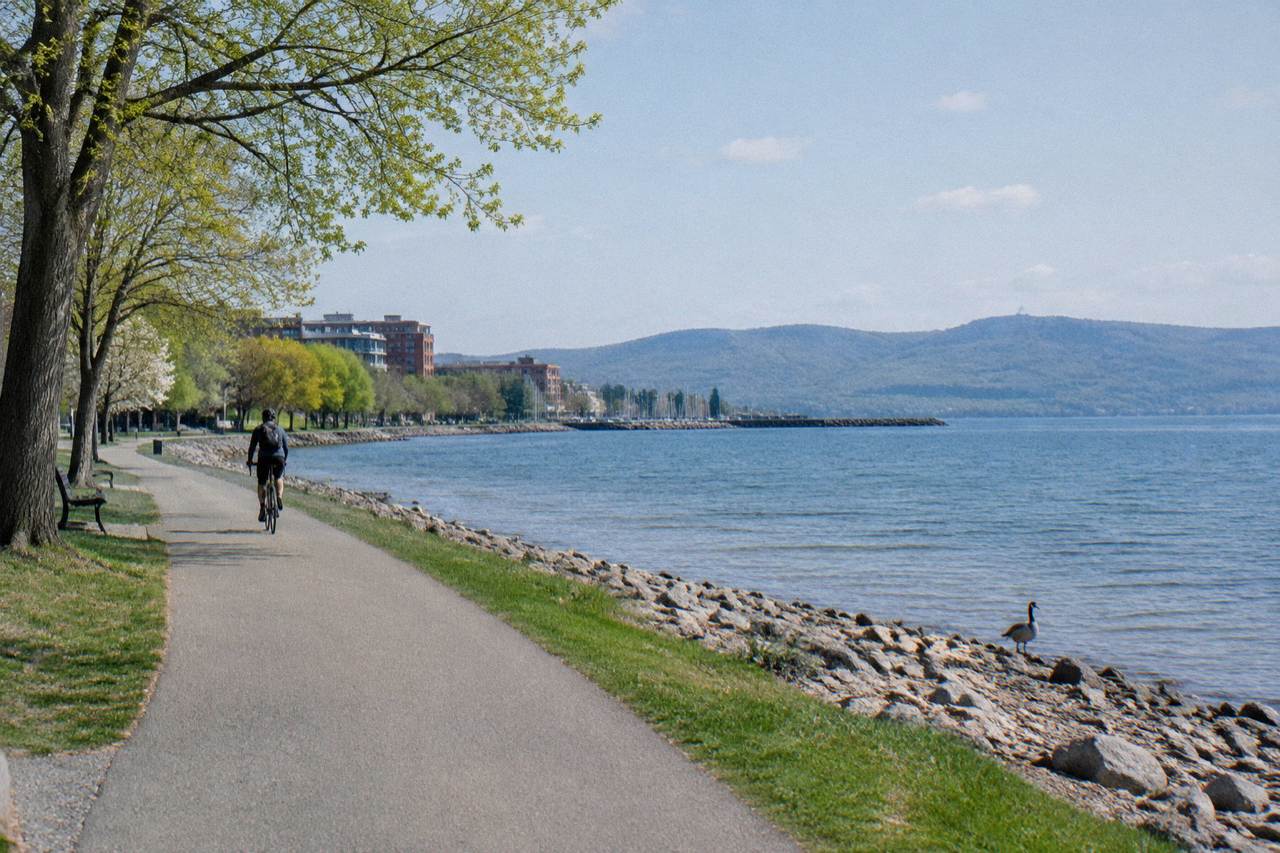
Five Signature Rides
The best bike rides in Vermont cover five styles: the Lamoille Valley Rail Trail, a 95 mile car-free route and the longest rail trail in New England; the Island Line Trail out of Burlington; the singletrack at Kingdom Trails; the road loops around Stowe and Middlebury; and the gravel climbs of the Green Mountain foothills. Each rewards a different rider, and most sit within an hour of each other.
Vermont earns its reputation among cyclists the honest way: quiet roads, converted rail corridors, and a mountain bike network that people cross the country to ride. The state is small enough that one trip can sample several kinds of biking without long drives between them. A rider can pedal a lakeside path in the morning and be on dirt singletrack by early afternoon. Before you commit to a trip built around the dirt, our guide to whether Vermont lives up to its mountain biking hype walks through the trail networks and season in plain terms.
This guide breaks the best rides down by style rather than by ranking. A rail trail rider and a gravel grinder want very different things from the same state, and pretending one list serves both produces mushy advice. Every route named here is described from verified public sources, and where a figure like a pass price is not published, this page says so instead of guessing.
The through line is variety. Few states offer a 95 mile traffic-free corridor, a causeway ride across a lake, world known singletrack, and punchy gravel climbs inside a single tank of gas. That spread is what makes biking in Vermont worth planning around.
Which Rail Trail Ride Should Top A Vermont Bike Trip?
The Lamoille Valley Rail Trail is the rail trail ride in Vermont: 95 miles from St. Johnsbury to Swanton through 18 towns, on a firm compacted stone surface about ten feet wide with grades under three percent. E-bikes are allowed, motorized vehicles are not, and the trail is open year round to non-motorized uses. Most riders tackle it in segments rather than end to end. Since this route holds the state distance record, our guide to Vermont's longest bike trail and how to ride it covers planning your segments, access points, and logistics.
The trail's official page is blunt about its standing: at 95 miles, it is the longest rail trail in New England. The surface is crushed stone over a former rail bed, which means road bikes with skinny tires are the wrong tool, but hybrid, gravel and e-bike riders roll it comfortably. The grade never pushes past three percent, so it works for beginners, seniors and anyone towing a kid trailer.
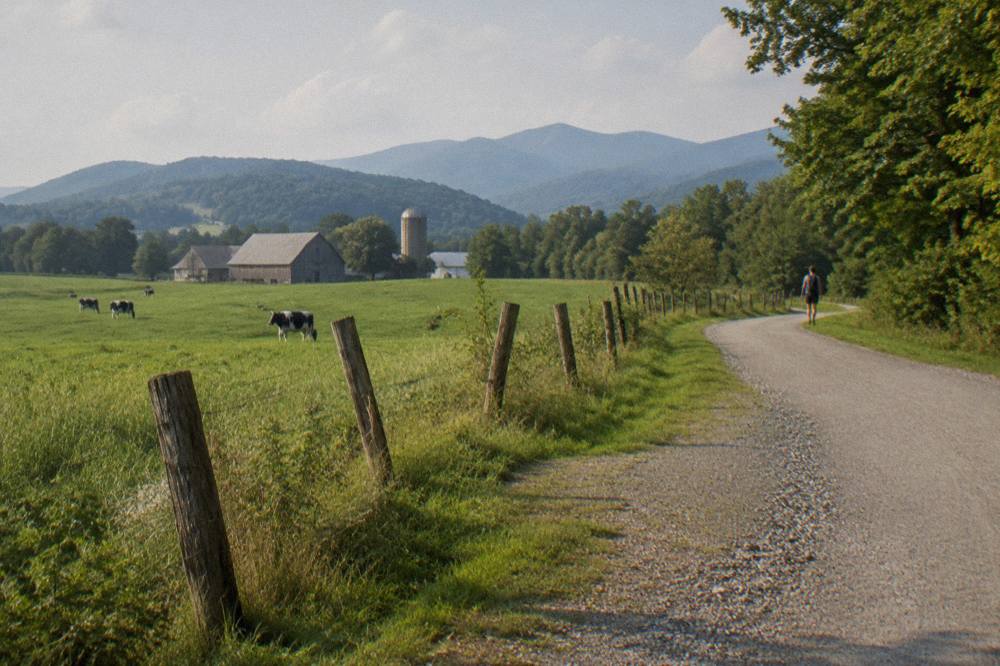
Segment choice matters more than pace. The stretch between Cambridge and Jeffersonville pairs river views with mountain backdrops, while the eastern sections near St. Johnsbury feel more wooded and remote. Trailheads sit in most of the 18 towns along the route, so a half day out and back is easy to arrange. Check trail status before a long ride, since the state trail updates page carries notices on closures and flood repairs as they happen.
The neighboring Missisquoi Valley Rail Trail adds 26.4 miles from St. Albans to Richford in the northwest, and it joins the LVRT near Sheldon, which opens a linked itinerary for riders with multiple days. Riders planning around the Lamoille corridor specifically can get more detail in the Lamoille Valley Rail Trail biking guide.
What Is The Best Waterfront Bike Ride In Vermont?
The Island Line Trail is Vermont signature waterfront ride, about 14.4 miles from Burlington out to South Hero, including roughly 5 miles of crushed gravel across the Colchester Causeway with Lake Champlain on both sides. The Burlington Greenway portion is about 8 miles of paved path, and the Local Motion bike ferry carries riders across the causeway gap in season.
Riding a bike on a narrow gravel ribbon with open water to the left and right is the kind of experience that usually requires a ferry ticket to an island nation. Here it starts a few minutes from downtown Burlington. The paved Greenway section rolls through waterfront parks, and then the path leaves land behind on the causeway.
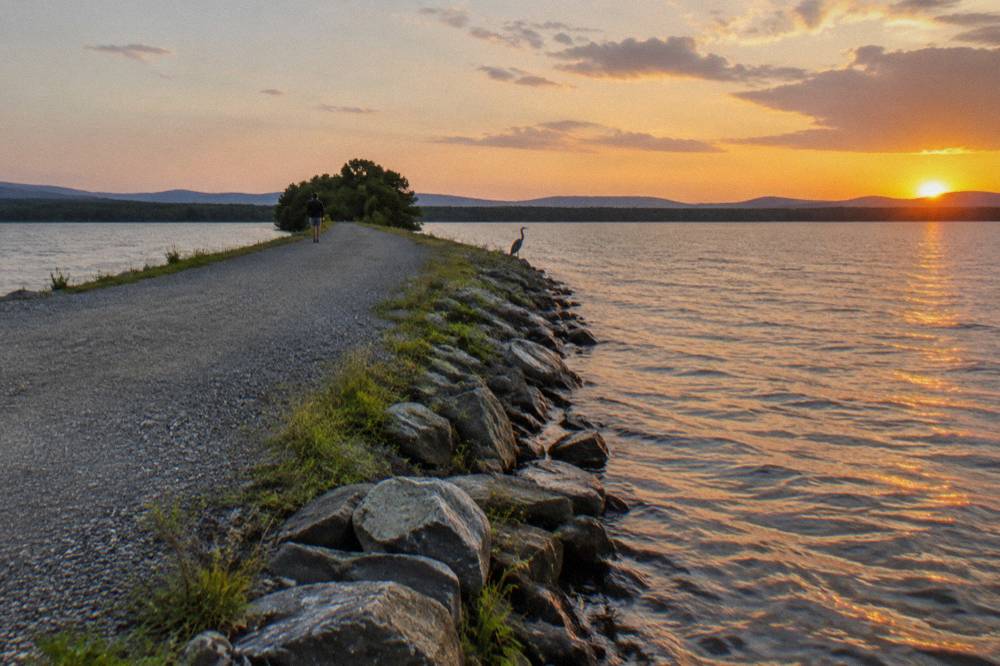
The catch is the gap. A channel in the causeway blocks wheeled travel, and the Local Motion bike ferry bridges it, running roughly late May to mid October with a donation based fare. Outside that window the ride ends at the gap. Riders should check the ferry page before planning a fall or spring attempt. The Lake Champlain bike ferry schedule covers the timing in detail, and the Burlington bike path guide handles the city end.
Burlington makes the logistics easy. Local Motion runs a Trailside Center at 1 Steele Street, right on the path, renting conventional bikes, Class 1 e-bikes, adaptive bikes and kids options, with reservations recommended. Riders who want the full picture of that corridor can read the Island Line Trail biking guide.
Where Are The Best Mountain Bike Rides In Vermont?
Kingdom Trails in East Burke is the mountain bike answer, with 213 trails and more than 100 miles of non-motorized singletrack and multi-use trail across working farmland and forest. The summer riding season runs when conditions allow, typically from May to about the end of October, and passes are required, bought online or at the Welcome Center on VT Route 114. Once you've got your pass sorted, our guide to planning the perfect Kingdom Trails riding trip covers where to stay and what else to ride in the area.
East Burke is the reason mountain bikers put Vermont on maps. The network rides through pastures with cows watching from the other side of the fence, and the flow trails have a reputation that draws riders from across the country. 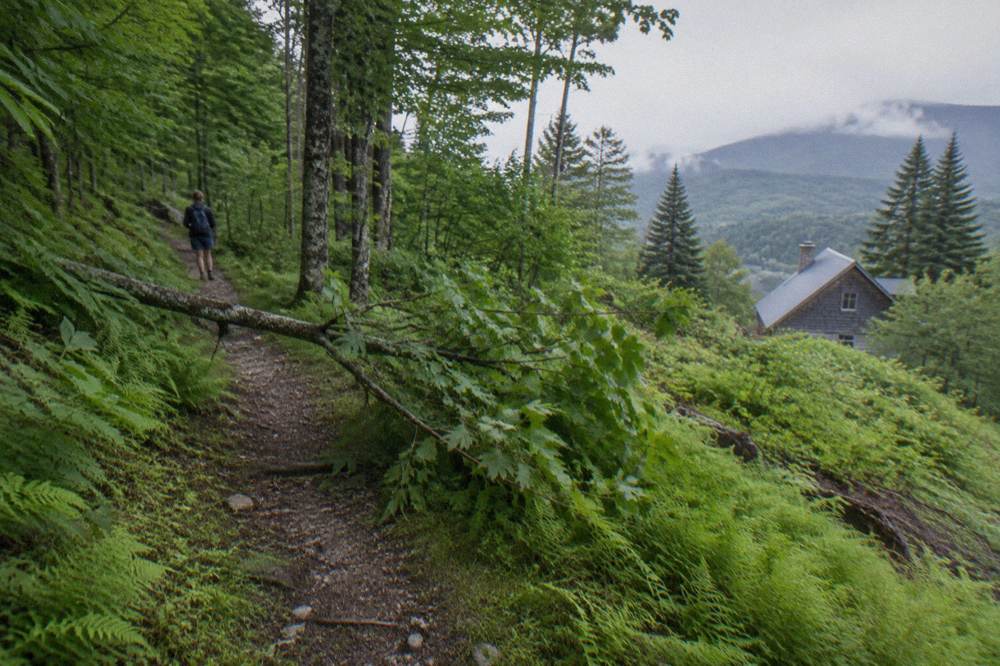
Practical notes: passes are purchased through the Kingdom Trails Association store or in person at the Welcome Center, and pass prices are not published in a form this site can verify, so check the association's store for current pricing. Class 1 pedal-assist eMTBs are allowed on most trails per the Kingdom Trails Association, with the trail map showing any landowner exclusions. Rentals cluster nearby at East Burke Sports, Kingdom Bike Rentals, Village Sport Shop and Rifugio Darling Hill, though rental pricing is likewise something to confirm directly.
The state land picture differs. On Vermont state forests and parks, e-bikes are currently prohibited on non-motorized natural surface trails and allowed on roads and multi-use paths, per the Vermont Mountain Bike Association. The deeper dive on where to ride and rent is in the Kingdom Trails mountain biking guide, and broader coverage lives in mountain biking in Vermont.
What Are The Best Road Cycling Loops In Vermont?
Stowe and Middlebury anchor the best road riding in Vermont. Stowe pairs the paved Recreation Path with road loops over Mountain Road and the surrounding passes, while Middlebury sits on the Trail Around Middlebury loop with quiet Addison County roads radiating out. Manchester rounds out the south with resort-based road rides.
Road cycling in Vermont is about narrow backroads, dairy farms and climbs that arrive without warning. Many rural roads carry limited or no shoulder, so riders stay as far right as is safe and plan routes that favor low traffic county roads over the numbered highways. Route 100 is scenic and famous, and it also carries the most leaf season traffic of any road in the state, so midweek and off peak hours matter there.
Stowe works because the riding starts at the door. The Recreation Path is a separate paved trail through town, and the road loops around the village and up Mountain Road give road riders real terrain without needing to drive to a start. The Stowe Recreation Path and Lamoille County biking guide maps the combinations. Middlebury offers the Trail Around Middlebury, a loop close to town, plus the flat to rolling terrain of the Champlain valley to the west.
Riders who want a supported version of this terrain can look at guided and self-guided operators. VBT Bicycling Vacations is the long established name and runs trips across the state, and Lamoille Valley Bike Tours and Vermont Mountain Bike Tours also operate locally. Booking happens directly with the operator, and this site sells nothing. The guided versus self-guided comparison walks through that choice. If your trip lines up with autumn, the comparison of bike, bus, and train fall foliage tours in Vermont covers which setup suits leaf-peeping best.
Where Does Gravel Riding In Vermont Shine?
Gravel riding in Vermont centers on the Green Mountain foothills and towns like Woodstock, West Windsor and the routes around Peru and Goshen, where Class 4 roads and forest tracks climb hard. Woodstock also offers the Mount Tom carriage roads as a softer gravel option, and the state's gravel event calendar draws riders through late summer and fall.
Vermont gravel is honest work. The state's network of unpaved town roads means a rider can string together hours of dirt without repeating a stretch, and the climbing totals pile up fast. The terrain around West Windsor has become a reference point for the discipline, host to a well known 55 mile gravel event with roughly 7,000 feet of elevation gain each August.
Woodstock is the gentler entry. The carriage roads on Mount Tom roll through forest with gradients that a fit rider on any bike can manage, and the village sits close to gravel loops suitable for a first outing. Further south, the roads around Peru and Goshen serve steep, remote gravel best ridden with supplies and a plan. Riders comparing surfaces can start with road versus gravel versus e-bike in Vermont.
Two rules matter for gravel planning. First, e-bike access on public land depends on the surface: state land currently bars e-bikes from non-motorized natural surface trails, per the Vermont Mountain Bike Association, while rail trails like the LVRT allow them. Second, navigation on Class 4 roads fails fast without a GPS file or a good map, since signage is minimal and conditions vary from hardpack to mud within a mile. The Vermont gravel bike tours guide goes deeper.
Where Should You Stay To Reach The Best Rides?
Match the base to the riding style: Burlington for the Island Line and waterfront path, Stowe for the Recreation Path and road loops, and the Lyndonville and East Burke area for Kingdom Trails. Each area has lodging positioned for cyclists, and the right base removes the daily drive entirely, letting rides start from the door.
Burlington is the waterfront pick. Hotel Champlain Burlington, Curio Collection by Hilton sits near Waterfront Park with direct bike path access, and its listing includes free bicycle rentals, which removes the logistics of bringing or renting bikes for the path. A short distance away, Hotel Vermont sits about 0.2 miles from the Burlington Bike Path in the lake side downtown, a walkable option for riders who want the Greenway at the doorstep.
Stowe is the road and path base. Sun & Ski Inn And Suites positions riders for the Stowe Recreation Path and the road loops around the village, and the Lodge at Spruce Peak serves riders planning a day on the village path and Mountain Road. For Kingdom Trails, The Wildflower Inn in Lyndonville sits 2.3 miles from the trail network, offers bike rentals and runs a bicycle shuttle, which is about as close to turnkey as a mountain bike trip gets.
Hotel Champlain Burlington, Curio Collection by Hilton
Burlington, near Waterfront Park
Steps from Waterfront Park and the bike path access; its listing includes free bicycle rentals.
Check ratesThe pattern repeats elsewhere in smaller form. Woodstock Inn & Resort puts riders in the village for the gravel loops and the Mount Tom carriage roads, while Swift House Inn and Middlebury Inn both sit in Middlebury for the Trail Around Middlebury loop. Down south, The Equinox Golf Resort & Spa serves as the Manchester base for southern Vermont road rides. The point is that Vermont rewards picking one region per trip rather than hopping.
When Is The Best Time Of Year For These Rides?
The core riding season runs May through October, with foliage season from late September to mid October the most scenic and busiest window. Foliage peaks earlier on northern ridgelines, around late September, and later in southern valleys, toward mid October, and October riding means highs near 56, lows near 36, and sunset creeping toward 6 in the evening.
Timing in Vermont is a foliage question as much as a weather one. The summer months give long days and green tunnels of trees, with the tradeoff of occasional heat on exposed climbs. September quiets the backroads once school returns. Then late September arrives and the state fills up, because the color show is genuinely worth planning around, with the Northeast Kingdom turning first and the southern valleys holding green the longest.
Riders chasing color should read the wind, not the calendar: a storm strips a region in a day. The general pattern holds well enough for planning, ridgelines one to two weeks ahead of the valleys, and the statewide peak window falling roughly in the first third of October in a typical year. The best time to bike in Vermont guide breaks this down by riding style.
October also shortens the day. Early to mid October sunrise sits near 7 and sunset near 6:20, so a long gravel loop that starts after lunch ends in the dark without lights. Morning frost is common in the valleys, which argues for a later start and layers that shed. Riders weighing a late trip can check whether mid October is too late for foliage.
What Should You Know Before Riding In Vermont?
Three things shape every Vermont ride: trail status is volatile, so check conditions with the managing organization before long rides; rural roads are narrow with limited or no shoulders, so route on quiet roads and ride predictably; and e-bike rules differ by surface, with Class 1 pedal assist allowed on rail trails and most of Kingdom Trails but not on natural surface trails on state land.
The status point deserves emphasis because it changes plans. The LVRT carries notices for closures and flood repairs on the state trail updates page, Kingdom Trails posts conditions and links to real time updates, and the bike ferry has a defined season that ends in the fall. A ten minute check the night before beats a truncated ride.
| Ride | Style | Distance | Surface | E-bike Access |
|---|---|---|---|---|
| Lamoille Valley Rail Trail | Rail trail | 95 miles | Compacted crushed stone | Allowed |
| Island Line Trail | Waterfront path | About 14.4 miles | Paved plus gravel causeway | Class 1 allowed |
| Kingdom Trails | Mountain bike | 100+ miles of trail | Singletrack and multi-use | Class 1 eMTB on most trails |
| Missisquoi Valley Rail Trail | Rail trail | 26.4 miles | Compacted stone | Allowed on rail trail rules |
| Mount Tom carriage roads | Gravel | Loop options | Carriage road | Check state land rules |
E-bike riders should internalize the split. Vermont treats e-bikes as bicycles under its three class system, but land managers layer their own rules on top: the LVRT explicitly allows e-bikes, Kingdom Trails permits Class 1 pedal-assist eMTBs on most trails with map exclusions, and state forests and parks bar them from non-motorized natural surface trails. The Vermont Mountain Bike Association tracks the policy and any proposed changes.
| Region | Best For | Anchor Ride | Riding Season |
|---|---|---|---|
| Burlington and Champlain Islands | Waterfront path riding | Island Line Trail | May to mid October for ferry |
| Northeast Kingdom | Mountain biking | Kingdom Trails | Typically May to end of October |
| Lamoille Valley | Long rail trail days | LVRT segments | Year round, best May to October |
| Stowe | Road loops and path | Stowe Recreation Path | May to October |
| Woodstock and south | Gravel climbing | Mount Tom carriage roads | May to October |
Helmets are simple advice regardless of statute: wear one. This site does not print Vermont helmet law specifics or passing distance figures because the official sources did not verify cleanly, and guessed legal details are worse than none. What is safe to say is that drivers on Vermont roads are generally accustomed to cyclists, and riding visibly and predictably matters most on the narrow town roads where there is no room for ambiguity.
Which Ride Should You Pick First?
Pick by what kind of cyclist you are: beginners and families should start on the Burlington Greenway or a short LVRT segment, road riders on the Stowe loops, gravel riders on the Woodstock carriage roads, and mountain bikers at Kingdom Trails. One trip cannot cover all five styles well, so choose a region, base there, and ride it properly.
The mistake first time visitors make is treating Vermont as a checklist. The state rewards depth: a weekend in East Burke rides differently from a weekend in Burlington, and mixing both means driving more than pedaling. Match the trip to the rider, not the other way around.
For a mountain bike weekend, riders who would rather not shuttle themselves can look at a stay near the network: The Wildflower Inn near Kingdom Trails sits 2.3 miles from the trailhead with rentals and a bicycle shuttle on site. Road riders heading for the Recreation Path have a similar door to trail option in Sun & Ski Inn And Suites in Stowe, positioned for the village path and the surrounding road loops.
The Wildflower Inn
Lyndonville, 2.3 miles to Kingdom Trails
Offers bike rentals and a bicycle shuttle, and sits 2.3 miles from Kingdom Trails.
Check ratesRiders who want a fuller comparison of terrain types before committing can start with how to choose a Vermont bike tour for guided options, or Vermont bike trails by difficulty for route selection by fitness. Families and older riders have a dedicated resource in Vermont bike tours for beginners and seniors. Whatever the choice, this site, Vermont Biking Tours, exists to help riders plan it well.
Common Questions About The Best Bike Rides In Vermont
What Are Some Of The Best Bike Rides In Vermont?
The Lamoille Valley Rail Trail for distance, the Island Line Trail for waterfront riding, Kingdom Trails for mountain biking, the Stowe area for road loops, and the Woodstock carriage roads and southern hills for gravel. Together they cover every common riding style inside one small state.
What Is The Longest Rail Trail Ride In Vermont?
The Lamoille Valley Rail Trail, at 95 miles from St. Johnsbury to Swanton through 18 towns. It is the longest rail trail in New England, open year round to non-motorized uses, with e-bikes allowed and ATVs and dirt bikes prohibited.
Can You Ride A Bike Across Lake Champlain From Burlington?
Partly. The Island Line Trail runs about 14.4 miles from Burlington toward South Hero, including roughly 5 miles of causeway, but a channel gap stops wheels. The Local Motion bike ferry crosses that gap during its season, roughly late May to mid October, so check its schedule before riding.
Do You Need A Pass To Ride Kingdom Trails?
Yes, passes are required and bought online through the Kingdom Trails Association store or in person at the Welcome Center on VT Route 114 in East Burke. Pass pricing is not published in a verifiable form here, so confirm current prices at the association store.
Are E-Bikes Allowed On Vermont Bike Trails?
It depends on the surface. E-bikes are allowed on the Lamoille Valley Rail Trail and Class 1 pedal-assist eMTBs are allowed on most Kingdom Trails routes, but e-bikes are currently prohibited on non-motorized natural surface trails on Vermont state land, per the Vermont Mountain Bike Association.
When Is The Best Month For Bike Riding In Vermont?
May through October works, with late September to mid October the foliage window: northern ridgelines peak first and southern valleys last. October brings highs near 56 and lows near 36, with sunset moving toward 6 in the evening, so plan long rides with light and layers.