What Are Some Good Fall Foliage Tours In Vermont?
Bike-led fall foliage tours in Vermont compared with bus and train leaf-peeping, with routes, timing, operators and how to book directly.
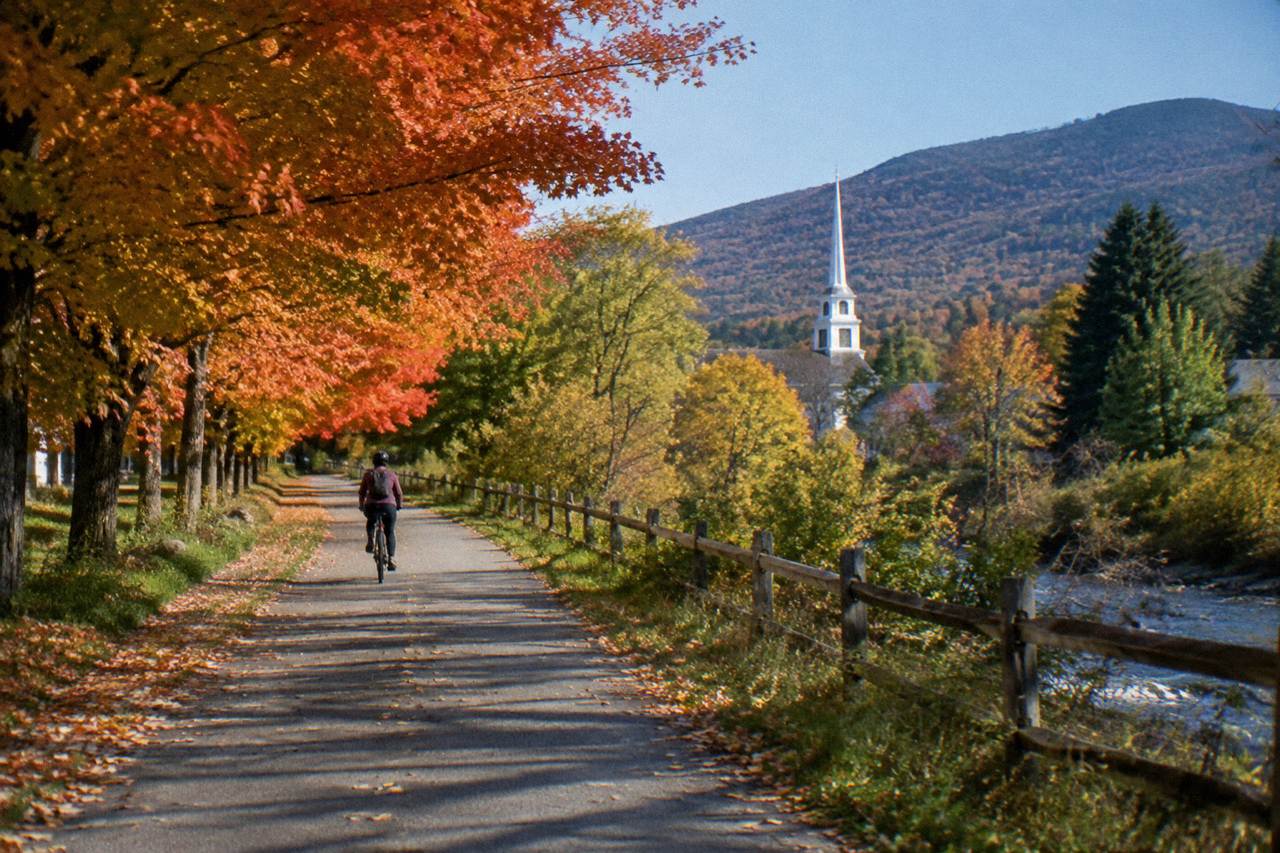
What Are Some Good Fall Foliage Tours In Vermont?
Vermont's foliage window is short and famous, and almost everyone who visits for it sees the state the same way: from a car, a tour bus, or a scenic train. All three work. But the riders get a different state. A bike tour in October puts you on rail trails and low-traffic backroads where the maple canopy closes overhead, the air smells of wet leaves and woodsmoke, and the only schedule is daylight. This article compares the realistic foliage tour formats in Vermont, bike-led and otherwise, and explains how each one is actually booked, since the operators who run them sell direct and none of them list through this site. For riders sold on the idea, the full breakdown of Vermont's fall foliage bike tours covers timing, routes, and real costs.
Tour Options By Format
The good fall foliage tours in Vermont fall into three formats: guided and self-guided bike trips from operators like VBT Bicycling Vacations and Great Bike Tours, scenic train rides on heritage railroads, and van or bus tours that follow foliage hotspots such as Route 100 and the Northeast Kingdom. Bike trips suit travelers who want to be inside the color; buses and trains suit travelers who want the views without the effort. All are booked directly with the operator. If you'd like to mix formats rather than pick just one, the three-day Vermont fall itinerary with a bike day built in shows how to combine a ride with driving and train segments.
The bike-led option is the one this site exists for, and it is genuinely well matched to foliage season. Vermont's riding is built around quiet town highways, converted rail corridors, and village-to-village road loops, and in early October those corridors are exactly where the color concentrates: river valleys lined with sugar maples, ridge roads with long views across rolling forest, and small towns that hold their foliage festivals on weekends. A bike moves slowly enough to register all of it, and fast enough to reach a new valley every day.
The train and bus formats answer a different question. They cover more ground, they run regardless of fitness, and they are weatherproof in a way a bike week is not. Many visitors actually combine the two: a few days of riding bookended by a scenic train trip or a driving loop. That mix works well in Vermont because the state is small, and the distance between a rail trail trailhead and a covered bridge byway is often twenty minutes.
What none of the formats can do is guarantee peak color on a specific date. The window moves. The sections below cover what each tour type actually delivers, when to go, what a week costs in structure if not in dollars, and how to book. For the deeper route-by-route picture, the fall foliage bike tours guide is the companion page to this one.
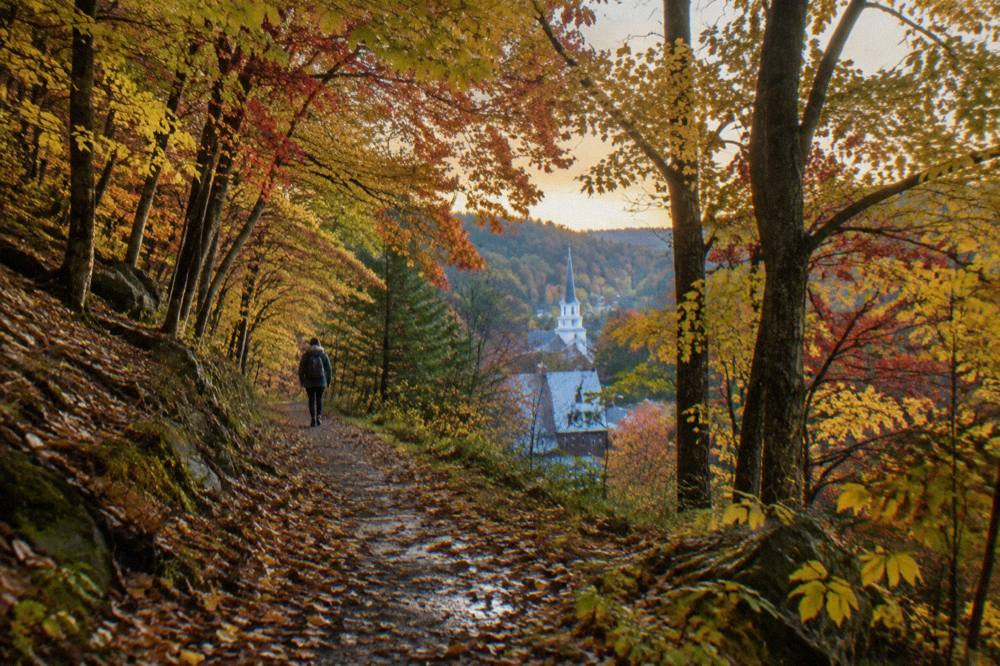
Bike Tour Or Bus Tour For Vermont Foliage?
A bike tour is the better choice for immersion, quiet roads, and villages at bike speed; a bus or van tour is better for maximum coverage, mobility limits, or tight schedules. Bikes reach places buses cannot, including rail trails like the Lamoille Valley Rail Trail and causeways like the Island Line. Neither format is cheap or expensive by definition, since prices vary by operator and are listed on their own sites.
The core trade-off is depth against reach. A bus tour can sweep Route 100, Smugglers Notch, and a couple of covered bridges between breakfast and dinner, and for a traveler with one free day that is a fair deal. What it cannot do is stop where the light is good, linger where the sugarbush is thickest, or take the dirt lane that loops behind the church. A bike tour does all three by default, because the pace is eight to fifteen miles an hour rather than fifty.
Weather decides more than travelers expect. October in Vermont averages a high around 56 and a low around 36, which is excellent riding temperature once you are moving and cold at the trailhead at seven in the morning. Rain happens. A bus tour shrugs it off; a bike trip needs rain shells and a flexible attitude. Most bike operators running in foliage season build a support van into the trip precisely for this, so a rider can sit out a wet afternoon and rejoin the route later.
The third factor is where the color actually is. Buses chase the famous roads, which means sharing them with everyone else chasing the famous roads. Backroad cycling routes and rail trails sit one valley away from the congestion, often with better color and a fraction of the traffic. Riders consistently report that midweek riding on Vermont's secondary roads is close to solitary, even at peak foliage.
| Format | Best for | Typical reach per day | Foliage experience | Weather sensitivity |
|---|---|---|---|---|
| Guided bike tour | Immersion, support van, group pace | 20 to 40 miles | Inside the canopy, backroads and rail trails | High, mitigated by van |
| Self-guided bike tour | Independent riders, own schedule | 25 to 45 miles | Same roads, luggage moved for you | High, no van unless added |
| Bus or van tour | Coverage, mobility, one-day visits | 100+ road miles | Viewed from iconic byways | Low |
| Scenic train | Families, relaxed sightseeing | Fixed route | Long valley views from a seat | Very low |
What Does A Fall Bike Tour In Vermont Actually Include?
Most guided Vermont bike trips include lodging each night, breakfasts and most dinners, a support van or luggage transfer, route notes, and one or two leaders; self-guided versions drop the leaders but keep the lodging, luggage moves, and maps. Bike rental is usually available as an add-on, including e-bikes. Operators publish exact inclusions and prices on their own sites, and every booking is made directly with them, not through any intermediary site.
The structure matters more in foliage season than at any other time of year, because the week has to be in the right place at the right time. Guided departures are fixed-date: the operator picks the week, the inns, and the daily routes, and you pick the departure. That is a real advantage when the goal is peak color, because an operator running foliage trips every October knows which valleys turn first and schedules accordingly. If the northern hills have already dropped, a guided group can shift a day southward in a way a self-guided rider with prepaid inns cannot.
Self-guided trips trade that flexibility for independence. You ride at your own pace, stop where you like, and skip the group dynamic entirely. The operator still books the inns, moves your bags between them, and hands you cue sheets or a GPS file. In Vermont this format works especially well because the classic riding regions, the Champlain Valley, the Lamoille Valley, the Northeast Kingdom, are compact enough that daily stages stay reasonable and the inn-to-inn logic holds together.
The questions worth asking any operator before booking are concrete. What is the average daily mileage and total climbing? What happens if a rider cannot finish a day? Are e-bikes available, and of what class? How many nights are in each town? What is the cancellation policy if the foliage timing misses? Operators answer these readily; a reluctance to answer is itself information.
Which Vermont Operators Run Foliage Bike Trips?
VBT Bicycling Vacations runs guided and self-guided biking vacations in the state, including foliage-season departures; Great Bike Tours, Lamoille Valley Bike Tours, and Vermont Mountain Bike Tours also run trips in the state. Local Motion, a Burlington nonprofit, is not a tour operator but rents bikes and runs the Trailside Center on the lakefront path. All bookings go through the operator directly.
VBT runs trips in the state it is named for, as well as destinations far beyond it. Its foliage-season departures follow the inn-to-inn and center-based formats described above, with leaders, vans, and route support on guided versions. The VBT site lists current itineraries, dates, and prices, which shift by departure and by season, so check the live pages rather than any secondhand figure.
The smaller operators each cover a different slice of the state. Lamoille Valley Bike Tours works the corridor around the Lamoille Valley Rail Trail, the 95-mile crushed-stone path that is the longest rail trail in New England, running from St. Johnsbury to Swanton through eighteen towns; a foliage trip based on that corridor swaps traffic entirely for tree tunnel. Mountain bikers head to the East Burke area, home to Kingdom Trails, where the Kingdom Trails network holds more than a hundred miles of non-motorized singletrack and multi-use trail. Great Bike Tours runs fall foliage trips in Vermont. The rest of the planning pages sit on Vermont Biking Tours.
Local Motion sits in a different category and is worth knowing about for the Burlington end of any trip. The organization's Trailside Center at 1 Steele Street rents conventional bikes, Class 1 pedal-assist e-bikes, adaptive bikes, and kids' bikes right on the lakefront path, and reservations are recommended in busy foliage weeks. It also operates the seasonal bike ferry across the Colchester Causeway gap; the ferry runs late May to mid October on a donation basis, so check its status before planning an Island Line crossing in autumn.
This site sells nothing and books nothing; the operators above are named so you can go to them directly.
Where Should A Foliage Bike Trip Be Based?
The strongest foliage riding bases in Vermont are Burlington and the Champlain Islands for waterfront paths, Stowe and the Lamoille Valley for inn-to-inn road trips on the rail trail corridor, Woodstock for gravel loops and carriage roads, and East Burke for the Kingdom Trails mountain bike network. Each base pairs a distinct riding style with a distinct foliage landscape, from lake-level color to ridge maple. For route ideas within each of these riding styles, the shortlist of top Vermont bike rides by terrain and region covers everything from rail trail cruises to mountain singletrack.
Burlington is the easiest entry point. The city's lakefront path connects to the Island Line Trail, about 14.4 miles from the waterfront toward South Hero, with an eight-mile paved greenway segment and roughly five miles of crushed gravel on the Colchester Causeway. In early October the causeway rides out over open water with the Adirondacks on one side and Vermont color on the other, and it is flat enough for any rider. Riders wanting the practical details can start with the Burlington bike path guide.
Stowe anchors the classic road-riding foliage trip. The Stowe Recreation Path runs through town, and the road loops around the village and up Mountain Road give road riders graduated climbing with valley color below. A Stowe base also puts the Lamoille Valley Rail Trail within reach for flat days. For overnighting close to the riding, the Sun & Ski Inn And Suites in Stowe works as a Stowe base for the recreation path, so morning rollouts skip the drive.
Woodstock serves the gravel crowd. The village is the natural base for the area's gravel loops and the carriage roads on Mount Tom, where wide dirt lanes climb through hardwood forest that peaks gold. The Woodstock Inn & Resort in the village center is the classic stay for that riding, with the loops starting effectively at the door.
East Burke is the mountain bike answer. The Kingdom Trails network holds 213 mapped trails and passes are bought through the Kingdom Trails Association's online store or at the Welcome Center on Route 114 in East Burke; check the Kingdom Trails site for current pass prices, since none are listed as fixed here. The network's summer season typically runs from May conditions to about the end of October, which places foliage squarely inside it. The Wildflower Inn in Lyndonville is 2.3 miles from the trails, offers bike rentals and a bicycle shuttle, and sits in the part of the state where foliage peaks first.
| Base town | Riding style | Signature foliage route | Who it suits |
|---|---|---|---|
| Burlington | Flat path riding | Island Line Trail and Colchester Causeway | Families, casual riders, first trips |
| Stowe | Road and recreation path | Village loops and Mountain Road climbs | Road riders, mixed-ability couples |
| Woodstock | Gravel and carriage roads | Mount Tom carriage roads and gravel loops | Gravel and mixed-surface riders |
| East Burke | Mountain bike singletrack | Kingdom Trails network, 100+ miles | Mountain bikers, all levels by trail choice |
| Middlebury | Rail trail and town loop | Trail Around Middlebury | Riders wanting a single-town stay |
The Wildflower Inn
Lyndonville, 2.3 miles to Kingdom Trails
Offers bike rentals and a bicycle shuttle, and sits 2.3 miles from Kingdom Trails.
Check ratesWhen Is Peak Foliage For A Vermont Bike Trip?
Peak color in Vermont runs roughly from late September to mid October, with the northern Northeast Kingdom ridgelines turning first, central Green Mountain valleys peaking around the first week of October, and southern valley towns holding color into mid October. A bike trip booked across the first ten days of October has the best odds of catching peak somewhere along the route, since riding north to south chases the color down the state.
The gradient is the whole trick. Color moves downhill and southward: high ground in the northeast turns ten days to two weeks before the low valleys of the south. A rider in East Burke in the last week of September sees ridge maples at full red while the valleys are still green; a rider in the same valleys ten days later sees them gold. A one-week trip that starts in the Kingdom and finishes in the southern hills is effectively surfing the peak.
Timing questions come up often enough that this site keeps a dedicated answer: the piece on what month is best for foliage in Vermont breaks the calendar down, and the regional peak dates guide maps the gradient town by town. The short version for tour planning is that the first week of October is the statistically safest single week statewide, and mid October is late but not lost, since southern valleys regularly hold strong color past the statewide average.
Daylight shapes the riding day as much as the color does. In early to mid October Vermont sees sunrise near seven and sunset near six twenty, which pushes the comfortable riding window toward the middle of the day and makes golden-hour photography easy to catch from the saddle at both ends. Mornings are cold, often near freezing, so tour itineraries tend to roll out late and ride through the warm hours.
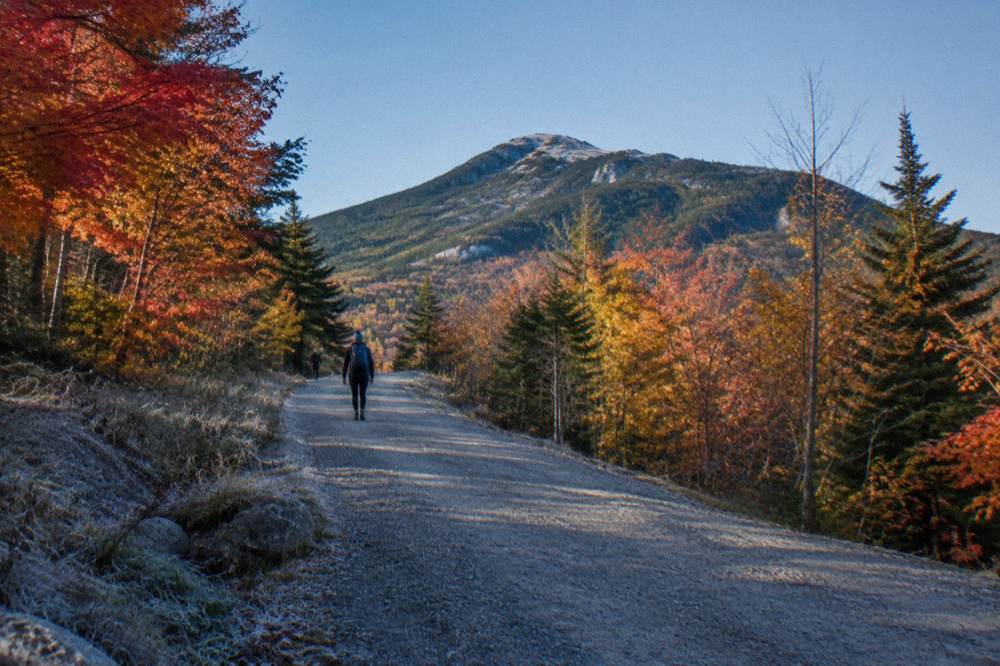
Can You Ride A Rail Trail For The Foliage?
Yes, and for many riders it is the best foliage format in the state. The Lamoille Valley Rail Trail runs 95 miles from St. Johnsbury to Swanton on firm compacted crushed stone with grades under three percent, e-bikes are allowed, and its eighteen towns make it a natural inn-to-inn spine. The Missisquoi Valley Rail Trail adds 26.4 miles from St. Albans to Richford, joining the LVRT near Sheldon.
The Lamoille Valley Rail Trail is the headline. The state rail trails page describes it as the longest rail trail in New England, open year-round to non-motorized uses, with ATVs, dirt bikes, and motorized scooters prohibited and snowmobiles permitted only in the winter club season. The surface is a ten-foot-wide ribbon of compacted stone with shallow rail grades, which makes it rideable on any bike including e-bikes and many adaptive setups. In October it runs through river valley hardwoods for its whole length, and a rider covering even two or three towns of it passes through continuous color without sharing a lane with a car.
The practical foliage advantage is timing stability. Rail corridors sit at valley elevation, and valley color arrives a few days after the ridgelines and holds a few days longer. That widens the workable window: a trail-based trip in the second week of October is far safer than a ridge-road trip the same week. The corridor is also flat enough that mileage expectations can be set high without fitness anxiety, and e-bike riders face no restrictions, since e-bikes are allowed on the LVRT per the state's trail rules.
Check trail status before a long ride. Segments occasionally close for maintenance or flood repair, and trailhead work has caused short detours in past seasons; the state trail updates page carries current conditions.
What Do Scenic Trains Offer In Foliage Season?
Vermont's heritage and scenic railroads run fall foliage trips through river valleys and mountain cuts that no road follows, offering seated, weatherproof leaf-peeping with commentary, typically one to three hours per ride. Trains suit families, travelers with limited mobility, and anyone pairing a riding day with a rest day. Schedules and fares are seasonal and sold on each railroad's own site.
The honest comparison is that a train gives you Vermont's foliage at the speed and vantage rail was built for: tight river cuts, ledges above streams, and corridors where the forest presses close because nothing else was ever built there. Those alignments are precisely the ones bikes also love, which is why so much of the state's riding is on converted rail. A train ride is in effect a seated preview of a rail trail.
For a bike traveler, the train fills two gaps. First, it covers a rest day well: many inn-to-inn riders build one zero day into a week, and a scenic train fills it without a car. Second, it extends the range of non-riders in a mixed group, so a couple where one partner rides and the other does not can still share the foliage week. The bus formats work the same way, and a family can split a day between a morning ride on a flat path and an afternoon train through the hills the bikes did not reach.
The limitation is fixed geometry. A train goes where the rails go, once or twice a day, on a schedule set months ahead, and it cannot chase the color the way a bike tour with a van can. Book fall departures early, because foliage weekends sell the trains out first.
How Much Does A Foliage Tour In Vermont Cost?
Tour prices are set by each operator and change by departure, inclusions, and season, so no reliable fixed figure can be quoted here; guided bike vacations generally cost more than self-guided ones because leaders and vans are included, buses and trains are the lowest-cost formats, and lodging is the largest line in any multi-day Vermont trip. Check each operator's live listing or site for current pricing before comparing.
What can be said honestly is how the money is structured. A guided bike trip bundles lodging, most meals, support, route leadership, and often bike rental into one number, so the sticker looks high until you unbundle it against what a self-booked week of Vermont inns, dinners, and daily rides would cost in October, which is the state's highest-demand window for rooms. Self-guided trips strip the leaders and van from the price and are typically meaningfully cheaper. Bus day tours and train rides are priced per outing and involve no lodging at all unless you add it yourself.
The planning ranges travelers should hold in their heads are the incidentals. Foliage-season inn rooms in the popular towns book up first and carry premium rates. Rental bikes and e-bikes are available from the Trailside Center in Burlington and from shops around Burke; rental pricing is not published as fixed here, so check with the shop. The Kingdom Trails passes are bought through the association's store, and the suggested bike ferry donation is five dollars one way.
Budget extra for the shoulder-season realities, too: a rain day needs an indoor option, and October evenings end early, so dinners and a book matter more than they do on a summer trip.
Woodstock Inn & Resort
Woodstock village
The village base for the Woodstock gravel loops and the Mount Tom carriage roads.
Check ratesHow Do You Book A Vermont Foliage Tour?
You book directly with the operator: bike trips through the operator's own site or reservation line, train seats through each railroad's site, and bus tours through the tour company, and for bike trips the key booking decision is choosing a fixed guided departure versus a self-guided date range. Book foliage-season bike trips well ahead, because October departures fill first and inn availability in the popular towns is the real constraint.
The booking path itself is simple. Find the operator, pick the departure, and reserve on their site; this guide and its companion pages exist to help you choose, not to process bookings. What deserves care is the sequence. For guided trips, pick two or three candidate departures before you commit, because the best-value foliage weeks are usually the first two of October and they sell out earliest. For self-guided trips, the operator confirms inn availability as part of the booking, so earlier is again better.
Cancellation terms matter more in foliage season than in July, because the thing you are buying is weather-and-timing dependent and plans shift. Read the operator's policy before reserving, and ask specifically what happens to lodging if a departure is moved or a rider cancels. Travel insurance that covers the whole trip cost is worth pricing for an October departure.
A practical booking calendar looks like this.
| Step | When | Why |
|---|---|---|
| Pick format, bike, bus, or train | As early as possible | Sets budget and region |
| Reserve guided foliage departures | Earliest, first openings | October weeks fill first |
| Book inns for self-guided trips | Early | Foliage weekends carry minimum stays |
| Reserve rental bikes and e-bikes | A few weeks ahead | Limited fleets in October |
| Check trail status and ferry status | Week of the trip | Closures and season end shift plans |
Common Questions About Fall Foliage Tours In Vermont
What Are Some Good Fall Foliage Tours In Vermont?
Good options include guided and self-guided bike trips from operators such as VBT Bicycling Vacations, Great Bike Tours, Lamoille Valley Bike Tours, and Vermont Mountain Bike Tours, plus scenic train rides and bus tours of the classic byways. Bike trips suit travelers who want to ride through the color on rail trails and quiet roads; buses and trains suit coverage and comfort. Book every format directly with the operator.
What Month Is Best For A Foliage Tour In Vermont?
The statewide peak window is roughly the first ten days of October, with the full color season running from late September to mid October. Northern ridgelines turn first and southern valleys last, so early October trips have the best odds of catching peak somewhere along the route.
Can You Do A Fall Foliage Tour Without Riding A Bike?
Yes. Scenic trains run foliage departures through river valleys, and van and bus tours cover Route 100, the Notch, and the covered bridge regions in a single day. Many visitors combine a train or bus day with a day or two of flat path riding in Burlington.
Are E-Bikes Available On Vermont Foliage Bike Trips?
Most bike tour operators offer e-bikes as an add-on, and e-bikes are allowed on the state's rail trails, including the Lamoille Valley Rail Trail. Class 1 pedal-assist eMTBs are allowed on most Kingdom Trails trails per the Kingdom Trails Association; check the trail map for exclusions. Local Motion's Trailside Center in Burlington rents Class 1 e-bikes.
Is Mid October Too Late For Foliage In Vermont?
Not everywhere. Northern areas are typically past peak by mid October, but southern valleys and lower elevations often hold strong color into the second week of the month. Rail trail corridors, which sit at valley elevation, are among the latest places to hold color.
Do You Need To Book Vermont Foliage Tours In Advance?
Yes, especially anything involving lodging or a fixed departure. October is Vermont's highest-demand travel window, guided bike departures fill first, and inns in the popular towns impose weekend minimums. Rental bike fleets also thin out in foliage weeks, so reserve those ahead too.