What Month Is Best For Foliage In Vermont?
The best month for Vermont foliage is a moving target: late September in the Northeast Kingdom, early October in the center, mid October in the southern valleys. Here is how to time it around a bike ride.
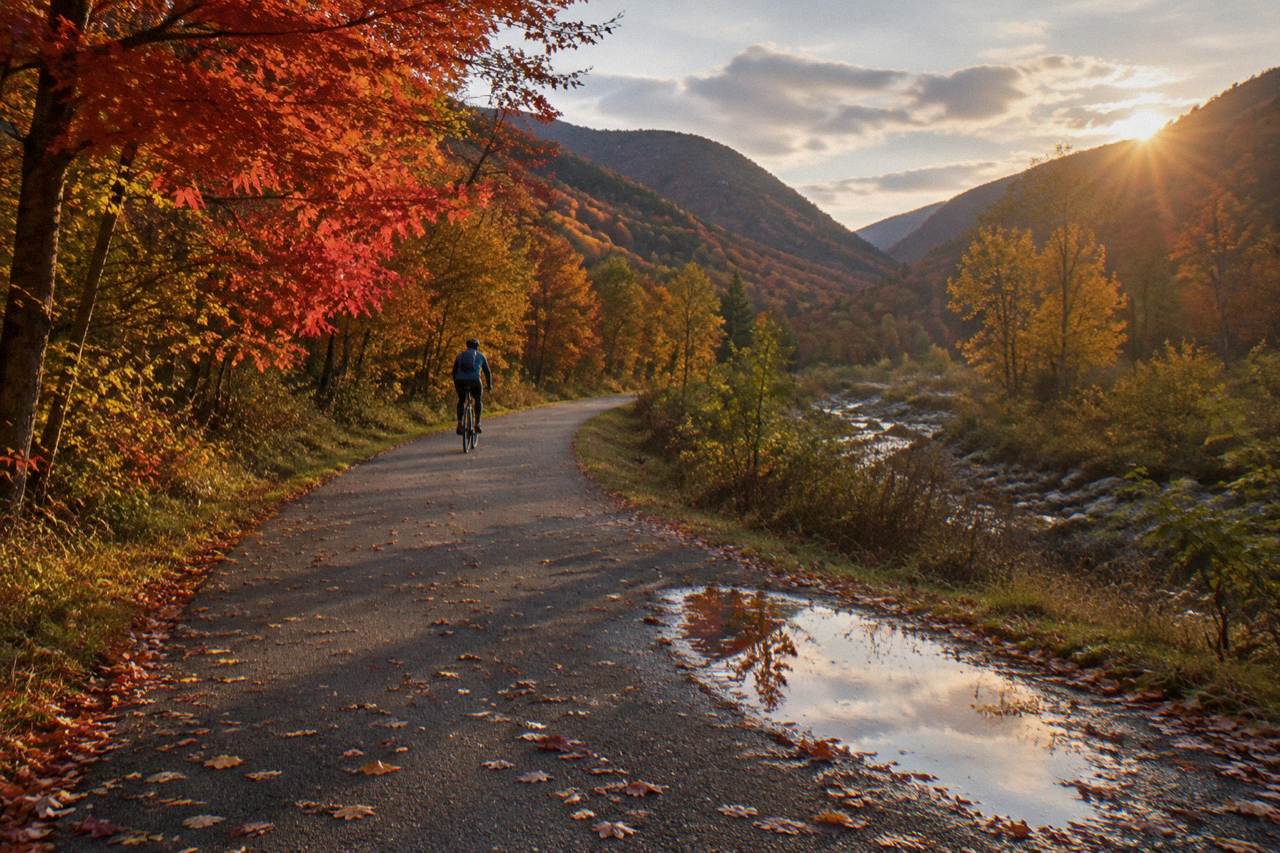
Hillsides, not calendars, decide when Vermont turns. The same drive that looks green one week can be burning red the next, and the color moves across the state like a slow wave from the high Northeast Kingdom down to the southern valleys. For a cyclist the timing matters more than for a driver, because a bike ride through peak color is one of the best experiences New England offers, while a ride two weeks late is a ride through bare branches and wet leaves. The honest answer to the month question is that there is no single best month, there is a best window per region, and it opens in the far north in late September and closes in the low southern valleys by mid October. If you can only travel late in the season, the case for riding Vermont in mid-October explains where the color still holds and what conditions to expect on the bike.
Peak Foliage Timing
For most riders, early October is the best single answer: the first nine days of the month are the typical statewide peak window, with the Northeast Kingdom turning about a week earlier and the southern valleys about a week later. If you want the safest planning rule, target the first week of October and adjust north or south depending on where your route sits.
The reason the answer splits by region is elevation. Vermont is a stack of microclimates. Ridgelines run ten to fourteen days ahead of the valleys below them, so a climb on a mountain road can put you in color while the village at the bottom is still green. Sugar maples, the trees that produce the deep oranges and reds people picture, turn before the birches and aspens that carry the late yellow. A single ride in the first week of October can pass through three separate stages of autumn in an afternoon.
Statewide, riders can count on the peak window landing roughly October 1 to 9 in a typical year, and color holding in the low southern valleys into mid October. Anything past mid October is a bonus round, windy days can strip the maples fast, and the riding shifts from leaf-peeping to shoulder-season touring. The deeper planning question is which region to pick for your dates, and that is where the wave becomes useful instead of frustrating. If your vacation is fixed in the last week of September, ride the north. If it is fixed in the second week of October, ride the south. For more detail on the regional breakdown, see the guide to Vermont foliage peak dates by region.
When Does Color Peak In Each Region?
The Northeast Kingdom, the high country around Burke, Lyndonville and Island Pond, peaks first, typically late September into the first days of October. Central Vermont, the Green Mountains and the Lamoille and Mad River valleys, follows in the first week of October. The southern counties, Bennington and Windham, hold the last color through mid October.
Those three windows overlap, which is why Vermont can feel like it is at peak everywhere at once for a few days. The shift from north to south takes roughly a week, and the shift from ridgeline to valley adds up to two more. Riders planning around the wave can stretch a season out of a short window: start on a Kingdom highland route, then move your base south every few days and ride the same stage of color twice.
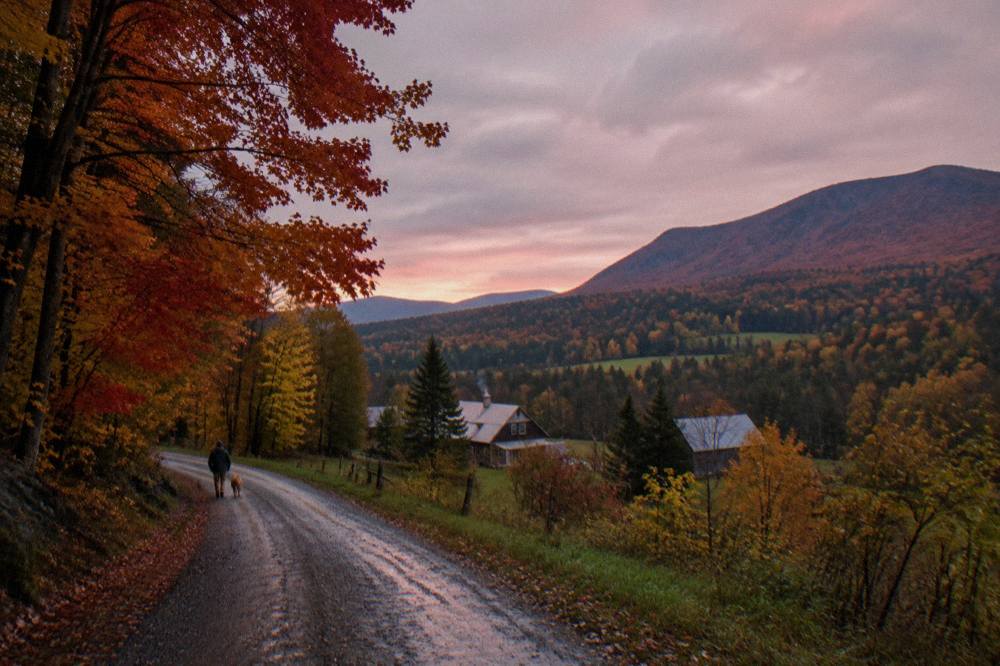
For a cyclist, the regional table doubles as a planning tool, because each region also carries a different style of riding. The Kingdom is singletrack and gravel. The center of the state is the classic mountain-road and rail trail country. The south is quiet village roads and covered bridges. Match the week to the region and the riding style follows naturally.
| Region | Typical peak window | What the riding looks like |
|---|---|---|
| Northeast Kingdom (Burke, Lyndonville, Island Pond) | Late September to early October | Mountain bike singletrack at Kingdom Trails, gravel and quiet lakeside roads |
| Central Green Mountains and Lamoille Valley | Roughly the first week of October | Rail trail cruising, mountain road climbs, village-to-village road loops |
| Champlain Valley and Burlington area | Early to mid October | Flat lakeshore path riding, causeway routes, easy family cycling |
| Southern Vermont (Manchester, Woodstock, Bennington county) | Mid October | Village roads, covered bridge loops, gravel through rolling farm country |
Elevation is the wildcard inside every region. A route that climbs into the Green Mountains will show color earlier than the valley floor on the same day, and sheltered hollows hang onto green long after exposed slopes have turned. Riders who want to hedge their bets should pick routes with climbing in the middle: the start and finish sit in valley color, the summit section sits in color that arrived days or weeks sooner.
Which Region Turns First, And Which Holds Color Longest?
The far north turns first and the southern valleys hold longest, a spread of about two weeks from the first red maples in the Kingdom to the last yellow birches around Bennington and Brattleboro. Between those endpoints, central Vermont sits in the middle of the wave, and the Champlain Valley, low and lake-moderated, runs later than the mountains beside it.
The first color is worth planning around if you can travel on short notice. Red maples in wet areas and on ridgelines start turning in mid to late September, and by the last week of the month the northern hills can be at full display while the rest of the state is still mostly green. That early window is also the quieter one, schools are back in session and the largest leaf-peeping crowds have not yet arrived, so a Kingdom Trails ride in late September can feel close to private on a weekday.
The late window rewards patience. Mid October in the southern valleys means maples past their prime but still colorful in spots, birches and aspens at full yellow, and roads that are noticeably calmer than they were two weeks earlier. It also means shorter days and cooler mornings, a trade that suits riders who like a slow start and a long lunch. Cyclists who want to keep riding after the wave passes should read whether mid October is too late for foliage before writing off the back half of the month.
What Does A Foliage Bike Ride Actually Look Like In Early October?
An early October ride in Vermont is a cool-start, warm-middle day: temperatures in the 30s and 40s at dawn, climbing into the 50s by early afternoon, with low golden light for most of the day. It is widely considered the best week of the entire year to be on a bike in the state, and most riders plan their whole season around it.
The experience depends on the kind of ride. A rail trail day on the flat surfaces of the Lamoille Valley or the Island Line means steady spinning through tunnels of color, frequent photo stops, and the smell of fallen leaves along the tree-lined sections. A road day in the mountains means long climbs where the color opens up into full hillside views, and descents that are cold enough to want gloves even when the valley was warm at the start. A mountain bike day at Kingdom Trails means singletrack under a red and gold canopy, with leaf cover on the trail itself, so line choice matters more than usual.
Leaf litter is the one handling note that surprises road riders new to the state. Wet leaves on pavement are slick, and piles of them can hide potholes and gravel. Braking distances stretch, corners want slower entry, and rail trail bridges and boardwalks deserve extra respect in the morning damp. None of this argues against riding in October, it argues for riding it with slightly more caution than a July century. The light alone pays you back: low sun angles through red maples are the reason photographers chase the state every autumn, and a rider moving at cycling speed passes through that light for hours at a time.
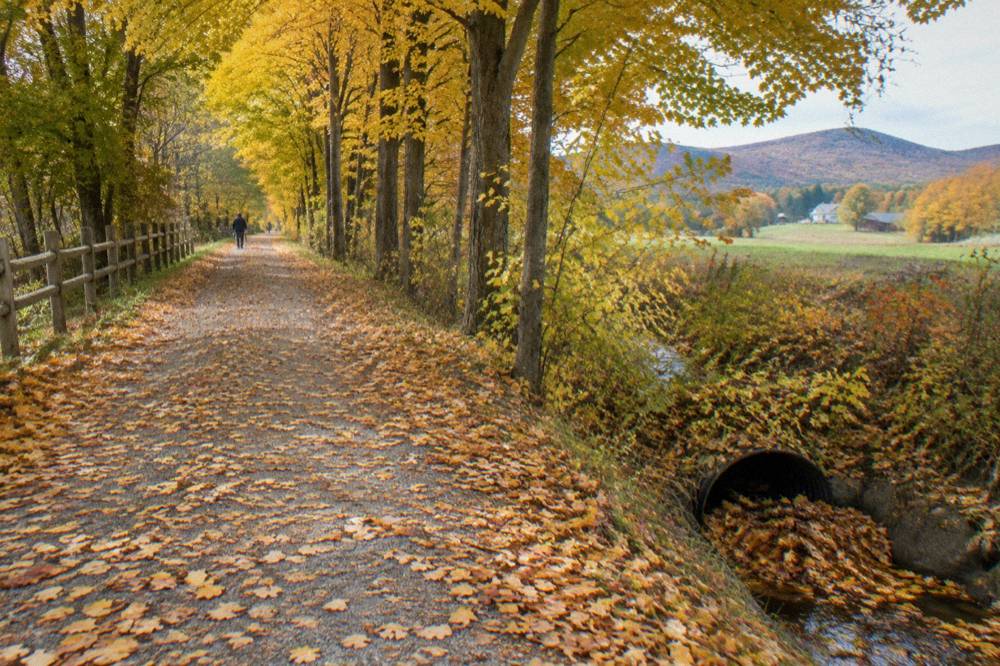
The Burlington waterfront offers one of the easiest foliage rides in the state for exactly this reason. The paved path along the lake runs through stands of color with the Adirondacks across the water, and Local Motion's Trailside Center at 1 Steele Street rents conventional, Class 1 e-bike, adaptive and kids bikes for riders who arrive without their own, with reservations recommended. Riders planning a causeway route out toward the islands should check the status of the seasonal bike ferry first: the Local Motion ferry crosses the cut in the Colchester Causeway from late May to mid October on a weekend-heavy fall schedule, and a ride that counts on the crossing needs the ferry to be running. Details and the current schedule sit on the Local Motion bike ferry page.
Where Should You Base A Foliage Riding Trip?
The best foliage base is the town whose trails and roads match both your riding style and your week: Lyndonville or East Burke for late September singletrack, Stowe or the Lamoille Valley for the first week of October mixed riding, and Woodstock or a southern village for mid October road and gravel loops. Booking early matters more than the specific town.
The single biggest logistical fact about foliage season is that lodging in the small towns fills first precisely where the riding is best. A base that lets you start rides from the door, instead of driving to a trailhead through leaf-season traffic, is worth a premium in October. In the Kingdom, that means staying close to the trail network rather than commuting in from a distance, and it means picking a property that understands bikes.
The Wildflower Inn in Lyndonville is built exactly for this: it sits 2.3 miles from Kingdom Trails, offers bike rentals on site, and runs a bicycle shuttle for guests, which removes the parking scramble at the East Burke trailheads during the busiest weeks. Book that kind of base for the late September window, when the Kingdom is at peak and day-use lots can fill by mid morning on weekends.
The Wildflower Inn
Lyndonville, 2.3 miles to Kingdom Trails
Offers bike rentals and a bicycle shuttle, and sits 2.3 miles from Kingdom Trails.
Check ratesFurther south and a week later, the Stowe area runs a different playbook. The Stowe Recreation Path gives riders a traffic-free village corridor, and the road loops around the village and up Mountain Road carry classic foliage views without requiring a mountain bike. The Sun & Ski Inn And Suites positions you for both, an easy base for a Stowe week built around the path and the village loops. For riders who want the full picture of that corridor, the guide to the Stowe Recreation Path and Lamoille County riding covers the route options in detail.
In the mid October window the wave has moved south, and Woodstock becomes the smarter base. The village sits amid gravel loops and the carriage roads of Mount Tom, gentle terrain that suits the shorter days and softer light of the back half of the month. The Woodstock Inn & Resort places you in the middle of that riding, a village base for loop rides that start and finish on foot-friendly streets. Choosing between these regions is really choosing a week, and the question of which Vermont town is best for foliage resolves once your dates are fixed.
Can You Still Ride The Trails In Late Season?
Yes, with two caveats. Mountain bike trail networks close or restrict riding during mud season and hunting windows, and the longest rail trails stay rideable straight through October as long as you check trail status before a long ride. Kingdom Trails runs its summer trail season to about the end of October, then closes for deer season before the winter network opens.
The autumn closure pattern matters for trip timing. The Kingdom Trails Association publishes its seasonal rules on its official site: the summer trail network runs while conditions allow, typically from May into the end of October, then the trails close for the late-autumn deer hunting period before the groomed winter fat bike and Nordic network opens with the snow. A foliage trip in the first half of October lands comfortably inside the summer season, but a late October mountain bike plan should verify the trails are still open. Passes are bought online through the Kingdom Trails Association store or in person at the Welcome Center on VT Route 114 in East Burke, and current pass prices live on that store page rather than anywhere else.
Rail trails are the more forgiving option late in the month. The Lamoille Valley Rail Trail, the longest in New England at 95 miles from St. Johnsbury to Swanton, is open year-round to non-motorized users with e-bikes allowed, and its compacted stone surface drains and dries faster than singletrack after autumn rain. The state rail trail program maintains a trail updates page, and the standing advice for any long fall ride is simple: check trail status before you go, because flood repairs and maintenance work can close a segment or a trailhead at any point in the season.
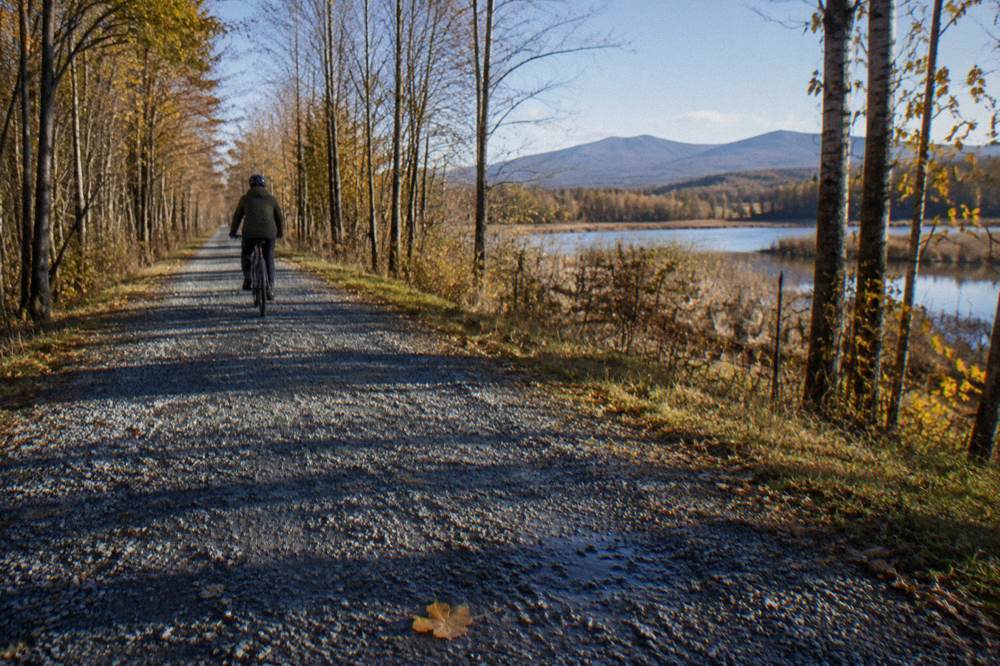
Weather, not color, is what actually ends the riding season. October mornings can carry frost, and a rainy week can bring the leaves down early regardless of what the calendar promised. The riders who get the most out of the foliage window treat the forecast as the real schedule: a clear, calm Tuesday after a cold snap is often the single best riding day of the entire autumn, and it can arrive a week before or after the nominal peak.
What Should You Pack For A Foliage Ride In Vermont?
Pack for a thirty-degree swing: full-finger gloves, a warm head layer, layers you can shed as the day warms from the 30s into the 50s, and lights if you might be out past sunset near 6:20. Wet-leaf caution also argues for slightly wider tires or lower pressure than a summer setup.
The packing list for a Vermont foliage ride is really a packing list for two rides, the frosty one at 8 in the morning and the mild one at 1 in the afternoon. Merino base layers, a wind shell, and knee or leg warmers cover the range without bulk. Eye protection matters more than in summer, because low sun angles on east-west roads can blind you on descents, and falling leaves and grit mean something in your eye at speed ends a ride. A basic repair kit, water, and snacks stay the same as any season, though riders burn noticeably more energy keeping warm on long descents than they expect to.
| Condition | Typical October range | What it means for the ride |
|---|---|---|
| Afternoon high | Around 56 | Comfortable in a base layer and vest by mid day |
| Overnight low | Around 36 | Frost on bridges and shaded corners early |
| Daylight | Sunrise near 7:00, sunset near 6:20 | Plan a full day ride to finish by early evening |
| Leaf cover | Heaviest at and just after peak | Slower cornering, watch for hidden potholes |
| Road shoulders | Narrow or absent on many secondary roads | Favor rail trails and mapped low-traffic routes |
E-bike riders have a small extra consideration: cold mornings modestly reduce battery range, so a long foliage day on a pedal-assist bike wants either a fuller charge than summer habits suggest or a mid-day top-up. The state's three-class system treats Class 1 and 2 e-bikes as bicycles, permitted where bikes are allowed, including the rail trails, while throttle e-motos are not. On natural-surface mountain bike trails on state land, e-bike access is currently restricted, so riders should confirm the rules for the specific network before rolling out; the Vermont Mountain Bike Association tracks that policy closely.
How Do You Avoid Leaf-Pepper Traffic On Two Wheels?
The traffic rules are simple: ride midweek when you can, avoid the famous numbered routes like Route 100 on peak weekends, and use rail trails and village paths to bypass the scenic-drive crowds entirely. Cyclists on backroads generally find leaf season far calmer than the highway congestion suggests, and the quietest riding is often one valley away from the busiest overlook.
The leaf-peeper crush is real but concentrated. It stacks up on the marquee scenic corridors and the overlook pull-offs, the places where cars can queue for a view. A bike route that parallels those corridors on the next road over, or that leaves them entirely for a rail trail, skips most of it. Midweek riding is the other big lever: Tuesday through Thursday in early October delivers the same color as the weekend with a fraction of the traffic, and locals plan their own rides accordingly.
Cyclists should also ride defensively on narrow shoulders, which many Vermont secondary roads lack entirely. Stay as far right as is safe, take the lane briefly where debris or leaf piles make the shoulder unrideable, and expect drivers watching the scenery instead of the road. The payoff for the caution is that a bike moves through foliage country at the right speed to see it, slow enough for the tunnels of maple, fast enough to cover a full valley loop between the frost and the sunset. For help picking routes and timing your ride, our guide to Vermont fall foliage bike tours by season and route covers the details.
How Do You Time A Trip Without Knowing The Exact Peak?
Build the trip around the typical window for your region, then leave slack to adjust: book a base with flexible cancellation, hold your longest ride for the day the color looks best from the door, and use condition reports rather than the calendar to make the call. Riders who lock in a single perfect weekend are gambling, riders who leave one flexible day almost always win.
The practical method most experienced foliage riders use is a two-step plan. First, pick the region whose typical window matches your fixed dates, the Kingdom for late September, the center of the state for the first week of October, the south for mid October. Second, once you are there, let the terrain decide the daily routes: chase ridgelines if the valleys look green, drop into sheltered hollows if the high ground looks past peak. Because the elevation spread runs up to two weeks, almost any date inside the broad window has peak color somewhere within a short drive or ride.
A base with bike-friendly infrastructure makes that flexibility real. Being able to ride out the door on the good mornings, rather than loading a car and hunting parking, turns a foliage trip from a scenic-drive schedule into a riding trip. The Inn at Lyndonville pattern, rentals and a shuttle 2.3 miles from the Kingdom Trails network, is the model worth copying wherever you end up. For the broader picture of riding conditions through the season, the guide to the best time to bike in Vermont maps the whole year, and Vermont Biking Tours covers the riding regions in depth across the rest of the site.
Woodstock Inn & Resort
Woodstock village
The village base for the Woodstock gravel loops and the Mount Tom carriage roads.
Check ratesCommon Questions About Foliage Timing In Vermont
What Month Is Best For Foliage In Vermont?
There is no single best month, because peak color sweeps the state from north to south over roughly three weeks. The Northeast Kingdom peaks in late September, central Vermont in the first week of October, and the southern valleys hold color through mid October. For one answer, the first week of October catches most of the state near peak.
Is Early October Or Late October Better For Seeing Color?
Early October is better for the majority of the state, since the typical statewide peak window is roughly October 1 to 9. Late October can still deliver in the southern valleys and at low elevations, where birches and aspens hold yellow after the maples have dropped, but it is a bonus round rather than the main event.
Where Does Foliage Peak First In Vermont?
The high country of the Northeast Kingdom turns first, typically in late September. Red maples in wet areas and on ridgelines lead the change statewide, and ridgelines in general run ten to fourteen days ahead of the valleys directly below them, which is why a climb can put you in color while the village below is still green.
How Long Does Peak Foliage Last In Vermont?
Any single spot holds peak color for only a few days to about a week, but the statewide display lasts around three weeks because the wave moves. Wind and rain can shorten a local peak sharply, and hard storms can strip exposed maples fast, which is why flexibility beats a rigid itinerary.
Is Mid October Too Late For A Foliage Bike Trip?
Not in the south. Mid October still holds color in the low southern valleys, and the riding is quieter than at the height of the season. In the northern mountains the maples are usually past peak by then, though yellow birch color and rail trail riding remain good through much of the month.
When Do Vermont Bike Trails Close For The Season?
The Kingdom Trails summer network runs while conditions allow, typically May through about the end of October, then closes for the late-autumn deer hunting period before the groomed winter fat bike network opens with snow. The long rail trails, including the Lamoille Valley Rail Trail, stay open to riders year-round. Check trail status before any long ride in the shoulder weeks.