Is Mid-October Too Late For Fall Foliage In Vermont?
Mid-October is late but not too late for Vermont foliage: southern valleys and low elevations still hold strong color, and riding conditions stay pleasant. Here is where to bike and what to expect.
Is Mid-October Too Late For Fall Foliage In Vermont?
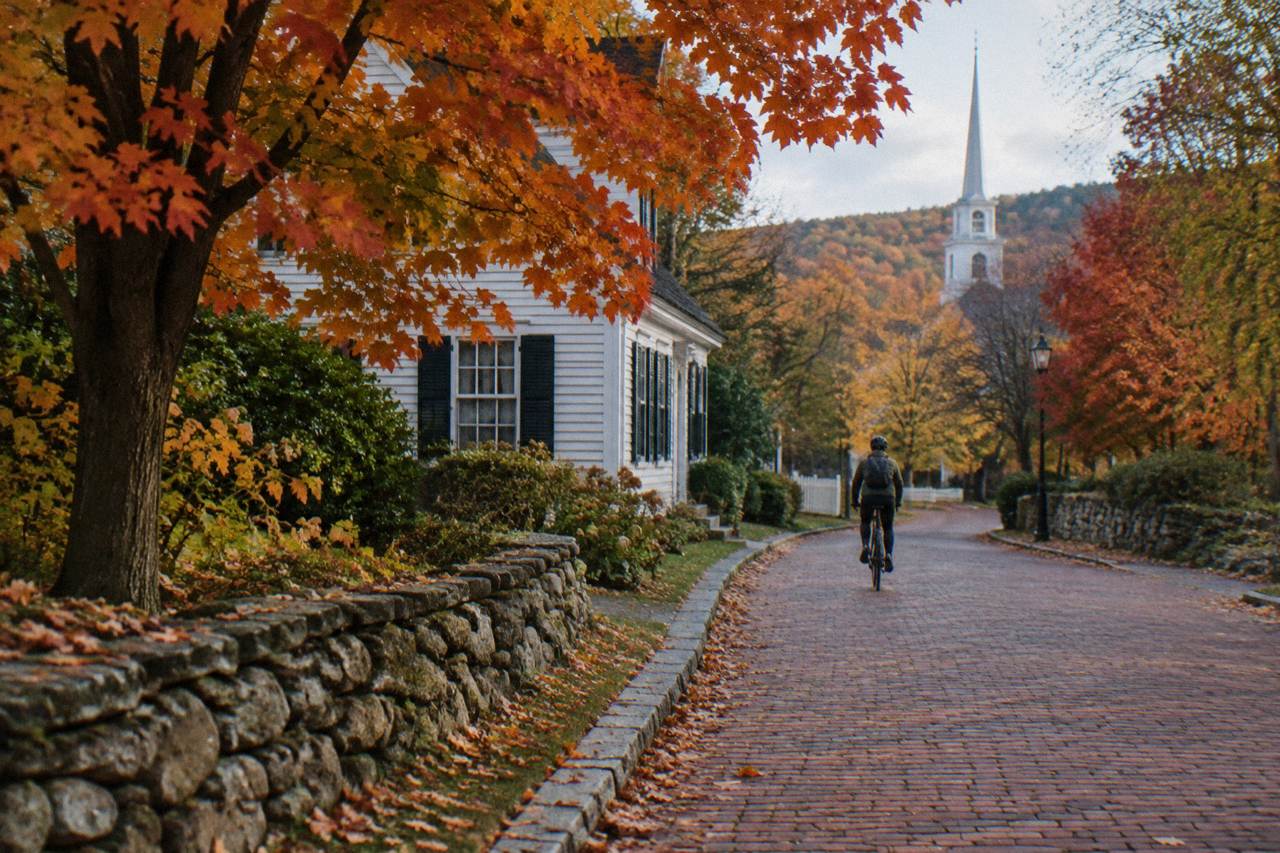
Mid-October is late, but it is rarely too late everywhere at once. Vermont's color moves north to south and downhill to uphill in reverse: the high Northeast Kingdom ridgelines turn and drop their leaves first, while the southern valleys around Bennington and Windham counties, the Champlain shore and sheltered low roads often still show strong reds and golds well past the middle of the month. For a cyclist, that makes mid-October a targeting problem rather than a lost cause. The riding itself is close to ideal, with crisp air, thin traffic on the backroads and golden afternoon light, provided you aim the bike at the right towns.
The statewide peak window in a typical year runs about the first week to the middle of October, centered on the first third of the month at reference elevations. Ridgelines run ten to fourteen days ahead of the valleys, and the far north runs roughly a week ahead of the far south. That spread is the whole answer to this question. A mid-October visitor who drives to Burke Mountain and finds bare maples has not missed foliage; they have simply looked in the place where it ended first.
Mid-October Color Conditions
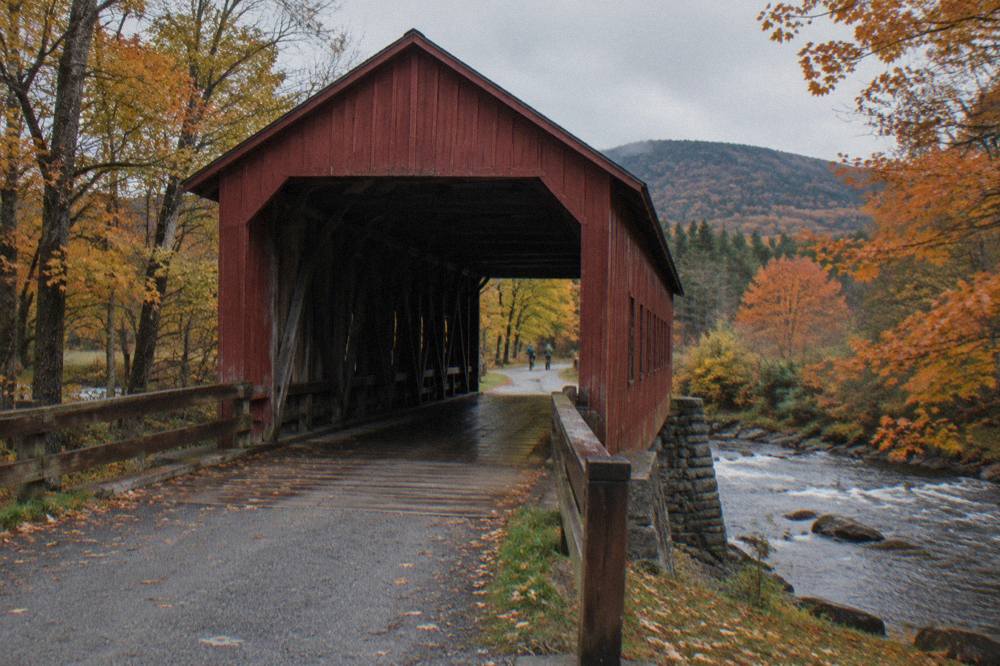
No, not for the southern two-thirds of the state and the low valleys. Northern high country, including most of the Northeast Kingdom, is typically past peak by mid-October, with leaves thinning and starting to drop. Southern Vermont, the Champlain valley and sheltered low-elevation roads commonly hold good color into the second half of the month, and some years color lingers even later at the lowest elevations. The honest framing is that mid-October buys you the back half of the show, not the front half, and it buys it in specific places. Pick those places and the trip works. Treat foliage as a statewide single event that either happens or does not, and a mid-October visit can feel like a miss when it should not.
There is also a quiet advantage to arriving after the main surge. The heaviest leaf-peeping traffic is on the famous numbered routes, and it thins noticeably once the northern half of the state goes past peak and the tour buses follow the color south. Riders report that midweek backroad riding in the middle of October feels emptier than the same roads in late September, and October light, low and warm in the late afternoon, is arguably better for photos than the flatter light of early September. Fallen leaves on the shoulder do mean you should watch your line, but a leaf-strewn dirt road at golden hour is one of the signature images of riding in Vermont for a reason.
When Does Vermont Foliage Actually Peak?
The typical statewide peak falls between the first and ninth of October, with the exact window shifting a few days either way each year depending on temperature, rainfall and elevation. Northern high country peaks first, usually from late September into the first days of October, while the southern counties and low valleys peak last, often in the second week of October or a little beyond. Mid-October therefore lands just after peak in most of the state. The word "after peak" misleads people, because a hillside does not go from peak to bare overnight. Color declines over ten days to two weeks, and the decline is slower and prettier in the valleys than on exposed ridgelines.
The mechanics are simple. Shortening days trigger the change everywhere at nearly the same rate, but cold nights and exposure speed it up on high ground, while warm valley air and lake influence slow it down at low elevation. That is why the same mid-October day can show bare birches on a Northeast Kingdom ridge and a solid wall of red maples along a river flat fifty miles south. Frost accelerates the drop, rain and wind strip leaves once they have turned, and a calm, dry stretch of mid-October weather can hold valley color far longer than the calendar suggests.
Which Regions Hold Color Longest In Mid-October?
The regions that hold color longest are the southern valleys of Windham and Bennington counties, the low-elevation river valleys of the center of the state, and the Champlain lake shore around Burlington, where the water moderates overnight cooling. The Northeast Kingdom and the high Green Mountain ridgelines finish first and are usually well past peak, though even there strong color can remain on sheltered slopes after the exposed hills have gone bare. In practice, mid-October rewards a base town south or west of the spine of the Green Mountains. Woodstock, Manchester, Grafton, Townshend and the lakeshore communities are all late-color towns in a normal year, while East Burke, Jay and the Northeast Kingdom highlands are early towns.
The regional guide to Vermont fall foliage peak dates by region carries the full town-by-town breakdown, but the short version for a cyclist is this: ride where the elevation is lowest and the latitude is furthest south. A gravel loop out of Woodstock down in the valley will almost always carry more color on October 15 than a loop up on the ridgeline in the same county. The trade-off is that valley color is maple-and-river color, soft and layered, rather than the panoramic hillside sweep you get at peak on the ridges. Both are worth riding; only one of them is still on offer in mid-October.
| Region | Typical mid-October state | Best base towns for a bike trip |
|---|---|---|
| Northeast Kingdom (Orleans, Essex, Caledonia counties) | Past peak, leaves thinning, pockets of color on sheltered slopes | Lyndonville, East Burke (ride for trails, not peak color) |
| Central Green Mountains (Lamoille, Washington counties) | Just past peak, strong remnants at low elevation | Stowe, Waterbury, Morrisville |
| Champlain Valley and Burlington shore | Late color, lake-moderated, often still strong | Burlington, Shelburne, South Hero |
| Woodstock and east-central valleys | Just past peak to holding, depends on elevation | Woodstock, Quechee, Randolph |
| Southern Vermont (Windham, Bennington counties) | Latest in the state, frequently still at or near peak | Manchester, Grafton, Townshend, Wilmington |
Is Mid-October Still Good For Biking In Vermont?
Yes, and for many riders it is the best fortnight of the year. Daytime highs in October average in the mid fifties Fahrenheit, which is close to ideal temperature for pedaling, traffic on secondary roads thins after the early-October surge, and bugs are effectively gone. The trade-offs are shorter daylight, chilly mornings near freezing, possible frost on shaded corners early, and fallen leaves hiding potholes and frost heaves on rural pavement. Riders who start mid-morning, dress in layers and keep their rides to daylight hours generally find mid-October conditions excellent. The month rewards planning more than September does, but it punishes very little.
The riding surface is the thing to take seriously. A layer of wet maple leaves on pavement is genuinely slippery, comparable in feel to a light scatter of ice, and it collects exactly where a cyclist looks for traction: on corners, on bridge decks and along the shaded edge of narrow roads. Dry leaves are mostly a visibility problem, since they can conceal the frost heave or gravel patch that appears in the last three feet of a descent. Gravel roads hold up well in typical dry mid-October weather, and Vermont's network of rail trails, which are wide, gently graded and car-free, are at their most scenic with color still hanging on the trees around them. The Lamoille Valley Rail Trail's official page notes e-bikes are allowed and the trail runs 95 miles from St. Johnsbury to Swanton, which makes it a forgiving mid-October option when you want scenery without traffic.
Where Should You Ride In Mid-October For The Best Color?
Aim for low, southern and lakeshore terrain. The strongest mid-October rides are usually the Woodstock gravel loops and the carriage roads on Mount Tom, the road and gravel routes around Manchester in the southwest, the Champlain valley including the Burlington waterfront and the Champlain Islands, and the quiet river-flat roads of the Connecticut valley on the east side of the state. Save the high ridgelines and the Northeast Kingdom for earlier in the season. The pattern holds across the whole state: the lower your route sits, the longer the color hangs on.
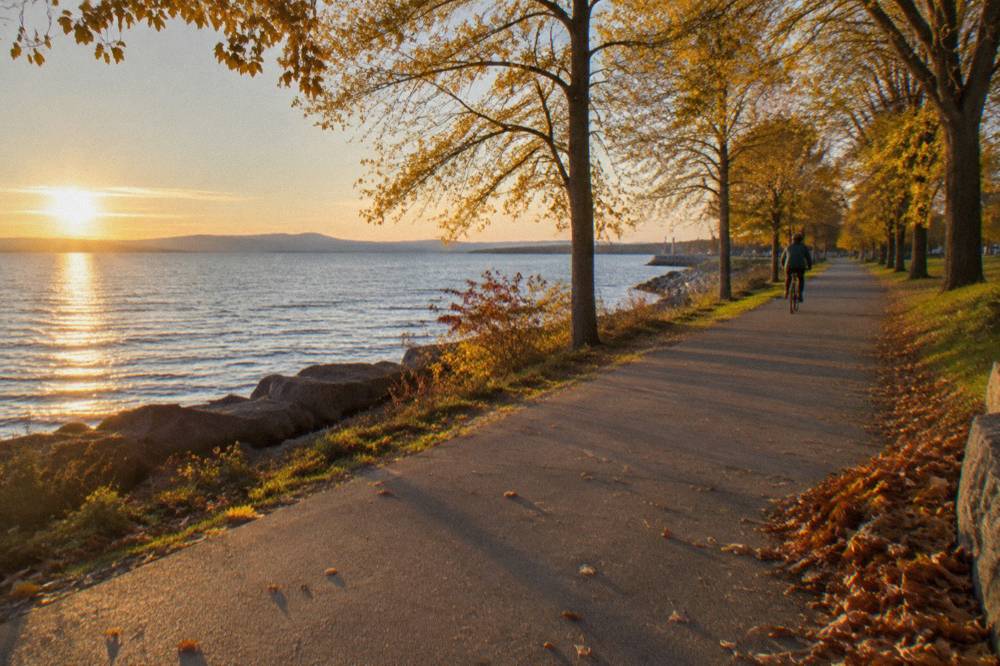
Burlington deserves a specific mention because the lake does two useful things. It slows the turn right along the shore, so the city's trees and the South Hero farmland beyond the causeway are reliably late, and it flattens the terrain, so a mid-October ride there can be a relaxed pedal rather than a climb-fest in cooling air. The Island Line runs about 14.4 miles from the Burlington waterfront toward South Hero, with an 8-mile paved greenway segment and roughly 5 miles of crushed gravel on the Colchester Causeway, and it is one of the few places in Vermont where flat, car-free riding and late foliage overlap. Note that the seasonal bike ferry across the causeway gap runs only from late May to mid October, so a mid-October rider should check the schedule before counting on the crossing. Local Motion, the nonprofit that runs the ferry and a Trailside Center on the path, is the source for current status. The full index of guides sits on Vermont Biking Tours.
| Mid-October ride | Character | Why it works this late |
|---|---|---|
| Woodstock gravel loops and Mount Tom carriage roads | Village-based gravel and dirt | Low east-central valleys hold color past mid-month |
| Manchester area road rides | Southern road cycling, climbing options | Windham and Bennington counties peak last in the state |
| Burlington waterfront and Island Line | Flat, paved then gravel, car-free | Lake moderation delays the turn along the shore |
| Champlain Islands farm roads | Quiet rural lanes, water views | Low elevation, open horizons, late lake-shore color |
| Stowe Recreation Path and Mountain Road | Village path plus rolling road | Valley floor color persists after the ridgelines go bare |
In the north, the honest mid-October play is to ride for the riding rather than the leaves. The Kingdom Trails network around East Burke holds more than a hundred miles of singletrack and multi-use trail, and while the canopy there is typically past peak by mid-October, the trails themselves are usually in fine shape after the summer crowds disperse, with cool, tacky dirt and long sightlines through thinned trees. Riders who want trails and color in one trip often split the difference: the Wildflower Inn in Lyndonville sits 2.3 miles from the Kingdom Trails network, offers bike rentals and a bicycle shuttle, and works as a trail base even in the leaf-bare weeks, while a night or two further south catches the color the north has already given up.
What Should You Pack For A Mid-October Bike Ride?
Pack for a thirty-degree temperature swing and treat the ride as a layers problem. Mornings start near or below forty degrees Fahrenheit, midday climbs into the mid fifties, and a shaded descent can drop the effective temperature another ten degrees. The working kit is a wicking base layer, a warm mid-layer you can strip, a windproof shell, full-finger gloves, a headband under the helmet, and lights front and rear, because sunset sits near 6:20. Nothing on that list is exotic, and every piece of it earns its space in October.
Two items matter more than riders expect. The first is tire choice or at least tire pressure: wider tires at moderate pressure cope far better with leaf-covered frost heaves and gravel sections than skinny rubber at high pressure, and a bike with generous tire room turns a sketchy leafy descent into a routine one. The second is a plan for daylight, not just lights. With sunrise near 7:00 and sunset near 6:20, the sensible structure is a mid-morning start after the frost burns off, the big climb or exposed ridge section in the warmest hours, and a finish that keeps you off narrow shoulder-less roads in the last flat light of the day. The packing guide, what to bring on a Vermont bike tour, covers the full checklist for longer trips; in October the short version is simply: more layers, wider tires, earlier decisions.
| Condition | Typical mid-October range | What it means for the ride |
|---|---|---|
| Morning low | Near freezing, frost possible on shaded corners | Delay shaded descents until mid-morning |
| Midday high | Mid fifties Fahrenheit | Ideal pedaling temperature in a base layer plus shell |
| Daylight | Roughly 7:00 sunrise to 6:20 sunset | Plan an 11-hour window, finish rides before dusk |
| Road surface | Fallen leaves over frost heaves and gravel | Wider tires, moderate pressure, ride the clear line |
| Precipitation | Variable, rain and wind strip leaves quickly | Recheck conditions the morning of a long ride |
Where Should You Stay For A Mid-October Foliage Ride?
The base town is the decision that determines whether mid-October works. Stay south or low: Woodstock for the east-central valleys and carriage-road riding, Manchester for the southwest's late color, or the Burlington lake shore for flat, car-free paths with lake-moderated foliage. Stowe splits the difference, holding valley color on the Recreation Path floor after the ridgelines go bare, while northern trail towns like Lyndonville are better justified by riding quality than by remaining leaves. Where you sleep, in other words, is a foliage decision, not just a lodging one. For a closer look at how these towns stack up, our town-by-town foliage comparison covers trail access and peak timing for each one.
Woodstock makes the strongest single case. The village sits low in its valley, the gravel loops and the Mount Tom carriage roads radiate straight out of town, and the region is reliably among the later parts of central Vermont to drop its leaves. The Woodstock Inn & Resort in the village center puts you at the start of those loops without a daily drive, which matters when daylight is the limiting resource. Further north and west, Burlington's lakefront hotels put the bike path at the door, and the city's dining and evening options are a fair consolation on a chilly night. For riders who want the path-and-village combination in the mountains, the Sun & Ski Inn And Suites in Stowe sits right on the Stowe Recreation Path and the road loops around the village, a pairing that works well when the foliage is past prime on the peaks but still lining the valley floor.
Woodstock Inn & Resort
Woodstock village
The village base for the Woodstock gravel loops and the Mount Tom carriage roads.
Check ratesWhat Daylight And Weather Should You Plan Around?
Plan around roughly eleven hours of daylight, from about 7:00 in the morning to about 6:20 in the evening, with the warmest and best-lit riding coming in the early afternoon. Frost can linger on shaded corners at dawn, rain and wind can strip leaves overnight, and a calm dry stretch can stretch valley color further than expected, so check conditions the morning of the ride rather than trusting a forecast made days ahead. None of this narrows the trip much; it mostly argues for a mid-morning roll-out and for putting the headline climb in the middle of the day.
Wind deserves a mention that foliage itineraries rarely give. By mid-October the state has often had its first real autumn blow, and wind is the single fastest way a good color weekend turns ordinary, because it takes the leaves off in hours. Riders heading out after a windy night should temper expectations on exposed routes and lean toward the sheltered river valleys, which hold their canopies longest for exactly the same reason they turn latest: protection. The one consolation of post-peak bare trees is that sightlines open up, a ridgeline descent that was a green tunnel in July becomes a panorama in late October, and the low afternoon light through even a thinned canopy is the thing people remember from mid-October bike trips in Vermont. If a windy week has you rethinking your route, our comparison of guided foliage tours by bike, bus, and train covers operators and timing that account for exactly this kind of weather luck.
Should You Book Anything Ahead For A Mid-October Trip?
Yes for lodging, no for most riding. Mid-October weekends still fill rooms in the popular foliage towns even after the northern peak has passed, because late-season travelers chase the southern color. Book your base town early, but keep the rides themselves flexible; trail passes, rentals and shuttle services are the only riding costs worth reserving ahead, and mainly at busy networks like Kingdom Trails. The flexible part is the route, and flexibility is genuinely valuable in mid-October because color conditions change faster than any other variable.
The right morning-of routine takes five minutes. Check the state's foliage reporting, check the weather for wind and rain overnight, and check the trail status page for whichever network you are riding, since flood repairs and maintenance closures appear on the official trail-update feeds through the season. Then choose between the sheltered valley route and the open one. A rider who does that small check every morning of a mid-October trip will, in most years, find good color on at least some of the days, because somewhere in Vermont there is almost always a valley still holding its maples well past the middle of the month. If the whole equation feels tight for your dates, the broader best time to bike in Vermont guide lays out the full season, and what month is best for foliage in Vermont covers the timing question from the leaf side.
The Wildflower Inn
Lyndonville, 2.3 miles to Kingdom Trails
Offers bike rentals and a bicycle shuttle, and sits 2.3 miles from Kingdom Trails.
Check ratesCommon Questions About Mid-October Foliage In Vermont
Is Mid-October Too Late For Fall Foliage In Vermont?
Not statewide. The Northeast Kingdom and the high ridgelines are usually past peak, but southern Vermont, the Champlain shore and the low river valleys often still hold strong color into the second half of October.
Which Part Of Vermont Has Color The Latest?
The southern counties, Windham and Bennington, along with low-elevation valleys and the lake shore. These areas peak last and hold their leaves longest, roughly a week behind the far north.
Is It Too Cold To Bike In Vermont In Mid-October?
No. Daytime highs average in the mid fifties Fahrenheit, which suits cycling well. Mornings near freezing call for layers, full-finger gloves and a mid-morning start.
Do The Leaves Fall Off The Trails In October?
Yes, gradually. Fallen leaves can hide rocks, roots and frost heaves, so ride looser lines and lower speeds on singletrack, and expect the best grip on cool, tacky midday dirt.
Is The Bike Ferry Across The Colchester Causeway Running In Mid-October?
The ferry's season runs late May to mid October, so a mid-October crossing may just be available or may just have ended. Check the operator's current schedule before planning a ride that depends on it.
Where Should A Cyclist Base For A Mid-October Foliage Trip?
Woodstock for valley gravel and carriage roads, Manchester for late southern color, or Burlington for flat, car-free lakefront riding. Stowe and Lyndonville work better for riding quality than for remaining leaves.