The Wildflower Inn
Lyndonville, 2.3 miles to Kingdom Trails
Offers bike rentals and a bicycle shuttle, and sits 2.3 miles from Kingdom Trails.
Check ratesOctober in Vermont can start near 36F and reach 56F by afternoon, which makes packing for a bike ride here a layering problem more than a gear problem. This guide covers the clothing, rain protection, tools and daily-carry items that work for road, rail trail and mountain bike rides across the state.
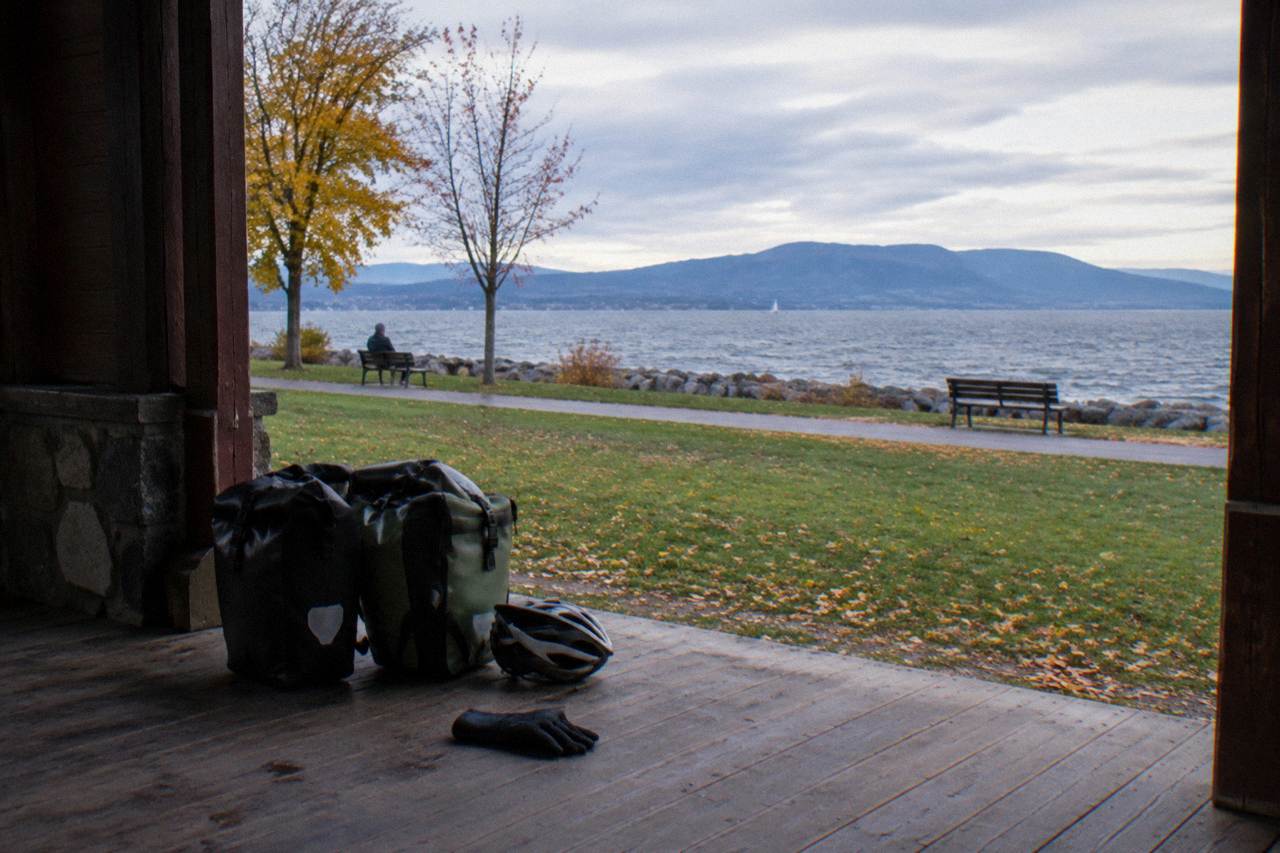
Short answer
Bring layered clothing for 36 to 56F mornings, a real rain shell, a helmet, lights, a basic repair kit and any personal pedals or saddle you cannot ride without. Operators such as VBT Bicycling Vacations typically supply the bike, helmet and support; on self-guided rail trail rides you carry your own kit. Skip cotton, skip bulky spares.
Vermont sits far enough north and high enough above the sea that a single day of riding can pass through three seasons before lunch. Statewide October averages run about 56F for a high and 36F for a low, and the gap between a shaded valley at 8 a.m. and an open ridge at 2 p.m. is wider still. That single fact shapes almost every packing decision on this list. Riders who dress for the forecast high freeze on the descent; riders who dress for the morning low cook by the first climb. The answer is layers, and this guide walks through exactly which ones, plus the rain gear, tools, documents and daily-carry items that make a bike trip in Vermont work. It also covers what a guided operator typically supplies, so you do not duplicate a bike, helmet or support van you are already paying for. For the money side of that decision, see our separate Vermont bike tour prices guide.
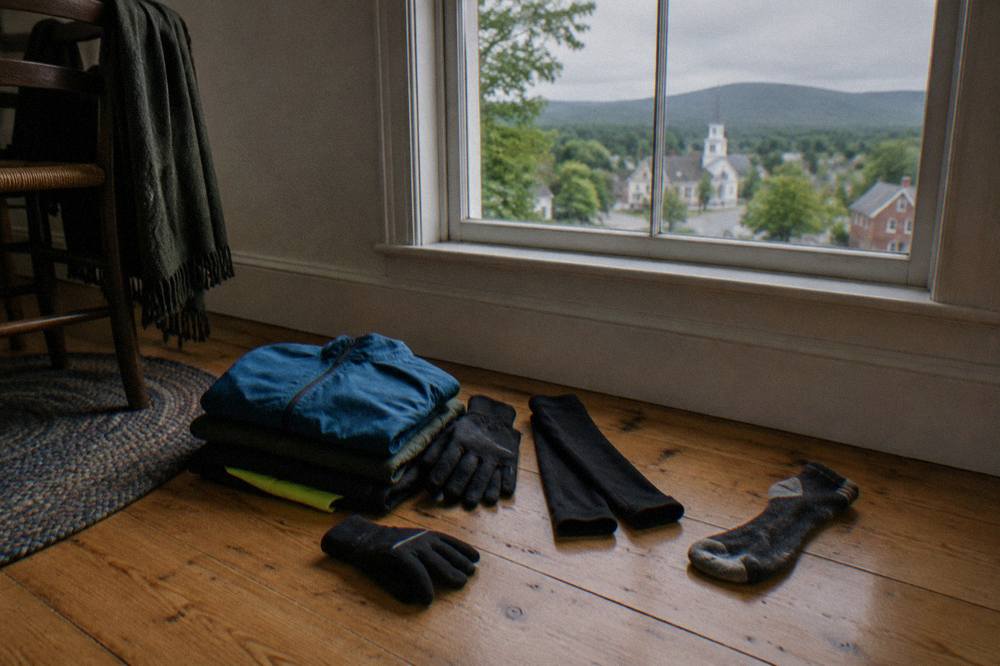
Pack for a ride that starts cold, warms through the morning and can turn wet with little warning: a base layer, a mid layer, a packable shell, full-finger gloves, lights, a helmet and a small repair kit are the non-negotiables. Add food, water and navigation, then stop. Nearly everything else can be bought or rented in the towns you ride through, and overpacking matters more on a bike than in any other kind of travel.
The core list splits into four groups: clothing, bike gear, body care and paper. Clothing is the biggest group because Vermont weather, not terrain, is what surprises visitors. The bike gear group is small if you are riding with an operator and larger if you are self-supported on a rail trail. Body care covers chamois cream, sunscreen and blister treatment, all of which matter more on day three than day one. Paper means identification, insurance card and any lodging confirmations, which matters if your bags travel in a support van that is not always behind you.
A useful discipline is to lay everything out the night before and remove one item. If nothing on the bed fails the removal test, you have packed about right for a supported trip. For a self-guided ride on something like the 95 mile Lamoille Valley Rail Trail, the longest rail trail in New England, the calculus shifts: there you want the full repair kit and spare tubes, because a shop may be an hour away in one direction. More on that trade later in this guide.
Plan a three layer system: a synthetic or merino base layer against the skin, an insulating mid layer you can shed, and a windproof or waterproof shell on top. Vermont mornings from spring through late fall regularly sit in the 30s and 40s Fahrenheit while afternoons reach the 50s and 60s, so the mid layer goes on and comes off within the first ninety minutes of most rides. Cotton belongs nowhere in the stack.
The base layer does the quiet work. Merino wool or a synthetic knit moves sweat off your skin, and that matters most on the first climb of the day, when your body is still cold and working hard. A short-sleeve base with arm warmers is more flexible than a long-sleeve one, because the warmers peel down to wristbands when the sun arrives and back up when you drop into a river valley. Leg warmers or knee covers follow the same logic; knees are the joint riders regret leaving cold.
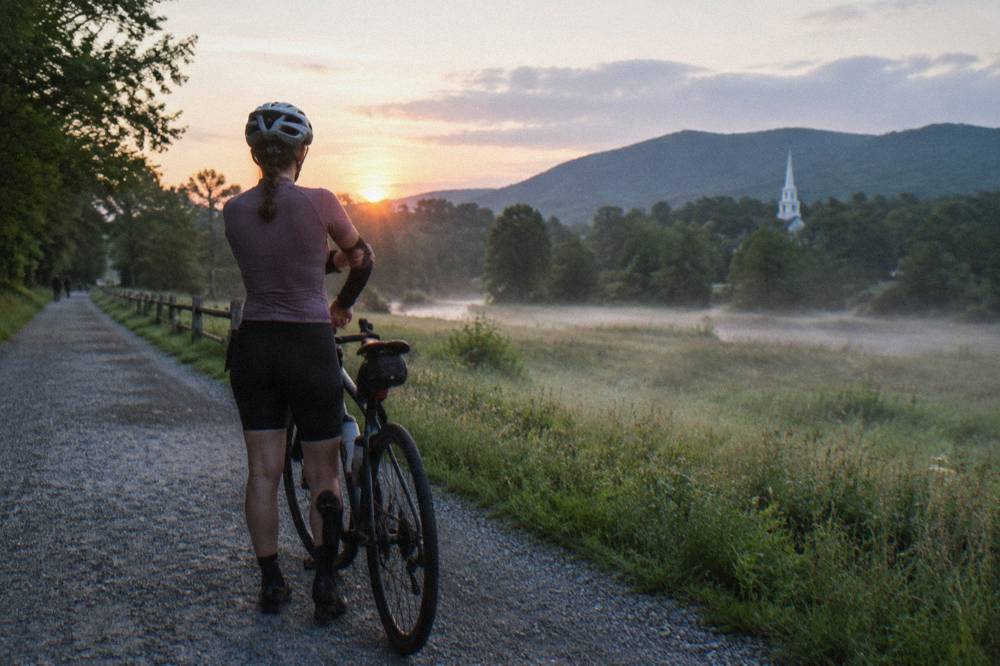
The mid layer is a jersey-weight fleece or a long-sleeve riding top, and it lives in a jersey pocket or handlebar bag for most of the day. The shell is where money matters. A packable wind shell weighs almost nothing and blocks the airflow that turns a damp jersey cold at 25 mph downhill; a proper rain shell does the same job plus rain. If you bring only one outer layer, bring the rain shell, because it can substitute for the wind shell but not the reverse.
Accessories decide comfort more than their size suggests. Full-finger gloves, a thin beanie or headband under the helmet, and wool socks cover the extremities that lose heat fastest. Foliage season, late September to mid October, adds one wrinkle: daylight shrinks to roughly 7 a.m. to 6:20 p.m., so the temperature floor of your ride window is the morning one. Our best time to bike in Vermont guide covers the seasonal timing in more depth.
| Layer | What It Is | When It Goes On | Where It Lives When Off |
|---|---|---|---|
| Base | Merino or synthetic short sleeve plus arm warmers | All day | Worn at all times |
| Mid | Fleece or long-sleeve riding jersey | First hour, cold valleys, long descents | Jersey pocket or handlebar bag |
| Shell | Waterproof rain jacket (doubles as wind shell) | Rain, wind, long descents | Packable into its own pocket |
| Extremities | Full-finger gloves, thin head cover, wool socks | Below about 50F at the start | Pockets |
| Legs | Knee or leg warmers, or riding tights | Below about 55F at the start | Pockets or bag |
A real waterproof rain jacket with taped seams, not a water-resistant one, plus a lightweight cap and a dry-bag for electronics, covers Vermont rain. Showers here are frequently brief and vertical rather than all-day horizontal, so rain pants are optional and shoe covers are a comfort item rather than a necessity. The jacket is the piece worth spending on, because a soaked rider at 40F is a genuinely unsafe rider, not just a wet one.
Rain in Vermont tends to arrive in bands off Lake Champlain or as afternoon convection over the Green Mountains, and it can clear as fast as it arrives. That argues for gear you can deploy in thirty seconds and stow just as fast. A jacket with a long tail, a high collar and pit zips does double duty: fully zipped in rain, half ventilated as a wind shell on dry cold descents. Packable rain capes and lightweight covers work too; the failure mode to avoid is the unlined emergency poncho, which becomes a sail at speed.
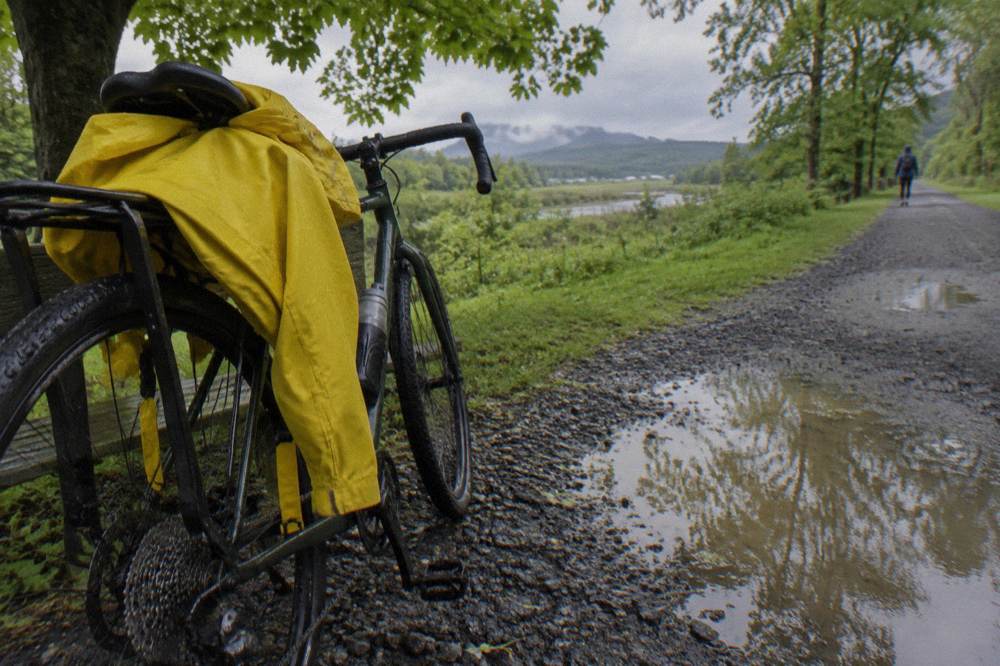
Beyond the jacket, think in terms of keeping things dry rather than keeping every body part dry. A roll-top dry bag or a zip bag for phone, wallet and paper protects the items that cannot be dried at an inn. Mountain bikers heading to Kingdom Trails should note the network's own guidance about riding in wet conditions; the trail system closes or reroutes trails to protect the surface, and riders are asked to check the Kingdom Trails conditions page before and during a visit, since mud-season rules shape what you ride more than what you wear.
Weather gear also includes the sun. Vermont's latitude gives a lower, sharper angle of light than most riders from the south expect, and glare off Champlain or off pale gravel roads is real. Sunscreen, lip balm with SPF and sunglasses with a light tint or interchangeable lenses are year-round items here, not summer ones.
Guided and self-guided operators generally supply the bicycle, a helmet, handlebar or rear bags, maps or route notes, and lodging with breakfast; guided trips add a support van, a sweep rider or driver, snacks, water and most meals. That means your personal packing list shrinks to clothing, body care and anything bike-specific you cannot ride without, such as your own pedals, saddle or shoes. Confirm the exact inclusions with your operator before buying duplicates.
VBT Bicycling Vacations runs both guided and self-guided formats, and you can read the current trip inclusions on the VBT site. The industry pattern is consistent: the bike is included and fitted to you at the start, helmets are provided though most riders bring their own, and luggage moves between inns on its own schedule. The self-guided version drops the van and guide, which is why our guided versus self-guided bike tours in Vermont comparison matters at the packing stage: self-guided riders carry more of their own spares.
Two categories are worth bringing even when supplied. First, your own helmet: a personally fitted helmet you have worn for a season is safer and more comfortable than a loaner. Second, contact points: riders who use clipless pedals or a specific saddle should bring them, because operator bikes come with flat pedals and stock saddles, and most shops will install yours at the fitting. That ten-minute swap prevents more day-three misery than any other single act of packing.
Carry a spare tube that matches your tire, tire levers, a mini pump or CO2 inflator, a multitool with a chain breaker, and a patch kit; on self-supported rail trail rides add a second tube and a quick link. Lights, front and rear, are required thinking rather than optional, because Vermont's riding day shortens sharply in fall and tunnels, shaded woodlands and overcast mornings dim earlier than riders expect. Everything on this list fits in a seat bag.
The tube question is the most common gap. Write your tire size on a card or memorize it, and buy the tube before the trip, because the odds that a small-town shop stocks your exact size on a Sunday are not worth betting a ride on. Gravel and rail trail riders on wider tires carry the same kit with a larger tube. Mountain bikers at Kingdom Trails can lean on the rental and service shops at the trailhead, including East Burke Sports, Kingdom Bike Rentals, Village Sport Shop and Rifugio Darling Hill, but a tube and a multitool still belong in the pack.
Lights deserve a second mention because Vermont law treats bicycles as vehicles with lighting requirements in darkness, and because fall riding here routinely ends near 6 p.m. A USB rechargeable rear light on pulse mode and a small front beam cover both legality and safety. Riders bringing an e-bike or renting one should also pack the charger and confirm the class rules: our Vermont e-bike and helmet rules guide details where Class 1, 2 and 3 machines may ride, and the Vermont Mountain Bike Association publishes the current state-land policy for pedal-assist bikes.
| Item | Road Ride | Rail Trail Ride | Mountain Bike Ride | Why |
|---|---|---|---|---|
| Spare tube, correct size | Yes | Yes | Yes | The one flat that ends a day |
| Tire levers and patch kit | Yes | Yes | Yes | Second flat insurance |
| Mini pump or CO2 | Yes | Yes | Yes | Tube without air is decoration |
| Multitool with chain breaker | Yes | Yes | Yes | Adjustments, seatpost, chain |
| Quick link | Optional | Yes | Yes | Chain repair without a shop |
| Front and rear lights | Yes | Yes | Yes | Short fall days, tunnels, shade |
| E-bike charger | If e-biking | If e-biking | If e-biking | Class 1 rental or personal |
| Basic first aid | Yes | Yes | Yes | Blister and scrape care |
Rail trail riding rewards volume: water, food, tubes and clothing layers, because shops and water fountains can be many miles apart on corridors like the 95 mile LVRT. Mountain bike riding rewards protection and specificity: knee coverage, a properly fitted helmet and grip matter more, and e-bike riders must confirm the Class 1 rule for their trail network. Neither discipline needs the other's kit, so match the bag to the day.
The Lamoille Valley Rail Trail is the anchor case for self-sufficiency. It runs St. Johnsbury to Swanton across 18 towns on a firm compacted stone surface with grades under 3 percent, and while towns dot the route, the distances between services are real. Riders there want two bottles or a hydration pack, actual food rather than hopes, and the full repair kit from the table above. The trail is open year-round to non-motorized use and e-bikes are allowed, per the state rail trails page. Our LVRT biking guide covers access points and segment planning.
Mountain bike trips, above all at Kingdom Trails in East Burke, flip the priorities. The network lists more than 100 miles of non-motorized singletrack and multi-use trail across some 213 named routes, summer access typically runs May through late October, and passes are bought online through the Kingdom Trails Association store or at the Welcome Center on VT Route 114. Packing for that means less carry and more preparation: check the trail map for the day's exclusions, confirm Class 1 eMTB access if riding electric, and carry only the tube, multitool, water and layers that fit in a pack.
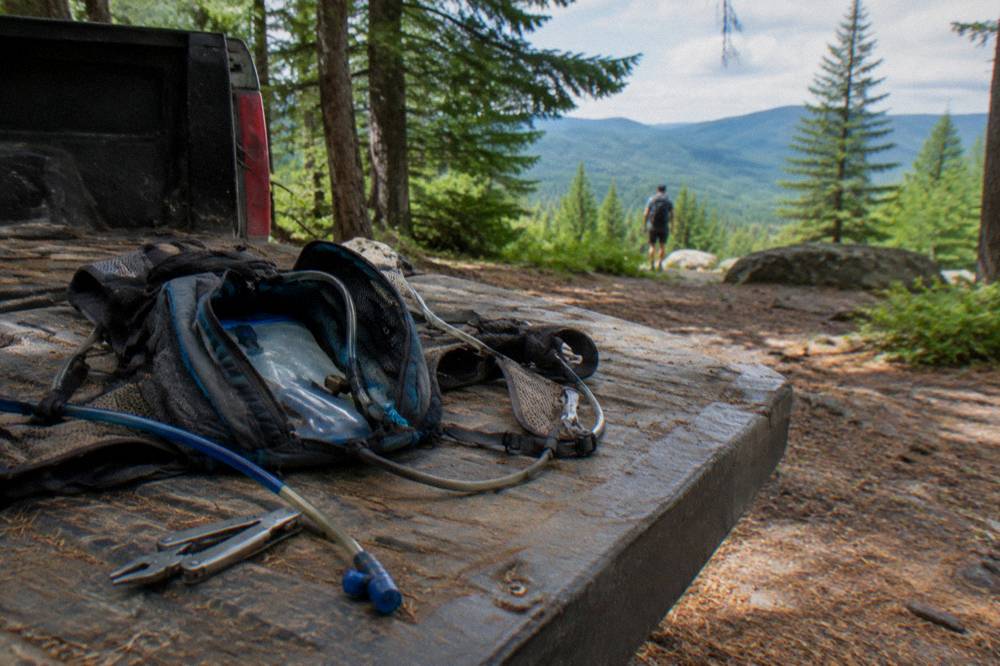
Road riders get the simplest kit and the hardest clothing call. Vermont's secondary roads are often narrow with limited shoulders, so a bright outer layer is genuinely functional, not vanity. Foliage season adds traffic on famous corridors like Route 100, and midweek riding plus visible kit is the standard local answer.
Choose lodging within riding distance of your first trailhead, because the quietest, coldest, most beautiful hour of a Vermont biking day is the first one, and a thirty minute drive wastes it. In the Northeast Kingdom, a base near East Burke or Lyndonville puts Kingdom Trails at the end of a short spin; in Burlington, a hotel by the waterfront puts you on the Greenway before breakfast. Location is the one packing decision you cannot fix with gear.
The Wildflower Inn sits 2.3 miles from Kingdom Trails in Lyndonville and adds its own bike rentals and a bicycle shuttle, which removes the daily drive and most of the cargo problem entirely; riders staying there can pack lighter because the shuttle carries the bikes. That pattern repeats across the state. In Burlington, staying near the water puts the Island Line Trail, about 14.4 miles from the waterfront toward South Hero, within a short roll, and Local Motion's Trailside Center at 1 Steele Street rents conventional, Class 1 e-bike, adaptive and kids bikes if you would rather not travel with a machine at all; details are on the Local Motion site, and our Vermont bike rentals guide surveys options statewide.
Riders who want to be able to walk out the door and onto the Burke singletrack can also look at The Wildflower Inn for the shuttle-and-rentals setup, while a Burlington itinerary pairs well with a stay at Hotel Champlain Burlington, steps from Waterfront Park and the bike path access.
Lyndonville, 2.3 miles to Kingdom Trails
Offers bike rentals and a bicycle shuttle, and sits 2.3 miles from Kingdom Trails.
Check ratesStowe answers the same question for a different kind of riding. The village sits on the Stowe Recreation Path with road loops radiating from it, so a base there means you walk out the door onto car-free path and pedal straight into a warmup. A practical note for anyone packing around a Burlington itinerary: the Local Motion bike ferry across the Colchester Causeway gap is closed for the 2026 season and returns in May 2027, with the season generally running late May to mid October, so island-bound riders should plan the out-and-back accordingly rather than counting on a crossing.
Leave behind cotton clothing, duplicate tools when a guide or van carries them, heavy locks on supported trips, and any single-use gadget with a carabiner. Also leave the assumption that you must transport a bicycle: rentals across Burlington, Stowe and Burke are good enough that flying with a bike case is a choice, not a requirement. Every pound you skip is a pound you never carry up Middlebury Gap.
The cotton rule bears repeating because it catches even experienced riders. A cotton t-shirt under a rain shell on a 45F descent becomes a cold, heavy rag, and it does not dry overnight in a humid inn. The same logic kills cotton socks and cotton hoodies. The lock rule has an exception: riders staying in towns and leaving bikes outside pubs or shops do want a light cable, but a two pound U-lock touring a supported week is dead weight that the sag van will resent with you.
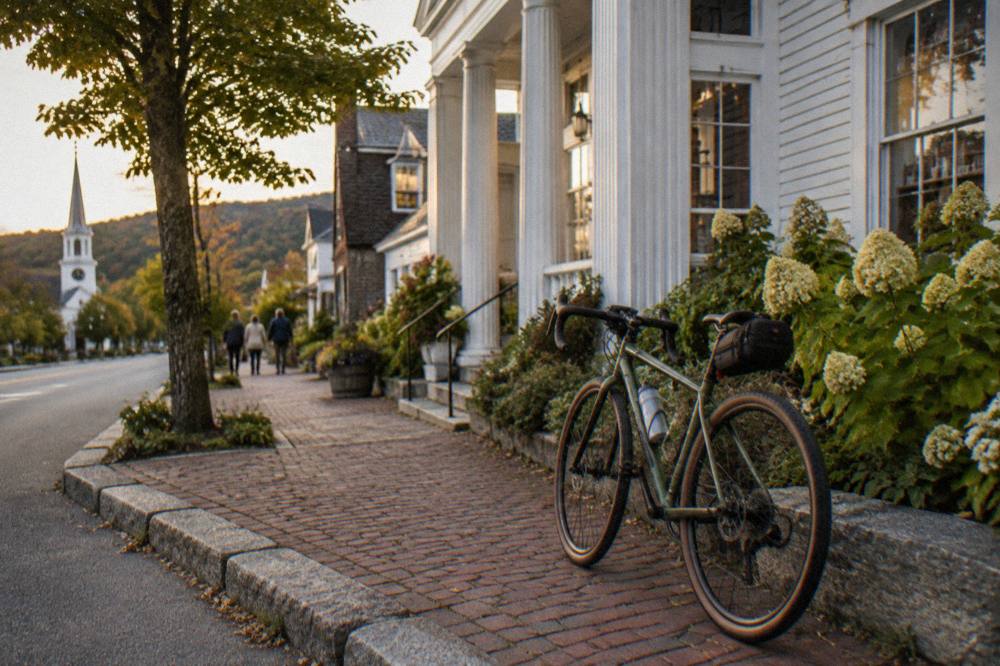
The gadget purge is about honesty. A heart rate strap, a GPS computer and a phone cover real needs. A fourth spare bottle, an emergency bivvy for a supported foliage ride and a full tool roll beyond the multitool are anxiety dressed as preparation. One exception earns its space every time: a small power bank, because cold weather drains phone batteries fast and the phone is now the map, the camera, the room key backup and the emergency call.
| Skip It | Why | What Replaces It |
|---|---|---|
| Cotton base layers and socks | Holds sweat, chills on descents, slow to dry | Merino or synthetic equivalents |
| Full tool roll on a guided trip | The support van carries the serious kit | Multitool, tube, levers |
| Heavy U-lock on supported tours | Dead weight in the van | Light cable for town stops |
| Water-resistant "rain" jacket | Wets out within the hour | Taped-seam waterproof shell |
| Fourth bottle or duplicate spares | Volume without benefit | Two bottles plus a filter stop plan |
| Hard bike case on a rental trip | Storage and hauling burden | Rent at the destination instead |
Split your gear into three bags: what rides on the bike with you every day, what moves inn to inn in a soft duffel, and what stays in the car if you have one. On the bike goes clothing for the day's weather swing, the repair kit, food and documents; the duffel holds evening clothes and everything else. Operators move duffels between inns on their own schedule, so daily essentials must never live in the duffel.
The on-bike kit should fit a seat bag, a handlebar bag or a jersey's three pockets, and nothing more for road rides. Rail trail and gravel riders add a small frame bag or a pack, sized around water capacity first and everything else second. The test is simple: you should be able to add or remove your mid layer and shell in under a minute without dismounting gear, because a layering system you cannot reach is a layering system you will not use.

The duffel deserves soft construction, not a roller bag, because support vans and inn closets in centuries-old buildings punish hard shells. Pack it in day-blocks rather than item-type blocks if your trip moves towns daily: each evening's outfit and the next morning's riding kit together, so a late van arrival never separates you from tomorrow's base layer. Zip bags inside the duffel keep the wet away from the dry on rain days, and a single labeled bag for chargers, power bank and cables ends the nightly hunt.
One last habit earns its keep in Vermont specifically. Lay out tomorrow's riding kit, filled bottles and on-bike bag before dinner, not in the morning. Cold, dark New England mornings move slowly, and the riders who roll out at first light with everything already staged are the ones who get the empty road, the mist on the pasture and the moose-free hour. The packing list gets you ready; the staging habit gets you out the door.
For anyone turning this list into a full itinerary, our three day Vermont fall itinerary and the beginners and seniors bike tours guide both build on the same layering and luggage logic, with route suggestions attached.
Burlington, near Waterfront Park
Steps from Waterfront Park and the bike path access; its listing includes free bicycle rentals.
Check ratesIn Burlington specifically, Hotel Champlain Burlington sits steps from Waterfront Park and its bike path access, and the listing notes free bicycle rentals for guests, which pairs neatly with a pack-light arrival by train or plane. Farther inland, Sun & Ski Inn And Suites in Stowe works as a base for the Recreation Path and the village road loops, and The Wildflower Inn near Burke covers the Kingdom. Each removes a daily drive from the plan, which is the single biggest quality-of-life upgrade a biking trip in this state can buy. Vermont Biking Tours covers these riding regions in depth across the rest of this guide collection, from the Champlain Islands to the Northeast Kingdom.
Guided operators supply helmets, but bringing your own is still the better choice. A helmet you have fitted and worn for a season fits correctly without adjustment, and it travels easily clipped to a handlebar or packed inside your duffel. Loaner helmets vary in age and fit, so riders who ride often should ride in their own.
Plan for a low near 36F and a high near 56F. Start in a merino or synthetic base layer, arm and knee warmers, full-finger gloves and a packable shell, then strip layers as the morning warms. Rain is always possible, so the shell should be a real waterproof one with taped seams.
Yes, on both guided and self-guided trips with Vermont operators the bicycle is typically included and fitted to you at the start, along with bags and route materials. Riders using specific pedals, saddles or shoes should bring them, since operator bikes generally come with flat pedals and stock contact points. Confirm inclusions with the operator directly before your trip.
Renting is a genuinely good option here. Local Motion's Trailside Center in Burlington rents conventional, Class 1 e-bike, adaptive and kids bikes, and shops around Burke and Stowe serve the mountain and road networks. Renting skips the bike case, the airline fee and the assembly hassle, at the cost of riding an unfamiliar machine.
Carry a spare tube matched to your tire, tire levers, a mini pump or CO2 inflator, a multitool with a chain breaker, a patch kit and a quick link. On long corridors like the 95 mile Lamoille Valley Rail Trail, services can be many miles apart, so a second tube and real food and water belong in the plan too.
Bring the charger and know your bike's class. Class 1 pedal-assist e-bikes are allowed on the LVRT and the Burlington Greenway, and Class 1 eMTBs are allowed on most Kingdom Trails routes per the Kingdom Trails Association, with exclusions shown on the trail map. State land rules for e-bikes on natural surface trails are stricter, so check before you ride.
Before you go, the pick for this guide:
Hotel Vermont
About 0.2 miles from the Burlington Bike Path in the lake-side downtown.
Check rates →