Hotel Champlain Burlington, Curio Collection by Hilton
Burlington, near Waterfront Park
Steps from Waterfront Park and the bike path access; its listing includes free bicycle rentals.
Check ratesNo single number answers what a Vermont bike trip costs, because the price depends almost entirely on the format: a self-guided day ride on a rail trail, a weekend of mountain biking at a trail network, or a multi-day guided tour with luggage moved and dinners included. This guide breaks down what drives each of those price tags and where to confirm the current figures.
Short answer
Vermont bike trip costs range from a near-free rail trail day ride with a rented bike to multi-day guided tours that bundle lodging, meals, luggage transport and a support van. Prices are not listed here because they change season to season: confirm current figures on the operator's own site, at Local Motion's Trailside Center for Burlington rentals, or with the Kingdom Trails Association for passes.
The most expensive part of almost every Vermont bike trip is not the bike. It is the bed you sleep in, the meals attached to it, and whether someone else moves your luggage between inns while you ride. A day on the Island Line Trail with a rented bike can cost less than a dinner out, while a week-long guided road tour through the Green Mountains runs to a different order of spending entirely, and both are legitimately called a Vermont bike tour.
That spread is why this guide does not print a single price figure for any operator, rental shop or hotel. Tour operators reprice seasonally, rental counters adjust with demand, and any number published today reads stale within months. What does not change is the underlying structure: which ingredients make up the cost, which of those ingredients you can control, and where to look for the live figure when you are ready to book. The framework below applies whether you are planning a first rail trail weekend in Burlington or weighing a guided inn-to-inn trip through the Northeast Kingdom.
For the riding side of the planning, the companion pieces on how to choose a Vermont bike tour and on guided versus self-guided bike tours in Vermont cover the decision this page prices out.
There is no single market price, because Vermont bike trips are sold in three different formats with different cost structures: do-it-yourself day rides where the only cost is the bike rental and any trail pass, self-guided multi-day packages that bundle lodging and luggage transport, and fully guided tours with leaders, meals and a support van. Each layer of service multiplies the price. Current figures live on each operator's own site, never on a middleman page. For a closer look at the mid-priced option, our guide to inn-to-inn bike tours across Vermont explains daily mileage, lodging styles, and what a typical package runs.
The honest answer is that the price is modular. Start with the bike: renting one for a day from a shop such as Local Motion's Trailside Center in Burlington, which rents conventional, Class 1 e-bike, adaptive and kids bikes, costs a fraction of what a week of the same rental would, and rental prices are confirmed at the counter or on the shop's own page. Add a trail pass where one is required, as at Kingdom Trails, where the Kingdom Trails Association sells passes online or at the Welcome Center in East Burke and publishes current pricing in its own store. Add lodging, which on multi-day trips is the dominant line item. Then decide whether a guide, a support van and catered dinners are worth the premium, which is a question of travel style rather than arithmetic.
A useful mental model: the riding itself is close to free, the equipment is a modest daily cost, and everything that makes the trip comfortable, beds, meals, moved luggage, someone who fixes your flat, is where the budget goes.
Guided tours cost more per day because you are paying for people: a trip leader riding with the group, a support vehicle carrying snacks and a lift option, and often a second guide driving. Self-guided trips keep the logistics, booked lodging, mapped routes, luggage moved between inns, but drop the staffing, which typically makes them cheaper. The gap between the two formats is essentially the price of human support.
Both formats usually include lodging, daily route notes and breakfasts, and both move your luggage so you ride with a light day bag. What changes is who solves problems when they happen. On a guided trip, a mechanical, a wrong turn or a rider having a hard day on the hills is the guide's problem. On a self-guided trip it is yours, which is why self-guided suits riders who are comfortable reading a route sheet and doing basic roadside repairs, and why guided trips appeal to groups of mixed ability where one rider may want the van.
The table below breaks the cost structure apart. Note the pattern, not the dollars: every row is a service, and every service either appears in your package price or becomes something you arrange and pay for separately.
| Cost component | Guided tour | Self-guided tour | Fully independent |
|---|---|---|---|
| Trip leader riding with the group | Included, priced in | Not included | Not included |
| Support van during rides | Usually included | Not included | Not included |
| Lodging each night | Included in package | Included in package | Booked and paid directly |
| Luggage moved between inns | Included | Included | You carry it or book inns that shuttle |
| Breakfasts | Typically included | Typically included | Paid at the inn or cafe |
| Dinners | Often several included | Sometimes included | Paid directly |
| Bike rental | Often included or discounted | Often included or bookable as an add-on | Rented separately by the day |
| Route planning and maps | Included | Included, this is the core product | Your own research |
| E-bike upgrade | Common surcharge pattern | Common surcharge pattern | Higher daily rental rate for e-bikes |
The e-bike row deserves a note, because it is the fastest-growing surcharge in the market. Vermont's rules treat Class 1 pedal-assist e-bikes as bicycles on multi-use paths and rail trails, so an e-bike upgrade widens who can ride a hilly route, and operators charge for it as a per-day or per-trip add-on. The size of that surcharge varies by operator and is confirmed at booking.
Nights of lodging scale almost linearly: every added night adds a room, a breakfast and a luggage move, so a five-night trip costs roughly five thirds of a three-night trip in its lodging and logistics alone. The bike, the guide and the pass costs stay flat or shrink as a share of the total. The cheapest structure change is shortening the trip, not downgrading it.

There is a floor effect too. A two-night weekend carries fixed costs, the arrival, the departure, the first and last day's riding at half strength, that a longer trip spreads out. Riders who want maximum value per night often extend by one or two nights rather than upgrading the hotel class, because the incremental night buys a full additional day of riding through different terrain while the per-day overhead keeps falling.
The other length question is daily distance. A shorter daily distance does not usually reduce the price of a packaged tour, since the lodging count is the same, but it does change which trips are open to you: a relaxed-mileage itinerary lets a mixed group share one trip instead of splitting into two. That is a cost question in disguise, because one shared trip is cheaper than two parallel bookings.
A do-it-yourself day ride in Vermont can cost little more than the bike rental and, on some trail networks, a day pass, with no lodging at all if you live nearby or are passing through. The multi-day formats add accommodation, meals and logistics on top. The decision is really between buying a service and buying an experience: the day ride prices the equipment, the tour prices the week.
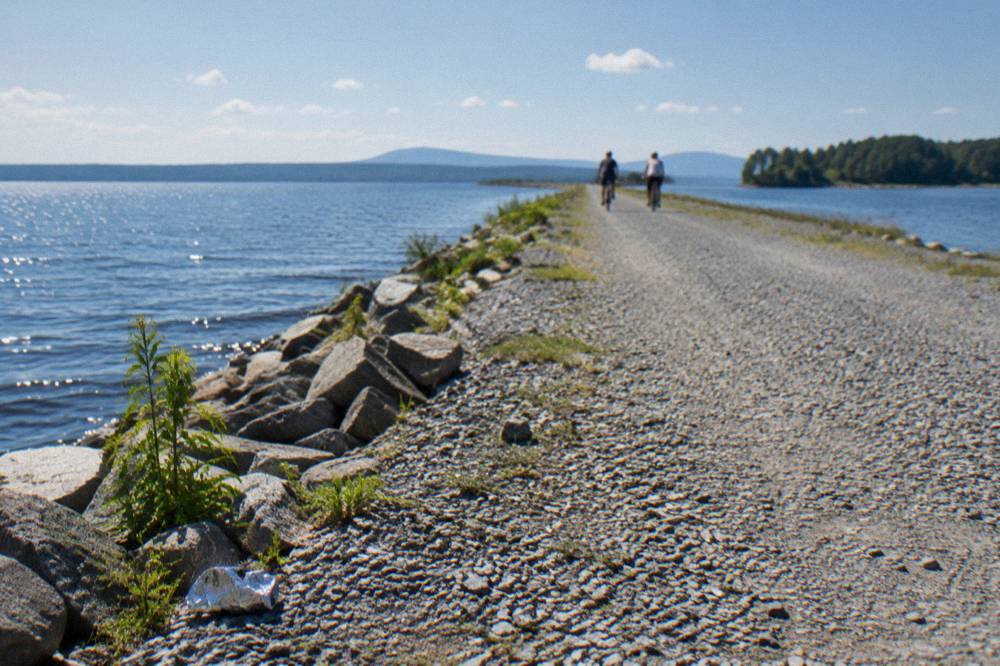
Consider the shapes of the main options. The Island Line Trail runs about 14.4 miles from the Burlington waterfront toward South Hero, about 8 miles of it on the paved Burlington Greenway and roughly 5 miles on the crushed gravel of the Colchester Causeway. Riding it costs nothing but the bike, and a day rental from the Trailside Center at 1 Steele Street in Burlington covers conventional, e-bike, adaptive and kids bikes, with reservations recommended in peak season. At the other end of the spectrum, a guided week with a company such as VBT Bicycling Vacations bundles inns, most meals, a support van and sometimes airfare credits, and is priced as a vacation, not a ride.
| Trip style | What you pay for | Typical length | Where to confirm the current price |
|---|---|---|---|
| Rail trail day ride | Bike rental for the day, sometimes parking | A few hours to a full day | The rental shop's own page or counter |
| Mountain biking at Kingdom Trails | Day pass plus rental if needed | One to three days | Kingdom Trails Association store for passes, rental shops directly |
| Weekend inn-based riding | One or two nights, two days of rental | Two to three days | Inn and rental shop directly |
| Self-guided multi-day | Lodging, luggage transport, routes, often bike | Three to seven nights | The operator's own site |
| Guided multi-day | All of the above plus guides, van, most meals | Five to ten days | The operator's own site |
The middle row is worth dwelling on, because it is the format most riders overlook. A weekend built around one base town, riding different loops each day with no luggage logistics at all, captures most of what a multi-day tour delivers at a fraction of the structure, and you choose your own dinner. The trade is route research and the loss of a support van, not the riding itself.
A workable planning framework: budget separately for the bike, the bed, the pass and the plate. For a weekend, plan on one to two rental days, one or two nights of lodging and simple restaurant meals. For a week-long tour, the package price replaces most of those lines, and your out-of-pocket budget shrinks to lunches, a few dinners and anything you buy along the way. Build the frame, then fill in live prices.
The point of a framework is that it survives price changes. Rather than anchoring on a dollar figure that may be wrong by the time you book, allocate your budget across the four lines and see which one has slack. Riders who want the trip to feel luxurious usually upgrade the bed, since Vermont has a strong inn culture in riding towns like Stowe, Woodstock and Middlebury. Riders who want to ride further usually spend on the bike, either an e-bike upgrade or a better-fitted rental.
| Budget line | Weekend inn-based trip | Self-guided week | Guided week |
|---|---|---|---|
| Bike or e-bike | One to two rental days from a local shop | Often in the package, confirm at booking | Usually in the package, e-bike may surcharge |
| Trail passes | Day pass where required, such as Kingdom Trails | Rarely needed on road routes | Included where applicable |
| Lodging | One to two nights, your choice of inn | Included, tiered by inn level | Included, tiered by tour level |
| Meals | Breakfast at the inn, dinners out | Breakfasts usually included | Most meals included |
| Transport of luggage | Not needed, single base | Included in the package | Included in the package |
| Contingency | Taxi or shuttle if a ride ends early | Local taxi numbers in route notes | Support van covers it |
That contingency line is a real budget item, and it is where guided trips quietly earn their premium. On an independent ride, a mechanical or a storm two inns from your bed means a taxi or a long walk, and setting aside a small buffer for that possibility is honest budgeting. On a guided trip the van absorbs it.
E-bikes carry a consistent surcharge pattern across the market: a higher daily rental rate than a conventional bike, and on packaged tours a per-day or per-trip upgrade fee. Season matters more than most riders expect: foliage season, late September to mid October, is peak demand for Vermont lodging everywhere, and summer weekends follow, so the same trip costs most when the leaves turn.
The seasonal effect is strongest on the lodging line, which is the biggest line. Inns in riding towns fill for foliage weekends well ahead, and the pricing reflects it. Spring and early summer, and the stretch after foliage, offer the same roads with more availability and gentler rates. The riding in June is excellent and the greens are deep; the trade is variable weather and blackfly season in low-lying areas late spring.
E-bike access itself is broadly settled: Class 1 pedal-assist bikes are treated as bicycles on rail trails and multi-use paths, while state land rules currently keep e-bikes off non-motorized natural-surface trails, a policy the Vermont Mountain Bike Association tracks closely. Budget the surcharge, check the surface you plan to ride, and the upgrade decision is straightforward. For more detail, see the site's guide to Vermont e-bike tours.
The single most effective cost lever on a Vermont bike trip is staying in one base town instead of moving nightly. A single-base trip eliminates luggage logistics entirely, lets you unpack once, and turns the lodging decision into a normal hotel search rather than a tour package. Towns with riding from the door, Burlington, Stowe, Lyndonville, Woodstock, Middlebury, reward this structure best.
Burlington is the clearest example. The city's lake-side paths put the Burlington Greenway and the Island Line corridor at the door of the downtown hotels, so a stay there plus a rental bike is a complete car-free weekend; Hotel Champlain Burlington sits steps from Waterfront Park and the bike path access, and its listing notes free bicycle rentals for guests, which removes the rental line from your budget entirely. In the Northeast Kingdom, The Wildflower Inn in Lyndonville sits 2.3 miles from Kingdom Trails and offers both bike rentals and a bicycle shuttle, which again collapses two budget lines, the bike and the transport, into the room rate.
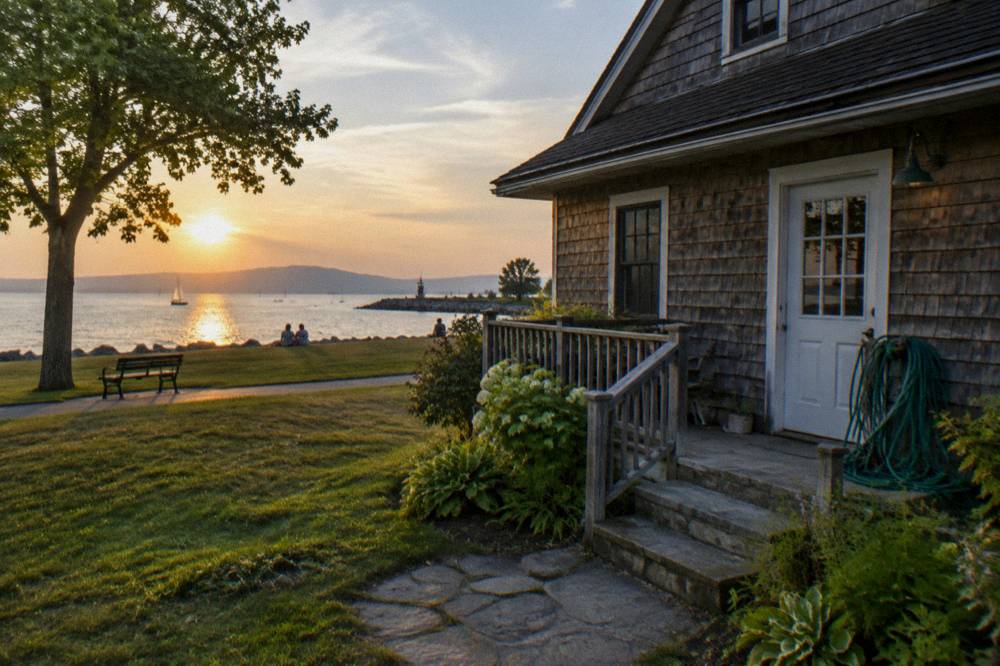
The comparison is not just about money. A single base means every ride starts and ends at the same door, which lets you shorten a day when the weather turns without breaking an itinerary. For a full walkthrough of the moving-base style this section is the cheaper alternative to, see inn-to-inn bike touring in Vermont.
Burlington, near Waterfront Park
Steps from Waterfront Park and the bike path access; its listing includes free bicycle rentals.
Check ratesStowe rewards the same structure. The Stowe Recreation Path and the road loops around the village make a car-light stay realistic, and Sun & Ski Inn And Suites markets itself directly to riders as a base for exactly those routes. The pattern to look for anywhere in the state is an inn or motel that names a trail or a loop in its own description: those properties have usually thought about bike storage and morning start times, which matters more than a lower nightly rate at a property ten driving miles from the riding.
Ask five questions before paying a deposit: what exactly is included in the quoted price, what is the e-bike surcharge if you want one, what is the cancellation and refund policy, what level of rider is the group aimed at, and what happens if a rider cannot finish a day. The answers separate the well-run trips from the optimistic ones, and they are all fair questions that a serious operator answers readily.
The included/not-included question is the one that most changes the real price. Two tours that look similar can differ by dinners, by bike rental, by airport transfers and by gratuities for guides, and the only way to know is the inclusions list, which every operator publishes. Read it against the budget framework above and mark each line as included or out-of-pocket. If the operator does not publish an inclusions list, treat that as information.
| Question to ask | What a good answer looks like | Why it matters for cost |
|---|---|---|
| What is included in the price? | A clear list covering lodging, meals, bike, luggage, van | Prevents surprise out-of-pocket spend mid-trip |
| What is the e-bike surcharge? | A stated per-day or per-trip figure | Lets you price the upgrade before deposit |
| What is the cancellation policy? | Written terms with a refund window | Protects the whole spend if plans change |
| Who is this trip for? | A stated daily distance and hilliness level | Avoids paying for a trip you cannot ride |
| What if I cannot finish a day? | A van or shuttle option, stated plainly | Defines your worst-case day |
| Is the bike included or rented? | Stated either way, with the model type | A full-week rental is a meaningful line |
Book directly with the operator, on their own site, and keep the confirmation. VBT Bicycling Vacations publishes its trips at its own site, as do Great Bike Tours, Lamoille Valley Bike Tours and Vermont Mountain Bike Tours; this site sells nothing and takes no booking, it is a guide to the market. The guide to choosing a Vermont bike tour walks through matching an operator to your riding style in more depth.
Confirm every price at the source: the operator's own website for tours, the rental shop directly for bikes, the Kingdom Trails Association store for trail passes, and Local Motion for Burlington rentals and the bike ferry. Prices change seasonally and are deliberately not printed here, because a stale figure is worse than none. This page holds the structure, the sources hold the numbers.
Each source owns one piece. The state rail trail pages, including the Lamoille Valley Rail Trail information page, carry trail status, rules and trip planning detail at no cost. Local Motion runs the Trailside Center rentals and the bike ferry page, including the notice that the ferry is closed for the current season and returns in May 2027. The Kingdom Trails site carries passes, the trail map and conditions, and rental shops near Burke such as East Burke Sports, Kingdom Bike Rentals, Village Sport Shop and Rifugio Darling Hill quote their own rates directly.
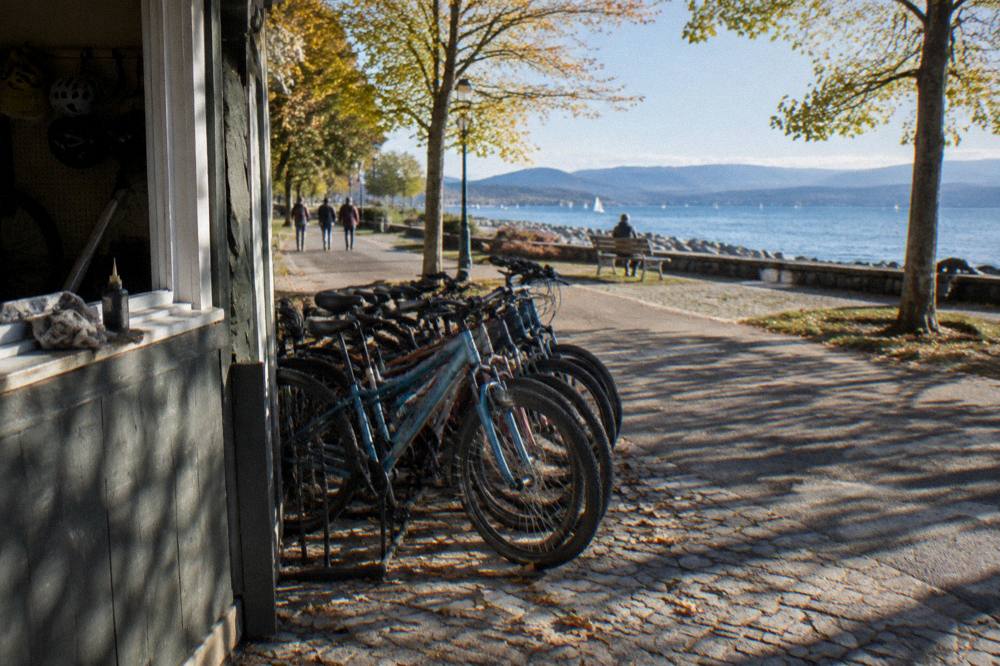
One habit worth forming: screenshot or save the quoted price when you find it, with the date you saw it, in your own trip notes. Prices on operator sites move with demand, and a figure you noted while planning is your baseline for spotting whether the price you are asked to pay later has shifted. That is also why this guide, Vermont Biking Tours, links to sources rather than restating their numbers: the live page is always more current than any article about it.
The cheapest strong trip is a single-base weekend in a riding town with a bike rented by the day from a shop at the trail: no package, no luggage logistics, no pass except where a network requires one. Next cheapest is a self-guided multi-day package, which buys logistics without staffing. Guided tours cost most and deliver the most support, and every format rides the same roads and trails.
The roads do not check your receipt. A rider on a rented hybrid crossing the Colchester Causeway sees the same lake, the same gap in the causeway and the same distant Adirondacks as a rider on a fully supported tour, and the Lamoille Valley Rail Trail's 95 miles of compacted stone surface are open to everyone at no charge, e-bikes explicitly included per the state trail page. What money buys is comfort and coverage, not access.
Three concrete economies, all consistent with the facts above. First, ride midweek and outside the foliage window of late September to mid October when lodging rates are softest. Second, pick a base town where the riding starts at the door, Burlington, Stowe, Lyndonville, Middlebury, Woodstock, and delete the daily driving. Third, rent only for the days you will actually ride long, not for the arrival and departure days when the bike sits in storage.
In the Northeast Kingdom, that third economy pairs well with The Wildflower Inn, which sits 2.3 miles from the Kingdom Trails network and offers both rentals and a shuttle, so the bike and the lift to the trailhead arrive with the room. The surrounding area, covered in the Kingdom Trails mountain biking guide, holds more than 100 miles of singletrack and multi-use trail, and passes are bought from the Kingdom Trails Association store or the Welcome Center on VT Route 114 in East Burke.
Lyndonville, 2.3 miles to Kingdom Trails
Offers bike rentals and a bicycle shuttle, and sits 2.3 miles from Kingdom Trails.
Check ratesTour operators reprice seasonally and by departure, rental shops adjust with demand, and any figure printed today would be stale within months. This page explains the cost structure instead, and points to the operator sites, Local Motion and the Kingdom Trails Association store where the live numbers are published.
They are worth it for riders who value a trip leader, a support van for tired legs or mechanicals, and most meals arranged, especially in groups of mixed ability. Riders comfortable reading a route sheet and handling roadside repairs usually find self-guided or independent trips deliver the same roads for less.
E-bikes carry a surcharge pattern across the market: a higher daily rental rate than a conventional bike, and on packaged tours a per-day or per-trip upgrade fee. The exact figure varies by operator and rental shop, so confirm it at booking. Class 1 pedal-assist e-bikes are allowed on rail trails and multi-use paths in Vermont.
Outside the foliage window and summer weekends. Foliage peaks between late September and mid October and lodging demand peaks with it; late spring, early summer weekdays, and the stretch after the leaves fall offer the same riding with gentler rates and more availability.
Most rail trails and road routes are free. Kingdom Trails requires a pass, bought online through the Kingdom Trails Association store or at the Welcome Center in East Burke, and that store carries the current pricing. Check the trail's own site before any long ride.
Yes, and many riders do. Rent a bike in a riding town such as Burlington or Stowe, stay in one base, and ride the local paths and loops each day. The Burlington Greenway and Island Line corridor, the Stowe Recreation Path and the Lamoille Valley Rail Trail all work as standalone day rides with no package attached.
Before you go, the pick for this guide:
Hotel Vermont
About 0.2 miles from the Burlington Bike Path in the lake-side downtown.
Check rates →