Hotel Champlain Burlington, Curio Collection by Hilton
Burlington, near Waterfront Park
Steps from Waterfront Park and the bike path access; its listing includes free bicycle rentals.
Check ratesVermont bike trips come in more shapes than most riders expect: guided inn-to-inn weeks, self-guided rail trail tours, single-day mountain bike outings at Kingdom Trails, and casual rentals on the Burlington waterfront. Here is how to match the format to your legs, your budget style and your travel companions.
Short answer
Choose by three variables: how much support you want, how far you want to ride each day, and whether your trip is one day or several. Guided trips from operators like VBT handle luggage, lodging and routes; self-guided trips suit confident riders; rail trails and Kingdom Trails work for day trips booked directly.
Vermont has roughly 95 miles of continuous rail trail, more than 100 miles of singletrack at Kingdom Trails alone, and a handful of operators who have run bike trips here for decades. That range is exactly why choosing is hard: a "Vermont bike tour" can mean a supported week of riding between inns, a rented bike on a lakeside path, or a shuttle up a mountain before a day of descending. The wrong format, not the wrong state, is what ruins bike trips.
This guide lays out the decision frame. It compares guided and self-guided trips, day and multi-day formats, and the tradeoffs between road, gravel and mountain biking in Vermont, and it names the actual operators you would book with, directly and on their own terms. Nothing here is sold by this site; it is a comparison of a real market. For the broader question of supported versus unsupported trips, see guided versus self-guided bike trips.
Vermont bike trips fall into four working categories: guided multi-day tours with luggage handling and a support vehicle, self-guided trips where the operator books inns and hands you maps, single-day guided rides or shuttles, and independent day rides built around a rental bike. Guided and self-guided formats dominate the multi-day market, while rentals anchor most day trips. Each suits a different rider.
The guided format is the most complete package. An operator such as VBT Bicycling Vacations plans the route, moves luggage between inns, arranges meals or meal stops and typically rides with a sweep vehicle. Great Bike Tours also runs fall foliage trips. You pay more for that structure and you ride on the operator's schedule, which is the tradeoff that defines the category.
Self-guided trips strip out the guide and the van but keep the planning. The operator books your lodging, marks the route and transfers bags; you ride at your own pace each day. Riders who are comfortable reading a route, fixing a flat and handling a missed turn save meaningfully this way, and the format suits couples or small friend groups especially well.
Day formats split by terrain. Lamoille Valley Bike Tours and similar local outfits run self-guided e-bike foliage rides in the northern part of the state, and Vermont Mountain Bike Tours is another operator to contact directly about mountain biking. At the simplest end, Local Motion rents bikes from its Trailside Center at 1 Steele Street in Burlington, right on the path, and riders build their own day from there.
| Trip type | Typical length | Support level | Best for |
|---|---|---|---|
| Guided multi-day | 4 to 7 days | Guide, van, luggage, inns | Riders who want everything handled |
| Self-guided multi-day | 3 to 7 days | Route, inns, luggage only | Confident, independent riders |
| Guided day ride | 2 to 6 hours | Guide only | First-time visitors, skill building |
| Independent day ride | Your call | Rental only | Locals, casual riders, families |
The categories overlap in practice: plenty of riders do one guided day to learn a network like Kingdom Trails, then ride it solo the rest of the week. The point of the frame is to force the first decision, which is how much structure you are actually buying.
Choose guided if you want a support vehicle, company on the road and zero logistics, or if anyone in your group worries about distance or navigation. Choose self-guided if you ride regularly, prefer your own pace and your own dinners, and can handle a mechanical on a rural road. The riding itself is often identical; only the wrapper changes.
Guided trips earn their premium in the hard moments. A van that appears at the top of a long climb, a guide who reroutes around fresh chip seal, and luggage that magically appears at the next inn are worth real money to some riders and irrelevant to others. VBT has a full library of Vermont itineraries; Great Bike Tours and Lamoille Valley Bike Tours work smaller and more locally. Book with the operator directly.
Self-guided trips suit riders whose main friction is logistics rather than ability. The route is designed for you, the inns are pre-booked, and the daily distances are calibrated to real beds rather than optimism. What you give up is the safety net: no van if a knee gives out mid-afternoon, no guide to translate a trail closure notice.
A quick honesty test: when did you last ride 30 miles on consecutive days, and did you enjoy day two? If the answer is "not recently", guided is the safer buy. If it is "last month", self-guided saves money and adds freedom. Riders weighing cost in more depth can start with what Vermont bike trips cost, which covers where the money goes in each format.
Match daily distance to the least experienced adult rider in your group, not the strongest. Guided Vermont itineraries commonly offer route choices on a given day, rail trail riding runs gentler than road riding because grades stay under about three percent, and mountain biking days are measured in hours on trail rather than miles. Distance is a preference, not a virtue.
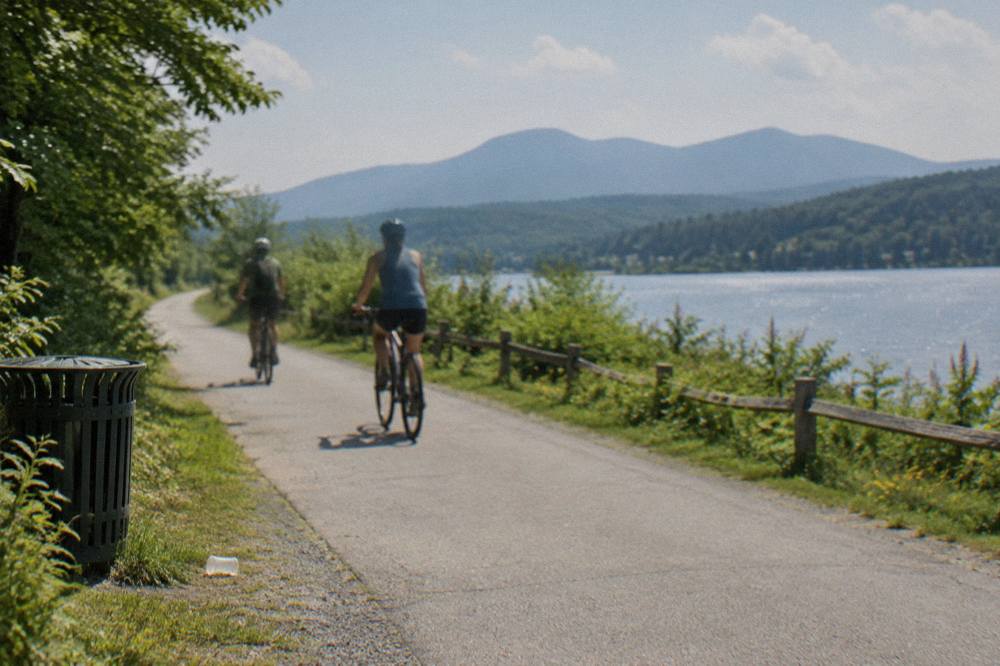
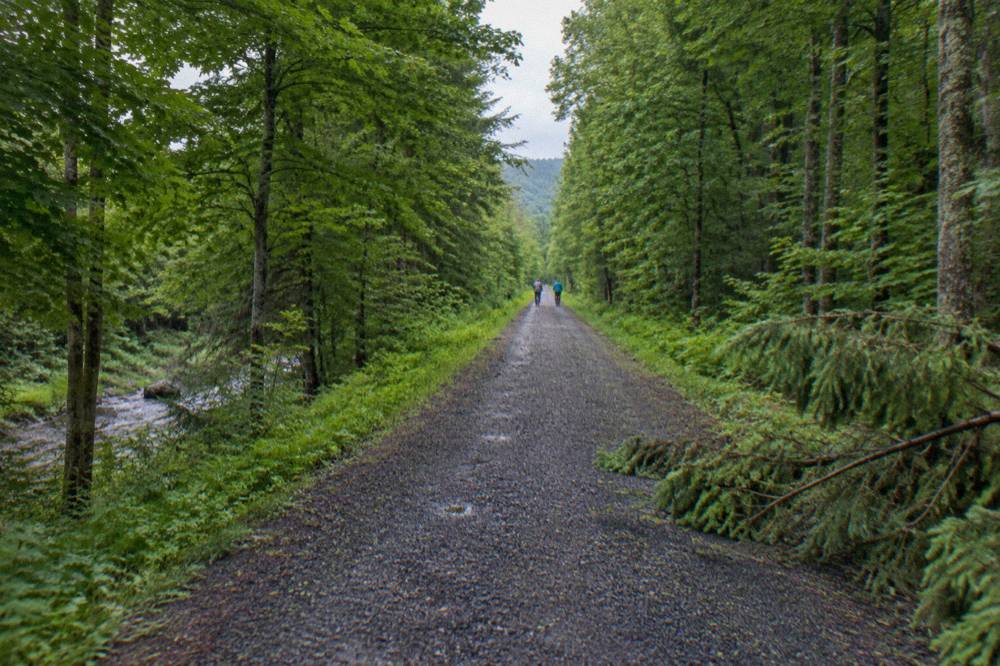
Rail trail riding changes the distance math. The Lamoille Valley Rail Trail runs 95 miles from St. Johnsbury to Swanton on compacted crushed stone at grades under three percent, which makes 40 mile days feel noticeably easier than 40 road miles with Green Mountain pitches in them. The surface is firm but not pavement, so wider tires ride better than racing rubber. Riders curious about the mechanics of e-bikes on that trail can check the state rail trail pages for the current rules, which allow e-bikes and ban motorized scooters and similar machines.
Road trips in Vermont are shorter on paper for a reason. Secondary roads often carry narrow or absent shoulders, and a route that looks flat on a map can hide steady climbing between river valleys. Operators plan around this, which is another argument for buying planning in some form rather than drawing lines yourself.
Mountain biking is measured differently again. A strong day at Kingdom Trails might cover far fewer miles than a road day but include hours of descending and climbing singletrack; fatigue arrives by a different route. First-timers there should read the Kingdom Trails mountain biking guide before committing to a multi-day stay in the Northeast Kingdom.
Pick road for scenery at climbing effort, gravel for quiet and steady distance, and mountain bike for skill-focused days at dedicated networks. Vermont supports all three seriously: narrow farm roads for riding, converted rail lines for gravel, and Kingdom Trails for singletrack. Most riders enjoy one style far more than the others, so be honest about which.
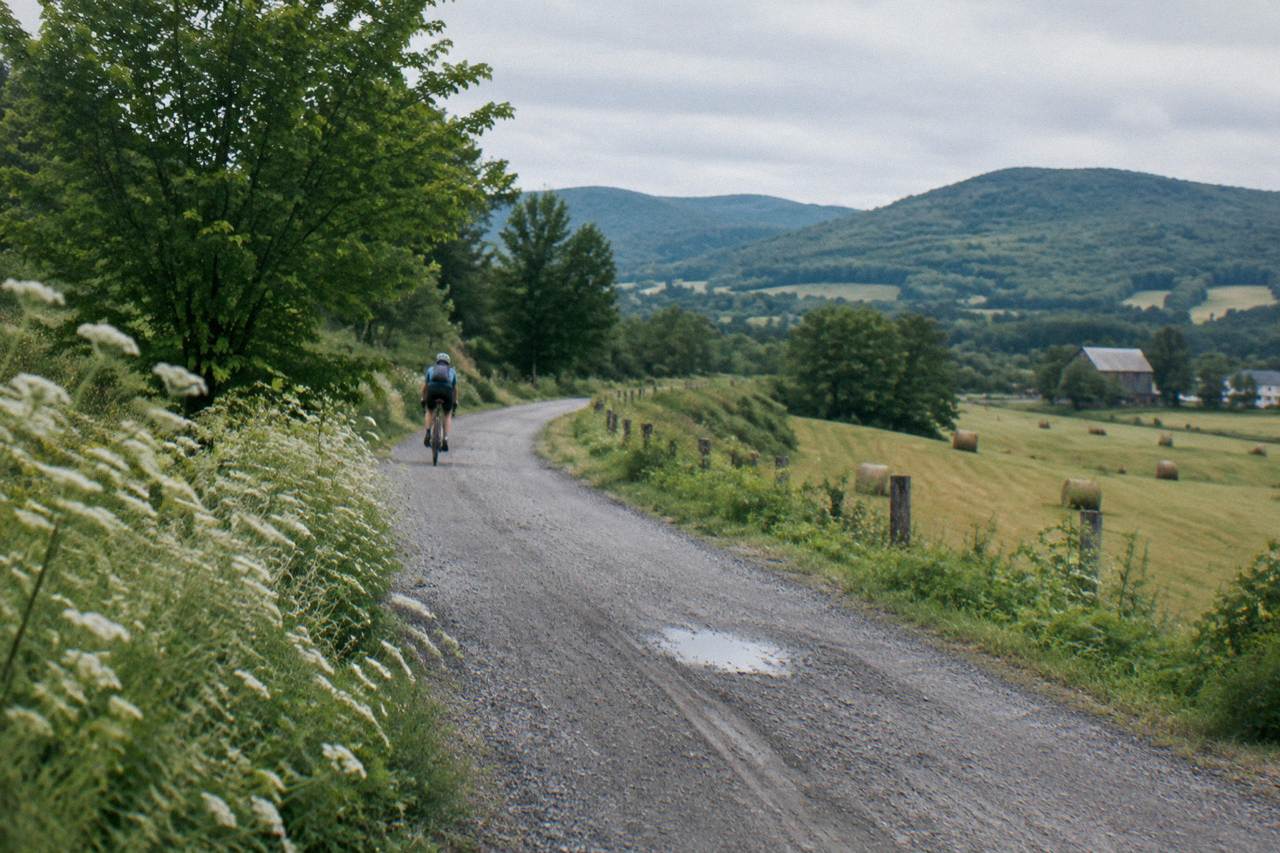
Road riding is Vermont's classic cycling image: covered bridges, dairy farms and long climbs. The effort profile is real, and the pavement quality varies. What you get in return is access to terrain that feels earned, and the state's small towns are spaced almost perfectly for inn-to-inn riding. Guided operators lean heavily on these networks because they can tune difficulty day by day.
Gravel is the quiet middle. Rail trails and forest roads give you long car-free stretches, and Vermont's rail trail network is among the best in the region for it. The surface rewards a bike with room for wider tires, and a gravel trip is the easiest format for mixed-ability groups to share, since a strong rider and a steady rider can travel the same miles at different efforts. The tradeoffs between machines are laid out in road versus gravel versus e-bike in Vermont.
Mountain biking concentrates in a few networks, with Kingdom Trails in East Burke the best known. It draws riders from across the country, runs a summer season that typically closes around the end of October before a groomed winter fat bike network opens, and requires a pass bought online or at the Welcome Center; check the Kingdom Trails Association site for current pass pricing and the trail map. Shops at the trailhead include East Burke Sports, Kingdom Bike Rentals, Village Sport Shop and Rifugio Darling Hill, and rental pricing is best confirmed with them directly.
| Style | Terrain character | Effort profile | Gear needs |
|---|---|---|---|
| Road | Paved farm and valley roads, climbs | Steady to hard, distance driven | Road bike, helmet, repair kit |
| Gravel | Rail trails, forest roads, crushed stone | Steady, long days possible | Gravel or wide-tire bike |
| Mountain bike | Singletrack at networks like Kingdom Trails | Bursts of skill and effort | Mountain bike, protection |
Guided multi-day trips typically include lodging, most meals, a guide and support vehicle, luggage transfer, route planning and often a rental bike; self-guided trips include lodging, luggage transfer, routes and sometimes bikes, but not meals or guides. Day tours usually include the guide and bike only. Always ask the operator to confirm the exact list before you pay a deposit.
The inclusions that actually decide value are the unglamorous ones. Luggage transfer sounds trivial until you have carried four days of clothes up a hill; route planning sounds trivial until you meet a closed bridge with no cell signal. These are the two things a good operator earns its fee on, and the two things self-guided riders most underestimate when they strike out alone.
Bikes themselves are a line item to check. Some trips include a house bike, others ask you to rent separately or bring your own. If you are renting independently, Vermont bike rentals covers where to rent by region. In Burlington, Local Motion's Trailside Center on the path rents conventional, Class 1 e-bike, adaptive and kids bikes, with reservations recommended; details are on the Local Motion site.
| Inclusion | Guided multi-day | Self-guided | Day tour |
|---|---|---|---|
| Lodging booked | Yes | Yes | No |
| Luggage transfer | Yes | Usually | No |
| Guide riding with you | Yes | No | Yes |
| Meals | Most | Breakfast often | Rarely |
| Bike supplied | Often | Sometimes | Usually |
| Question to ask | Why it matters |
|---|---|
| What is the average daily distance and climb? | Calibrates the trip to your real fitness |
| Is the bike included, and what type? | Determines tire width and comfort on the surface |
| What happens if I cannot ride a day? | Reveals whether a van or shuttle exists |
| How many riders per guide? | Small groups ride better on narrow roads |
| What is the cancellation policy? | Mountain weather and plans change |
Operators answer these questions daily, and the good ones answer them precisely. Ask them of VBT at the VBT site, Great Bike Tours, Lamoille Valley Bike Tours or Vermont Mountain Bike Tours directly, and compare the answers rather than the brochures.
Most Vermont bike trips anchor on one of four bases: Burlington for lake path riding and the Island Line Trail, Stowe for the recreation path and mountain road loops, the Northeast Kingdom for Kingdom Trails, and the Middlebury or Woodstock area for road and gravel. Choose the base that matches your riding style, then pick lodging you can walk or roll a bike from.
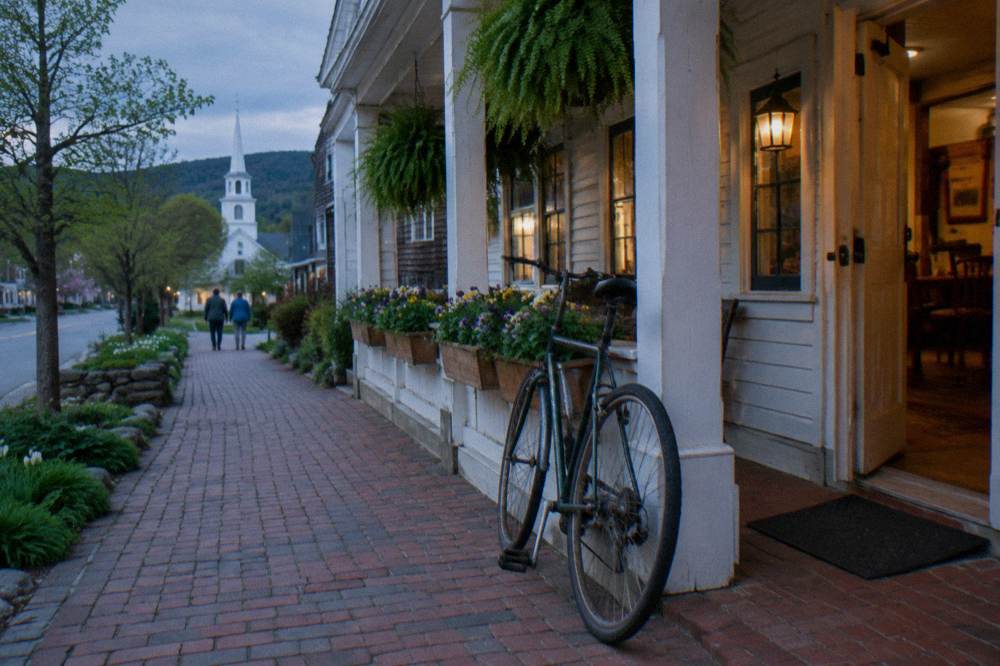
Burlington is the easiest entry point. The city's lake-side paths connect toward the Island Line Trail, and rental options sit right on the route. A stay such as Hotel Champlain Burlington, Curio Collection by Hilton puts you steps from Waterfront Park and the bike path access, with bicycle rentals listed among its offerings, which removes the first-morning logistics problem entirely.
Stowe pairs a classic village with the Stowe Recreation Path and road loops around the village and up Mountain Road. The Sun & Ski Inn And Suites sits as a base for exactly that riding, and the town is compact enough that a bike is genuinely the best tool for dinner. For riders sizing up that area, the Stowe Recreation Path guide covers the mileage and connections.
The Northeast Kingdom is a different trip entirely: mountain biking country, quieter, and spread out. The Wildflower Inn outside Lyndonville sits about 2.3 miles from Kingdom Trails, offers bike rentals and runs a bicycle shuttle, which is the single most useful service a Kingdom base can offer.
Burlington, near Waterfront Park
Steps from Waterfront Park and the bike path access; its listing includes free bicycle rentals.
Check ratesSmall group trips, often roughly 8 to 20 riders with a guide, favor companionship and shared logistics; private and custom trips favor families and mixed-ability groups; self-guided trips are effectively private by default. In Vermont, group size affects road choice more than in wide-open states, because narrow roads and small inns cap how many riders travel comfortably together.
A guided group delivers what solo research cannot: riding companions at your speed, and a guide who knows which rider needs the van at mile 40. The cost is pace compromise. Groups ride at the pace of the ride leaders, with faster riders waiting and slower riders chasing. If your group contains one reluctant rider, that dynamic either makes or breaks the week.
Private departures solve it at a price. If you want a private or custom departure for a family, a friend group or a celebration, ask operators directly, since availability varies from one company to the next. Families with kids or seniors should also read Vermont bike trips for beginners and seniors, which covers the flatter, shorter end of the market.
Self-guided travel is the privacy option without the custom price. Your group of two to six rides alone with pre-booked inns, and the only pacing argument is internal. The catch repeats from earlier: no safety net beyond your own tools and judgment.
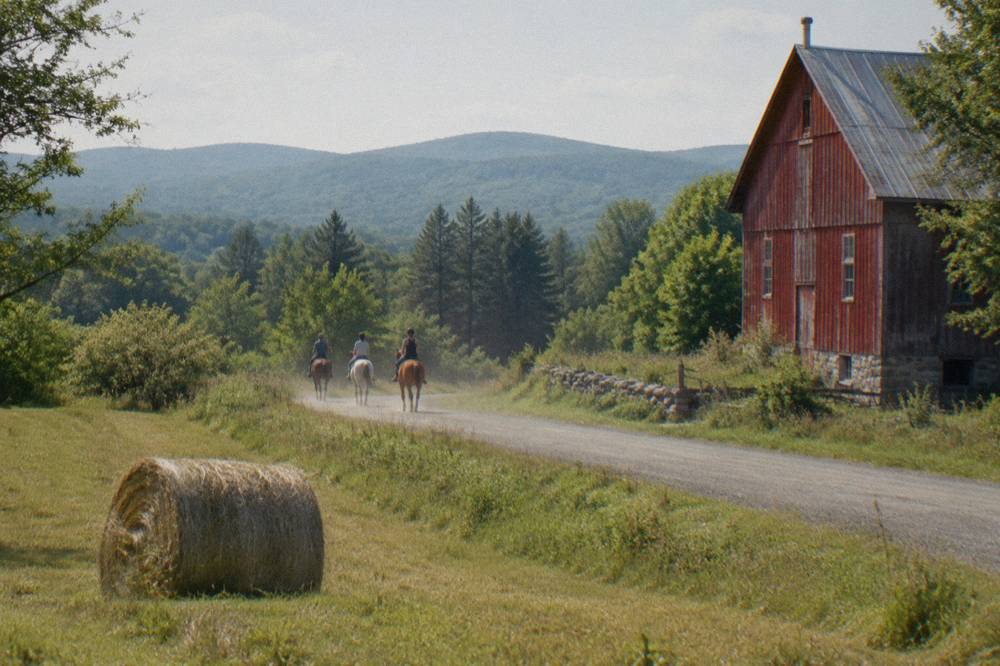
| Group format | Typical size | Pace control | Tradeoff |
|---|---|---|---|
| Guided open group | Often 8 to 20 | Guide sets it | Companionship, fixed schedule |
| Private guided | Yours | Yours | Higher cost |
| Self-guided | 2 to 6 | Yours | No support vehicle |
| Independent day | Any | Yours | You plan everything |
Day trips make sense for first-time visitors testing whether they like riding in Vermont, for families with variable stamina, and for anyone basing in one town; multi-day trips justify themselves when you want to cross regions, ride inn to inn without backtracking, or let someone else handle logistics for a full week. One good day often sells riders on the week.
The day-trip version of Vermont cycling is underrated. Ride the Burlington Greenway and out the causeway in a morning, book a guided singletrack day at Kingdom Trails, or rent in Stowe and ride the recreation path: each is a complete experience with no itinerary commitment. Costs are limited to rental and pass fees, and a bad-weather day costs you nothing. The Island Line's causeway section alone, about five miles of crushed gravel out over the lake, is worth the drive for many riders; note that the seasonal bike ferry across the causeway gap runs late May to mid October and readers should check the Local Motion ferry page for the current schedule before planning a crossing.
Multi-day trips buy depth. Crossing the state on quiet roads, or linking towns along the rail trail, gives you evenings in places a day visitor never reaches, and luggage transfer is what makes it humanly possible. A week also amortizes the fixed frictions of any bike trip: the travel to Vermont, the bike setup, the first-day wobble.
The honest decision rule is frequency. If you ride weekly and have a week free, the multi-day formats are built for you. If you ride monthly and are visiting Vermont for other reasons too, one or two strong riding days inside a broader trip usually satisfy, and some of the best bike rides in Vermont is the natural next read for choosing them.
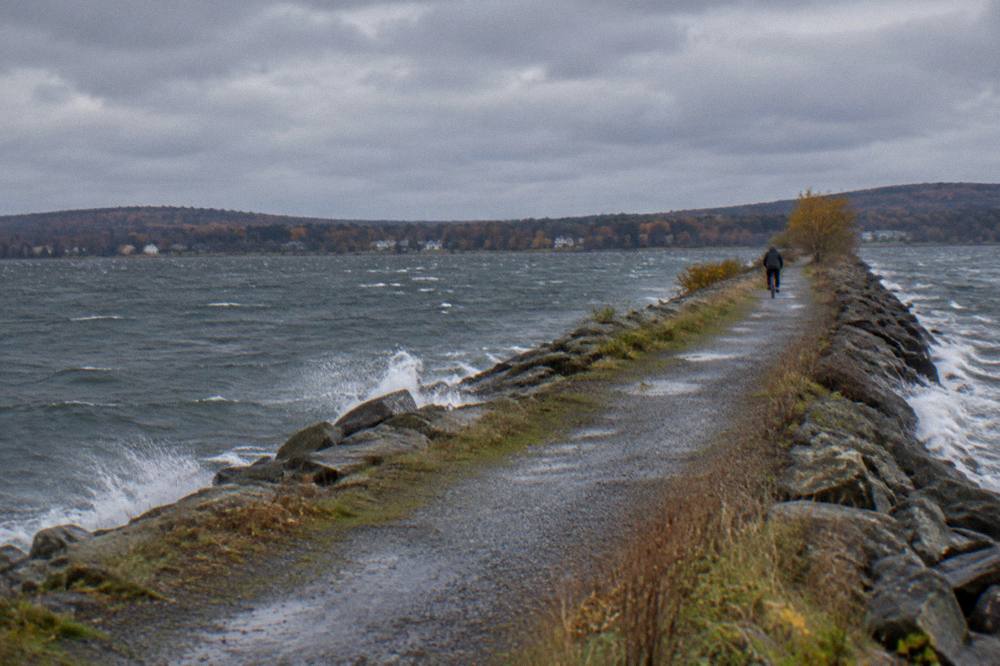
Ask five things in writing: the daily distances and climbing, what the price includes and excludes, the bike and tire options, the cancellation and weather policy, and the group size per guide. Vermont-specific answers matter on surface and season: crushed stone routes need wider tires, foliage season books out early, and trail networks close or change conditions with weather.
The distance question deserves numbers, not adjectives. "Easy" and "moderate" mean nothing across operators; a concrete mileage with a stated amount of climbing is a specific promise you can compare. Ask for the day-by-day profile, and ask what the bail-out option is if a rider stops. Reputable operators answer both without hesitation, and the answer distinguishes a planned trip from an improvised one.
Surface and season are the Vermont specifics. A route on the rail trail's crushed stone is kinder with 40mm tires than 28mm; a mountain bike week in the Kingdom depends on trail conditions, which the Kingdom Trails Association publishes so riders can check before committing. On timing, foliage season, late September to mid October, is the state's most beautiful and most crowded riding window, and lodging in the small towns fills first; the best time to bike in Vermont breaks the calendar down month by month.
Finally, book directly. Every operator named in this guide, from VBT to the Burke-area rental shops, takes reservations on its own site or by phone. Booking direct keeps your cancellation relationship with the people running the trip, and there is no reason for a middleman on a trip this personal.
Combine the three axes, format, terrain and length, and the choice collapses quickly: structure level picks guided versus self-guided, terrain picks road versus gravel versus singletrack, and calendar picks a day versus a week. Most riders land on one of a few familiar combinations, and the table below shows how the pieces fit for the common cases.

| Rider profile | Format | Terrain | Base town |
|---|---|---|---|
| First-time visitor, casual rider | Day trip, rental | Rail trail or lake path | Burlington |
| Couple, regular riders | Self-guided week | Road or gravel | Region-spanning |
| Family with teens | Private guided | Gravel or easy road | Stowe or Woodstock |
| Skill-focused mountain biker | Multi-day stay plus coaching | Singletrack | East Burke area |
| Solo traveler wanting company | Guided open group | Road | Operator itinerary |
Whichever cell you land in, the same sequence works: pick the terrain, pick the structure, then pick the base and the stay. A Kingdom-based rider at the Wildflower Inn outside Lyndonville, with its bike rentals and bicycle shuttle 2.3 miles from the trail network, is buying a different product from a lake-side guest in Burlington, and both are correct.
Lyndonville, 2.3 miles to Kingdom Trails
Offers bike rentals and a bicycle shuttle, and sits 2.3 miles from Kingdom Trails.
Check ratesThe site behind this guide, Vermont Biking Tours, exists to make that matching exercise easier: compare the formats honestly, then book with the operator or the inn directly.
Four main types: guided multi-day tours with support vehicles, self-guided trips with routes and lodging pre-booked, guided day rides, and independent day rides built on a rental bike. Operators like VBT and Great Bike Tours run the first two; local outfits and rental shops such as Local Motion in Burlington anchor the day formats.
Choose guided if you want a van, a guide and no logistics, or if any rider in your group is unsure about distance. Choose self-guided if you ride regularly and can handle navigation and minor repairs yourself. The routes are often the same; the support is the difference.
Guided multi-day trips generally include lodging, most meals, a guide, luggage transfer and often a bike. Self-guided trips include lodging, routes and luggage transfer but not guides or most meals. Day tours usually cover just the guide and the bike. Confirm the exact list with the operator before booking.
A day trip suits first-time visitors, families with mixed stamina and riders testing the state. A multi-day trip justifies itself when you want to cross regions, ride inn to inn without backtracking, and hand logistics to someone else for a full week.
Ask for daily distances and climbing, a full list of inclusions and exclusions, bike and tire options for the surface, the cancellation and weather policy, and the rider-to-guide ratio. Get the answers in writing and compare operators on those numbers, not on brochure language.
Burlington for lake path riding and the Island Line Trail, Stowe for the recreation path and road loops, the Northeast Kingdom for Kingdom Trails singletrack, and Middlebury or Woodstock for road and gravel riding. Match the base to your terrain, then choose lodging within rolling distance of the ride.
Before you go, the pick for this guide:
Hotel Vermont
About 0.2 miles from the Burlington Bike Path in the lake-side downtown.
Check rates →