Sun & Ski Inn And Suites
Stowe
A Stowe base for the Stowe Recreation Path and the road loops around the village.
Check ratesVermont riding splits three ways: pavement on quiet town roads, crushed stone and packed dirt on the rail trails, and steep singletrack in the Northeast Kingdom. The bike you pick decides which of those you actually enjoy.
Short answer
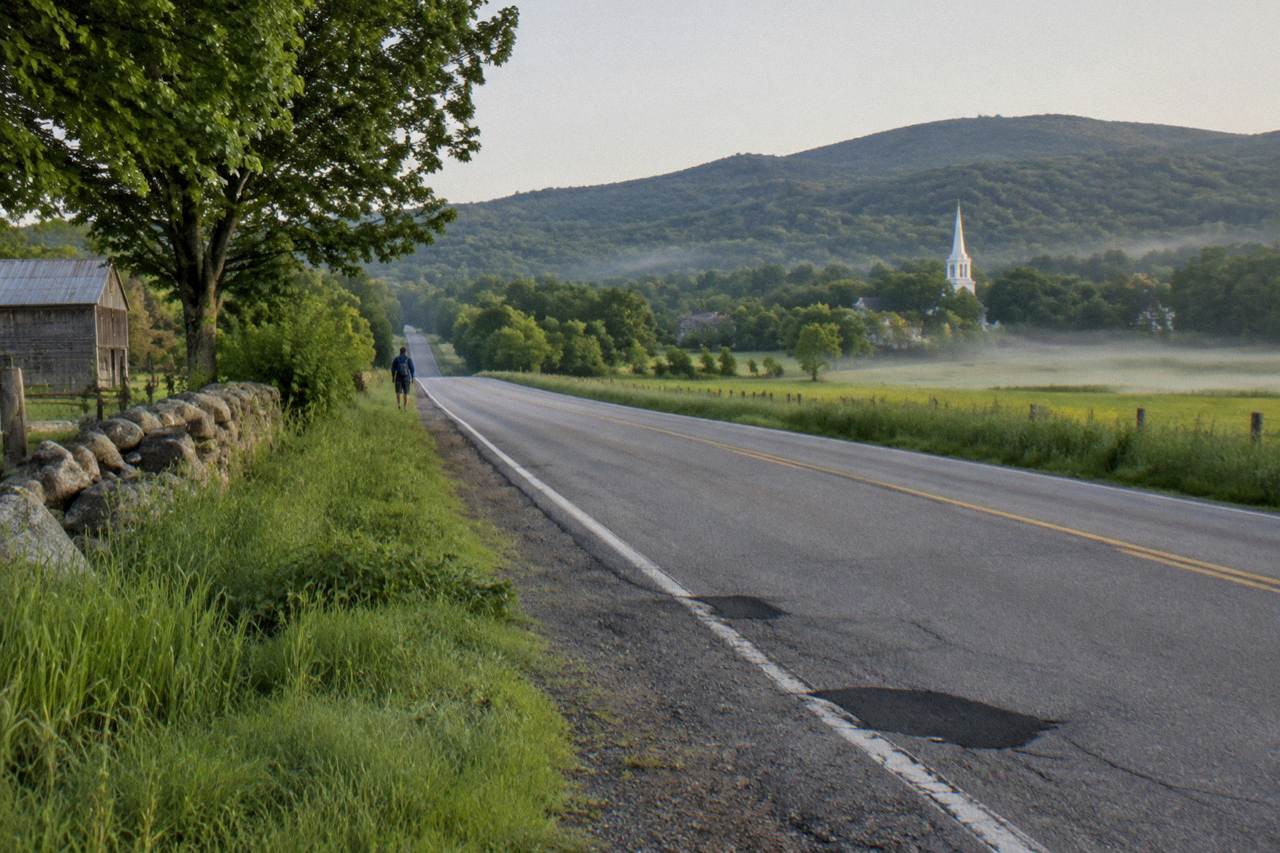
Most Vermont riders do best on a gravel or all road bike: the state mixes pavement with dirt town roads and crushed stone rail trails, and a wide tire covers nearly all of it. Road bikes suit paved gap climbs, and Class 1 e-bikes are allowed on the big rail trails but not on natural surface singletrack at state lands.
Vermont is one of the few states where the question of which bike to bring is a real decision rather than a preference. The riding splits into three distinct worlds: quiet paved town roads that climb through gaps, a web of dirt roads and crushed stone rail trails that a skinny tire handles badly, and purpose built singletrack centered on East Burke. A rider who shows up with the wrong bike does not have a bad day, they have a narrowed trip, because whole regions effectively close off.
The good news is that the three categories overlap more than bike marketing suggests. A gravel bike with modest tires rides most of the pavement, all of the rail trails, and a surprising amount of the mellow singletrack. A road bike covers the paved climbs but bounces on the causeway gravel. An e-bike flattens the hills and is welcomed on the big rail trails, yet state land rules keep it off natural surface mountain bike trails. This guide compares the three on surface, tire, hill load and trip style so the choice follows the riding you actually came for.
For a first Vermont bike trip that mixes surfaces, a gravel or all road bike on wide tires is the most versatile choice: it rides the paved town roads, the dirt passes and the crushed stone rail trails without punishment. A road bike is the right pick only if every planned day is pavement, and an e-bike is best when hills or knee fatigue, not terrain, are the limiting factor. If you'd like to see what those dirt-road routes actually look like in practice, our guide to Vermont gravel bike tours covers the classic rides and what to expect on each one.
The reason gravel wins the general case is surface variety. The Lamoille Valley Rail Trail, at 95 miles the longest rail trail in New England, runs on firm compacted crushed stone between St. Johnsbury and Swanton, and the state's rail trail pages confirm it is open to bicycles and e-bikes year round. The Colchester Causeway segment of the Island Line is crushed gravel for roughly five of its 14.4 miles. Neither surface is kind to a narrow road tire at speed, and both are effortless on a gravel setup.
Trip style matters as much as surface. Riders who want a supported, luggage free experience can book directly with operators such as VBT Bicycling Vacations, which runs guided and self guided road and e assisted trips; the details of what each trip includes live on the operator's own site. Independent riders towing their own logistics lean gravel, because dirt roads connect nearly everything and let you avoid the busier paved arteries.
| Bike type | Best Vermont surfaces | Weakest on | Typical trip it suits |
|---|---|---|---|
| Road bike | Paved town roads, gap climbs, lake side paths | Crushed stone, packed dirt, singletrack | Fast pavement days, inn to inn road trips |
| Gravel or all road | Dirt roads, rail trails, paved links, mellow doubletrack | Technical singletrack | Mixed surface trips, rail trail tours, foliage rides |
| E-bike (Class 1) | Rail trails, paved paths, hilly dirt roads | Natural surface trails on state land, some singletrack | Hill heavy regions, riders wanting range with less strain |
| Mountain bike | Kingdom Trails singletrack, technical descents | Long paved transfers | Trail focused trips based in East Burke |
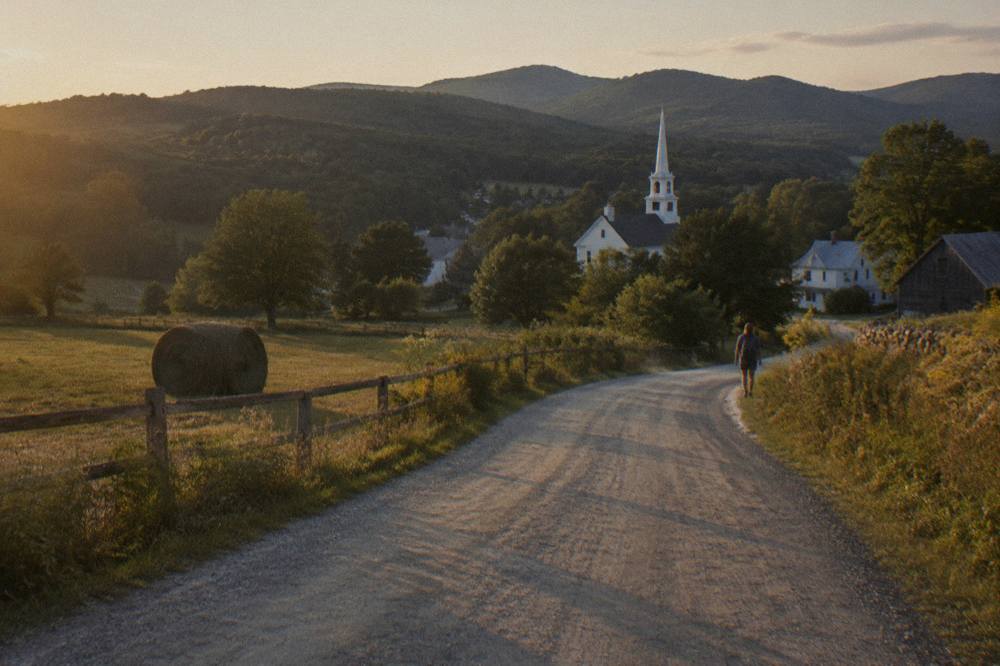
A large share of Vermont's rideable network is unpaved: the state crisscrosses with dirt town roads, plus dedicated crushed stone rail trails including the 95 mile Lamoille Valley Rail Trail and the 26.4 mile Missisquoi Valley Rail Trail. Any bike plan built only around pavement misses most of the quiet riding, which is exactly where the scenery and low traffic live.
The rail trail layer alone is substantial. Beyond the Lamoille Valley and Missisquoi Valley corridors, the Delaware & Hudson Rail Trail adds nearly 20 miles in two southern sections, and the Cross Vermont Trail stitches off road and on road segments into a crossing of the state. These are wide, gently graded routes: the LVRT runs a ten foot wide compacted stone surface with grades under three percent, built on a rail bed, which makes it approachable for beginners and loaded bikes alike. The state rail trail pages publish the surface and motor rules for each corridor, and they are the authority worth checking before any long ride.
On top of the formal trails sits the informal layer, the town gravel roads. Vermont's town highway system includes thousands of miles of gravel, and these roads carry very little traffic, climb through farm country, and link paved valleys to gap views. This is the home of the state's gravel scene, and it is why the gravel format has taken hold here faster than in flatter states.
Vermont gravel is generally friendly: hard packed town roads, wide rail trail corridors and grades under three percent on the converted rail beds, rather than the shattered limestone of racing scenes. The challenge is cumulative climbing and occasional loose sections after rain, not technical difficulty, which is why the format suits such a wide range of riders.
Riders coming from road cycling are usually surprised by how rideable the surfaces are. The typical town gravel road is firm, rolling and empty, with grass shoulders and mountain views. The rail trails are even easier, since the rail bed grading means long stretches at barely perceptible incline. What gravel adds is rhythm rather than obstacle: you sit up, spin, watch the fields, and stop worrying about the paint line.
Hill load is the honest catch. The state's gravel events illustrate the vertical: the Vermont Overland ride covers 55 miles with roughly 7,000 feet of climbing in the hills around West Windsor, and that ratio is not unusual for a full loop in the central Green Mountains. Riders who want gravel without the climbing should head for the rail trail corridors, where the grade is capped by the original rail engineering, or the Champlain Islands, where flat lake side dirt and causeway riding dominate.
Rain changes the equation. Gravel that is glassy in dry weather can turn to soft paste for a day after a storm, and the rail trail managers post condition updates through the riding season. The standing advice is simple: check trail status before a long ride, and be ready to shorten a dirt loop rather than push through mud, which damages the surface for everyone.
| Surface type | Where you find it | Tire that works | Notes |
|---|---|---|---|
| Paved town road | Everywhere, especially gap routes | Narrow road tires | Some narrow shoulders, ride predictably |
| Hard packed dirt road | Town highways across the state | Mid width gravel tires | Softens after rain |
| Compacted crushed stone | Lamoille Valley and Missisquoi rail trails | Wide gravel tires | Grades under three percent on rail beds |
| Causeway gravel | Colchester Causeway, Island Line | Wide gravel tires or larger | Rough sections, open to wind |
| Singletrack | Kingdom Trails and local networks | Mountain bike tires | Separate category, passes required at Kingdom |
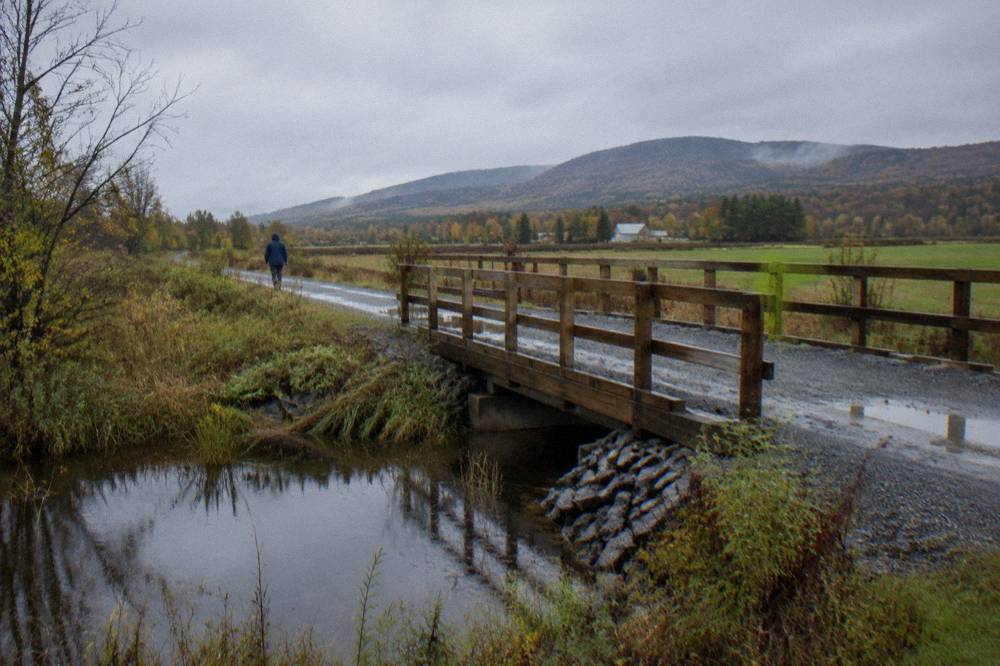
A road bike handles the paved half of Vermont beautifully and can limp across short gravel connectors, but it is the wrong tool for the rail trails and dirt road networks that define Vermont gravel riding. Riders committed to pavement should target the gap climbs and lake loops; riders who want the quiet dirt need wider tires.
The pavement in Vermont is genuinely worth a road bike. The state's network of paved town roads includes long, low traffic climbs through named gaps, rolling farmland in Addison County, and lake side riding around Burlington and the Champlain Islands. On routes like these a road bike is not a compromise, it is the point: the surfaces are smooth, the grades are steady, and the descents reward the drop position.
The failure mode arrives the moment the route leaves pavement. Compacted stone on the Lamoille Valley Rail Trail is rideable on a narrow road tire at low pressure but slow and nervy, and the loose sections after rain are worse. A rider planning even one rail trail day or a dirt road loop should either rent a gravel bike locally or choose a route that stays on asphalt. Our companion piece on Vermont gravel bike trips breaks down the route style in more depth.
There is a middle path: the modern all road bike. With clearance for wide tires, it rides nearly everything a dedicated gravel bike rides while losing almost nothing on the descent. For a one bike Vermont trip that includes pavement, dirt and a rail trail day, this is the category that answers the question, and it is what most rental fleets in the state now stock for exactly this reason.
Class 1 pedal assist e-bikes are allowed on the state's rail trails, including the full Lamoille Valley Rail Trail, and on multi use paths such as the Burlington Greenway, but they are prohibited on natural surface trails on state land. That makes an e-bike a strong choice for hill heavy rail trail and road trips, and a limited one for mountain bike destinations.
The rules are clearer than in most states. Vermont treats e-bikes as bicycles under a three class framework, with Class 1 and 2 motors cutting out at 20 mph and Class 3 at 28 mph, and no license or registration required. The state rail trail rules explicitly allow e-bikes while prohibiting ATVs, dirt bikes and motorized scooters. On the Burlington side, Local Motion's Trailside Center on the waterfront rents conventional, Class 1 e-bike, adaptive and kids bikes, with reservations recommended, which makes an e assisted Island Line day possible without traveling with a battery.
The mountain bike side is different. On state forests and parks, e-bikes are currently not permitted on non motorized natural surface trails, per the Vermont Mountain Bike Association's policy summary, while remaining allowed on roads and designated multi use paths. The association's page on pedal assist riding tracks a proposed expansion of Class 1 access whose adoption is unconfirmed. Private land networks set their own rules: at Kingdom Trails, Class 1 pedal assist eMTBs are allowed on most trails per the Kingdom Trails Association, with the trail map marking landowner exclusions. The Kingdom Trails site carries the current map and pass information.
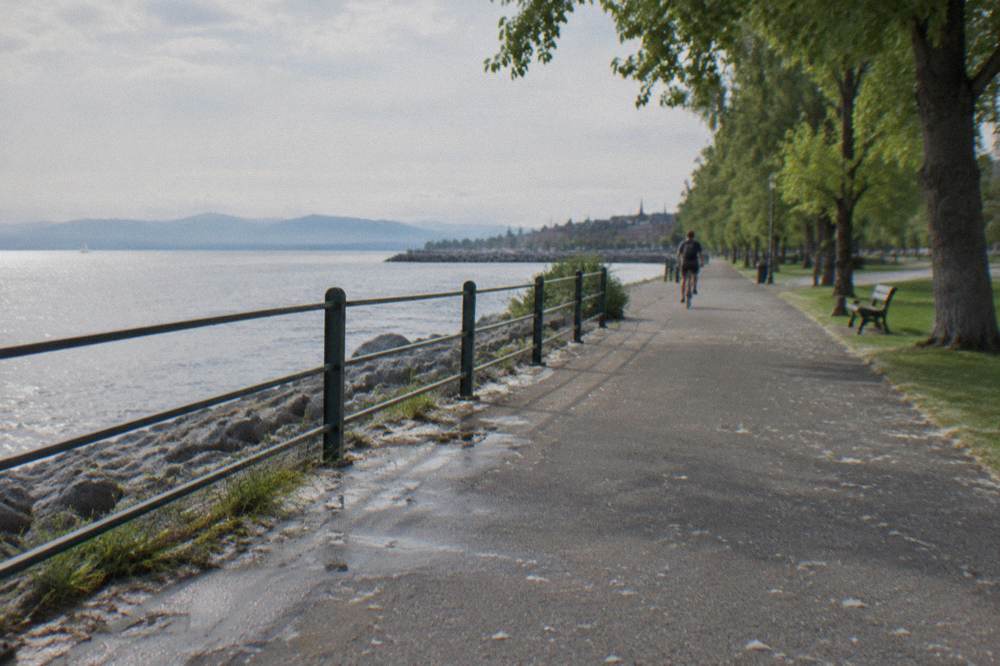
For trip planning, the e-bike question is really a hills and mileage question. An assist turns a 60 mile rail trail day with a headwind home from a survival ride into a cruise, and it opens hilly dirt road loops in the Green Mountains to riders who would otherwise skip them. The tradeoffs are battery logistics on multi day trips, the state land singletrack restriction, and the simple fact that a borrowed or rented conventional gravel bike is available almost everywhere the big trails run.

Burlington and the Champlain Islands suit road and e-bike riders on flat lake paths; the Lamoille Valley and Northeast Kingdom are gravel and mountain bike country; the central Green Mountains reward road climbers with gravel alternatives; and southern Vermont splits between dirt road touring and rail trail cruising. Match the bike to the region, not the other way around. Once you've settled on a region and bike style, the guide to renting bikes across Vermont by area shows which shops stock each type nearby.
The geographic logic follows the terrain. In the northwest, the Island Line and Burlington Greenway give pavement and causeway gravel with negligible climbing, ideal for families, e-bikes and hybrid setups. East of the Green Mountains, the Lamoille Valley Rail Trail anchors a gravel corridor from St. Johnsbury toward Swanton, and the Northeast Kingdom adds Kingdom Trails' 100 plus miles of singletrack around East Burke, the state's mountain bike anchor.
Central Vermont is the road climber's territory, with paved gap roads stacking vertical feet between small towns, and a parallel dirt network for gravel riders who want the same hills with less traffic. The southern counties lean on scattered gravel events, the West River corridor and two sections of the Delaware & Hudson Rail Trail, plus quiet road loops around Manchester and Woodstock that work on any tire wider than a road racing tire.
| Region | Signature riding | Best bike | Watch for |
|---|---|---|---|
| Burlington and Champlain Islands | Greenway, Island Line, causeway | Road, e-bike, hybrid | Open wind on the causeway |
| Lamoille Valley | 95 mile rail trail, town links | Gravel, e-bike | Condition checks after rain |
| Northeast Kingdom | Kingdom Trails singletrack | Mountain bike, Class 1 eMTB | Pass required, seasonal closures |
| Central Green Mountains | Paved gap climbs, dirt alternates | Road or gravel | Narrow shoulders, steady climbing |
| Southern Vermont | D&H rail trail, gravel events, road loops | Gravel or road | Scattered services on dirt routes |
The efficient Vermont trip puts your bed within pedal distance of the riding: Burlington and Stowe for path based road and e-bike days, East Burke or Lyndonville for mountain biking at Kingdom Trails, Middlebury for a rail trail and gravel mix, and Woodstock for southern dirt road loops. A well placed base removes the daily load and unload.
Base choice does more for a biking trip than any equipment decision. In the Northeast Kingdom, The Wildflower Inn sits 2.3 miles from Kingdom Trails and runs its own bike rentals and a bicycle shuttle, which covers the bike logistics question entirely for a mountain bike week. In the south, Woodstock Inn & Resort places riders in the middle of the Woodstock gravel loops and the Mount Tom carriage roads, a walking and riding network that radiates from the village.
Middlebury works as a gravel and rail trail hub, since the Trail Around Middlebury loops the town and the western rail trail network sits within reach; the Swift House Inn and the village green's Middlebury Inn both put that loop at the end of the driveway. For a fuller comparison of how bases pair with regions, see where to bike in Vermont, which maps the state by riding style.
Stowe
A Stowe base for the Stowe Recreation Path and the road loops around the village.
Check ratesStowe rounds out the list for road riders: the Stowe Recreation Path and the Mountain Road climbing lanes make a car free or nearly car free base realistic, and the village supports everything from budget motels to the slopeside lodge at Spruce Peak. Burlington remains the easiest car free option of all, with two downtown hotels sitting within a few hundred yards of the bike path and Local Motion's rental and repair operation on the waterfront at 1 Steele Street.
Ask four questions: what surface does each planned day ride, how much climbing is in the route, what does the rental fleet at your base actually stock, and where do the local e-bike rules land. Answering those before booking locks the bike choice to the trip instead of to fashion, and it usually reveals that one versatile bike beats a specialized one.
Surface first, because it is the only question with hard constraints. A day on Kingdom Trails singletrack requires a mountain bike, full stop. A day on the Lamoille Valley Rail Trail does not require a gravel bike but strongly prefers one. Everything pavement based is open to all three categories, which means the surface question is really about how many non paved days the itinerary holds.
Climbing second. Vermont's hilly regions can stack thousands of feet into a loop, and that is where an e-bike earns its place, particularly for mixed ability groups where one rider's fitness sets the ceiling for everyone. The e-bike rules question folds in here: rail trails and multi use paths are open to Class 1 pedal assist, state land singletrack is not, and Kingdom Trails allows Class 1 eMTBs on most but not all trails. Riders unsure of the framework can start with are e-bikes allowed in Vermont for the rule summary.
Rental logistics third. Vermont's bike shops, from Local Motion's Trailside Center in Burlington to the cluster around East Burke including East Burke Sports, Kingdom Bike Rentals, Village Sport Shop and Rifugio Darling Hill, rent across the road, gravel and mountain categories. Renting on site sidesteps airline bike fees and lets you match the bike to the region, though reservations are recommended everywhere in the busy foliage window. Our Vermont bike rentals guide covers the options by region.
| Question | What it decides | Where to check |
|---|---|---|
| How many unpaved days? | Road bike viability | Your own itinerary |
| How much climbing? | E-bike value | Route planning tools, event profiles |
| What does the local fleet rent? | Whether to bring or rent | Shop and rental pages |
| Are e-bikes allowed there? | Assist option on trails | State and landowner rules |
| What condition are trails in? | Dirt and stone rideability | Trail manager status pages |
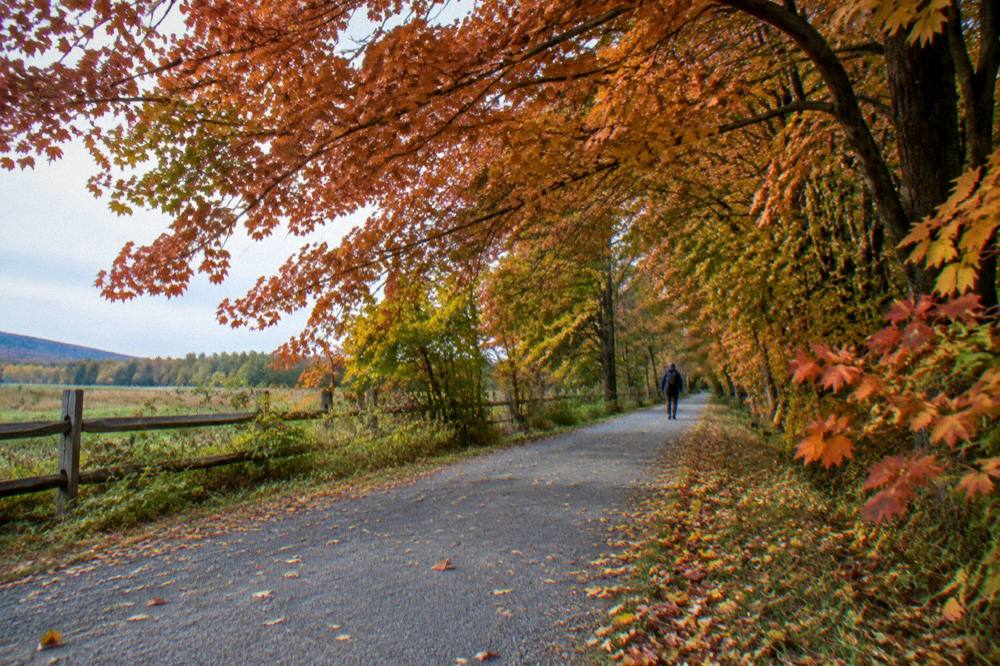
For riding during the late September to mid October foliage window, the gravel bike wins on flexibility: dirt roads climb into the best color faster than pavement, the rail trails run through uninterrupted corridors of it, and wider tires keep riding an option when leaves coat the surface. E-bikes run a close second because daylight is short and every saved hour matters.
Foliage season compresses the day. Sunrise lands near seven and sunset near twenty past six, with October temperatures averaging a high in the mid fifties and a low in the mid thirties, so the practical riding window sits between mid morning and late afternoon. Color peaks in late September to mid October on the general pattern, with ridgelines turning up to two weeks ahead of the valleys, which means a rider can chase good color by changing elevation rather than waiting.
The bike choice interacts with that chase. Dirt roads through the Northeast Kingdom and the central hills put you inside the color at low speed with no traffic, which is the experience most foliage riders are actually buying. The rail trails offer a flatter, family friendly version of the same thing, and the Burlington Greenway pairs the color with lake views. Riders mapping the timing should read the best time to bike in Vermont alongside the regional foliage breakdown.
Two practical notes. Leaf fall on pavement is slippery when wet, which argues for wider tires and modest speeds on descents even on a road bike. And backroads in the popular corridors carry more sightseeing traffic on peak weekends, so gravel alternates are not just prettier, they are quieter. Vermont Biking Tours treats the foliage window as the state's peak bike travel season for exactly these reasons.
Bring or rent a gravel or all road bike if the trip mixes surfaces, which most Vermont trips do. Choose a road bike only for a pure pavement itinerary of gap climbs and lake loops. Choose a Class 1 e-bike when hills, mileage or mixed ability groups are the constraint, and accept that state land singletrack stays off the menu.
That verdict holds across the state's regions because Vermont's riding inventory rewards range over specialization. The one exception is the mountain biker headed to East Burke, who needs a mountain bike and a Kingdom Trails pass, and who should plan around the summer season that runs when conditions allow through late October, with the winter fat bike network opening later. Everyone else is choosing between tire widths and assist levels, not between incompatible sports.
One thing the verdict does not depend on: price. This guide deliberately quotes no rental or pass prices because they move, and the honest answer is to check the operator's or shop's own page for the current number. What does not move is the surface map: crushed stone in the valleys, dirt on the hills, singletrack in the Kingdom, and pavement threading it all together.
For riders building a longer itinerary, the base and bike decisions feed each other: a Woodstock base implies southern gravel and carriage road loops, a Middlebury base implies the Trail Around Middlebury and western rail trail days, and a Lyndonville base implies Kingdom Trails shuttles. The gravel lean of the state's best riding is why the format dominates trip planning here, and why a rider who arrives with wide tires rarely regrets it.
Woodstock village
The village base for the Woodstock gravel loops and the Mount Tom carriage roads.
Check ratesFor most trips, yes. Vermont mixes paved town roads with dirt roads and crushed stone rail trails, and a gravel bike on wide tires rides all of it comfortably. A road bike is better only when every planned day stays on pavement, such as a gap climbing week or a lake loop base.
Yes. The state's rail trail rules allow e-bikes on corridors like the 95 mile Lamoille Valley Rail Trail, while prohibiting ATVs, dirt bikes and motorized scooters. The rules are different on state land singletrack, where e-bikes are currently prohibited on natural surface trails.
You can, but you will not enjoy it. Roughly five miles of the 14.4 mile Island Line corridor is crushed gravel on the causeway, which is punishing on narrow tires. Wider tires, lower pressure, or an e-bike or hybrid rental from the Burlington waterfront make the crossing far more pleasant.
Plan on wide tires for a mixed trip covering dirt roads and rail trails, wider still if the itinerary includes rough stone or loose sections after rain. Pure pavement days work fine on narrow road tires. Mountain bike destinations like Kingdom Trails call for actual mountain bike tires.
No, because the rail trails flatten the question. Corridors like the Lamoille Valley Rail Trail run a compacted stone surface on a rail bed with grades under three percent, and the Burlington Greenway and Champlain Islands are nearly flat. The dirt and gap roads are hilly, so beginners should choose routes, not avoid the state.
Not necessarily. Rental fleets in Burlington, the Kingdom and other hubs cover road, gravel, mountain and e-bike categories, and reservations are recommended in the busy foliage window. Renting on site lets you match the bike to the region rather than compromising on one bike for every surface.
Before you go, the pick for this guide:
Hotel Vermont
About 0.2 miles from the Burlington Bike Path in the lake-side downtown.
Check rates →