Where To Bike In Vermont By Skill Level?
A skill-by-skill routing guide to biking in Vermont: flat rail trails for beginners, quiet paved roads for intermediates, and singletrack and gravel for advanced riders.
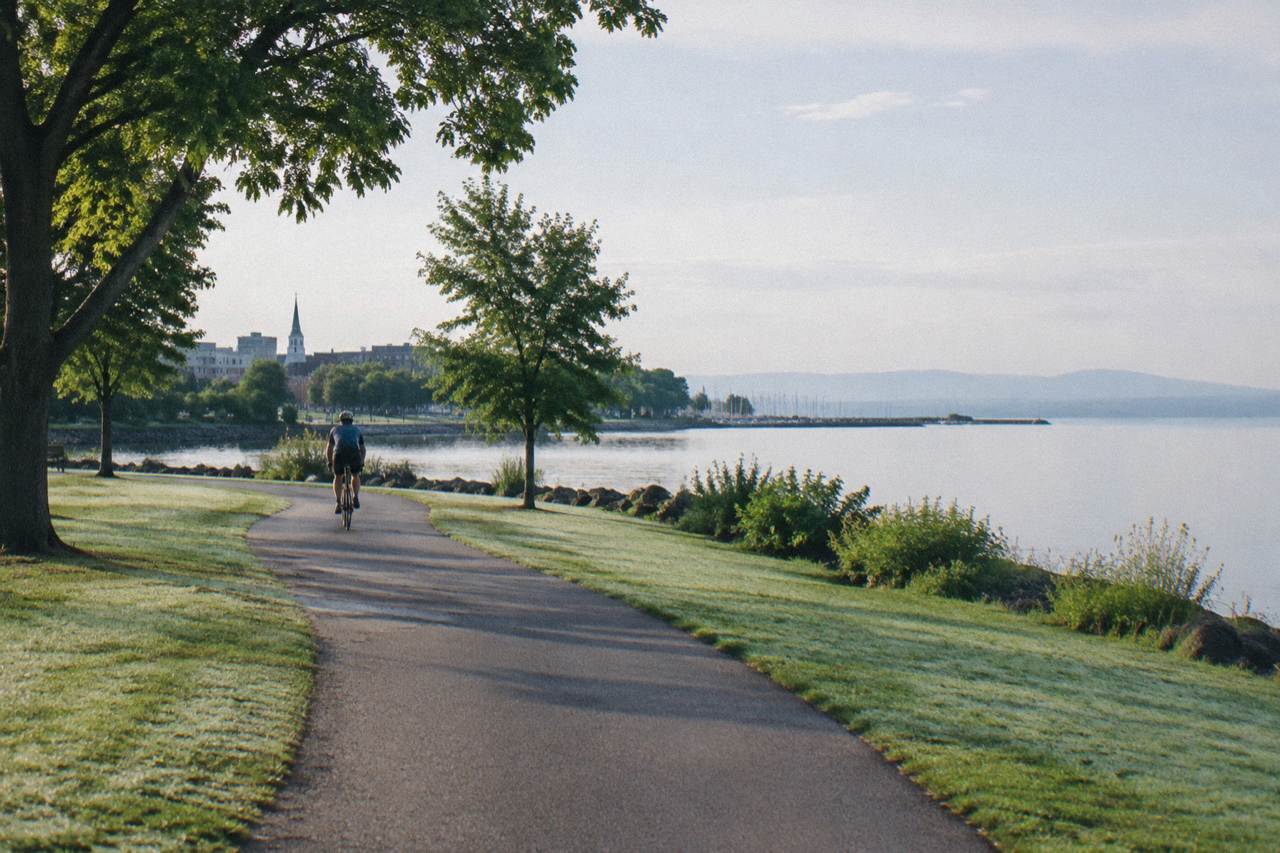
Routes By Skill Level
Vermont routes cleanly by ability. Beginners belong on the Lamoille Valley Rail Trail and the Burlington Greenway, both flat, wide and car-free. Intermediates thrive on paved backroads around Middlebury, Woodstock and Stowe. Advanced riders head to Kingdom Trails singletrack, the gravel passes of the Green Mountains, and long mixed-surface days linking them together. The state is small enough that one base town can serve several skill levels at once, which is why multigenerational biking groups keep coming back. A family can split up for the morning, one rider on the rail trail, one on a dirt climb, and meet for lunch in the same village. This guide routes each ability level to the terrain that fits, names the specific trails and towns, and points to the places to stay that sit closest to the riding. Every route named here is drawn from the state's official trail pages and the organizations that manage them, not from brochure copy.
Biking in Vermont rewards matching terrain to legs more than most destinations, because the gap between the easiest and hardest riding is enormous. The Lamoille Valley Rail Trail never climbs hard and never shares space with cars, while a gravel road over a Green Mountain pass can grind upward for miles on loose surface. Picking wrong does not just make for a hard day, it can make for an unsafe one on narrow rural roads with no shoulder. Picking right turns the whole state into a bike-friendly network.
What Should Beginners Ride In Vermont?
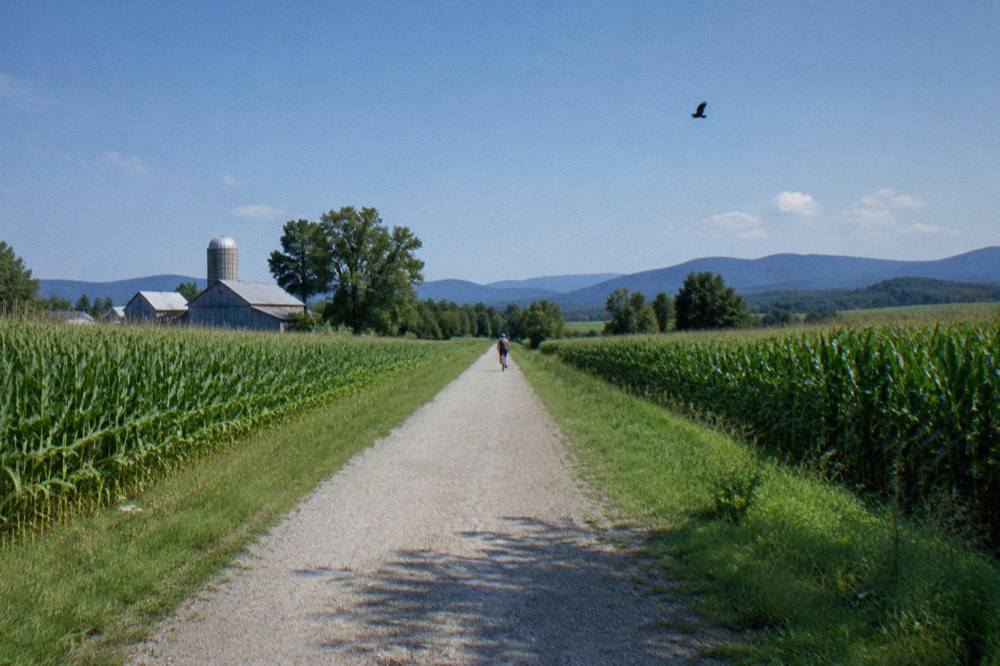
Beginners should ride the Lamoille Valley Rail Trail, the Burlington Greenway and the Stowe Recreation Path. All three are car-free, gently graded and wide enough to ride side by side. The LVRT runs 95 miles between St. Johnsbury and Swanton on compacted crushed stone, the Greenway gives Burlington about 8 paved miles along Lake Champlain, and the Stowe path threads the village on flat ground. None of the three demands fitness, technique or traffic tolerance, which is the whole point. A first-time rider on any of them can turn around whenever they want and still have had a real bike ride, not a truncated version of someone else's plan. That reversibility, more than any surface detail, is what makes a route beginner-friendly.
The Lamoille Valley Rail Trail is the anchor of easy biking in Vermont. The state's rail trail program describes it as the longest rail trail in New England, running through 18 towns on a ten-foot-wide bed of firm compacted stone with grass shoulders and grades under three percent, built on a railroad grade so the climbing never registers. E-bikes are allowed, motorized machines are not, and the trail is open year-round to non-motorized users, with snowmobiles sharing it only in their own winter season. Riders can read the full surface and access details on the official Lamoille Valley Rail Trail pages.
The Burlington Greenway, the paved spine of the Island Line, runs along the waterfront for about 8 miles and connects toward the Colchester Causeway, a roughly 5 mile crushed gravel stretch out over Lake Champlain that ranks among the most memorable easy rides in the East. The causeway crossing involves a seasonal bike ferry at the gap, which runs late May to mid October and is donation-based; it is worth checking the ferry page at Local Motion before planning a crossing, because the service is weekend-oriented in fall. For a deeper look at that ride, see the Island Line Trail biking guide.
In Stowe, the Recreation Path gives beginners a flat, village-based cruise with food and swimming holes within reach, and it doubles as the warmup lap for stronger riders heading up Mountain Road. A full routing breakdown lives in the Stowe Recreation Path and Lamoille County guide.
Where Should Intermediate Riders Go?
Intermediate riders should base in Middlebury, Woodstock or Stowe and ride the paved backroad loops each town anchors. These routes roll rather than punish, carry light traffic, and pass through covered bridges, dairy farms and village centers. Woodstock adds the Mount Tom carriage roads, Middlebury has the Trail Around Middlebury loop, and Stowe's road network climbs only when you choose to climb. The intermediate rider's real asset in Vermont is route choice, not a single named trail, because the secondary roads between villages form an effectively infinite lattice of loops.
Middlebury works well as a hub because the Trail Around Middlebury loops the town on a mix of trail and quiet road, so a rider can adjust distance on the fly and never rides more than a short pedal from a deli or a bakery. The loop itself is the draw: it puts a village start, forested stretches and open farmland inside one circuit, and a tired rider can cut it short on a paved town road at several points. The inns on the village green put a rider at the start of the loop without needing a car shuttle once unpacked, but routing, not lodging, is what earns Middlebury its slot here.
Woodstock pairs road loops with the carriage roads on Mount Tom, gravel-surfaced but gentle paths that give a road bike a taste of mixed riding without committing to a gravel bike. Stowe's Mountain Road climbs steadily toward Smugglers' Notch and gives intermediates a leg-building ascent with a fast descent back to village food. Route 100 is the famous north-south corridor and worth knowing about, but it carries more leaf-season traffic than the parallel backroads, so experienced riders treat it as a connector rather than a destination. In fall, when the late September to mid October color draws drivers out, the quietest riding is midweek on the unnumbered town highways.
Where Do Advanced Mountain Bikers Ride?
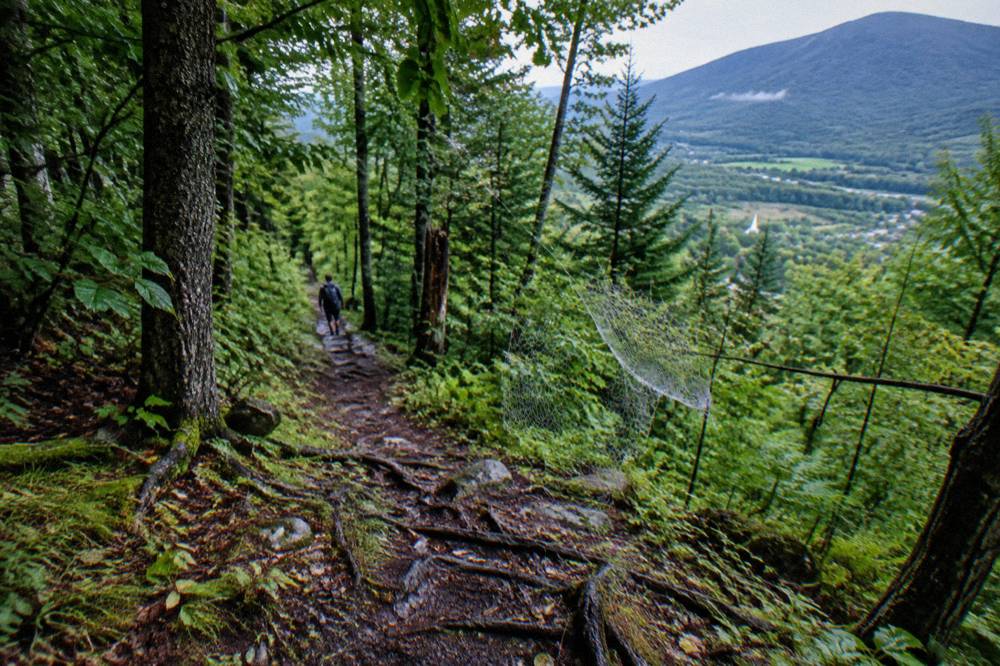
Advanced mountain bikers ride Kingdom Trails in East Burke, period. The network holds 213 trails totaling more than 100 miles of non-motorized singletrack and multi-use path across working farmland and forest, with flow trails, technical descents and jump lines graded across the spectrum. It is the riding area Vermont is best known for among mountain bikers, and it justifies a multiday trip on its own. Passes are required, bought online through the Kingdom Trails Association store or in person at the Welcome Center on Route 114 in East Burke, and riders should check the Kingdom Trails site for current pass prices and the live trail map before driving up.
The summer season runs from roughly May, as conditions allow, through the end of October, and the network then closes for late autumn before a groomed winter fat bike and Nordic operation opens on designated trails. Fat bikes need tires wider than 3.5 inches for the winter singletrack, and fat bikes are not permitted on the Nordic lanes. Class 1 pedal-assist eMTBs are allowed on most trails per the Kingdom Trails Association, with the trail map showing landowner exclusions, a detail covered more fully in the Kingdom Trails mountain biking guide.
Beyond Burke, advanced riders find lift-accessed and backcountry-style riding scattered through the state, and the mountain biking in Vermont guide maps the smaller centers. One rule matters statewide: on Vermont state land, e-bikes are currently prohibited on non-motorized natural-surface trails and allowed on roads and multi-use paths, a policy the Vermont Mountain Bike Association tracks closely, with a proposed expansion to Class 1 access still unconfirmed.
Rental support around Burke is genuinely deep. East Burke Sports operates a full-service shop at the trailhead, Kingdom Bike Rentals runs a mobile delivery fleet with an e-MTB focus, Village Sport Shop serves the Darling Hill side, and Rifugio Darling Hill rents eMTB and full-suspension bikes up on the hill itself. The Kingdom Trails rentals and guided rides guide compares them in detail. For a stay within pedaling distance of the whole network, the Wildflower Inn in Lyndonville sits 2.3 miles from Kingdom Trails, offers bike rentals and a bicycle shuttle, and removes the daily driving question entirely.
What About Gravel And Mixed-Surface Riding?
Gravel riders should target the classified and unclassified town highways of the Green Mountains and the Northeast Kingdom, where dirt roads climb steadily and carry almost no traffic. The surface is typically hardpacked dirt with loose stretches after weather, distances between services can exceed 20 miles, and the climbing is the point rather than an obstacle. Strong riders use gravel to link pavement, forest road and rail trail into single long days. Vermont's gravel scene has grown into one of the strongest in the country precisely because the road network was never fully paved, so the terrain was always there.
Planners should study the Vermont gravel bike tours guide for route construction, and decide equipment with the road, gravel and e-bike comparison. The practical rules are simple: carry more water than seems necessary, expect cell coverage gaps in the hollows, and treat every dirt descent with respect because loose marbles form in the braking zones. October rides need lights regardless of plan, since the sun sits near the horizon by early evening and the tree cover darkens the roads before open fields do. For anything the comparison leaves undecided, the Vermont gravel bike tours route guide covers surface conditions and resupply points in detail.
Weather and light shape gravel days more than pavement days. October averages a high around 56 and a low around 36 degrees statewide, with frost possible at dawn and pleasant midday temperatures, so layering beats a single warm jacket. Narrow shoulders on many rural roads mean gravel routing is also the safer road routing in foliage season, when the paved scenic corridors fill with slow-driving sightseers. Other pages covering the same trip are gathered on Vermont Biking Tours.
The Wildflower Inn
Lyndonville, 2.3 miles to Kingdom Trails
Offers bike rentals and a bicycle shuttle, and sits 2.3 miles from Kingdom Trails.
Check ratesWhich Towns Work Best As A Biking Base?
The best biking base towns are Burlington, Stowe, East Burke, Middlebury and Woodstock, and the right pick depends on the riding mix. Burlington covers flat path riding and lake scenery, Stowe blends path and road climbing, East Burke is the mountain bike answer, and Middlebury and Woodstock anchor road and gravel loops from walkable villages. Picking a base by terrain rather than by fame is the single biggest planning upgrade a visiting rider can make, because Vermont's riding clusters tightly around these towns and driving between clusters eats riding time.
| Base town | Terrain on the doorstep | Best skill fit | Signature ride |
|---|---|---|---|
| Burlington | Paved lakefront path, causeway gravel | Beginner to intermediate | Burlington Greenway toward the causeway |
| Stowe | Village path, road climbs, resort riding | All levels | Recreation Path plus Mountain Road |
| East Burke | Mountain bike singletrack, 100+ miles | Intermediate to advanced | Kingdom Trails flow and tech loops |
| Middlebury | Road loops, town trail circuit | Beginner to intermediate | Trail Around Middlebury |
| Woodstock | Paved loops, carriage road gravel | Intermediate | Mount Tom carriage roads |
Burlington deserves its spot at the top of the list for mixed groups. The Hotel Champlain Burlington sits steps from Waterfront Park and the bike path access, and its listing includes free bicycle rentals, so a visitor can arrive without a bike and still ride the Greenway the same afternoon. The Burlington bike path guide covers the full routing, and rentals are also available at Local Motion's Trailside Center at 1 Steele Street, right on the path, where the fleet runs from conventional bikes to Class 1 e-bikes, adaptive cycles and kids' options, with reservations recommended.
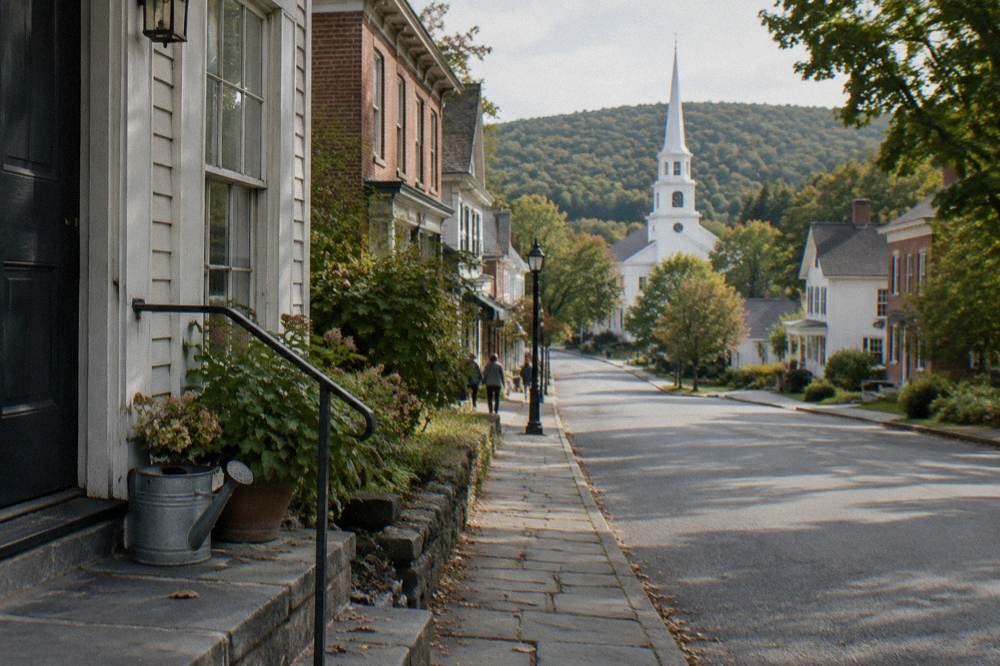
Stowe suits riders who want one bed and three sports. The Sun & Ski Inn And Suites positions a visitor for the Recreation Path and the road loops around the village, and stronger riders can extend up the Mountain Road grade toward the notch. The town also serves as a launch point for the Lamoille Valley Rail Trail to the north, which is close enough for a rest-day cruise.
What Does A Skill-Matched Weekend Look Like?
A skill-matched weekend pairs one base town with two riding days at the right level: beginners ride a different rail trail segment each day, intermediates build one flat loop and one rolling loop, and advanced riders ride singletrack or gravel both days with a deliberate recovery morning in between. The error most visiting riders make is stacking the hardest day first, arriving fresh and motivated on Friday and wrecking the rest of the trip by Saturday night. Reversing the order, easiest day first, reliably produces the better weekend.
The three-day Vermont fall itinerary builds exactly this structure around foliage season, and the best time to bike in Vermont guide handles seasonality in full. The short version: summer gives the longest days and the most reliable trail conditions, while fall gives the color and thinner crowds on the backroads, with the trade of shorter daylight and colder mornings. Whenever the trip lands, check trail status before a long ride, because flooding and maintenance close segments across the state's networks in any season.
How Do E-Bike Riders Fit Into The Skill Map?
E-bike riders follow the same skill map with one overlay: surface rules. Class 1 pedal-assist bikes are welcome on the rail trails, the Burlington Greenway and most of Kingdom Trails, but state land bars e-bikes from non-motorized natural-surface singletrack while permitting them on roads and multi-use paths. Vermont runs a three-class e-bike system that treats compliant machines as bicycles, so the question for an e-bike rider is never legality on pavement, it is which trail network allows the motor. The Vermont e-bike tours guide and the e-bike and helmet rules guide carry the details.
Practically, an e-bike flattens the skill map in one direction only. It turns an intermediate road route into a beginner-accessible one, and it lets a casual rider join a gravel day, but it does not grant technical descending skill, so eMTB riders should still build up at Kingdom Trails rather than starting on its steeper tech. Rental fleets at Local Motion in Burlington and the Burke-area shops make it possible to test that fit before buying anything, and reservations are recommended in peak season.
What Should Families With Mixed Abilities Ride?
Families with mixed abilities should ride rail trails and village paths, where the fastest rider can surge ahead and double back without leaving the route system, and the slowest rider is never trapped between hazards. The LVRT, the Stowe Recreation Path and the Burlington Greenway all support that leapfrog style, with restroom and food stops at regular intervals in the towns they thread. The failure mode for family biking is a route with one hard feature in the middle, a causeway gap, a road crossing, a blind descent, and rail trails simply have fewer of them.
The Island Line demands one piece of advance planning: the causeway gap needs the seasonal bike ferry, which runs late May to mid October and shifts to weekends only in fall. Families riding out and back should confirm the schedule first, since an unplanned turnaround at the gap is a disappointment rather than a danger, but still worth avoiding. Riders wanting the full picture can read what the ferry schedule looks like before committing.
For families whose range includes one strong rider, the base-town strategy solves it: base in Stowe or Burlington, let the strong rider add the Mountain Road climb or the causeway while the rest cruise the path, and reconvene for lunch. The beginners and seniors guide expands on this pattern.
Hotel Champlain Burlington, Curio Collection by Hilton
Burlington, near Waterfront Park
Steps from Waterfront Park and the bike path access; its listing includes free bicycle rentals.
Check ratesCommon Questions About Where To Bike In Vermont By Skill Level
Where To Bike In Vermont By Skill Level?
Beginners ride the Lamoille Valley Rail Trail, the Burlington Greenway and the Stowe Recreation Path. Intermediates base in Middlebury, Woodstock or Stowe for paved and light gravel loops. Advanced riders go to Kingdom Trails for singletrack and to the Green Mountain dirt roads for gravel.
What Is The Easiest Bike Ride In Vermont?
Any flat segment of the Lamoille Valley Rail Trail, which runs 95 miles on a railroad grade of compacted crushed stone with grades under three percent, or the paved Burlington Greenway along the lake. Both are car-free, wide and reversible at any point.
Is Vermont Good For Beginner Mountain Bikers?
Yes. Kingdom Trails grades its 200-plus trails across the spectrum and includes genuinely gentle flow trails, and several smaller networks around the state add beginner-friendly loops. Beginners should still buy a pass, check the trail map and start on the green-coded lines.
Can You Bike Across Vermont Without Riding On Roads?
Not fully. The rail trail network is extensive, led by the 95 mile LVRT and the Missisquoi Valley Rail Trail's 26.4 miles, which join near Sheldon, but a true crossing still links trail segments with road riding. The Cross Vermont Trail is closing those gaps section by section.
When Is The Best Time To Bike In Vermont?
Summer gives the longest days and most reliable conditions. Fall gives the foliage color, strongest from late September to mid October with ridgelines turning before the valleys, at the cost of shorter daylight and colder mornings near freezing.
Do You Need A Pass To Ride Kingdom Trails?
Yes, passes are required for trail access and are bought online through the Kingdom Trails Association store or in person at the Welcome Center on Route 114 in East Burke. Check the association's store for current pass prices before your trip.