Hotel Champlain Burlington, Curio Collection by Hilton
Burlington, near Waterfront Park
Steps from Waterfront Park and the bike path access; its listing includes free bicycle rentals.
Check ratesVermont draws riders from all over the country for its quiet backroads, rail trails and hill country, and most of them arrive on a package: either a guided group trip with a van and a leader, or a self-guided route with luggage moved ahead each night. The two formats look similar in a brochure and behave very differently on the road.
Short answer
A guided Vermont bike tour runs with a group, a trip leader and a support van; a self-guided tour gives you booked inns, moved luggage and route notes but no group and no van. Guided trips cost more per day because you pay for people; self-guided trips cost less because you pay mostly for logistics.
Vermont rides on a simple geographic fact: the state is a set of valley corridors separated by ridgelines, which means a bike trip here is a sequence of towns connected by either a rail trail or a packed dirt road. Tour operators have built an entire industry on that shape. Vermont Biking Tours exists to explain it, not to sell it: this guide compares the two package formats on the market, guided and self-guided, using what the operators themselves publish, and every booking happens directly with the operator.
The short version is this. A guided trip is a moving group: one or two leaders, a van carrying snacks, spares and tired riders, fixed departure dates and a fixed group of strangers who become acquaintances by day three. A self-guided trip is a plan you ride alone or with your own companions: the operator books the inns, moves your luggage between them, hands you cue sheets or a GPS file, and otherwise leaves you alone on the road. The riding, the scenery and even the routes are often identical. What you are really choosing is how much human infrastructure surrounds you, and what you pay for it.
A guided tour is a group product with leaders and a support van on fixed dates; a self-guided tour is a logistics product with booked lodging, luggage transfers and route materials on dates you choose. Guided trips cost more because staff ride along; self-guided trips cost less because you carry the decisions. Neither format changes the roads themselves, and in Vermont both usually ride the same valley routes and rail trails. Either way, most Vermont trips use small inns as overnight stops, and our guide to inn-to-inn bike tours across Vermont explains how the daily miles and lodging style shape the experience.
The distinction is cleaner than most first-time buyers expect. On a guided Vermont trip, the operator sets the itinerary, the daily distances and the departure dates. Leaders ride or drive the route, run sweep support, fix flats, translate menus and hold a schedule. The support van carries anything you do not want on your bike, and it can carry you over the hill you have decided not to climb. You ride with the group whether the group is fast or slow.
Self-guided flips the staffing to zero and keeps the logistics. You pick a start date from the operator's calendar, usually any date the inns have rooms. Your bags travel by the operator's shuttle or courier while you ride with a handlebar bag and a cue sheet. If something goes wrong, you call a support number rather than flagging down a van. The route notes do the guiding, and in a state where a wrong turn can add a serious climb, good route notes are the product.
A useful way to frame it: guided buys certainty and company, self-guided buys independence and value. Most Vermont operators, including VBT, sell both formats over the same territory, which tells you the roads are not the variable. The format is.
Guided tours price in staff: leaders, a support van and driver, group meals and fixed departures all sit in the per-day rate. Self-guided tours price in logistics: lodging, luggage transfers and route materials, with no payroll riding along. That is why self-guided trips typically run meaningfully cheaper per night for the same inns, and why guided rates rise with group services rather than scenery.
No operator's pricing is quoted here, because tour prices are set per season and per listing and this site does not print figures it cannot verify. What can be compared honestly is structure, and the structure is consistent across the market.
On a guided trip, your payment covers the people. Two leaders or a leader plus driver, the van itself, its fuel and its mileage, group dinners or wine with meals, entrance fees, sometimes bike rental and often gratuities culture on top. The operator also carries the cost of guaranteed departures, which is why single-supplement and solo-rider rules are stricter.
On a self-guided trip, your payment covers the moving parts. Nightly lodging, the shuttle or courier that moves bags inn to inn, printed or digital route notes, an emergency phone line, and sometimes airport transfers. There is no van following you, no leader fixing your derailleur at mile 30, and no group dinner unless the inn happens to host one.
| Cost component | Guided tour | Self-guided tour |
|---|---|---|
| Trip leaders | Included, riding or driving with the group | Not included; phone support line instead |
| Support van | Included, carries luggage, snacks and riders | Not included; luggage moves by separate shuttle |
| Lodging | Booked by operator, usually inn-based | Booked by operator, usually the same inns |
| Luggage transfers | In the van | Separate courier or shuttle, included |
| Meals | Often several group dinners included | Usually breakfast only, via the inn |
| Departure dates | Fixed group dates, set by operator | Flexible start dates, subject to inn availability |
| Bike rental | Often bundled into the package | Often a paid add-on |
| Solo traveler cost | Single supplement, sometimes waived if matched | Single supplement, matching rarely offered |
The honest summary of the money question: with a guided trip you are buying the absence of decisions and the presence of help. With a self-guided trip you are buying the itinerary and paying yourself to run it.
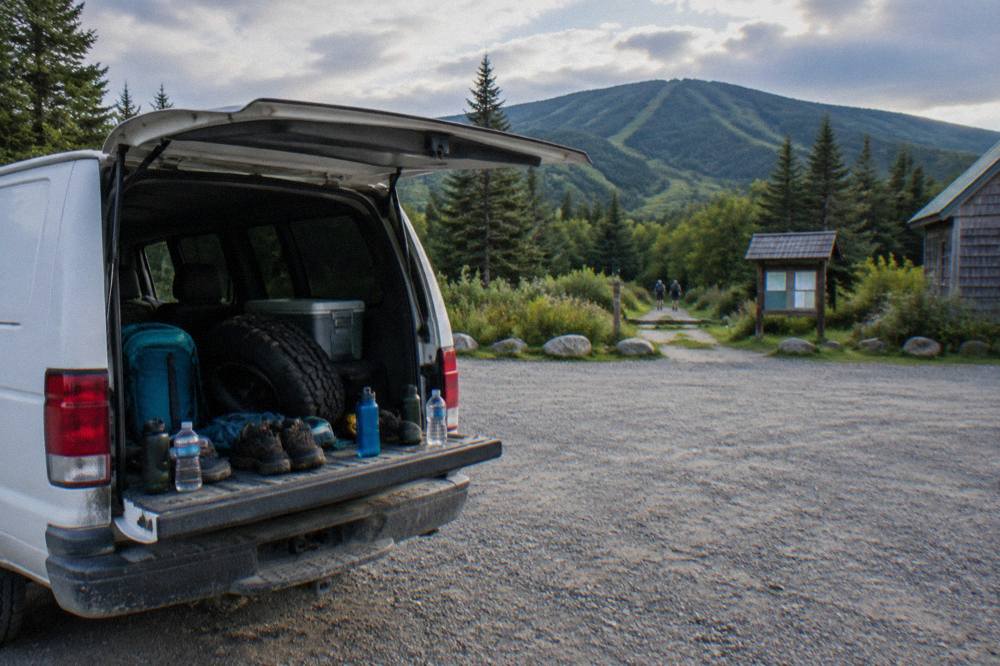

The support van carries luggage, water, snacks, spare tubes and tools, and it gives tired riders a lift over or home from any climb. You miss it most in Vermont on gravel hills, in sudden cold rain, and on the long climbs where a mechanical would otherwise end your day. Self-guided riders replace it with a phone, a taxi and preparation.
The van is the single biggest thing your guided payment buys, and its value is uneven across Vermont terrain. On the flat rail trails, the Lamoille Valley Rail Trail being the flagship at roughly 93 to 95 miles of nearly level crushed stone from St. Johnsbury to Swanton, a van matters little: the surface is forgiving, towns are frequent, and walking out is an option. The state's own rail trail pages confirm e-bikes are allowed and motorized vehicles are not, which makes it a natural self-guided corridor.
On the road and gravel routes through the Green Mountains, the calculus changes. Vermont secondary roads are famously narrow with limited or no shoulders, and the climbs between valleys are long rather than steep. A rider who blows a knee or breaks a chain fifteen miles from the night's inn, on a self-guided trip, is solving that problem with a phone. A guided rider waves at the van.
Weather is the other variable. Vermont can serve a cold driving rain in any month, and the difference between sagging into a warm van with your bike on the rack and grinding out the final hour wet is the difference between a story and a miserable memory. Self-guided riders compensate by planning shorter days, carrying more kit, and reading the forecast with respect.
| Situation | With a support van | Without one |
|---|---|---|
| Flat tire or mechanical | Leader fixes it or van carries the bike | You fix it; carry tools and spares |
| Rider exhaustion on a climb | Ride in the van to the inn | Rest, shorten the day, or call a taxi |
| Cold rain mid-ride | Change layers from the van, ride warm | Carry all layers yourself |
| Navigation error | Leader corrects the group | Route notes and GPS are the safety net |
| Gravel descent caution | Van meets riders at the bottom of bad sections | Ride within your skill, walk if needed |
Your bags are moved inn to inn by the operator's shuttle or courier while you ride with a small day bag; route notes arrive as printed cue sheets, maps or GPS files describing every turn, climb and lunch stop. The system depends on inns receiving bags by mid-afternoon, so it quietly imposes a daily distance you must finish before dinner.
Mechanically it is simple and it works well. Each morning you leave your main bag in the inn's lobby or a designated spot; it travels ahead while you ride. It is waiting at the next inn, usually by the time you arrive. You carry on the bike only what the day needs: rain layer, tools, snacks, documents, phone.
Route notes are where operators differentiate. The good ones give turn-by-turn cues with distances, mark the steep pitches before you reach them, flag the one bakery in a forty-mile stretch, and warn where a paved road turns to gravel. Digital files for bike computers and phones are now standard, and most riders run them with the paper as backup. On self-guided Vermont routes the notes matter more than in flatter states, because a missed turn in valley country can add a serious climb with no warning.
The hidden constraint is timing. Bags and riders both need to land at the same inn, and the shuttle runs on the operator's schedule, not yours. That makes a self-guided day slightly less lazy than it sounds: the itinerary's daily mileage is a soft commitment with a hard edge at dinner.
A guide matters most when the route mixes surfaces, when you do not know the region, and when group pace will pull you further than you would ride alone: exactly the conditions of Vermont's gravel hills. On flat rail trail corridors with good signage, a guide adds much less, and self-guided riding is the natural fit.
Vermont gravel is easy to underestimate from a car. A packed dirt road along a river reads as gentle, then pitches into a fifteen percent wall of loose stone around a blind bend. Local knowledge, which is what a guide sells, converts those surprises into plan: which descent warrants caution, which bridge is out, which climb has a paved bailout. On a guided gravel trip the leader also sets a pace that keeps the group together on surfaces where spacing matters.
Hills are the other case. A guide will not make a climb easier, but a guided itinerary with a van lets strong riders go long and tired riders cut the day short, both on the same trip. Self-guided groups with mismatched fitness, a common family scenario, have to solve that themselves, usually by renting an e-bike for one partner. That workaround is now common enough that Local Motion's rental fleet in Burlington, which includes Class 1 pedal-assist e-bikes alongside conventional and kids bikes, exists partly for exactly this kind of mixed-ability riding.
The counter-case is equally real. The Lamoille Valley Rail Trail, the Island Line, the Missisquoi Valley Rail Trail out of St. Albans: these are signed, level, car-free and self-explanatory. A guide adds sociability and color, but paying guided prices for a rail trail week is buying staffing the terrain does not require.
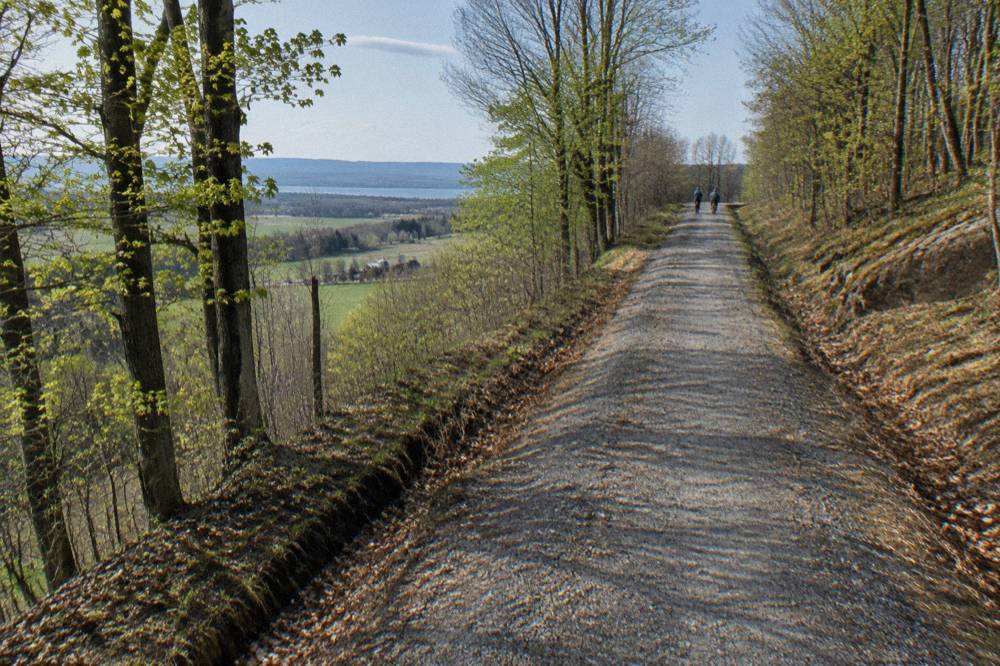
Guided fits riders who want company, fixed dates, on-trip help or a first visit to unfamiliar terrain; self-guided fits confident riders, couples and small friend groups who want their own pace, own start date and lower cost. Fitness asymmetry inside a pair tilts toward guided or e-bike self-guided; solo travelers weigh group sociability against the single supplement.
There is no single right answer, but there are strong patterns in who thrives where.
Riders who choose guided tend to be first-time bike travelers, people who do not want to read cue sheets on vacation, riders nervous about narrow-shouldered rural roads, and travelers who genuinely want the social engine of a group. Fixed departures also suit people whose calendar needs an external deadline. The van removes the fear of bonking twenty miles out, which for many first-timers is the whole decision.
Riders who choose self-guided tend to be experienced cyclists, couples and friend groups, people who like stopping for two hours at a swimming hole without apologizing, and value-focused travelers who would rather spend the difference on a better inn or an extra night. Self-guided also suits anyone whose ideal day is quiet: no group chatter, no schedule beyond the bags.
| Rider profile | Better fit | Why |
|---|---|---|
| First bike trip, nervous about logistics | Guided | Leaders and van absorb problems |
| Experienced couple, own pace | Self-guided | Independence, lower nightly cost |
| Mixed fitness within a pair | Guided, or self-guided with an e-bike | Van or motor equalizes the group |
| Solo traveler wanting company | Guided | Built-in group, possible roommate matching |
| Solo traveler wanting quiet | Self-guided | No group, but expect a single supplement |
| Gravel-curious road rider | Guided first | Surface reading is a learned skill |
| Rail trail family trip | Self-guided | Flat, signed, low-risk corridors |
E-bikes have quietly redrawn this table. A Class 1 pedal-assist rental turns the hills that once forced a guided choice into a self-guided option, and Vermont's rules treat compliant e-bikes as bicycles on the rail trails. Our companion guide on Vermont e-bike tours covers the format in detail.
Most operator routes thread the same corridors: the Champlain valley and Burlington waterfront in the west, the Lamoille valley and Stowe in the north-center, the Northeast Kingdom around East Burke, and Woodstock-country lanes in the center. Inn-based and inn-to-inn itineraries both cluster there, which means lodging, not routing, is where trips feel different.
The geography is not a secret and the operators all use it. Western trips lean on the Island Line and the lakeshore. Northern trips ride the Lamoille corridor and the Stowe area, where the Stowe Recreation Path gives car-free miles through the village. Kingdom trips are mountain bike trips, based around the trail network at East Burke. Central trips use Woodstock and the gravel loops around it.
Where you sleep shapes the day more than the route does, because both formats are really lodging products with bikes attached. A rider starting an Island Line day from downtown Burlington has a short roll to the path; the Hotel Champlain Burlington sits steps from Waterfront Park and the bike path access, and its listing includes free bicycle rentals, which removes even the rental logistics for a self-guided lakeshore day. That kind of base matters most on self-guided trips, where nobody is handing you a bike from a van each morning.
Burlington, near Waterfront Park
Steps from Waterfront Park and the bike path access; its listing includes free bicycle rentals.
Check ratesFurther east the pattern repeats. A Stowe base puts the Recreation Path and the Mountain Road loops at the door, which is why the Sun & Ski Inn And Suites works as a launch point for riders doing the valley on their own schedule rather than a group's. In the Kingdom, riding and lodging are inseparable: the Wildflower Inn sits 2.3 miles from Kingdom Trails, offers bike rentals and, unusually, a bicycle shuttle, which is a self-guided mountain biker's ideal arrangement. The inn-to-inn bike tours in Vermont guide covers the lodging-side mechanics of both formats at length.
For travelers comparing this against a fully independent DIY trip, the how to choose a Vermont bike tour guide walks the same decision from the operator side.
Ask what the price actually includes, how luggage moves, what happens if a rider cannot finish a day, what the route notes cover, and what the cancellation terms are on fixed-date guided departures versus flexible self-guided starts. Operators answer these questions directly and in writing, and the answers differ more than the brochures admit.
Booking happens with the operator directly, on the operator's own site, never through this guide. Before you pay, the questions below are the ones that separate a good fit from an expensive mismatch. There are no price figures here because operator pricing changes by season and by listing; the operator states current pricing on its own pages.
| Question to ask | Guided answer to expect | Self-guided answer to expect |
|---|---|---|
| Is bike rental included or extra? | Often bundled | Often an add-on, including e-bikes |
| How does luggage move? | In the support van | Separate shuttle, delivered by afternoon |
| What if I cannot finish a day's ride? | Van pickup, standard | Phone support, taxi at your cost |
| What exactly do route notes include? | Leader navigates live | Cue sheets plus GPS files, surface marked |
| Are meals included? | Several group dinners typical | Breakfast via the inn |
| What are the cancellation terms? | Stricter, tied to fixed dates | More flexible, tied to inn policies |
| What is the group size? | Stated maximum, ask directly | Your own party only |
One more question is worth asking on any gravel-inclusive itinerary: what surface is the route actually on, per day, and what tires does the rental bike carry? A self-guided rider on 28 mm road tires discovering twenty miles of Vermont dirt is the single most common mismatch in the market, and it is avoidable with one email.
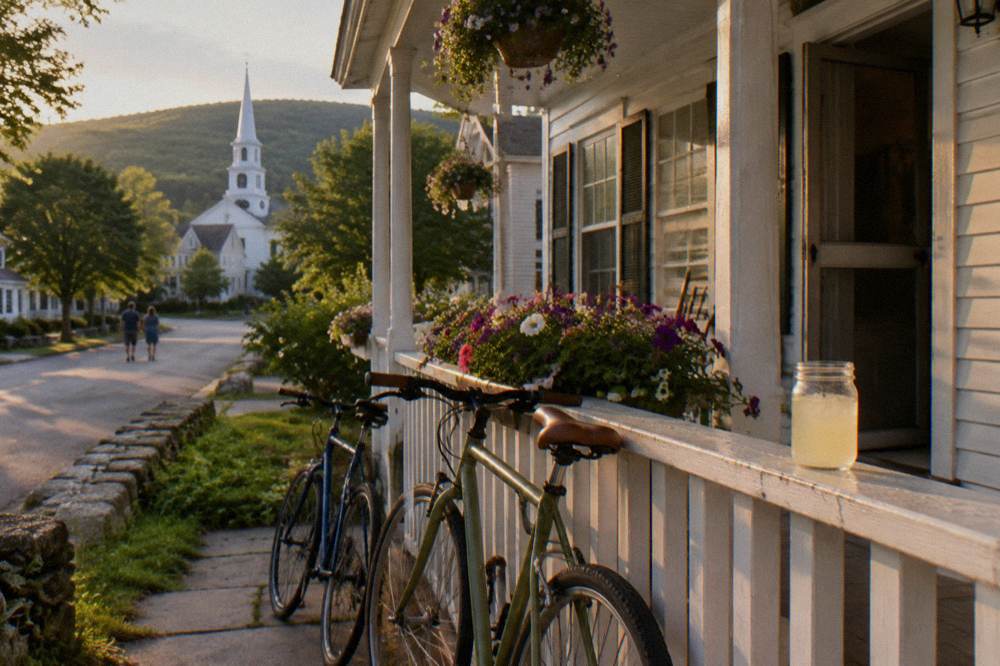
Yes, in practice: many riders use a guided trip as a first taste and return self-guided on the same corridor, and some operators let you add guided days or shuttle support to a self-guided itinerary. E-bike rentals are the most common mid-trip adjustment, and mixed-ability pairs often split one guided rider and one self-guided day from the same inn base.
The formats are not a marriage. A common pattern is a guided first visit: one week, van, leader, everything handled, learn the region's rhythm. The following year the same rider books self-guided over the same valleys, now confident about the roads, the weather and the climbing. Operators see this cycle often enough that several design their self-guided routes as shadows of their guided ones.
Mid-trip flexibility is thinner but real. Self-guided packages can sometimes be extended a night, or paired with a local day guide in the Kingdom, where Kingdom Trails guided rides and rentals operate as a separate market from the inn-to-inn road operators. East Burke Sports, Kingdom Bike Rentals, Village Sport Shop and Rifugio Darling Hill all rent around the trail network, and none of that requires a package at all.
The e-bike switch is the everyday version. A rider who underestimates Vermont climbing can, at several rental points including Local Motion's Trailside Center at 1 Steele Street in Burlington, swap to a Class 1 pedal-assist machine and finish the week comfortably. Vermont law treats compliant e-bikes as bicycles, with a three-class framework, Class 1 and 2 capped at 20 mph assistance and Class 3 at 28 mph, so the swap is legal wherever bikes ride on the multi-use corridors.
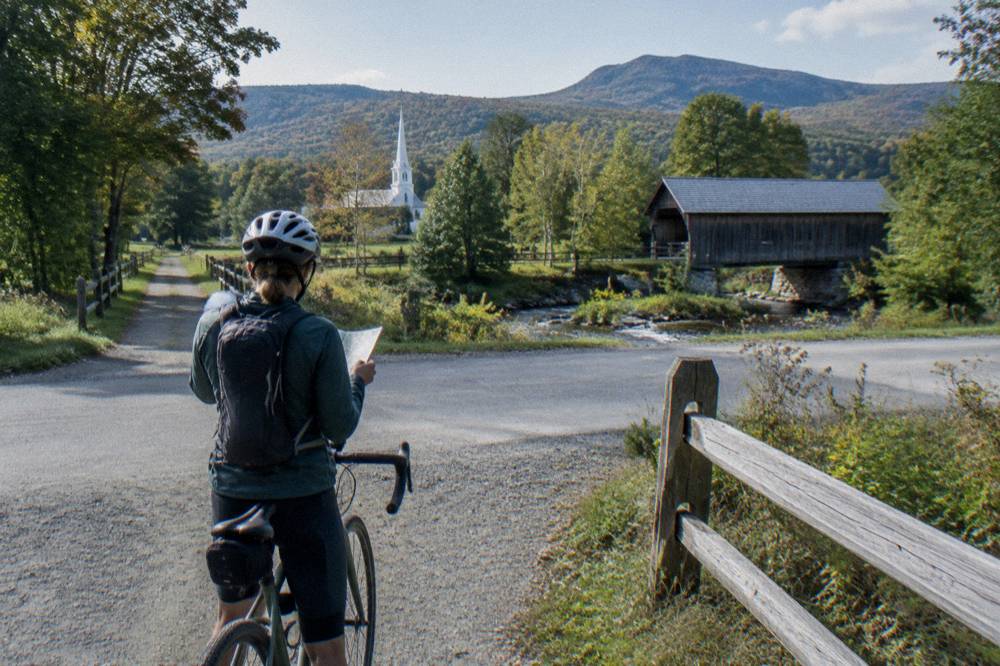
Guided trips concentrate in the May to October window with fixed departures that sell out around foliage season; self-guided trips run on the same roads with flexible starts, which makes late September to mid October easier to book self-guided than guided. Weather risk also shifts the balance: shoulder-season weeks reward the self-reliance self-guided demands.
Vermont's riding season is roughly May through October, and both formats live inside it. The difference is arithmetic. A guided operator runs perhaps a dozen departures on a given route; when the foliage departures fill, they are full. Self-guided capacity is whatever the inns have, which is more elastic, though the same foliage weeks strain it too. Foliage itself peaks from late September to mid October, earlier on the ridgelines and later in the southern valleys, and our best time to bike in Vermont guide maps the whole calendar.
Weather cuts the other way. The same flexibility that lets you start a self-guided trip on any date also means nobody cancels it for you when a cold rain settles in for two days. Guided groups ride or shorten as a group with a leader's judgment; self-guided riders make that call alone, and October in Vermont can deliver a 36 degree morning and a 56 degree afternoon on the same day. Riders who hate that decision pay for the guided format happily.
The Kingdom is its own calendar. The summer trail season runs to about the end of October, closes for late-autumn hunting, then reopens as a groomed winter network for fat bikes and Nordic skiing. Passes and conditions live on the Kingdom Trails site, and any mountain bike portion of a Vermont trip should check trail status before committing to dates.
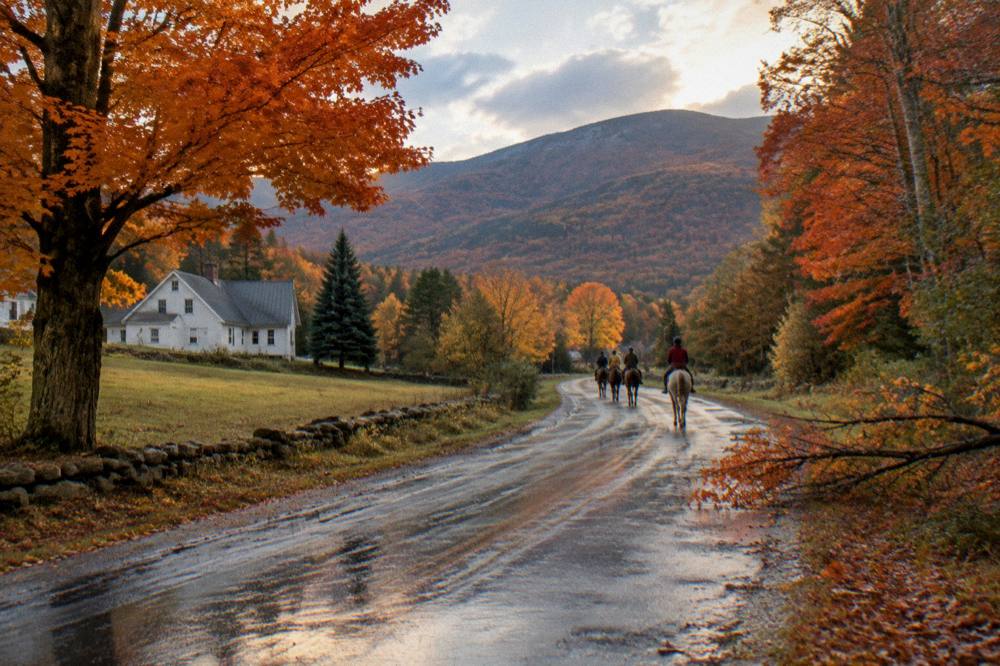
Burlington, Stowe and the Lyndonville-East Burke area each support a fully independent riding week with rental bikes, car-free corridors and a single hotel base, no operator required. That third option, inn-based DIY riding, beats both package formats on cost and flexibility, and it is how a growing share of riders now does Vermont.
The package market is not the only way. A rider who books one hotel for five nights, rents a bike, and rides loops from the door has effectively built a self-guided trip with the operator removed. Burlington supports this best in the west: the waterfront path, the Island Line, and rental inventory including e-bikes, adaptive cycles and kids bikes all sit within a short ride of downtown lodging, and Hotel Champlain Burlington sits at the path access with bike rentals of its own on the listing.
Stowe is the northern-center version, with the Recreation Path giving car-free spine miles and road loops radiating from the village; a base like the Sun & Ski Inn And Suites exists precisely for that pattern. And the Kingdom is the mountain bike version, where the Wildflower Inn near Lyndonville, 2.3 miles from the trail network with rentals and a bicycle shuttle, functions as a one-stop base that replaces most of what a guided mountain bike week would provide.
Lyndonville, 2.3 miles to Kingdom Trails
Offers bike rentals and a bicycle shuttle, and sits 2.3 miles from Kingdom Trails.
Check ratesThe DIY route does trade away the two things packages genuinely deliver: luggage movement, irrelevant on a single-base trip, and the itinerary itself, which riders assemble from sources like our Vermont bike trails by difficulty guide. For confident cyclists that trade is a bargain. For everyone else, the operators earn their keep, and booking with them happens on their own sites, directly.
A guided tour includes trip leaders, a support van and a fixed group on fixed dates. A self-guided tour includes booked inns, luggage transfers and route notes, with no leaders, no van and flexible start dates. The roads ridden are often the same in both formats.
Usually yes, and the reason is structural: guided rates pay for staff riding along with the group, while self-guided rates pay for lodging logistics only. Exact prices vary by operator and season, and each operator lists current pricing on its own site.
Yes. The operator's shuttle or courier moves your main bags from inn to inn each day while you ride with a small day bag. Bags typically arrive at the next inn by mid-afternoon, which quietly sets a daily distance you should finish before dinner.
You call the operator's support line and, in most cases, arrange your own taxi or shuttle at your cost. There is no van following the route. This is the main practical difference from a guided trip, where a van pickup is standard.
Most beginners are happier guided: leaders handle navigation, mechanicals and pacing, and the van removes the fear of being stranded. Confident beginners comfortable reading cue sheets and fixing a flat often do fine self-guided on flat rail trail corridors like the Lamoille Valley Rail Trail.
No. This site is a guide only and sells no tours. Book directly with the operator on its own site, and it states current prices, dates and inclusions there.
Before you go, the pick for this guide:
Hotel Vermont
About 0.2 miles from the Burlington Bike Path in the lake-side downtown.
Check rates →