Hotel Champlain Burlington, Curio Collection by Hilton
Burlington, near Waterfront Park
Steps from Waterfront Park and the bike path access; its listing includes free bicycle rentals.
Check ratesVermont riding runs roughly May through October, and the month you pick changes everything: trail openings, bug pressure, heat, foliage crowds and even whether the bike ferry across the Colchester Causeway gap is running.
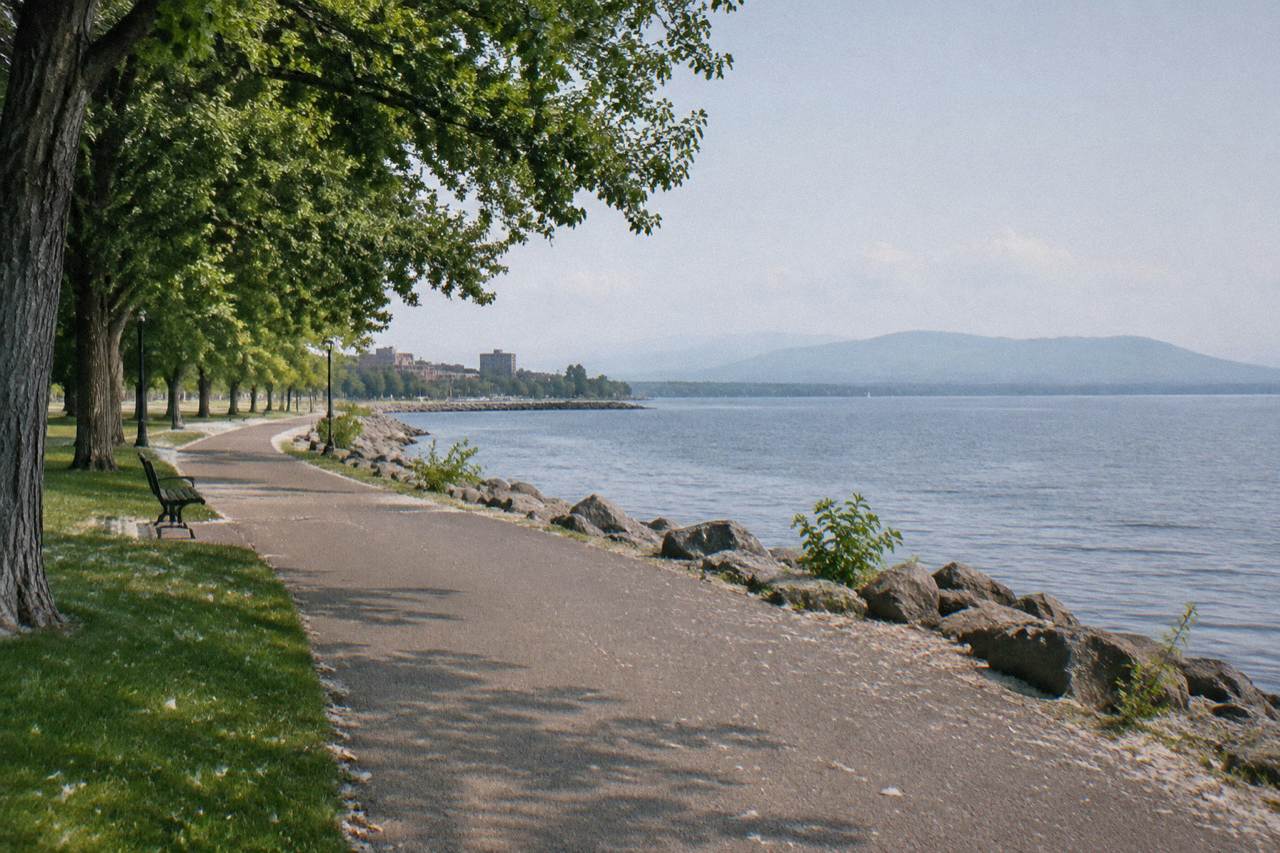
Short answer
The best window for biking in Vermont is mid May through mid October. July and September are the most reliable months for weather and trail conditions, while late September to mid October brings foliage but heavier traffic and fuller lodging. The Lake Champlain bike ferry runs late May to mid October, and Kingdom Trails closes its summer network around the end of October.
Biking in Vermont is a roughly six month activity, and the calendar decides more of the ride than most visitors expect. Mud season closes mountain bike trails in April and often into early May, blackflies own late May and early June, summer brings the fullest trail and ferry schedule, and October delivers foliage color alongside the thickest traffic and the tightest lodging of the year. Pick the wrong fortnight and a planned rail trail day can turn into a detour; pick the right one and the same road feels empty. This guide walks through the riding year month by month, with the conditions, the seasonal services and the booking windows that matter. And if you're curious how the trails themselves stack up, our honest look at Vermont's mountain biking networks covers the riding season and how the state compares for a bike trip.
The state's riding infrastructure is unusually seasonal. The Island Line Trail out of Burlington is open year round as a path, but the bike ferry that carries riders across the gap in the Colchester Causeway runs only from late May to mid October. Kingdom Trails opens its summer network as conditions allow in May and winds it down around the end of October, then flips to a groomed winter fat bike operation. The Lamoille Valley Rail Trail, at 95 miles the longest rail trail in New England, stays open year round, but even it asks riders to check trail status before a long ride because flood repairs and maintenance pop up through the season. For a fuller comparison of guided and self guided options across these windows, see our guide on choosing a Vermont bike trip.
The best time to bike in Vermont is mid May through mid October, with September the single best month for most riders, when trails are dry, bugs are gone, summer crowds have thinned, and the first color arrives late in the month. If foliage is the priority, aim for late September to mid October, accepting heavier leaf peeper traffic and the fullest lodging of the year.
Everything else in this guide is really a footnote to that one trade off: predictability versus color. A rider who wants empty backroads and open trailhead parking should target June or the weekdays of September. A rider who wants the reds and oranges should accept company and book early. The foliage window itself is not one moment but a slope: ridgelines and the northern Northeast Kingdom turn first, roughly a week to ten days ahead of the southern valleys, so the "best" week shifts depending on which part of the state you are riding. Our regional breakdown of Vermont foliage peak dates maps that slope in detail.
Season length also depends on what you ride. Rail trail and road riders can stretch into late October on mild years, since stone dust surfaces drain fast and pavement holds no mud. Mountain bikers are tied to trail closures: Kingdom Trails and most singletrack networks close for mud season and again for deer hunting in November, and the Vermont mountain bike community treats riding closed singletrack in April as a genuine offense because tire ruts harden into season long damage.
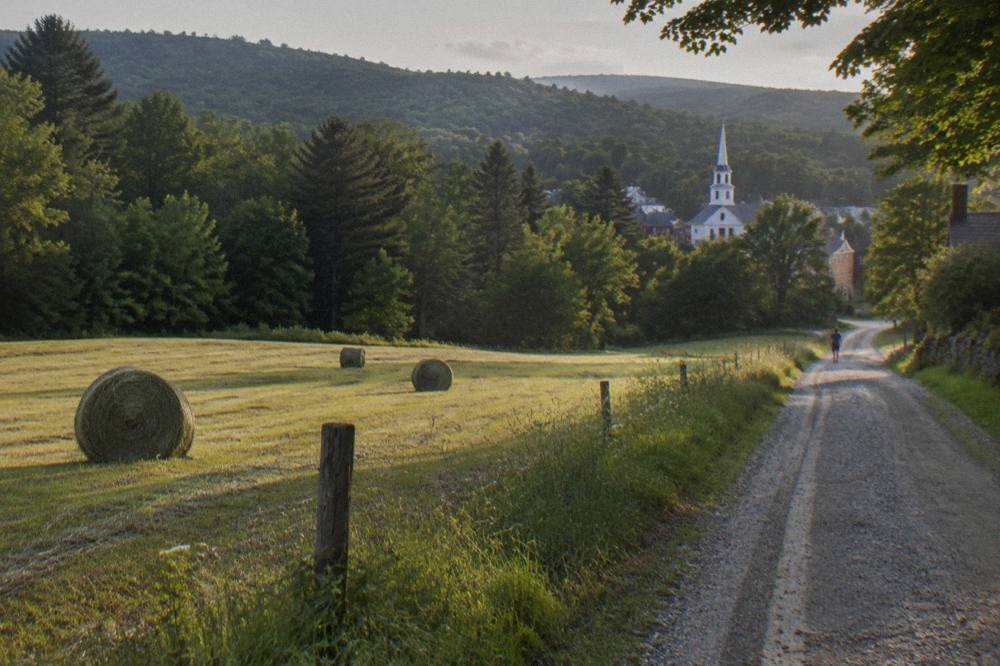
Mud season is the late thaw, typically April into early May, when melting snow saturates Vermont's soils and singletrack becomes unrideable without doing damage. Most mountain bike networks, including Kingdom Trails, stay closed or ask riders off until the ground dries, usually by mid to late May. Rail trails and paved paths stay open, so road and rail trail riders can still trip here in spring while singletrack riders should wait.
The reason for the closures is structural. Vermont's trails sit on freeze thaw soils that stay waterlogged weeks after the snow disappears, and a tire cut through soft tread sets into a rut that trail crews dig out by hand all summer. The Kingdom Trails Association frames its whole riding culture around landowner generosity, and respecting mud season closures is part of keeping that access. Riders planning a spring mountain bike trip should check the network's trail conditions page, which links to live Trailforks status, before committing to dates.
Spring is not a dead loss for biking, though. The Lamoille Valley Rail Trail's compacted crushed stone surface drains quickly and is open year round to non motorized use, and the paved Burlington Greenway rides well as soon as ice clears. Spring also offers something the foliage months cannot: near empty lodging, especially in the small towns along the rail trails, and waterfalls at full thaw. Pack layers, because spring temperatures swing hard across a single day.
Blackfly season runs roughly mid May into late June and is the single most underrated deterrent to early season riding in Vermont, especially in the woods and mountains of the Northeast Kingdom. Mosquitoes pick up in June and linger in damp areas into August. By September bug pressure is effectively over. Riders sensitive to bites should target July through October, or stick to open rail trail and lakeshore riding in early summer.
Blackflies are a woodland phenomenon: they thrive in moving water and forest cover, which describes much of the riding around Burke, the Kingdom Trails network and shaded road climbs. Open terrain behaves differently. The causeway section of the Island Line Trail is exposed lakeshore where wind suppresses insects, and road riding at pace outruns most of them. The practical pattern riders report is that a bug season mountain bike trip is manageable with repellent and a good weather window, but a bug season picnic stop is miserable.
The timing interacts with trail openings in an awkward way. Singletrack often opens in mid May, right as blackflies peak, so the sweet spot for forest riding without the swarm is July and August. Those months carry their own trade offs, heat and summer crowds on the marquee routes, covered next. Riders who want both dry trails and no bugs should plan around late June onward.
| Month | Typical Bug Pressure | Where It Is Worst | Best Defense |
|---|---|---|---|
| May | Blackflies beginning | Wooded singletrack, streams | Repellent, long sleeves |
| June | Blackflies peak, then mosquitoes | Northeast Kingdom woods | Ride open terrain, pace |
| July | Mosquitoes in damp spots | Dusk near wetlands | Time rides midday |
| August | Light and localized | Swamps, still evenings | Minimal |
| September | Effectively none | Anywhere | None needed |
July and August are Vermont's high summer riding months: trails are fully dry, every seasonal service including the bike ferry is running, and daylight stretches past 14 hours in early July. The trade offs are heat that can reach the 80s on road climbs, summer traffic on flagship routes, and the busiest rental and lodging weeks around Stowe and Burlington. For mountain biking and family rail trail trips, this is the most reliable window of the year.
Heat in Vermont rarely reaches southern levels, but the riding style amplifies it. Gravel climbs in the Green Mountains and the dirt road networks of the Northeast Kingdom offer little shade relief at effort, and humidity can make midday rides heavy. The local pattern is to ride early, break during the afternoon, and finish with evening mileage, using the long daylight. Riders coming for the Lamoille Valley Rail Trail or the Island Line should note both are largely flat and exposed, so sun preparation matters more than fitness on those corridors.
Summer is also when the seasonal services are at full schedule. The Local Motion bike ferry across the Colchester Causeway gap runs daily through the heart of summer, donation based, connecting the causeway to South Hero for the full Island Line experience. The Local Motion Trailside Center at 1 Steele Street in Burlington rents conventional, Class 1 pedal assist, adaptive and kids bikes daily through the season, and reservations are recommended in July and August. Mountain bikers heading to Burke find every rental shop at full operation.
Lodging fills hardest around the foliage weeks, but summer weekends in Stowe are not far behind, and lakefront Burlington is busy through the whole stretch. Riders planning a July base in the riding areas around the Burlington waterfront have options literally on the path: the Hotel Champlain Burlington, Curio Collection by Hilton sits steps from Waterfront Park and the bike path access, and its listing includes free bicycle rentals. Being able to walk out of the lobby onto the greenway removes the daily parking question entirely.
Burlington, near Waterfront Park
Steps from Waterfront Park and the bike path access; its listing includes free bicycle rentals.
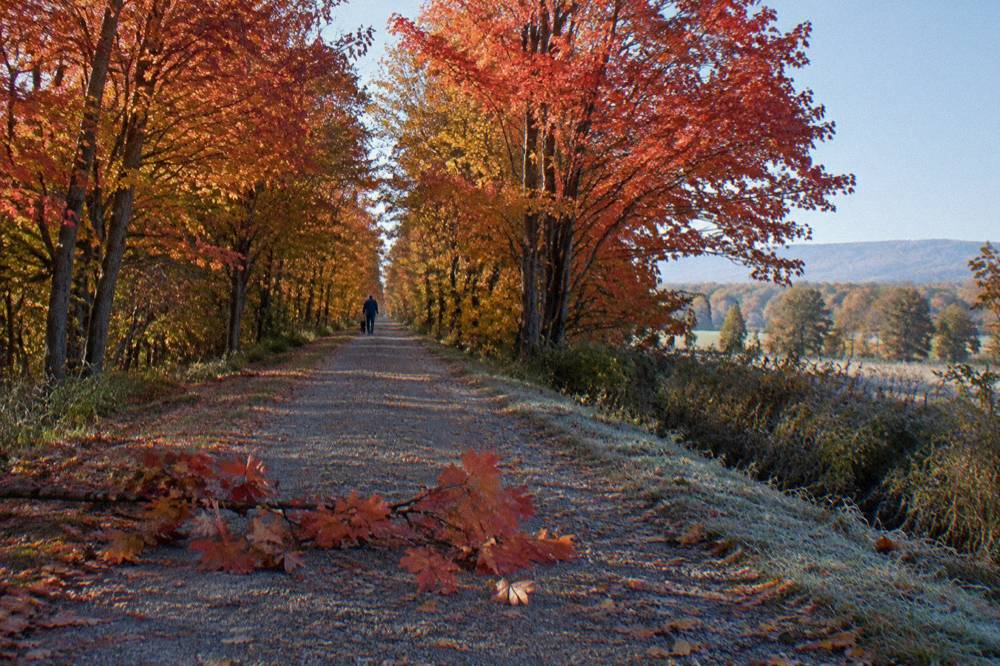
Check ratesVermont foliage peaks from late September to mid October, moving downhill and southward across about three weeks: northern Northeast Kingdom ridgelines turn first, the Green Mountains and central valleys follow, and southern Vermont valleys hold color last. For a biking trip built around color, the first two weeks of October are the safest bet statewide, with midweek rides avoiding the heaviest leaf peeper traffic on routes like Route 100. To fine-tune your timing around that north-to-south color wave, the month by month foliage guide for Vermont cyclists helps you match a ride window to each region.
Riders get a better foliage experience than drivers for one structural reason: the color is vertical. A climb from a valley floor passes through several stages of turn in a single hour, and ridgeline color runs a week to two weeks ahead of the valley below it. That also means a "past peak" report for one region often coexists with strong color a few hundred feet lower or fifty miles south. Riders targeting color should plan by elevation and region rather than by a single statewide date, and should read the regional detail in our piece on the best towns in Vermont for fall foliage.
October conditions reward preparation. Early to mid October averages a high around 56 and a low around 36 statewide, with sunrise near 7:00 and sunset near 6:20, so the comfortable riding window is mid morning through late afternoon and lights are worth packing for any ride that might run long. Frost is possible on mornings, especially in the valleys, and rain systems move through quickly. The riding itself is superb: cool air, low bug pressure, and backroads that carry modest traffic midweek. Popular foliage corridors are the exception, and route choice matters there.
| Region | Typical Peak Window | Riding Character | Traffic Pattern |
|---|---|---|---|
| Northeast Kingdom (Burke, Lyndonville) | Late September to first days of October | Forest singletrack, dirt roads | Moderate, fills on weekends |
| Green Mountains and Lamoille County | First week of October | Climbs, rail trail, Stowe path | Heavy on Route 100 |
| Champlain Valley (Burlington, islands) | First to second week of October | Flat path and causeway riding | Heavy near town, light on causeway |
| Southern Vermont (Manchester, Woodstock) | First to mid October | Village loops, gravel, resort roads | Heavy on weekends |
Foliage season, especially the first two weekends of October, is the tightest lodging window in Vermont: Stowe, Woodstock and the Burlington waterfront routinely sell out weeks ahead, and rates across the state peak on Saturday nights in that stretch. Midweek foliage riding offers the same color with dramatically better availability. Riders flexible on timing should target late September weekdays or the second week of October, when color holds but the surge eases.
The booking window is the part visitors underestimate. For the prime weekends, riders looking at Stowe should be reserving months ahead, not weeks. The pressure is worst for the small inns and motors inns near the marquee riding areas, because leaf peepers book the same rooms as riders. Burlington behaves differently: as a city it has more capacity, but waterfront hotels near the bike path carry a premium in October. The Northeast Kingdom is the sleeper: East Burke and Lyndonville have modest lodging stock near Kingdom Trails, and it fills with mountain bikers and foliage travelers competing for the same beds. The wider set of guides lives on Vermont Biking Tours.
The riding-area hotel strategy that works in October is the one that works all season: stay where the riding starts. In Stowe, the Sun & Ski Inn And Suites puts riders at the Stowe Recreation Path and the road loops around the village without needing the car each morning. In the Northeast Kingdom, the Wildflower Inn sits 2.3 miles from Kingdom Trails, offers bike rentals and a bicycle shuttle, and doubles as a foliage base with valley views that peak right at the start of October.
Lyndonville, 2.3 miles to Kingdom Trails
Offers bike rentals and a bicycle shuttle, and sits 2.3 miles from Kingdom Trails.
Check ratesThe Local Motion bike ferry across the gap in the Colchester Causeway runs from late May to mid October, and it is the only way to ride the full Island Line from Burlington to South Hero without turning back. It is donation based, with a few dollars suggested each way, and it scales back to weekends only in the fall shoulder weeks. Outside its season, riders turn around at the gap.
The ferry exists because the causeway was built as a rail bed with a swing section that was never restored for trail use, leaving a channel of open lake between the causeway and the South Hero shore. Local Motion, the Burlington nonprofit that also runs the Trailside Center rental operation, runs a small pontoon service across that channel in the warm months. The schedule details and current status are on the Local Motion bike ferry page, and riders planning an October crossing should check it, because the fall schedule drops to weekends before service ends for the year.
The ride the ferry unlocks is worth building a day around. From the Burlington waterfront, the paved Greenway carries riders about 8 miles north through Oakledge and along the lakeshore, the surface changes to crushed gravel on the causeway for roughly 5 more miles of open water riding on both sides, and the ferry links across to South Hero for a total of about 14.4 miles one way. Wind is the real variable: the causeway is fully exposed, and a north wind turns the return leg into a headwind grind. Riders should check the forecast and carry water, since services thin out past Colchester. Our dedicated Colchester Causeway riding guide covers the logistics in full.
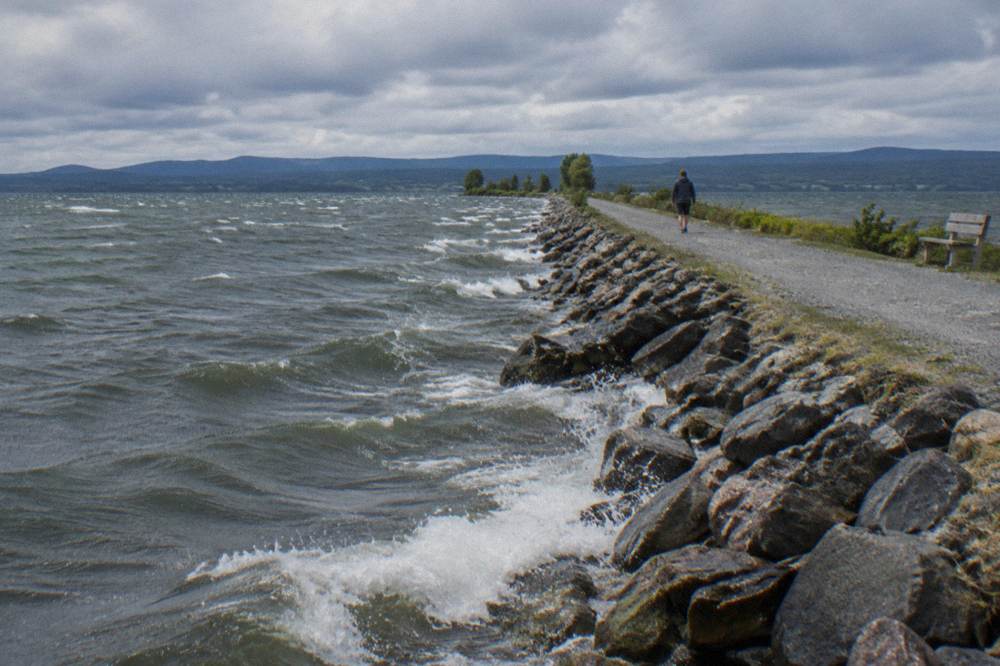
Kingdom Trails opens its summer network as conditions allow, typically in May, and rides through to about the end of October, when the network closes for the late autumn deer hunting window before reopening as a groomed winter fat bike and Nordic operation. Passes are required, bought online through the Kingdom Trails Association store or at the Welcome Center on Route 114 in East Burke. Class 1 pedal assist eMTBs are allowed on most trails, per the association's stated policy.
The closure gap between summer and winter networks is the detail that catches visiting riders. November into early December is off limits, then the winter network opens on designated groomed trails for fat bikes with tires wider than 3.5 inches, and fat bikes stay off the Nordic lanes. Trail status is volatile in every season, and the association's trail conditions page with its live Trailforks link is the authoritative check before any long drive north. Riders should also read the map carefully with an e-bike, because landowner agreements exclude Class 1 machines from some individual trails even though most of the network allows them.
Timing a Kingdom trip within the season follows the same logic as the rest of the state, with one addition: October around Burke is double booked. The trails sit inside one of the earliest foliage zones in Vermont, so mountain bikers and leaf peepers converge on the same weekends, and the trailhead lots and the village of East Burke both feel it. The sweet spot riders report is late June through mid July, when the network is fully open, the blackflies have faded and the crowds have not arrived, followed by the weekdays of September. Our Kingdom Trails mountain biking guide covers the network itself in depth.
Winter biking in Vermont is real but specialized: Kingdom Trails grooms designated singletrack for fat bikes with wide tires, and the rail trails are open to snow travel, while road riding shrinks to short daylight windows on salted roads. Early spring, April into early May, is the weakest riding period of the year, with singletrack closed for mud season and freeze thaw trails unreliable. Riders wanting a conventional road or path trip should book May through October.
The fat bike window is genuinely good, and it is the state's answer to a six month riding season. Groomed winter singletrack at Kingdom Trails runs on designated trails only, East Haven trails close to winter use entirely, and the same pass and trail map rules apply as in summer. On the rail trail side, the Lamoille Valley Rail Trail permits snowmobiles through the VAST season from mid December to mid April, so winter riders share the corridor with groomed snowmobile traffic and should ride the edges and use lights. The Vermont rail trails site publishes the motorized use rules and status updates for every state rail trail.
Early spring deserves its warning label. The snow is gone from the valleys but lingers in the woods, everything is saturated, and the roads that were gorgeous in October are peppered with frost heaves and leftover sand from winter maintenance. The riders who do best in April are gravel riders content with a slow, muddy, scenic spin and mountain bikers willing to stay off closed singletrack and ride gravel instead. Everyone else should hold out for May.
| Season | Trails Open | Key Services | Best For |
|---|---|---|---|
| Late April to mid May | Rail trails and paths only | Limited rentals, ferry not running | Gravel riders, waterfall views |
| Late May to June | Full singletrack, blackflies peak | Ferry starts late May | Bug tolerant riders, empty lodging |
| July to August | Everything, full schedule | Ferry daily, all rentals running | Families, mountain bikers |
| September | Everything, no bugs | Ferry daily then weekends | Most riders, best all round month |
| October | Foliage peak, networks open | Ferry weekends then closing | Color chasers, layers required |
| November to April | Winter network only, groomed fat biking | Rentals limited, passes still required | Fat bikers, Nordic skiers |
For a first Vermont biking trip, book September: dry trails, no bugs, daily ferry service early in the month, warm afternoons and the first foliage at month end. For a foliage specific trip, book the first week of October with midweek riding days. For mountain biking with the fewest crowds, book late June to mid July. For the cheapest lodging with full trail access, book late May or early June and pack repellent.
That ranking holds across riding styles with small adjustments. Rail trail riders planning a Lamoille Valley or Island Line itinerary have the longest usable season, May through late October, and can even chase shoulder season solitude in mid October once the ferry dependent sections are dropped from the route. Road riders should weight September and early October heaviest, when the air is cool, the light is low and golden, and the climbs through the passes are at their most scenic; they should also study our road versus gravel comparison for Vermont before choosing a bike. Families tied to school calendars end up in August, which is a fine consolation: everything is open, everything is running, and the heat is manageable with morning starts.
The booking mechanics matter as much as the month. Foliage weekends in Stowe, Woodstock and Burlington need reservations made well ahead, and the small riding towns like East Burke are not far behind in October. Rental bikes follow the same curve: the Burlington waterfront rental operation recommends reservations in peak weeks, and the Burke area shops are busiest on foliage Saturdays. Whatever the month, the last planning step is always the same one: check trail status before a long ride, because flood repairs, short trailhead closures and weather events move through every season, and the managers' own status pages are faster than any guide, including this one.
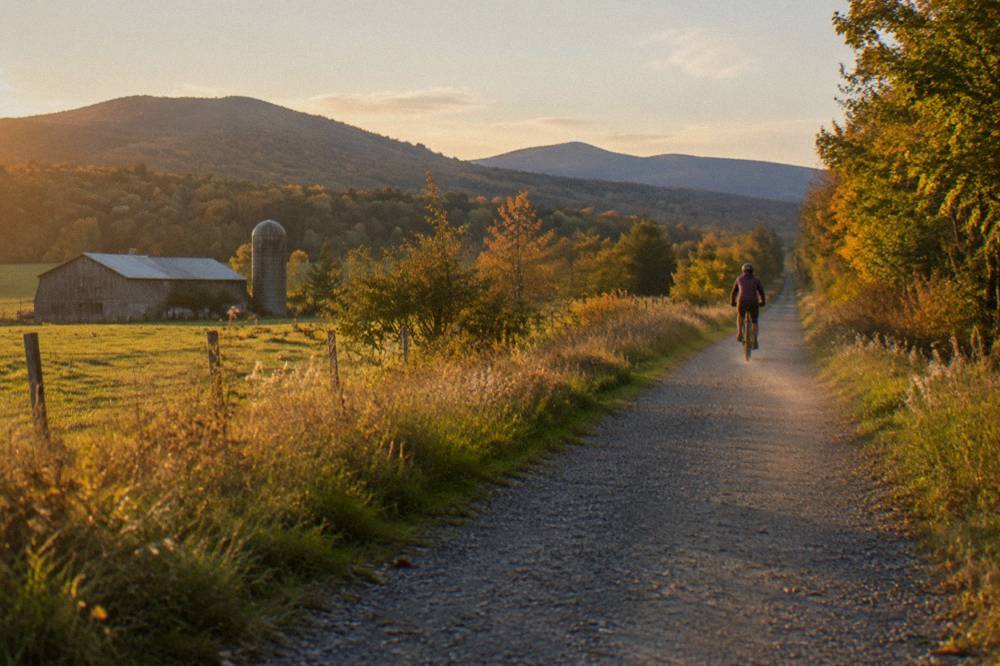

Summer trips need sun protection, water capacity for exposed rail trail and causeway sections, and repellent through June. September and October trips need layered clothing for mornings in the 30s and afternoons near 60, lights for the shrinking daylight, and rain shells for fast moving fronts. Every season deserves a helmet and a trail status check, and e-bike riders should confirm their machine is Class 1 pedal assist before planning singletrack.
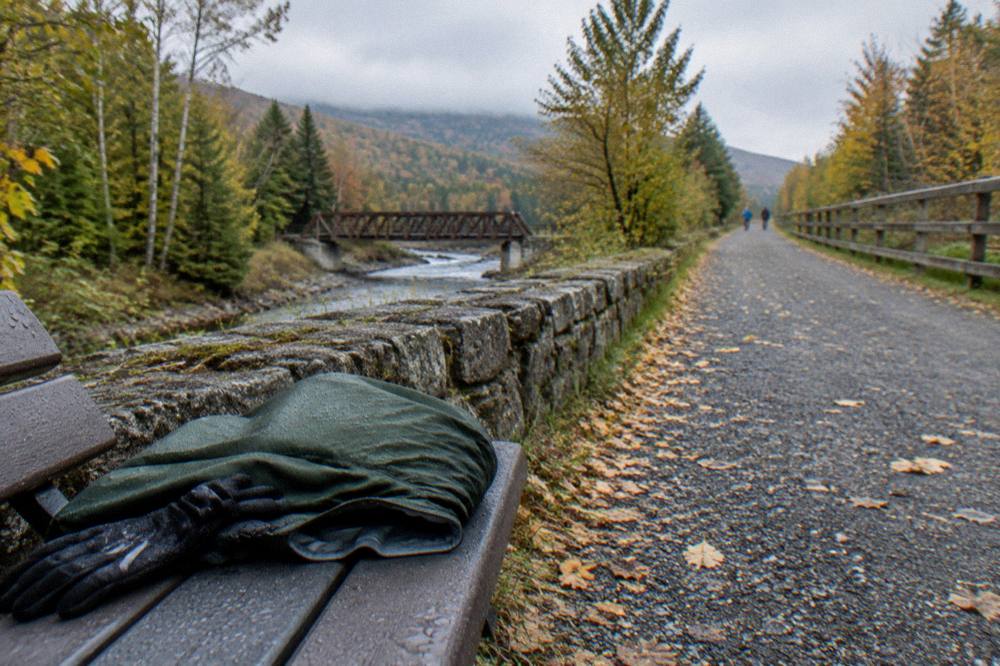
The layering question deserves specifics because October catches riders out. A valley start at 36 degrees can be a 60 degree climb by early afternoon, so the local uniform is a base layer, a warm layer that packs small, a wind shell and full finger gloves, with the whole stack shed into jersey pockets as the day warms. Frost on morning rail trail surfaces is common in October, so early starts on wooden bridge decks deserve care. Daylight is the other constraint: with sunset near 6:20 in the first half of October, a ride that starts at 2 in the afternoon finishes in dusk, and lights turn a marginal plan into a safe one. Our full Vermont bike trip packing guide carries the detailed checklist. For the full rundown on clothing layers, lights and pannier packing, see our detailed Vermont bike tour packing guide.
E-bike riders have one extra planning item, and it is worth stating precisely because the rules are uneven across land managers. On state rail trails like the Lamoille Valley, e-bikes are allowed and treated like bicycles, with motorized machines such as ATVs, dirt bikes and segways prohibited. On state land, the Vermont Mountain Bike Association reports that e-bikes are currently prohibited on non motorized natural surface trails while allowed on roads and multi use paths, with a proposed policy that would expand Class 1 access not yet confirmed. At Kingdom Trails, Class 1 pedal assist eMTBs are allowed on most trails per the association, with the trail map marking landowner exclusions. The consistent through line: Class 1 pedal assist, a charged battery, and a check of the local map before you ride.
Stowe
A Stowe base for the Stowe Recreation Path and the road loops around the village.
Check ratesMid May through mid October is the usable riding season, and September is the single best month for most riders: dry trails, no bugs, reliable ferry service and the first foliage color at month end. Foliage focused riders should target late September to mid October and accept heavier traffic.
Color peaks from late September to mid October, moving from the northern Northeast Kingdom ridgelines down to the southern valleys over roughly three weeks. The first week of October is the safest statewide bet, and ridgelines run a week or more ahead of the valleys beneath them.
No. Early to mid October offers cool, dry riding conditions with highs averaging near 56, and color often holds in the southern valleys through mid month. Riders should pack layers for mornings near 36, carry lights with sunset around 6:20, and note that the bike ferry scales back to weekends before closing for the season in mid October.
The Local Motion bike ferry operates from late May to mid October, crossing the open water gap between the Colchester Causeway and South Hero so riders can complete the full Island Line. It is donation based, runs daily in summer, then weekends only in the fall shoulder weeks. Check the Local Motion ferry page for the current schedule.
The summer network opens as conditions allow in May and rides through to about the end of October, closing for the late autumn deer hunting window before the groomed winter fat bike network opens. Passes are required and bought online or at the Welcome Center in East Burke, and trail status should be checked before any trip.
Blackflies run from mid May into late June and are worst in wooded terrain like the Northeast Kingdom; mosquitoes linger in damp areas into August. From September onward bug pressure is effectively gone. Repellent and open terrain riding manage the early season well.
Before you go, the pick for this guide:
Hotel Vermont
About 0.2 miles from the Burlington Bike Path in the lake-side downtown.
Check rates →