Woodstock Inn & Resort
Woodstock village
The village base for the Woodstock gravel loops and the Mount Tom carriage roads.
Check ratesThe same geography that makes Vermont foliage famous, narrow valleys, wooded ridgelines, and small villages stacked close together, also makes it one of the best cycling states in the East. This guide picks the towns where the color and the riding line up.
Short answer
The best foliage towns for riders are Woodstock, Stowe, Burlington, East Burke, Middlebury, and Manchester. Each pairs dependable early-October color with a real ride from the door: carriage roads, a recreation path, a lakefront rail trail, or singletrack. Peak color usually runs late September to mid October, northern ridgelines first, southern valleys last.
Vermont packs more distinct foliage villages into a small area than almost anywhere in the Northeast, and the state's riding network threads straight through them. A cyclist based in the right town can roll onto a rail trail, a recreation path, or gravel carriage roads without loading a bike onto a car once. The color itself follows a reliable gradient: northern ridgelines turn first, southern valleys last, and the window between them is roughly two weeks of overlapping peak. Riders who match the town to the week get the best of both. To narrow down the options, our town-by-town guide to Vermont's best foliage bases for cyclists compares trail access, peak timing windows, and places to stay near the riding.
This guide works through the regions in foliage order, north to south, and asks one question of every town: what can you ride from the door? The answer is usually a lot. The Vermont Biking Tours guide library covers the individual trails in depth, and this page points to those pages where a town deserves a deeper look.
Vermont's foliage towns sit in valleys with riding on three sides, which means a cyclist can base in one village and reach quiet roads, gravel, and rail trail without driving. The towns are small, five to ten minutes end to end, so lodging, food, and the trailhead cluster together. Foliage season adds heavy leaf-peeping car traffic on the main routes, and that pushes riders onto the paths and backroads where the towns work best.
The geography does the heavy lifting. The Green Mountains run north to south, and the state's classic villages, Woodstock, Stowe, Middlebury, Manchester, sit at the base of a valley wall that turns color from the top down. A rider watching a ridgeline can literally see the season advance over a week. Vermont law treats bicycles as vehicles with full road rights, and drivers on the secondary roads are generally accustomed to sharing them, though shoulders on many rural routes are narrow and riders should stay as far right as is safe. The payoff for tolerating that is a network of unpaved town highways and converted rail beds that carries almost no cars at all.
The rail trail network is the quiet backbone of foliage riding here. The Lamoille Valley Rail Trail alone runs about 95 miles from St. Johnsbury to Swanton through 18 towns, and the state's trail manager describes it as the longest rail trail in New England, with e-bikes allowed and a firm compacted stone surface at a grade under 3 percent. Our Lamoille Valley Rail Trail biking guide covers it segment by segment. Foliage season puts that corridor under continuous color for its entire length.
East Burke and Lyndonville are the Northeast Kingdom's foliage riding bases, and they peak first, usually in the first days of October and sometimes the last days of September. East Burke sits inside the Kingdom Trails network, more than 100 miles of non-motorized singletrack and multi-use trail across 213 mapped routes, so mountain bikers ride from lodging to trail without a car. Lyndonville sits on the LVRT for rail trail miles.
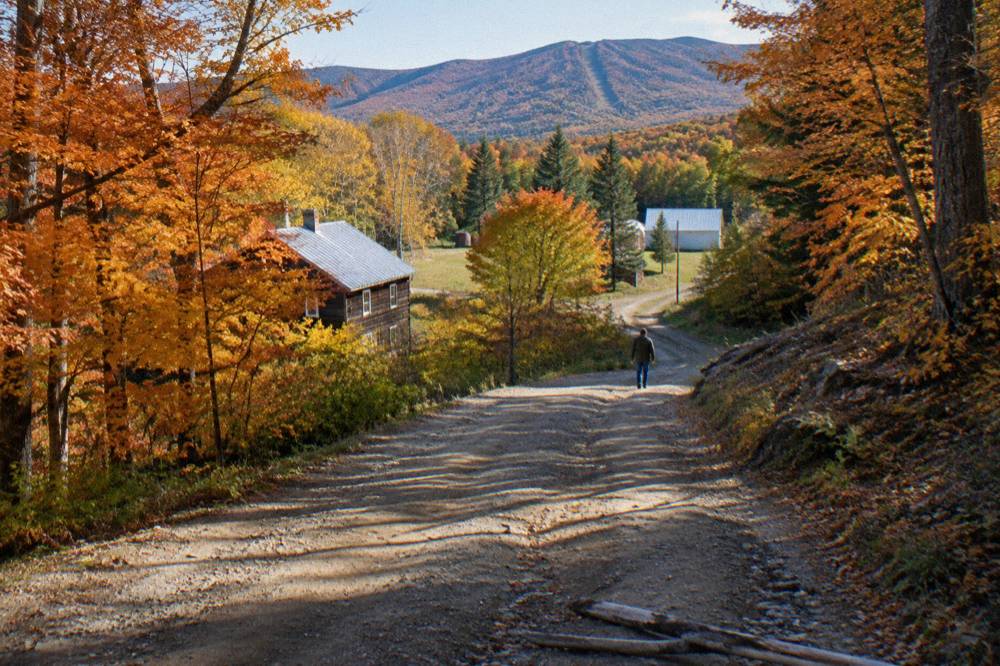
Kingdom Trails is the reason East Burke appears on every list of riding towns in the East, and the fall color there is as dense as the trail network. The Kingdom Trails Association opens the summer trail system as conditions allow, typically in May, and runs it through the end of October, which puts the full network inside the foliage window. Passes are bought online through the association's store or at the Welcome Center on VT Route 114 in East Burke, and riders should check the association's trail conditions page before a big day because wet autumn weather closes individual trails. The association's rules allow Class 1 pedal-assist eMTBs on most trails, with the trail map marking any landowner exclusions; our page on e-bikes at Kingdom Trails covers the details.
Rental support in the area is strong. East Burke Sports operates a full-service shop at the trailhead, Kingdom Bike Rentals runs a mobile delivery fleet with an e-MTB focus, Village Sport Shop serves the Darling Hill side, and Rifugio Darling Hill rents eMTB and full-suspension bikes. None of these shops publishes prices we can verify, so check with them directly for current rates and reserve ahead in foliage season, when the network draws riders from across the Northeast.
Lyndonville is the quieter alternative a few miles away. The town sits on the LVRT, and the Wildflower Inn outside Lyndonville markets itself to cyclists for exactly this pairing: it sits 2.3 miles from Kingdom Trails and offers both bike rentals and a bicycle shuttle. That combination lets a party split its stay between singletrack days at Burke and flat gravel days on the rail trail, all from one base.
Stowe is the strongest single-town base in Vermont for mixed riding, because the Stowe Recreation Path runs from the village into the woods, Mountain Road connects to long road climbs, and the surrounding gravel loops need no car to reach. Foliage in the Stowe area, in the north-central mountains, typically peaks in the first week of October. The town is busy in that week, and riders should book lodging well ahead.
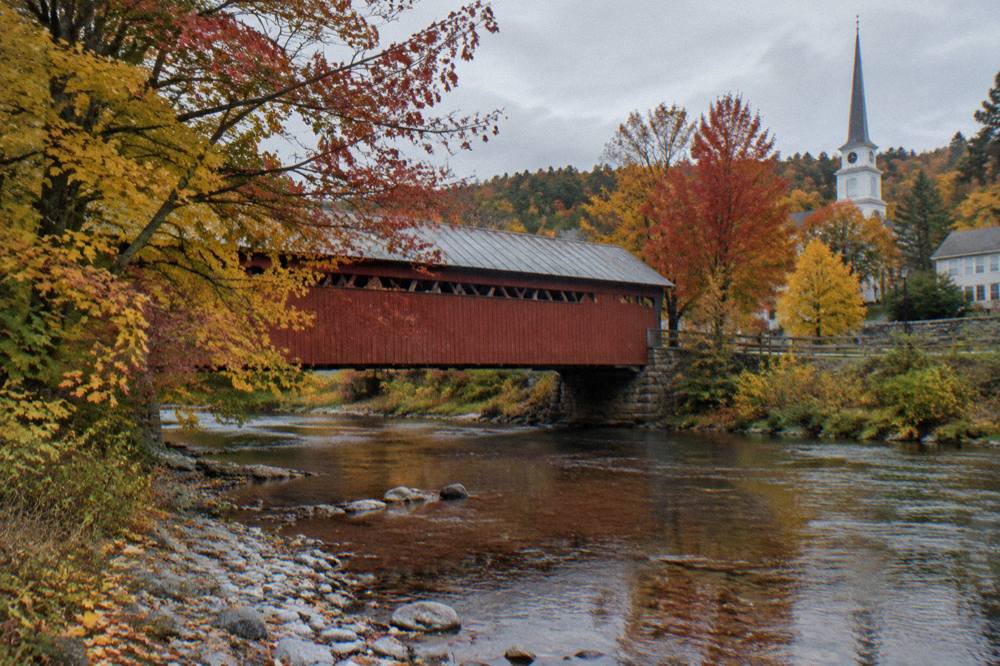
The Recreation Path is the spine of a Stowe cycling trip. It is a paved, off-road path starting near the village and running toward the base of the mountain, threading behind inns and through fields with the West Branch alongside. For foliage, the path delivers the classic Stowe scene, church spire, covered bridges, and slope-side color, without putting a cyclist on the busy Mountain Road shoulder. Riders who want the road experience can climb Mountain Road itself toward Smugglers' Notch, one of the most photographed foliage corridors in the state, though car traffic in peak week is heavy and the shoulder is not generous. Our Stowe Recreation Path and Lamoille County biking guide lays out both options with route notes.
| Stowe riding option | Surface | Type of ride | Foliage character |
|---|---|---|---|
| Stowe Recreation Path | Paved path | Flat family riding from the village | Streamside maples, village views |
| Mountain Road climb | Paved road | Steady road climb toward the Notch | Cliff wall and slope color, heavy traffic in peak week |
| Lamoille County gravel loops | Packed dirt | Rolling gravel, quiet farm roads | Valley farmland with ridge color above |
| Smugglers' Notch corridor | Paved road | Climbing ride through the gap | Dense color in a rock-walled cut |
For lodging, a Stowe base splits into two patterns. The Sun & Ski Inn And Suites sits for the Recreation Path and the road loops around the village, which is the practical choice for riders who want to skip the car entirely. At the other end of the scale, the Lodge at Spruce Peak sits up at the mountain, a resort base for a ride day that combines the village path and Mountain Road in one loop. The budget option in town is the Stowe Motel & Snowdrift, a plain motel base that leaves more of the trip budget for the rest of the week.
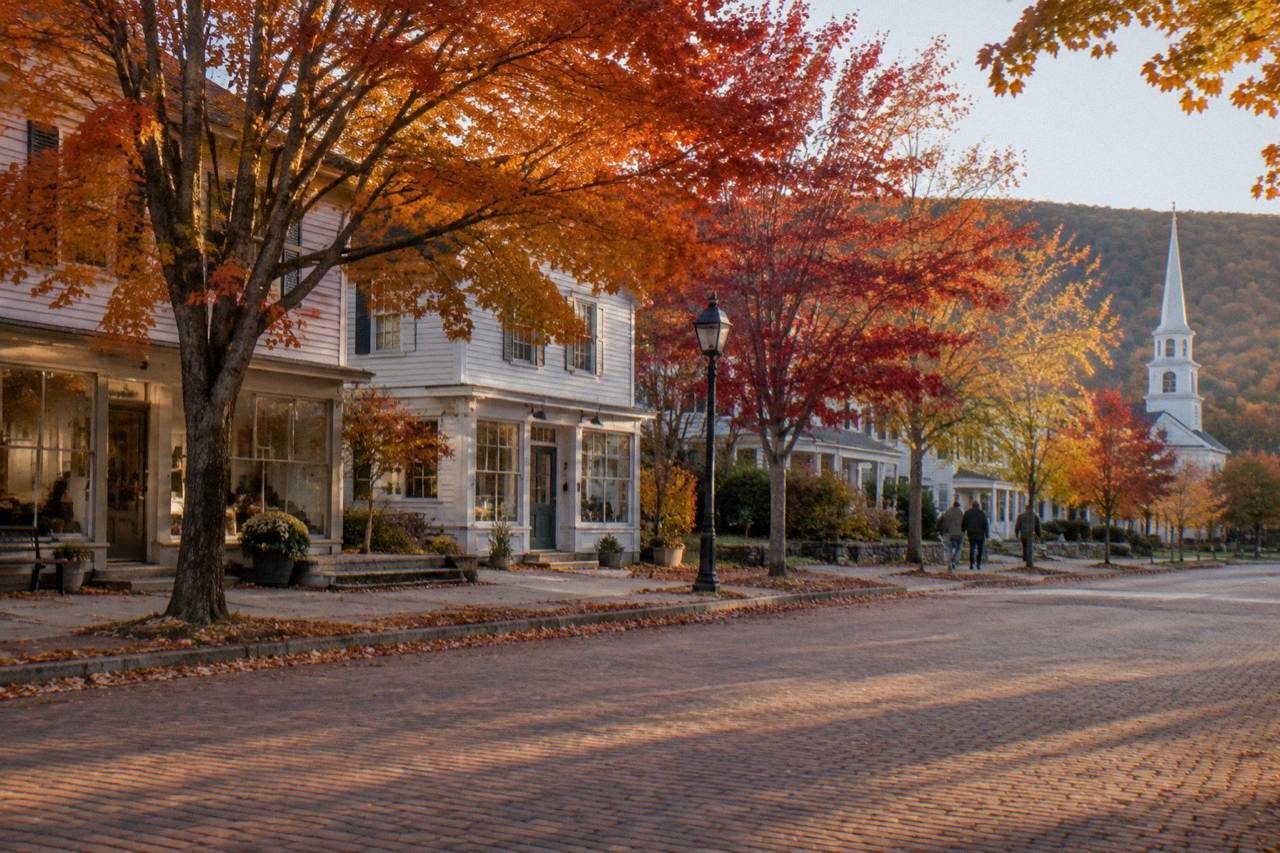
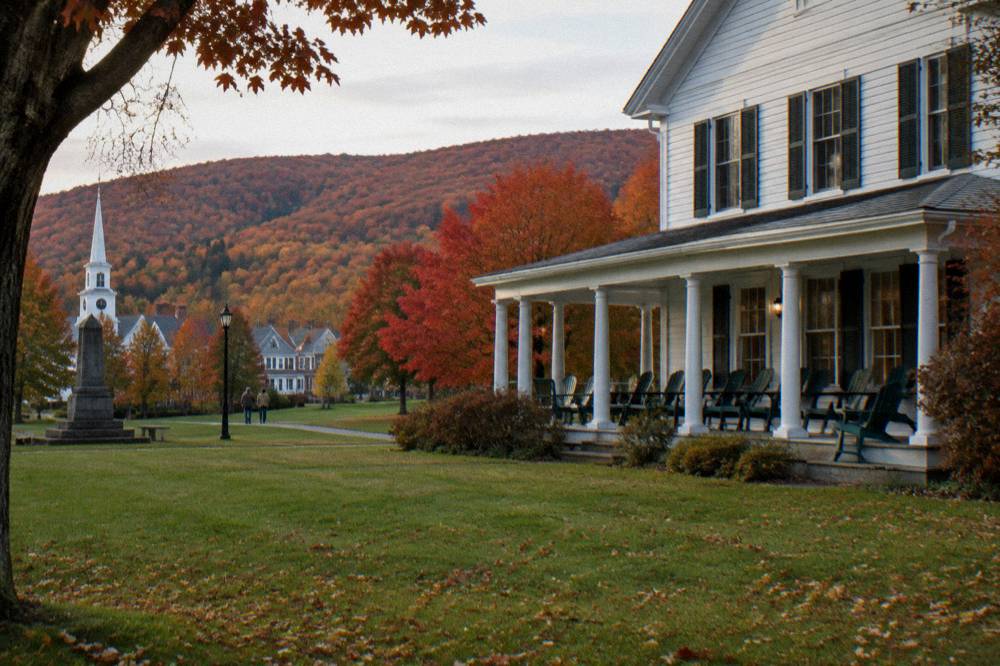
Woodstock pairs the most complete village scenery in Vermont with two rideable networks from the door: the Mount Tom carriage roads and a set of gravel loops on the surrounding town highways. The town sits in the central part of the state, where color typically peaks in the first week of October. Woodstock's village green, covered bridges, and fenced farm fields make it the postcard version of a Vermont foliage town, and the riding around it is quieter than Stowe's.
The Mount Tom carriage roads are the distinctive Woodstock asset. These are gravel carriage roads on the hillside above the village, wide, firm, and closed to cars, climbing through hardwood forest that turns solid red and orange in the first October week. They connect into a loop with village streets, so a rider can do a car-free morning ride that ends at a bakery on the green. Beyond the hill, the town's gravel loops roll through the surrounding farmland, and the low traffic on those roads makes them a better foliage choice than the numbered state highways that carry the leaf-peeping traffic.
| Woodstock ride | Surface | Distance character | What you see |
|---|---|---|---|
| Mount Tom carriage roads | Gravel, no cars | Climbing loop from the village | Hardwood forest, village overlooks |
| Woodstock gravel loops | Packed dirt town roads | Rolling half-day routes | Fenced farms, covered bridges |
| Village streets and green | Paved | Short easy spins | The classic village foliage scene |
The Woodstock Inn & Resort is the village base for exactly this riding: it sits in Woodstock village, on the green, at the foot of the carriage road climb. For a weekend built around morning rides and afternoon wandering, that location is hard to beat.
Woodstock village
The village base for the Woodstock gravel loops and the Mount Tom carriage roads.
Check ratesBurlington is both. The city's lakefront gives it a foliage profile different from the mountain towns, with the Burlington Greenway running about 8 paved miles along Lake Champlain and the Island Line Trail continuing about 14.4 miles total toward South Hero across the Colchester Causeway, roughly 5 miles of crushed gravel. Color peaks slightly later at lake level than on the ridgelines inland.
The Burlington riding story is the Burlington Bike Path, the Greenway, and the causeway beyond it, and in foliage season the lake adds something the mountain towns cannot: blue water below the color. Riding the causeway in the first half of October puts a cyclist on a gravel spur dike with water on both sides and the Adirondacks on the far shore, one of the most distinctive rides in the state. One logistics note matters here. The Local Motion bike ferry that carries riders across the causeway gap toward South Hero runs only from late May to mid October, with a weekend-heavy fall schedule, and it is closed outside that window. Riders planning a foliage trip should check the ferry page before counting on the crossing.
Rentals make Burlington the easiest car-free foliage trip in Vermont. Local Motion's Trailside Center at 1 Steele Street sits on the path itself and rents conventional bikes, Class 1 e-bikes, adaptive bikes, and kids' options, with reservations recommended in busy weeks; rental pricing is best confirmed with the center directly. Class 1 pedal-assist e-bikes are permitted on the Greenway and Island Line Trail where bicycles are allowed, while throttle e-motos are not. Our page on where to rent bikes for the Burlington Bike Path lists the options in full.

Two Burlington hotels fit the ride. The Hotel Vermont sits about 0.2 miles from the Burlington Bike Path in the lake-side downtown, and Hotel Champlain Burlington stands near Waterfront Park with the bike path access steps away.
Middlebury is the sleeper pick among Vermont foliage towns. The Middlebury area typically peaks in the first week of October alongside the rest of the central region, and the Trail Around Middlebury, a loop trail ringing the town, gives riders a wooded circuit that connects directly from village streets. The town also sits within striking distance of road riding in the Champlain Valley and the gaps to the east.
The Trail Around Middlebury is the town's riding signature: a loop of trail around the community that riders and walkers can join from several points near the village, passing through forest, fields, and riverside stretches. In foliage weeks the wooded sections hold full color while the open stretches frame the hills beyond. Middlebury's village green, college campus, and storefront marble give the town a walkable center, and the two inns on the green, the Swift House Inn and the Middlebury Inn, both serve as bases for the loop and the valley roads around it.
For riders who want to extend, the Champlain Valley west of town runs flat to rolling farmland with wide views, and it colors slightly later than the hills. That makes Middlebury a good second-week town when the northern ridgelines have already turned: ride the hills early in the window, then drop west as the valleys catch up.
| Town | Region | Typical peak window | Signature ride from town |
|---|---|---|---|
| East Burke | Northeast Kingdom | Late September to early October | Kingdom Trails singletrack |
| Stowe | North-central mountains | First week of October | Recreation Path and Mountain Road |
| Burlington | Lake Champlain shore | Early to mid October | Greenway and Island Line Trail |
| Woodstock | Central Vermont | First week of October | Mount Tom carriage roads |
| Middlebury | Central-west | First to second week of October | Trail Around Middlebury |
| Manchester | Southern Vermont | Mid October | Southern road rides |
Manchester and the southern counties are Vermont's second-week play. Color there typically peaks in mid October, roughly a week after the Northeast Kingdom, which makes the region the place to ride when the northern hills have gone past peak. Manchester itself sits in a wide valley between the Taconic and Green Mountain ranges, and its road riding runs over quiet passes and through villages that hold color late.
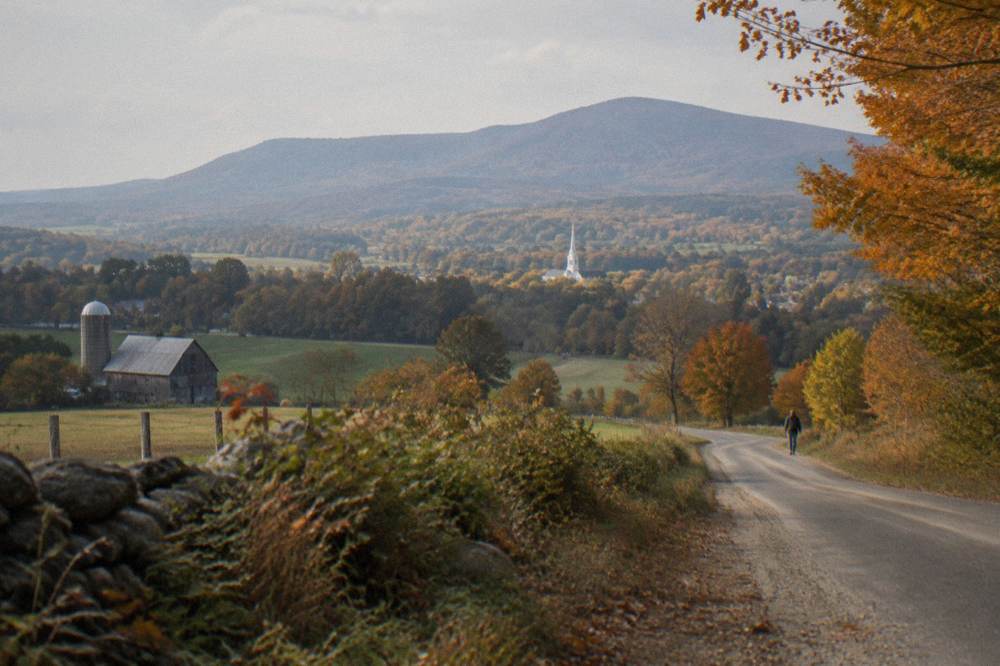
The Equinox Golf Resort & Spa in Manchester anchors the region's riding scene as a resort base for southern Vermont road rides. From town, road routes climb the nearby passes and drop into the Battenkill valley, whose farm roads and covered bridges draw cyclists through the whole season. The Vermont gravel bike tours guide covers the southern gravel scene, which includes some of the best dirt-road riding in the state; the same events that use those roads run in late summer and early fall, and riders planning around any of them should confirm dates with the organizers rather than relying on last season's schedule.
The strategic point for foliage planning is simple. A rider with one week to spend can start in the Northeast Kingdom as the ridges turn, then move south with the color, effectively doubling the length of the peak. A rider with one weekend should match the town to the calendar: Burke or Stowe in the first days of October, Woodstock or Middlebury in the middle of the window, Manchester toward the second week.
The best foliage lodging choice is the one that puts the ride at the door, because foliage season is the one time of year when Vermont's roads are genuinely crowded and a car transfer between trailhead and inn costs real riding time. In the north, the Wildflower Inn pairs Kingdom Trails access with a bike shuttle; in Stowe the Sun & Ski Inn sits on the village loops; in Woodstock the inn on the green sits under the carriage roads.
Book early. Foliage weekends fill the small towns months ahead, and the inns closest to the riding fill first. Riders bringing e-bikes should also confirm charging and storage with the property, and anyone planning Kingdom Trails days should confirm the shuttle schedule if they are relying on one. For the rail trail towns, the practical test is simple: if the inn is within a short roll of the trail, you will use the trail every day, and if it is not, you will drive, and foliage season is when driving is least pleasant.
| Base town | Hotel | Why it fits the riding |
|---|---|---|
| Woodstock | Woodstock Inn & Resort | Village base for the carriage roads and gravel loops |
| Stowe | Sun & Ski Inn And Suites | On the Recreation Path and village road loops |
| Lyndonville | The Wildflower Inn | 2.3 miles from Kingdom Trails, with rentals and a bike shuttle |
| Burlington | Hotel Vermont | About 0.2 miles from the Burlington Bike Path |
| Manchester | The Equinox Golf Resort & Spa | Resort base for southern Vermont road rides |
In the Kingdom, the Wildflower Inn earns its place on this list by solving the two problems a Burke trip creates: it rents bikes and it runs a shuttle, so nobody in the party has to drive to the trailhead with bikes on a rack in October traffic.
Lyndonville, 2.3 miles to Kingdom Trails
Offers bike rentals and a bicycle shuttle, and sits 2.3 miles from Kingdom Trails.
Check ratesPlan around the gradient rather than a single peak date. Northern ridgelines turn first, usually late September, southern valleys last, toward mid October, and the typical statewide peak window spans about the first ten days of October. Daylight is short in that window, sunrise near 7 and sunset near 6:20, so plan to be riding by mid morning. Trail status is volatile in autumn, and every long ride should start with a check of the trail manager's page.
Two practical notes close the timing picture. First, October temperatures average a high near 56 and a low near 36, which means layering: cold fingers for the first hour, comfortable riding by late morning, and a real chill once the sun drops behind a ridge. Second, the rail trails and path networks publish conditions, and autumn rain closes singletrack faster than it closes gravel. The Kingdom Trails conditions page and the state rail trail updates are the two pages worth bookmarking, and the Vermont Mountain Bike Association's e-bike policy page matters for anyone riding pedal-assist, since e-bikes are currently prohibited on non-motorized natural-surface trails on state land while remaining allowed on roads and multi-use trails such as the state rail trails.
| Planning factor | What to expect in foliage season |
|---|---|
| Peak color, northeast ridges | Late September to early October |
| Peak color, central towns | First week of October |
| Peak color, southern valleys | Through mid October |
| Typical October temperatures | High near 56, low near 36 |
| Daylight in peak weeks | Sunrise near 7, sunset near 6:20 |
| Bike ferry on the causeway | Late May to mid October, weekend-heavy fall schedule |
There is no single answer, because the peak moves. East Burke and the Northeast Kingdom turn first, usually by the first days of October; Stowe and Woodstock peak in the first week; and Manchester and the southern valleys hold color into mid October. The best town is the one matched to your week.
Early October overall. The typical statewide peak window spans about the first ten days of the month, with ridgelines running 10 to 14 days ahead of valley floors. Late September works in the far north, and mid October still holds color in the southern valleys.
Yes, and it is one of the best cycling windows in the state. Rail trails like the 95-mile Lamoille Valley Rail Trail, the Stowe Recreation Path, and the Island Line Trail all sit inside the color, and mountain biking at Kingdom Trails runs through the end of October. The tradeoff is heavier car traffic on the main roads, which pushes riders toward paths, gravel, and backroads.
It depends on the region. The northern ridgelines are past peak by then, but the southern valleys and lake-level areas often still hold strong color into mid October. Our page on mid October foliage covers the late-window strategy.
Pick the inn that sits on the riding: the Woodstock Inn & Resort in Woodstock village for the carriage roads, the Sun & Ski Inn in Stowe for the Recreation Path, or the Wildflower Inn near Lyndonville for Kingdom Trails with a bike shuttle. In Burlington, Hotel Vermont sits about 0.2 miles from the bike path.
Mostly yes. Class 1 pedal-assist e-bikes are allowed on the state rail trails, on the Burlington Greenway and Island Line Trail, and on most Kingdom Trails routes per the Kingdom Trails Association. They are currently prohibited on non-motorized natural-surface trails on state land, so check the managing body's rules for each ride.
Before you go, the pick for this guide:
Woodstock Inn & Resort
The village base for the Woodstock gravel loops and the Mount Tom carriage roads.
Check rates →