What Is The Schedule For The Lake Champlain Bike Ferry?
The Lake Champlain bike ferry across the Colchester Causeway gap runs late May to mid October, with weekend-only service in fall. Here is the full schedule, fares and riding advice.
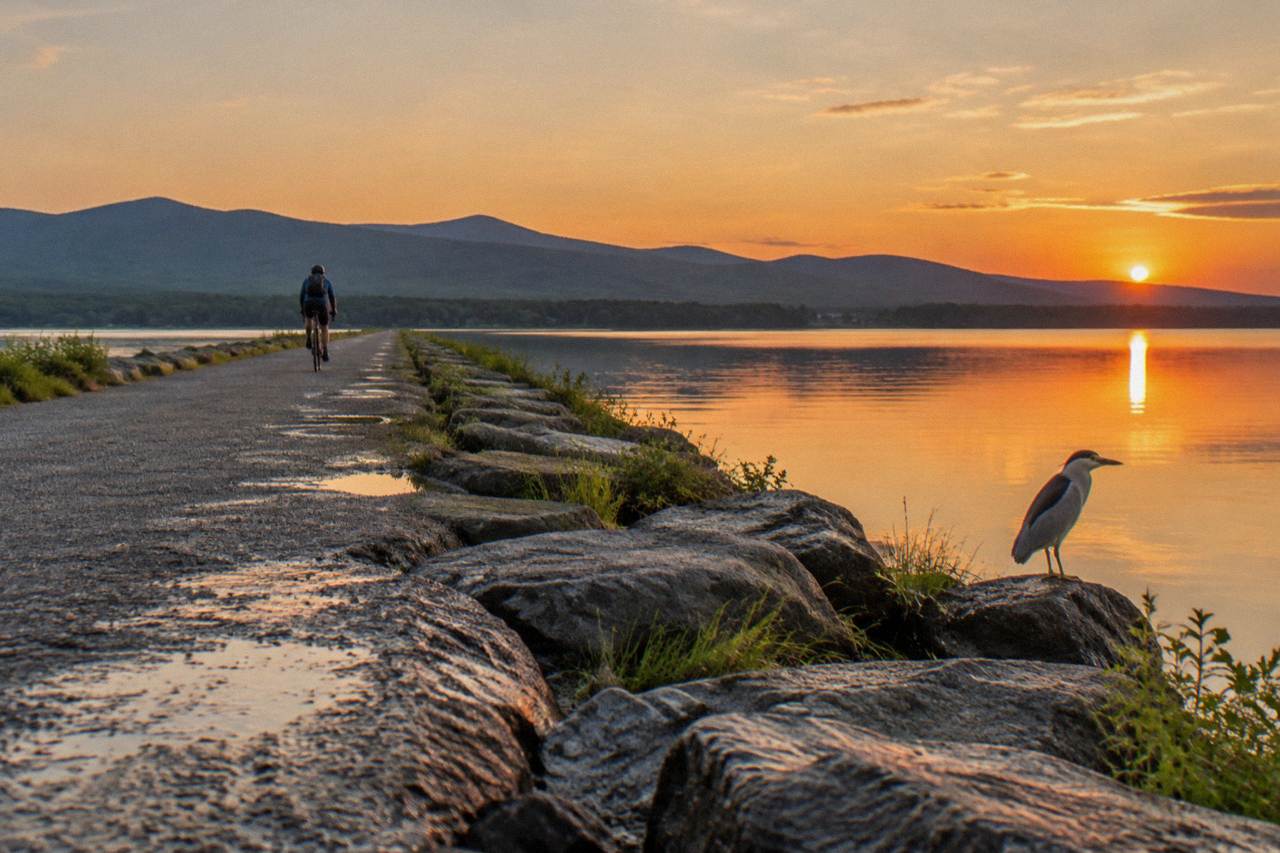
The Island Line Trail runs about 14.4 miles from the Burlington waterfront to South Hero, and for nearly all of that distance it is a continuous bike path. Then, from the Champlain Islands end of the causeway,the marble and limestone causeway simply stops. A floating bridge once carried the rail line across this open cut, and today the gap is bridged by a small boat with a rack: the Local Motion bike ferry. Riders who plan their trip around that boat get one of the best bike rides in New England. Riders who show up on the wrong weekend get a turnaround point.
The ferry is seasonal, it is donation based, and its schedule changes partway through the fall in a way that catches a lot of cyclists out. This guide lays out the season, the hours, the fare, the reason the ferry exists, and what your options are when it is not running, all drawn from Local Motion, the nonprofit that operates the crossing from its Trailside Center at 1 Steele Street in Burlington.
Ferry Season And Hours
The bike ferry operates from late May to mid October, crossing the gap in the Colchester Causeway that otherwise blocks a continuous ride from Burlington to South Hero. Through the summer it runs daily. From mid September it drops to weekends only, Friday through Sunday, and the season ends in mid October, with service returning in late May. The crossing itself takes only a few minutes, but the boat cycles back and forth on demand rather than on a strict timetable, so during open hours riders simply arrive at the cut and wait for the next run. Fares are donation based, with five dollars suggested each way and ten dollars round trip. The ferry is the only way across the gap without a long road detour, which makes its calendar the single most important planning fact for anyone riding the full Island Line Trail. For help pacing the whole outing, see our guide to biking the Colchester Causeway.
The operator is Local Motion, a Burlington nonprofit that promotes walking and biking across Vermont. The same organization runs the Trailside Center on the Burlington waterfront, where riders can rent conventional bikes, Class 1 pedal-assist e-bikes, adaptive cycles and kids bikes. The ferry operation and the rental operation are separate, so you do not need to rent from Local Motion to use the boat, and you do not need the boat to enjoy the eight paved miles of the Burlington Greenway closer to town.
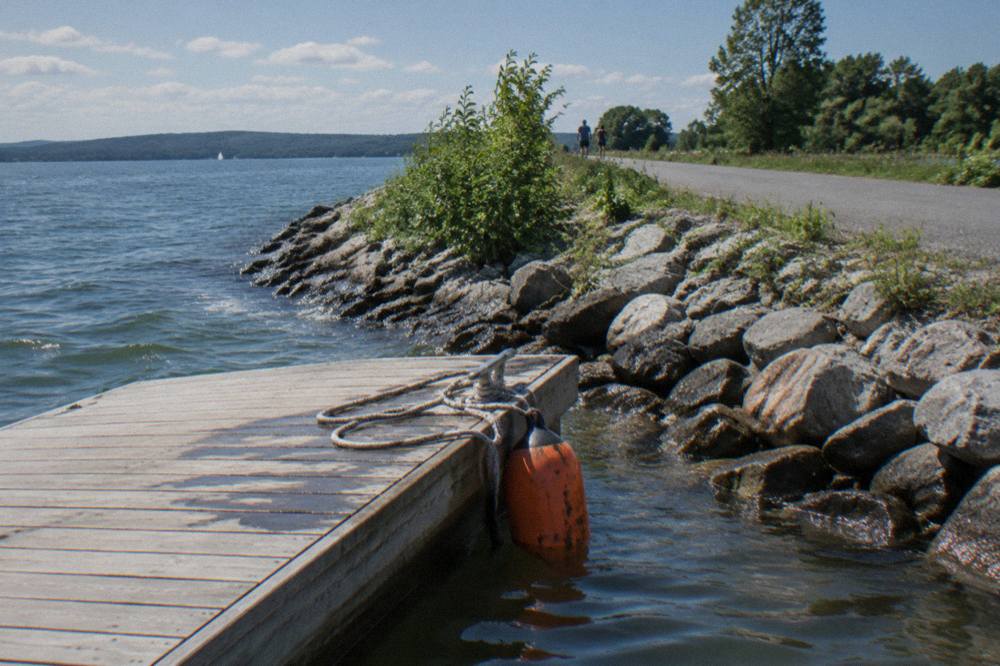
One point deserves emphasis because it surprises first-time visitors: the schedule is not symmetric across the season. A rider in July and a rider in the second week of October face completely different service, even though both are technically inside the ferry season. The summer rider can arrive on a Tuesday at noon and expect a crossing. The October rider needs a Friday, Saturday or Sunday, and needs to be off the water side of the gap before the boat stops for the day. Planning around that difference is the difference between finishing the ride in South Hero and retracing your tire tracks.
When Does The Bike Ferry Season Start And End?
Service begins in late May and runs to mid October, a season of roughly twenty weeks framed by Lake Champlain water levels and New England weather. The opening day varies slightly from year to year, and the closing weekend lands in mid October before lake conditions make the crossing unreliable. Outside that window, the ferry is simply not on the water. There is no winter service and no shoulder-season service on weekdays in fall. Local Motion announces the exact opening and closing dates on its bike ferry page, and that page is the place to confirm them before you commit to a ride date, because the couple of days on either edge of the season can move with conditions. If your trip falls in the last week of October, assume the boat is done and plan a turnaround ride instead. If the closing ferry date overlaps with your leaf-peeping plans, our guide to whether mid-October still delivers good Vermont foliage points to the southern valleys where color holds on longest.
The shape of the season follows the riding season rather than the calendar. Late May is when the lake has settled enough, and when the path crowd has built enough, to justify daily boat runs. Mid October is when the combination of cold water, shorter days and falling leaf-peeper traffic ends the economics of the crossing. That is also, coincidentally, close to the tail end of peak foliage in the Champlain Valley, which tends to run later than the northern mountains. A weekend ferry ride in the first half of October is one of the best color rides in the state, with maples on the islands behind you and the Adirondacks across the water in front.
If you are building a trip around the full crossing, the safest planning frame is to treat June through early September as the wide-open window, and the mid September to mid October stretch as the weekend window. Riders can check the official bike ferry page for the current operating status, since Local Motion posts changes there first. The trail itself, the causeway included, remains open to riders even when the ferry is not running; only the crossing disappears.
| Part of the season | Service pattern | What it means for riders |
|---|---|---|
| Before late May | No ferry service | Ride to the gap and back, or turn around earlier |
| Late May to mid June | Daily service begins | Full crossing possible on any day of the week |
| Summer season | Daily service, daytime hours | Arrive any day; wait at the cut for the next boat |
| Mid September onward | Fridays to Sundays only | Plan the crossing for a weekend; weekday rides end at the gap |
| Mid October | Season ends | Ferry off the water until late May returns |
What Are The Fall Weekend Hours?
Once the fall schedule takes over in mid September, the ferry runs three days a week: Friday, Saturday and Sunday, with boats operating from 10am into the late afternoon or early evening. Fridays carry the shorter day and weekend days run about an hour later, so the practical cutoff for arriving at the east side of the gap is late afternoon on a Sunday and mid afternoon on a Friday. The exact hours are published on Local Motion's ferry page and can shift with daylight and weather, so treat late afternoon arrivals as risky and aim to be at the cut with hours to spare. If you miss the last boat, the gap does not care about your plans; you ride back the way you came.
The reason for the weekend-only pattern is straightforward. Summer puts families, tourists and camp groups on the causeway every day of the week, and daily boat runs pencil out. After school starts, weekday ridership thins to a handful of locals and the occasional touring cyclist, and a three-day schedule matches demand. The fall weekend crowds are real, though, because this stretch of path is one of the prettiest fall bike rides in the Champlain Valley, and foliage weekends fill the causeway with camera-toting riders heading out toward the cut.
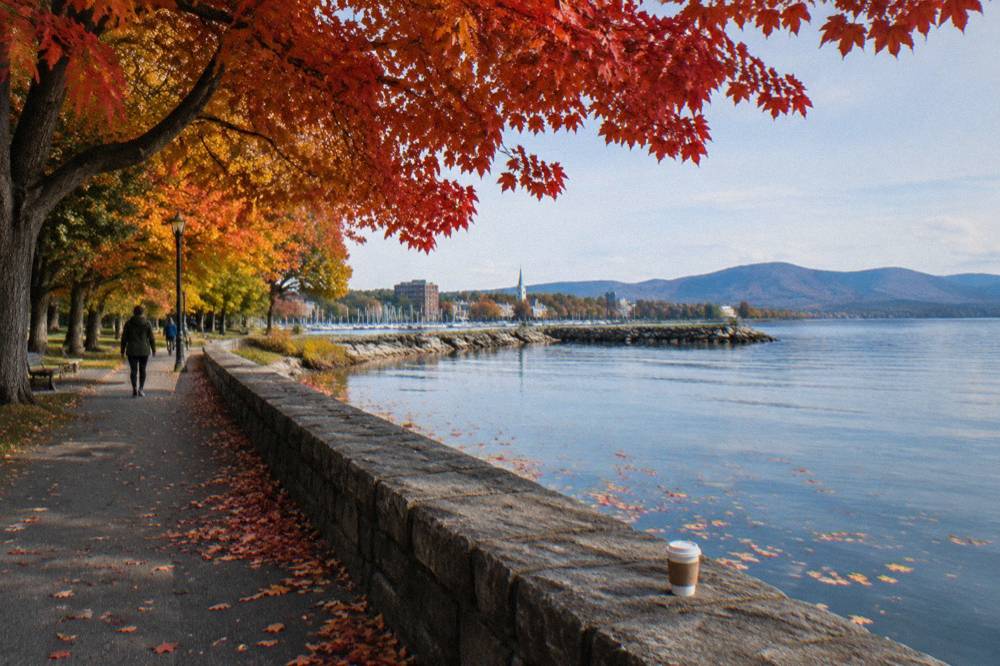
A sensible fall ride plan looks like this: start from the Burlington waterfront in the morning, ride the paved Greenway north through Colchester, take the gravel causeway out to the cut, cross on an early afternoon boat, and give yourself the rest of daylight to explore South Hero before reversing, or arranging a pickup on the islands side. October daylight is generous in the morning but ends early, with sunset in the first half of October landing not long after six in the evening, and sunrise near seven. That is a comfortable riding day if you start on time and a rushed one if you do not. The rules of thumb in our broader seasonal advice, in the guide to the best time to bike in Vermont, apply double out on an exposed causeway in October.
One more fall note: the causeway surface is crushed gravel, and after autumn rain the gaps between stones can hold moisture and soften slightly. A road bike with 25 mm tires will make it, unhappily. Anything wider, including most hybrids, gravel bikes and e-bikes, handles it without drama. Riding the causeway well is mostly a matter of tire choice and steady hands, and the ferry crew loads all bike types without fuss.
How Much Does The Bike Ferry Cost?
**The crossing runs on donations, with five dollars suggested for a one-way trip and ten dollars for the round trip on the boat. The ferry exists to complete a public trail, not to turn a profit, and the donation model keeps the crossing open to riders regardless of whether they have a wallet full of apps. Compared with the cost of any other way across the gap, which is to say a road detour of many miles or a car shuttle, the fare is a rounding error on the day.
It helps to understand what the donation actually funds. Local Motion operates the Trailside Center and the ferry as part of its mission work on better biking and walking in Vermont, and the boat, its crew and its fuel are ongoing costs across a twenty-week season. Riders who use the crossing regularly, including Champlain Islands locals who commute and exercise across the gap, are effectively supporting the service for everyone. If you rent from the Trailside Center, that rental revenue supports the same mission; the center is open daily through the season with conventional bikes, Class 1 e-bikes, adaptive cycles and kids options, and reservations are recommended on summer weekends.
| Cost item | Typical approach | Notes |
|---|---|---|
| Ferry, one way | Five dollar suggested donation | Donation based |
| Ferry, round trip | Ten dollar suggested donation | Cross out and back on the same day or a later weekend |
| Bike rental at the Trailside Center | Check current rates with Local Motion | Conventional, Class 1 e-bike, adaptive and kids bikes; reservations recommended |
| Trail access | Free | The Island Line Trail and causeway are open to the public |
The trail itself costs nothing. There is no day pass, no parking fee for the public path access points, and no charge to ride the Burlington Greenway or the causeway. The only money in the day is the ferry donation and whatever you spend on a rental bike, lunch in Burlington or the islands, or a place to stay. For riders comparing the cost of a day here against a lift-served mountain bike park or a guided tour, this is among the cheapest full days of riding in the state.
Why Does A Bike Ferry Exist On A Rail Trail?
The causeway that carries the path across Lake Champlain was built for trains, and it has a gap where the floating swing bridge that once let boats pass was removed, leaving a stretch of open water between the Colchester end and the South Hero end. The bike ferry is the modern replacement for that bridge, carrying riders and their bikes across the cut so the trail functions as one continuous route. Without it, the Island Line is two paths: a superb out-and-back from Burlington, and a separate islands ride starting from a South Hero trailhead. With it, the rail corridor does what it was built to do, connect both shores.
The gap itself is the most dramatic feature on the whole route. For miles the path runs dead straight across open water on a raised stone arm, with the lake on one side and the inlet on the other, and then it stops. Standing at the edge, you look across a channel of open lake at the continuing line of stone a short boat ride away. It is the moment every rider remembers, and the reason the ferry, a humble pontoon boat with bike racks, has an outsized role in Vermont cycling. Riders report the crossing itself, wind on the water, the causeway receding behind you, as the highlight of the day.
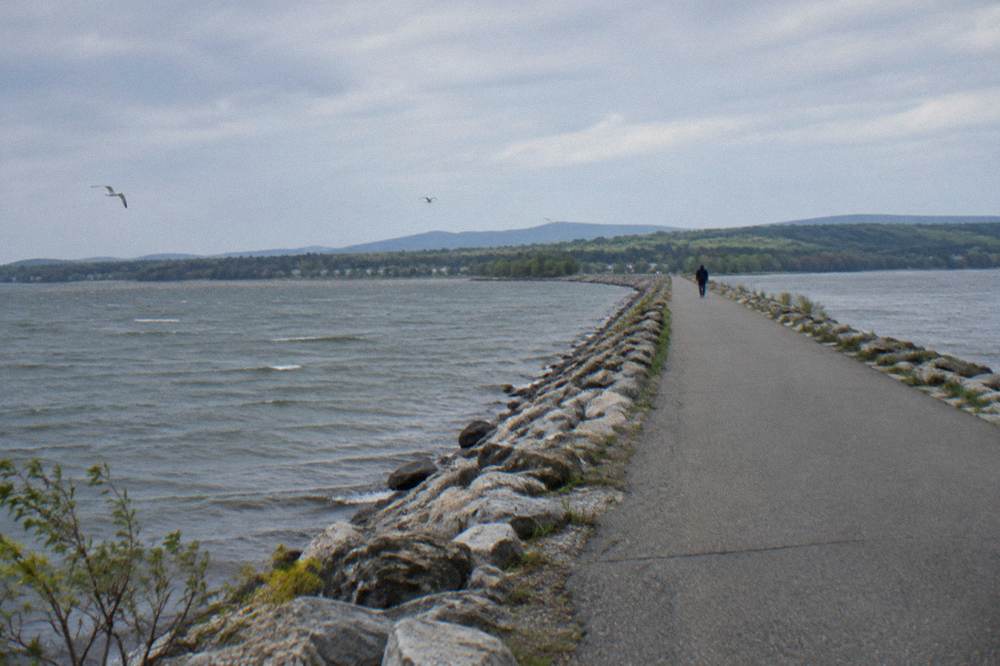
The trail on either side rewards the trip on its own merits. The Burlington Greenway, roughly eight paved miles along the waterfront, is flat, wide and busy with commuters, families and students; our Burlington bike path guide covers it in detail. The Colchester Causeway section, about five miles of crushed gravel, is wilder and quieter, with water on both sides nearly the whole way. Together with the ferry they form the ride described in our Island Line Trail biking guide, and the crossing question in that itinerary always comes back to the same thing: is the boat running?
What Are Your Options When The Ferry Is Not Running?
Outside the late May to mid October season, or on a fall weekday, the gap is simply closed to through riders, and your choices are to turn around at the cut, plan an out-and-back from either end, or build a road loop through the Champlain Islands that reconnects the two halves by bridge. None of these are bad rides, and the causeway out-and-back from Colchester remains one of the flattest, most scenic rides in the state. The mistake to avoid is arriving at the gap expecting a crossing that is not operating, because there is no alternative boat, no portage and no ride-around at the water. The decision point is the schedule, full stop.
The out-and-back option deserves more respect than it gets. Riding from the Burlington waterfront to the cut and back covers the heart of the route, the paved Greenway and the gravel causeway, without the logistics of a second vehicle or a pickup on the islands. Add the waterfront path network around Oakledge and North Beach and you have a full day of flat, fast riding suitable for almost any cyclist. Families with kids, riders on adaptive cycles and anyone building fitness can treat the ferry-less version as the default ride and be perfectly happy.
For riders who want the islands, the road option is real but different in character. Roads through the Champlain Islands connect by bridge at either end of the causeway line, and a loop using those roads delivers orchards, shoreline and rolling terrain. It carries traffic, unlike the path, and it demands the usual road-riding caution: Vermont country roads are often narrow with limited shoulders, so ride predictably and take the lane when needed. Riders weighing surface and traffic trade-offs more broadly can compare options in our road versus gravel versus e-bike guide to Vermont.
| Situation | Best plan | Ride character |
|---|---|---|
| Ferry running, full day | Cross at the cut, ride on to South Hero | Flat, car-free, full 14.4 mile line |
| Ferry running, half day | Out to the cut and back from Burlington | Paved then gravel, fully flat |
| Fall weekday, ferry off | Out-and-back, or islands road loop | Path plus narrow island roads |
| Off season | Waterfront and causeway out-and-back | Quiet, exposed, dress for wind |
Where Does The Ride Start And Where Can You Stay?
Most riders start at the Burlington waterfront, where the bike path, the Local Motion Trailside Center and the city's hotels sit within a few blocks of each other, making a car-free bike weekend genuinely possible. The Greenway heads north from the waterfront on dedicated path the whole way to Colchester and the causeway, so the practical starting question is not navigation but where you sleep and whether you rent or bring bikes. Burlington answers both questions well, and staying near the water puts the ride literally outside the door.
Two downtown properties fit that description. The Hotel Champlain Burlington, Curio Collection by Hilton sits steps from Waterfront Park and the bike path access, and its listing includes free bicycle rentals for guests, which removes the rental logistics from the day entirely. A few blocks deeper in the lake-side downtown, the Hotel Vermont sits about two tenths of a mile from the Burlington Bike Path, close enough that the ride to the causeway cut and back is a simple morning outing. Between them, the waterfront, the path and the Trailside Center form a compact base where a visitor can arrive by car, park once, and pedal everywhere for two days.
Hotel Champlain Burlington, Curio Collection by Hilton
Burlington, near Waterfront Park
Steps from Waterfront Park and the bike path access; its listing includes free bicycle rentals.
Check ratesFrom a waterfront base, the day writes itself. Coffee in the Old North End or on the waterfront, wheels rolling north by mid morning, the causeway by late morning, the cut and the crossing at midday, and the islands for a long lunch before turning back with the wind, typically, at your back going south. Riders who want to shorten the day can drive to trailhead parking in Colchester and ride just the causeway and crossing. Either way, check trail status before a long ride, since flood repairs and maintenance happen on this network like any other, and a quick look at current conditions beats discovering a closure at mile ten.
The same waterfront base serves the rest of Burlington's riding. The Greenway doubles as a commuter corridor, and from it riders can link to neighborhoods, beaches and parks without ever mixing with car traffic at speed. Our write-up on whether Burlington is bike friendly covers the city's path culture in more depth, and the short answer is that for a small American city it is unusually easy to get around on two wheels.
What Kind Of Bikes Work Best For This Ride?
Almost any bike can complete this ride: the Burlington Greenway is eight miles of smooth pavement, the causeway runs about five miles of firm crushed gravel, and the islands side continues on a mix of path and quiet road. Hybrid bikes, gravel bikes, e-bikes, or anything with tires around 40 mm or wider are ideal, while a road bike on narrow tires will manage the gravel slowly, so skinny-tire riders should budget extra time and run lower pressure. The ferry crew loads every kind of bike, including e-bikes and trailers, and riders on adaptive cycles use the crossing; the Trailside Center rents adaptive cycles precisely because this corridor is one of the most accessible rides in Vermont.
E-bikes are welcome on the path network. Class 1 pedal-assist e-bikes are permitted where bicycles are allowed on the Greenway and the Island Line corridor, while throttled electric motorcycles and similar motor-driven devices are not. Riders can check the specifics on Local Motion's pages and with the city's Greenway rules; the practical summary is that a standard pedal-assist e-bike is a normal bike here, and rentals from the Trailside Center are Class 1 units. The ride is flat enough that a conventional bike is genuinely sufficient for most riders, which is part of why this route appears so often on beginner and family shortlists, a point our Vermont bike tours for beginners and seniors guide makes in more detail.
Weather, not gradient, is the real variable. The causeway is fully exposed to wind off the lake, and a stiff southwesterly can turn the return leg into a grind even on flat ground. Morning fog burns off fast, afternoon thunderstorms build in summer, and October mornings can start near frost before warming into the fifties. Dress in layers you can shed, carry more water than the distance suggests, and treat the causeway with respect in wind: the path is wide, but there is water on both sides and no shelter anywhere along the stone arm.
Is The Ferry Ride Suitable For Families And Casual Riders?
Yes, and it is one of the best family bike outings in Vermont: the route is flat, car-free for its entire length, passable on any bike, and punctuated by beaches, parks and the boat crossing itself, which children tend to treat as the main event. The only planning constraints are the ferry calendar, the fall weekend schedule and simple exposure, since the causeway offers no shade, no water and no bathrooms along its five gravel miles. Families riding with young kids often turn around at the cut without crossing at all, or cross and stop at the first islands trailhead, keeping the day short. Either version works.
The mechanics of the crossing favor families. The boat is small and the ride across the gap lasts minutes, the crew handles the bikes, and the wait at the dock is usually short because the ferry cycles on demand during operating hours. Kids bikes and trailers are routine cargo. The donation fare means there is no ticketing friction, and the whole operation has the unhurried feel of a community service rather than an attraction. For a fuller treatment of the route's family logistics, including where to start with children, our guide to biking the Colchester Causeway and Champlain Islands covers access points and turnaround options.
The most common family mistake is underestimating the gravel. The causeway rides firm, but a five-year-old on a 16 inch wheeled bike will work harder on stone than on pavement, and the return trip is the same distance again. A better plan with small children is to ride the paved Greenway to and from Colchester, sample a mile of the causeway, and save the full crossing for a year or two later. Riders whose kids are past that stage can commit to the whole line, cross on the boat, and buy ice cream in the islands as the finish line. That is a day that tends to get requested again the following season.
What Should You Check Before Riding Out To The Gap?
Three checks cover almost every failure mode: confirm the ferry is operating on your specific date, confirm trail status for the causeway and Greenway segments, and confirm your bike and gear match five miles of exposed gravel. The ferry page and the trail condition reports answer the first two in a few minutes, and they matter because the schedule has three distinct modes across the season, daily summer service, weekend-only fall service and the closed off-season. Riders who skip the checks and ride out on a fall Thursday arrive at a beautiful, impassable gap.
Bring layers for wind, and lights if there is any chance your return leg stretches past sunset, which lands just after six in the first half of October. Check the weather for the lake specifically, not just Burlington, since onshore wind defines the causeway experience. If you are renting, reserve ahead with the Trailside Center, especially for summer weekends and e-bikes, which go first. And if your dates fall outside the ferry season, do not abandon the ride: the out-and-back to the cut is a destination in itself, and Vermont Biking Tours keeps a full set of route guides for the Greenway, the islands and every other corner of the state worth pedaling.
Hotel Vermont
Burlington, 0.2 miles from the Burlington Bike Path
About 0.2 miles from the Burlington Bike Path in the lake-side downtown.
Check ratesA final thought on timing. The ferry season and the foliage season overlap almost perfectly in their last weeks, and the second weekend of October is the sweet spot where weekend boat service, peak color in the Champlain Valley and riding temperatures in the fifties all coincide. Book the waterfront room early for that one. The rest of the season asks far less of your calendar, and any summer day with the boat running gives you the crossing, the causeway and one of the flattest, most memorable bike rides in New England.
Common Questions About The Lake Champlain Bike Ferry
What Is The Schedule For The Lake Champlain Bike Ferry?
The ferry runs late May to mid October, with daily service through the summer and weekends-only service, Friday through Sunday, from mid September. Fall boats run from 10am until 5pm on Fridays and 6pm on weekends, per the fall schedule. Check Local Motion's bike ferry page for exact dates before your ride.
How Much Does The Bike Ferry Cost?
The crossing is donation based, with five dollars suggested one way and ten dollars round trip on the boat.
Is The Bike Ferry Running In October?
Usually, but only on weekends. From mid September the ferry runs Fridays, Saturdays and Sundays until the season closes in mid October. A weekday October ride ends at the gap on the Colchester side, so plan an out-and-back or an islands road loop instead.
What Happens If I Ride To The Gap And The Ferry Is Closed?
You turn around and ride back the way you came. There is no bridge, portage or alternative boat at the cut. The out-and-back from Burlington to the gap is still a superb flat ride covering the paved Greenway and the gravel causeway.
Can I Bring An E-Bike Or Kids Bike On The Ferry?
Yes. The crew loads all bike types, including Class 1 pedal-assist e-bikes, kids bikes, trailers and adaptive cycles. The Trailside Center in Burlington rents conventional, e-bike, adaptive and kids bikes if you do not bring your own.
Where Does The Ferry Cross, And How Long Does It Take?
The ferry crosses the open gap in the Colchester Causeway, near the South Hero end of the Island Line Trail. The boat ride takes only a few minutes, and it runs back and forth on demand during operating hours rather than on a fixed timetable.