How Long Does It Take To Bike The Colchester Causeway?
Distance, surface, ferry gap and round-trip timing for biking the Colchester Causeway on Vermont's Island Line Trail, with where to start and where to stay.
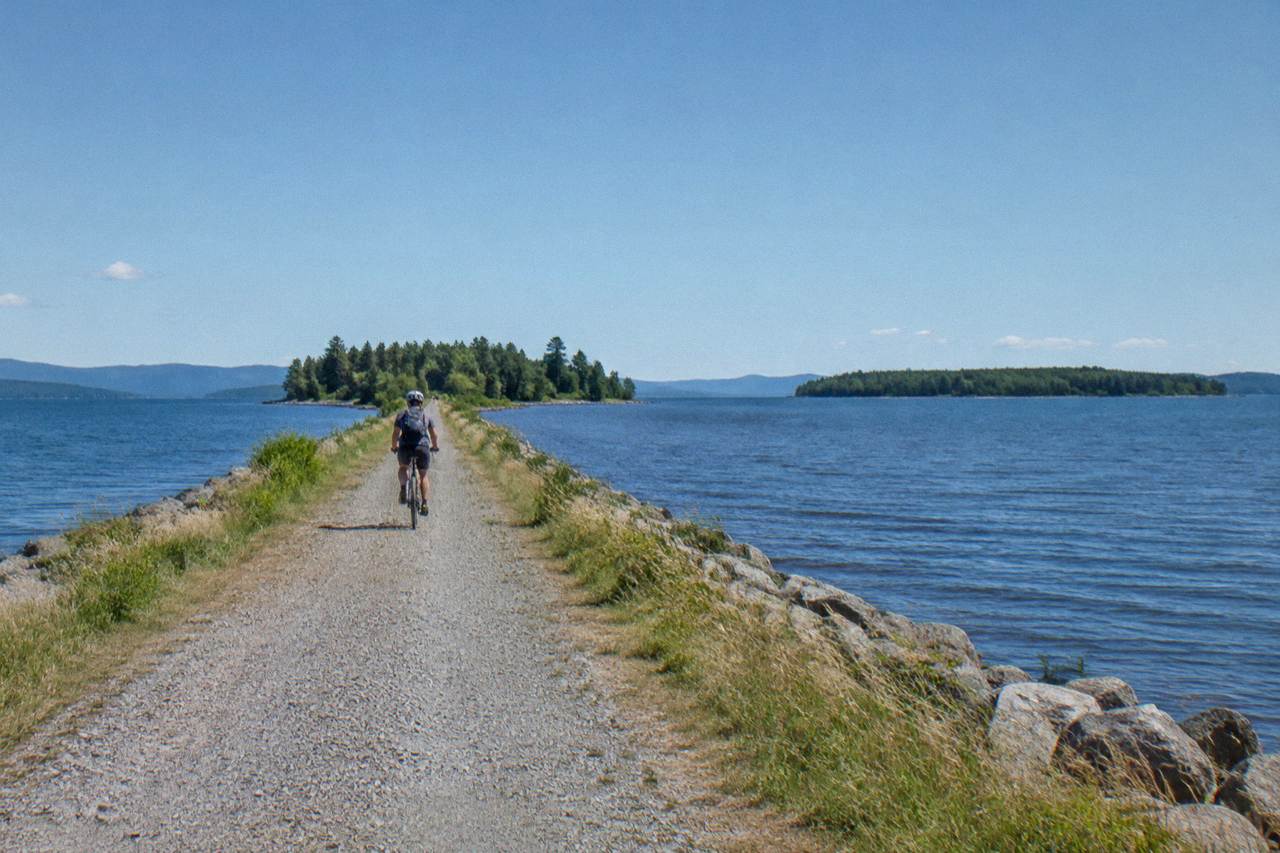
The Colchester Causeway is one of the strangest and best bike rides in Vermont: roughly 5 miles of crushed gravel laid on a former railbed that runs straight across the open water of Lake Champlain, with the lake on both sides for almost the entire distance. It is the middle section of the Island Line Trail, which runs about 14.4 miles from the Burlington waterfront to South Hero, and its only break is a gap in the causeway where the Local Motion bike ferry carries cyclists across a narrow channel in season. Riders who start in Burlington and turn around at the gap can finish in under two hours; riders who take the ferry through to South Hero usually spend half a day. Before you commit to the full ride, our guide to cycling conditions in Burlington covers the path network, rentals, and a few caution points worth knowing.
Ride Times And Distances
Plan on two to four hours for the classic round trip, and closer to half a day if you continue through to South Hero. The causeway itself is about 5 miles of crushed gravel, so a steady cyclist covers it one way in 30 to 45 minutes, but the full Island Line ride from the Burlington waterfront adds about 8 miles of paved greenway each way, and stops for photos on the causeway are close to unavoidable.
The timing math is simple once you know the pieces. The Island Line Trail runs about 14.4 miles end to end, Burlington to South Hero. Of that, the Burlington Greenway segment is roughly 8 miles of paved path, and the Colchester Causeway segment is about 5 miles of crushed gravel. The remaining distance is the South Hero end and the ferry gap itself. If you want a closer look at that paved stretch before you commit, the full Burlington Greenway mileage breakdown covers distances, surface, and riding time in detail.
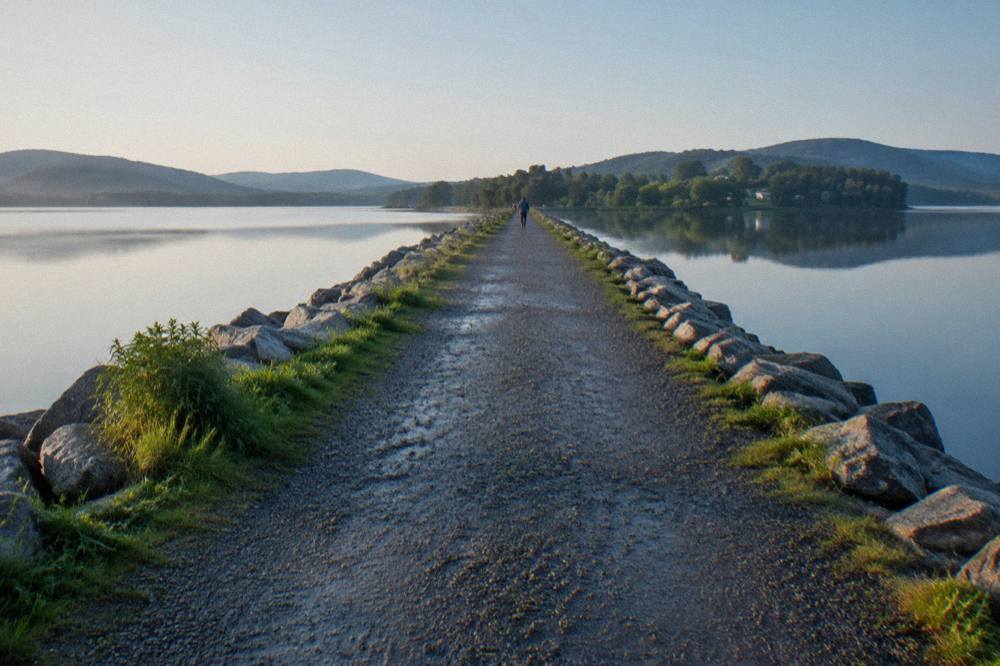
A comfortable pace on the gravel is 10 to 14 miles per hour, slower than road pace because the surface is loose in spots and everyone slows for the views. Count on these rough totals, all riding time plus modest photo stops:
| Route | One-way distance | Typical riding time | Notes |
|---|---|---|---|
| Causeway out and back from the Colchester end | ~10 miles | 60 to 90 minutes | Shortest version, no ferry needed |
| Burlington waterfront to the ferry gap and back | ~22 miles | 2 to 3 hours | The classic round trip |
| Burlington to South Hero via ferry, one way | ~14.4 miles | An hour and a half to two hours | Requires the bike ferry in season |
| Burlington to South Hero and back | The one-way distance doubled | 3 to 4 hours | Longest version, ferry both ways |
Families with children, or riders on e-bikes being polite in a crowd, should pad those numbers. On a peak foliage weekend the path traffic near Burlington slows everyone down. Add time for the ferry wait itself, since the boat shuttles back and forth on its own rhythm rather than a printed timetable, and a queue of cyclists can build at the gap on a busy Saturday. None of that time feels wasted; the queue is one of the friendliest spots on the whole route, with riders comparing tires and trading notes on where they started the morning.
Is There A Bike Path Along The Colchester Causeway?
Yes, the causeway itself is the bike path. The Colchester Causeway carries the Island Line Trail across Lake Champlain on a former railbed, surfaced in crushed gravel, open to cyclists and pedestrians, and closed to cars for its entire length. There is no road beside it and no alternate route: riders are out on the water, on stone, with the lake a few feet away on both sides.
That distinction matters for planning. This is not a bike lane next to traffic; it is a car-free trail built on a rail corridor that once carried trains across the lake. The surface is firm compacted gravel, rideable on any bike with reasonably wide tires, though skinny road tires will feel every inch of it. Mountain bikes, hybrids, gravel bikes and Class 1 pedal-assist e-bikes are all common out there, and e-bikes are permitted on the trail where bicycles are allowed.
The causeway section connects at its southern end to the paved Burlington Greenway through Colchester, and at its northern end to the gap where the ferry runs. Riders who want the full picture of the wider route can read the companion guide to Island Line Trail biking, which covers the whole Burlington to South Hero corridor. The physical experience of the two halves is completely different, and that is part of the design: the paved southern miles read like a city park that keeps going, while the causeway reads like a road that ran out of land and kept going anyway. Most riders remember the second half.
What Is The Surface Like And What Bike Do You Need?
The Colchester Causeway is crushed gravel, roughly 5 miles of it, and the paved Burlington Greenway covers the roughly 8 miles before it. Almost any bike works: hybrids, mountain bikes, gravel bikes and e-bikes are all fine, and only the skinniest high-pressure road tires are genuinely uncomfortable. Beginners manage it easily at a relaxed pace.
The gravel is compacted and well maintained, but it is not pavement. In dry stretches it rolls fast; after rain, soft spots and shallow washboarding appear, especially near the edges. Riders stay alert around pedestrians and fishing lines near the causeway edges. The exposure is real: there is no shade, no drinking water, and no shelter anywhere on the causeway itself, so a hot afternoon ride needs sunscreen and bottles carried from the start.
Tire choice matters more than bike type. Wider tires, the kind that come stock on hybrids and gravel bikes, feel planted and let you look at the scenery; skinny racing tires work but leave the rider white-knuckled through the looser sections. E-bike riders should note that Class 1 pedal-assist bikes are the type rented locally and permitted on the path, while throttle e-motos and motorized scooters are prohibited. Riding position matters too: the flat railbed means you sit in the same posture for a long time, so a bike with relaxed geometry beats an aggressive one on this route. Gloves help with the fine vibration the gravel transmits on longer stretches.
Where Does The Ride Start And Where Should You Stay?
Most riders start at the Burlington waterfront and ride north, because the roughly 8 mile paved Greenway warms up the legs before the gravel begins. The other common entry is from the Colchester side, which puts you on the causeway within minutes. For an overnight base, Burlington hotels near Waterfront Park put the path start essentially at the door.
The Burlington start is the fuller experience. You roll off the waterfront, past North Beach and through Colchester, and the moment the causeway begins the landscape changes completely: water, sky, stone, and the Green Mountains stacked up behind you. Local Motion, the nonprofit that advocates for cycling in the state, runs its Trailside Center at 1 Steele Street in Burlington right on the path, renting conventional bikes, Class 1 e-bikes, adaptive cycles and kids' bikes daily from 9am to 6pm, with reservations recommended. Current rental pricing is on their site, not on a dollar figure here.
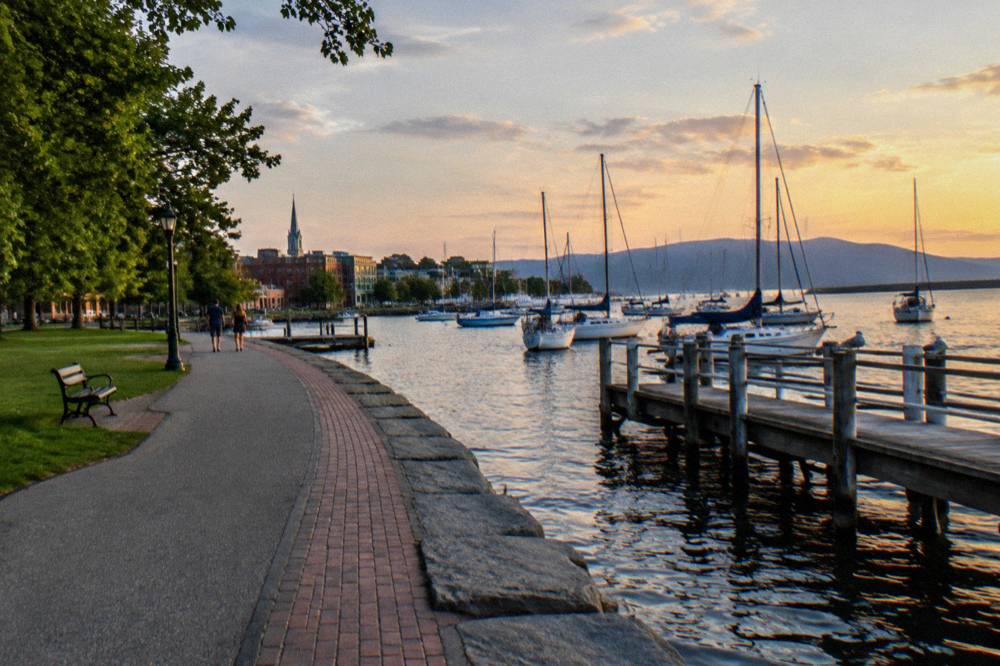
For staying overnight, Hotel Champlain Burlington sits near Waterfront Park with bike path access steps away, and its booking page lists free bicycle rentals, which can remove the rental stop entirely. A little farther into the lake-side downtown, Hotel Vermont is about 0.2 miles from the Burlington Bike Path, close enough to walk the bike to the start. Both make the early-morning causeway run, when the light is best and the trail is quietest, a matter of rolling out the door.
Hotel Champlain Burlington, Curio Collection by Hilton
Burlington, near Waterfront Park
Steps from Waterfront Park and the bike path access; its listing includes free bicycle rentals.
Check ratesWhat Is The Bike Ferry Gap?
The causeway has a deliberate break partway along its length, a cut in the stone left when the rail line was abandoned, and the Local Motion bike ferry carries riders across it. The ferry is donation based, with a few dollars suggested each way, and it runs only in the warmer months, late May to mid October. Outside the ferry season the ride ends at the gap.
The gap is not an obstacle so much as the ride's signature moment: a pontoon boat shuttles cyclists and their bikes across a channel while the lake opens out on either side. Riders planning a South Hero crossing should check the ferry schedule on the Local Motion site before committing, because service is seasonal and weekend-only toward the fall, and a missed last crossing means backtracking the full causeway. The ferry did not operate beyond mid October this season and is expected to return in May 2027; the full season details live on the schedule page linked above and in the companion post on the Lake Champlain bike ferry schedule.
Riding the causeway without the ferry is still a complete outing. Turn around at the gap, eat whatever you carried, and enjoy the fact that the return trip frames the Adirondacks on one side and the Greens on the other in reverse. More of these guides are collected on Vermont Biking Tours.
When Is The Best Time Of Day And Year To Ride It?
Morning, almost always. The causeway is fully exposed with no shade, so on a July afternoon it is an oven and on a windy October day the middle stretch feels like a different climate zone than the Burlington end. Late September to mid October is the favorite window, pairing cool air with foliage color on both shorelines, and weekdays are noticeably quieter than weekends.
The light on the causeway in the first two hours after sunrise is the reason photographers ride it. The water is calmest then, the ferry queues are nonexistent, and the ride back lands you in Burlington before lunch. In fall, the sun sits lower and later, with sunrise near 7:00 and sunset near 6:20 in early to mid October, so the riding day compresses; plan to be off the causeway well before dusk because there is no lighting on it at all.
Wind is the factor most first-timers underestimate. The causeway sits in the middle of the lake, and a steady north wind that feels like a breeze in town can be a headwind grind on the gravel. Riders check the forecast, start into the wind if they can, and bank the tailwind for the tired homeward miles. More seasonal detail is in the guide to the best time to bike in Vermont.
What Should You Bring For The Ride?
Water, sunscreen, a spare tube or patch kit, and layers, because the causeway has none of the services a normal ride passes: no water, no bathrooms, no shade and no bail-out points once you are out on the stone. A phone is worth carrying for the ferry timing check. Everything you need fits in a small seat bag or daypack.
The paved Burlington segment passes beaches and parks with facilities, but the causeway itself is bare. Flat repair matters more than usual because the gravel can carry thorns and sharp stone chips, and walking a flat bike 4 miles back on exposed gravel is a miserable hour. E-bike riders should top up the battery; the full round trip with wind is a real drain on pedal-assist.
| Item | Why it matters on the causeway |
|---|---|
| Two water bottles | No water source exists on the causeway segment |
| Sunscreen and a brimmed cap | Zero shade for roughly 5 miles of open water |
| Spare tube, levers, pump | Nearest bike shop is back in Burlington or Colchester |
| Wind layer | Middle of the lake runs colder and windier than shore |
| Phone | Ferry timing, weather check, emergencies |
A fuller packing rundown for riding in the state is in what to bring on a Vermont bike tour, which covers layering and repair logic in more depth than a day ride needs.
Can You Ride The Causeway With Kids Or As A Beginner?
Yes, and it is one of the best beginner bike rides in Vermont precisely because there are no cars on it. The gravel slows everyone to a sociable pace, the terrain is dead flat railbed the whole way, and the turn-around options are flexible. Families with younger children usually start on the Colchester end for a short out-and-back and skip the full Burlington approach.
The main caution with children is the exposure and the edges. The path is wide and the surface is good, but the lake is immediately beside the trail with no railing along much of the causeway, so riders keep young kids in the middle of the path and dismount at fishing spots. Balance bikes and trailer setups are common on the paved Greenway but rare on the gravel; a child on a small-wheeled bike with modest gears handles the causeway fine at an easy pace.
For adult beginners, the causeway is confidence-inspiring. There is no traffic, no climbing, and a visible endpoint. The only skill the ride quietly teaches is gravel handling, and that transfers directly to Vermont's rail trail network, including the Lamoille Valley Rail Trail, the 95 mile stone-surfaced path across the northern part of the state that is the longest rail trail in New England. Riding a rail trail in the state's biggest city and then continuing out over open water is about as gentle an introduction to gravel as the landscape can offer, and many riders treat the causeway as their first gravel mile before graduating to longer routes like the Lamoille Valley Rail Trail.
What Else Can You Combine With The Causeway Ride?
The natural pairing is the full Island Line route through to South Hero, turning the causeway into the centerpiece of a full-day round trip. Closer to Burlington, the waterfront paths, North Beach and the downtown food scene make a half-day loop easy. Riders with more time link the causeway to a second day on the Champlain Islands' quiet roads.
South Hero and the islands beyond are farm-stand country: apples, cider donuts and cheese within short pedals of the ferry landing. Riders planning the full crossing should carry a lock, because the island end rewards a stop. The approach from the Burlington side rewards a different kind of stop, the city itself, and the practical details of that segment are covered in the Burlington bike path guide.
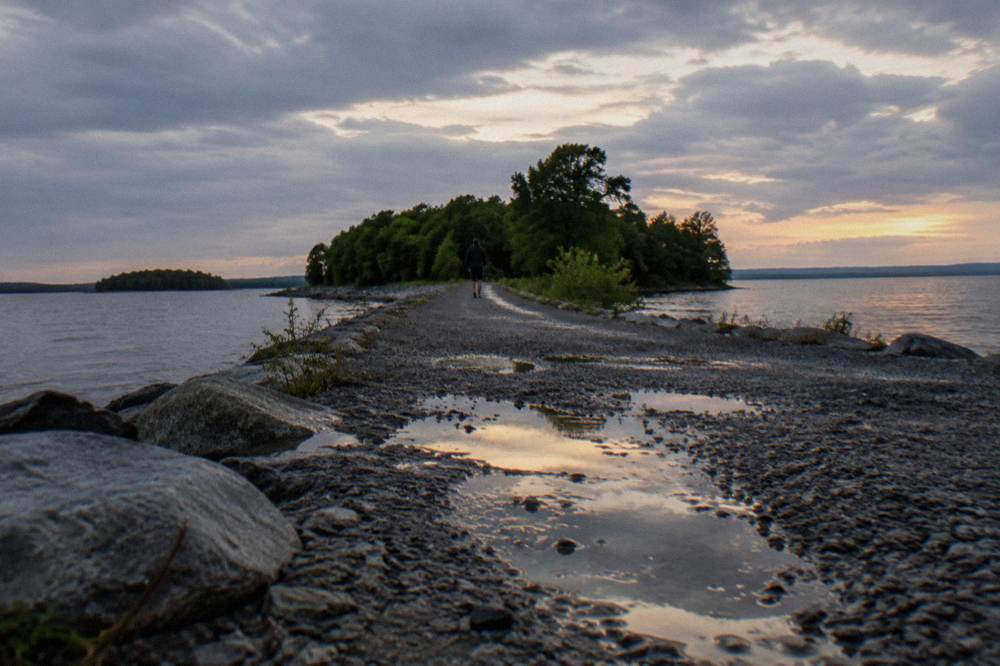
Cyclists building a longer trip around the ride can also look north: the Champlain Islands chapter of the route is described in the guide to Colchester Causeway and Champlain Islands biking, which lays out the island roads and the return options.
For riders who want to be in the middle of the city's ride scene rather than driving to a trailhead each morning, the lake-side downtown is the practical base. The Hotel Vermont address above puts you a couple of minutes from the path on foot, with the Greenway's whole paved run unrolling north from there, and after a causeway day the downtown restaurants are within an easy pedal of the door.
Hotel Vermont
Burlington, 0.2 miles from the Burlington Bike Path
About 0.2 miles from the Burlington Bike Path in the lake-side downtown.
Check ratesCommon Questions About Biking The Colchester Causeway
How Long Does It Take To Bike The Colchester Causeway?
The causeway itself is about 5 miles one way, so 30 to 45 minutes each way at a steady pace. The classic round trip from the Burlington waterfront, about 22 miles, takes two to three hours, and the full crossing to South Hero and back takes three to four.
Is There A Bike Path Along The Colchester Causeway?
Yes. The causeway is itself a car-free bike path, part of the Island Line Trail, surfaced in crushed gravel and open to cyclists and pedestrians for its full length.
What Is The Surface Of The Colchester Causeway?
Crushed gravel, roughly 5 miles of it, firm and well maintained but loose in patches after dry weather or rain. Hybrids, mountain bikes, gravel bikes and Class 1 e-bikes all handle it comfortably.
Do You Need The Bike Ferry To Ride The Causeway?
Only to continue past the gap to South Hero. The causeway out-and-back to the gap needs no ferry. The ferry is donation based and runs seasonally, late May to mid October, with a weekend-heavy fall schedule.
Where Do You Rent Bikes For The Causeway Ride?
Local Motion's Trailside Center at 1 Steele Street in Burlington sits right on the path and rents conventional, Class 1 e-bike, adaptive and kids' bikes daily from 9am to 6pm, with reservations recommended. Current prices are on its site.
Is The Causeway Ride Good For Beginners?
Yes. It is flat railbed, entirely car-free, and turn-around points are flexible. The two cautions are the total lack of shade and water on the causeway, and the lake running right beside the path with no railing in places.