Is Burlington, VT Bike Friendly?
A close look at Burlington's bike path network, the Island Line causeway, rentals, e-bike rules and caution points for cyclists planning a ride in Vermont's largest city.
Is Burlington, VT Bike Friendly?
The Short Answer
Yes. Burlington treats biking as both everyday transport and a headline attraction: an eight mile paved greenway follows the entire waterfront, a nonprofit rental center stands on the path itself, and Class 1 pedal-assist e-bikes share the same routes as conventional bicycles. The honest caveats are a seasonal ferry gap, mixed surfaces, and busy shared-path traffic.
The question is worth asking properly rather than glancingly, because "bike friendly" can mean a painted lane on a busy street or it can mean what Burlington actually built: a continuous, separated, lakeside riding corridor that connects the downtown core to one of the more remarkable bike rides in the country, the Colchester Causeway.
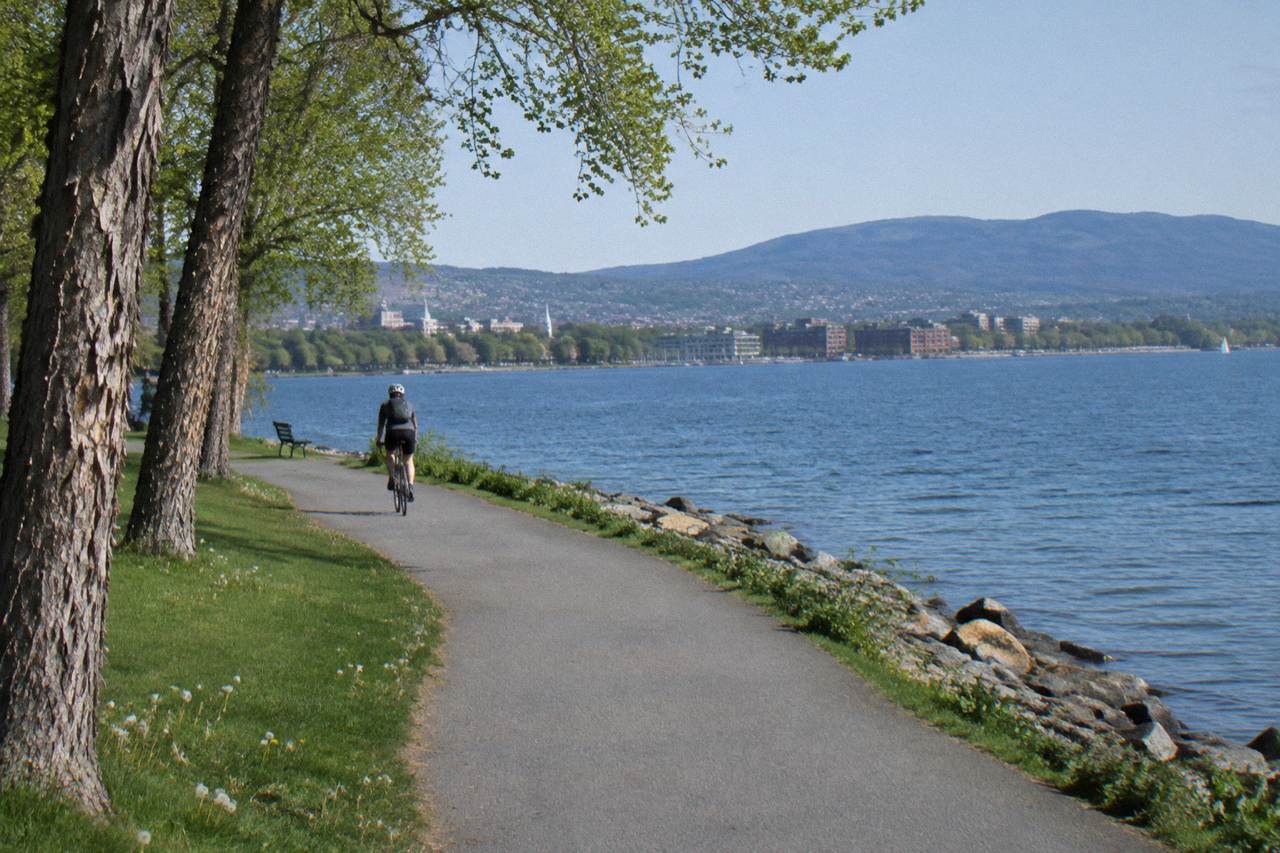
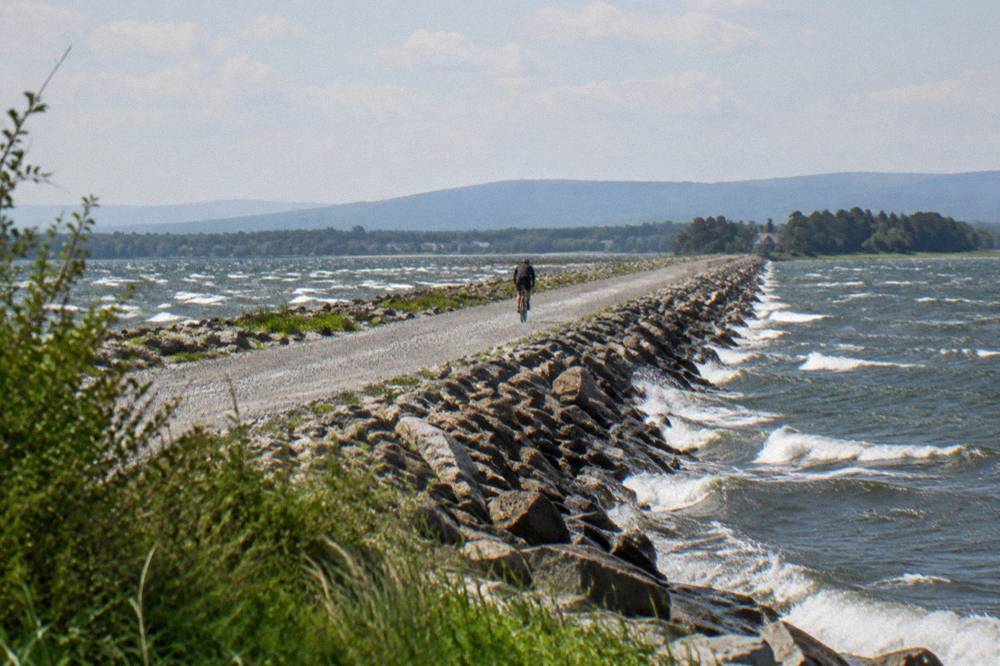
The city's riding identity centers on two connected assets. The Burlington Greenway is the urban spine, about eight miles of paved multi-use path along the Lake Champlain shore. At its northern end it hands off to the Island Line corridor toward South Hero, a rail trail conversion that runs roughly 14.4 miles end to end from the Burlington waterfront. Roughly five of those miles are the crushed gravel causeway segment, a raised ribbon of trail with open water on both sides. If you want a full mileage rundown before rolling out, this guide to how far the Burlington Bike Path and Island Line actually stretch covers distances, surfaces, and riding time.
For readers planning a Vermont biking trip around the city, the practical picture is strong but not uniform. The path network is genuinely excellent, rentals are easy, and the terrain is flat. The friction points are seasonal: the bike ferry that carries riders across the causeway gap operates only late May to mid October, and it is closed for the current season, returning in May. Riders heading toward the islands outside that window need to turn back at the gap or plan a road detour.
What Bike Paths Does Burlington Have?
The backbone is the Burlington Greenway, about eight miles of paved multi-use path that traces the Lake Champlain shoreline from the south end of town through the waterfront park and north toward the Winooski line. It is flat, fully separated from car traffic, and paved end to end, which makes it the default riding route for commuters, families and visitors on bikes alike. From its northern end the corridor continues as the Island Line toward Colchester and South Hero.
The Greenway does the quiet work of making the city rideable. Because it hugs the shore, it collects destinations rather than bypassing them: Waterfront Park, the boathouse, the beaches, the bike ferry dock area and a string of parks all sit directly on or beside the path. A cyclist staying downtown can reach nearly every lakefront attraction without a single turn in traffic. The city's own greenway page describes the corridor as a multi-use path open to bicycles and pedestrians, and that dual use is the first thing a fast rider notices.
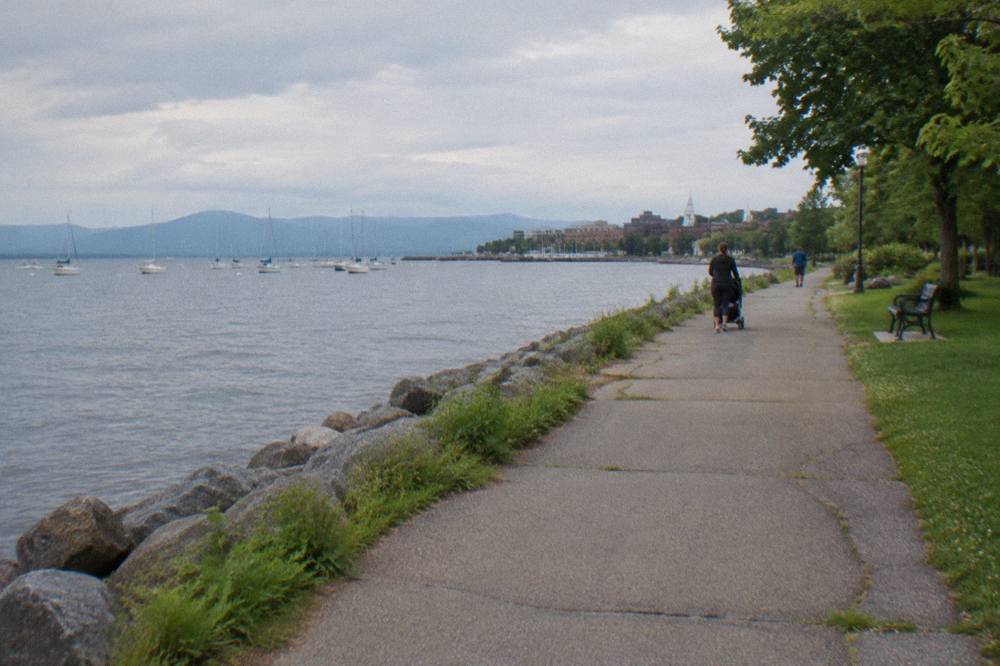
Surface and width are where the network earns its reputation. The Greenway segment is paved and comfortably wide for two-way bike traffic; the causeway segment beyond Colchester is firm crushed gravel, rideable on a road bike with patience but happier under a hybrid, gravel or mountain bike. Grades barely exist on any of it, since the whole corridor follows a former rail line. That flatness is why the route shows up on so many beginner and family riding plans, including our overview of Vermont bike tours for beginners and seniors.
The network also connects outward. Riders who want a longer day can leave the city northbound toward the Champlain Islands, a ride covered in detail in our Colchester Causeway and Champlain Islands bike ride guide. For context on how the waterfront corridor compares with the longest car-free route in the state, the Lamoille Valley Rail Trail's 95 miles put Burlington's paths in perspective, and the state rail trail program publishes the official LVRT details.
| Segment | Surface | Approximate length | Character |
|---|---|---|---|
| Burlington Greenway (waterfront) | Paved multi-use path | 8 miles | Flat urban riding, parks and lake views |
| Burlington to South Hero (Island Line) | Paved then crushed gravel | 14.4 miles total | Rail trail corridor, causeway crossing |
| Colchester Causeway | Crushed gravel | About 5 miles | Raised causeway, open water both sides |
Can You Bike From Burlington Out Into The Islands?
Yes, with one seasonal catch. The Island Line corridor carries riders about 14.4 miles from the Burlington waterfront toward South Hero, including the roughly five mile crushed gravel causeway across the open lake. Mid-causeway there is a gap in the fill, and crossing it requires the seasonal bike ferry, which runs late May to mid October. Outside that window the ride ends at the gap unless you turn back.
The ferry is a small operation with an outsized role in Vermont cycling. Local Motion, the Burlington-based nonprofit that runs it, describes the service and its schedule on its bike ferry page. It is donation based, with a suggested contribution of five dollars each way. The service is currently closed for the season and returns in May, so anyone riding the causeway in the shoulder seasons should plan an out-and-back to the gap and treat that as the destination, which is honestly not a hardship: the causeway views alone justify the trip.
Timing matters in both directions. In spring the causeway can open late if conditions are wet, and in late fall the ferry stops running before the snow arrives. Riders planning an islands day should check trail status before a long ride, the same habit we recommend for every major Vermont corridor, and confirm the ferry operating days for their dates on the operator's page rather than relying on secondhand summaries.
The ride itself is the answer to why so many visitors rent a bike in Burlington at all. Leaving the waterfront, the path passes beaches and marsh, crosses into Colchester, and then climbs onto the causeway proper, where Lake Champlain sits on both sides of a narrow gravel ribbon. On a clear afternoon the Adirondacks fill the western horizon. Our Island Line Trail biking guide covers the full routing, and the question of path length along the waterfront specifically gets its own treatment in how long is the Burlington bike path.
Where Can You Rent A Bike In Burlington?
The main answer is the Local Motion Trailside Center at 1 Steele Street, which sits directly on the path and opens daily from 9am to 6pm. It rents conventional bikes, Class 1 pedal-assist e-bikes, adaptive cycles and kids bikes, with reservations recommended in peak season. Rental proceeds support the nonprofit's advocacy work, so the rental desk and the trail network are the same organization.
That last point is worth pausing on, because it explains a lot about why Burlington rides the way it does. Local Motion is not a commercial rental chain that located near a trail; it is the advocacy organization behind much of the region's bike programming, running rentals, the ferry and safety campaigns from its Trailside Center. Cyclists renting there are, in effect, funding the paths they are riding on. Details on fleets and reservations are on the Local Motion site. For a fuller picture of the waterfront Trailside Center, e-bike rules, and how reservations work, our guide to renting bikes for the Burlington Bike Path covers everything you need to know before heading out.
| Rental source | Where | What to know |
|---|---|---|
| Local Motion Trailside Center | 1 Steele Street, on the path | Conventional, Class 1 e-bike, adaptive and kids bikes; opens daily 9am to 6pm; reservations recommended |
| Private shops in greater Burlington | Around the city | Worth calling ahead for fleet type and availability; prices vary and should be confirmed directly |
Rental pricing is deliberately not quoted here, because it moves with the season and the fleet, and any figure printed on a page like this goes stale quickly. Confirm the current rate when you reserve. E-bike rentals from the Trailside Center carry age restrictions: riders must be 18 or older, or 16 and older with a guardian along.
For riders whose trip continues beyond the city, rental logistics change by region. The shops clustered around Burke serve Kingdom Trails rather than the lakefront, a different scene entirely covered in our Kingdom Trails bike rentals and guided rides guide. In Burlington itself, the Trailside Center's on-path location means the gap between picking up a bike and riding a world-class corridor is about thirty seconds, which is as bike friendly as rental logistics get.
Are E-Bikes Allowed On Burlington's Paths?
Yes, with a class distinction that matters. Vermont uses a three-class system: Class 1 and 2 assist to 20 mph, Class 3 to 28 mph, and e-bikes are generally treated as bicycles where bicycles are allowed. On Burlington's paths, Class 1 pedal-assist riding is the norm, while throttle-driven electric motorcycles are prohibited on the greenway. Rental fleets reflect the same line, offering Class 1 pedal-assist only.
The practical summary for a visitor is simple: a pedal-assist e-bike is welcome on the Burlington Greenway and the Island Line corridor, and that opens the causeway ride to people who would not otherwise attempt it. The state-level picture has one important wrinkle riders should know before leaving town. On state-owned land, the Vermont Mountain Bike Association reports that e-bikes are currently prohibited on non-motorized natural-surface trails while remaining allowed on roads and multi-use paths, with a proposed policy that would expand Class 1 access not yet confirmed. The VMBA's e-bike policy overview tracks where that stands.
That distinction, pavement versus dirt, barely affects a Burlington itinerary, since the city's marquee riding is paved path and gravel rail trail rather than singletrack. But it matters immediately north and east of town, and it matters at Kingdom Trails, where Class 1 pedal-assist eMTBs are allowed on most trails per the Kingdom Trails Association, with riders directed to the trail map for landowner exclusions. Our are e-bikes allowed in Vermont post unpacks the class system statewide.
A note on helmets: rather than quoting a statute threshold, the straightforward advice is to wear one on every ride, path traffic included. The greenway mixes fast commuters, wobbling toddlers, dog walkers and inline skaters on a two-way corridor, and head protection costs nothing in exchange for a great deal of margin. The wider set of guides lives on Vermont Biking Tours.
Is Burlington Bike Friendly For Families And Beginners?
Very. The combination that matters for newer riders, flat grades, fully separated paths, short distance options and on-path bike rentals including kids equipment, is all present. A family can ride a two mile slice of the Greenway between the waterfront and a beach, stop whenever anyone tires, and never share space with a car. The one discipline required is path etiquette, because the corridor is popular with pedestrians as well as bikes.
Beginners benefit most from the corridor's modularity. Because the Greenway threads a chain of parks and waterfront destinations, a cautious rider can treat it as a series of short hops with bailout points rather than one committed ride, stopping at a beach, an ice cream stand or the park and calling it a day. Nothing about the route punishes a slow pace or an early turn-around. The surface is paved through the whole urban segment, so even a basic cruiser or a rented kids bike handles it comfortably.
The causeway changes that calculation slightly. Five miles of crushed gravel is rideable for a confident beginner on a hybrid or mountain bike, but a road bike with narrow tires will feel every stone, and wind on the open causeway can be demoralizing for a small rider heading north. Families attempting the full island run should pick a calm-weather day, carry water, and treat the ferry gap as the natural turnaround. Wind direction on Lake Champlain is the single biggest variable in how pleasant that ride feels.
Shared-path manners are the honest fine print. The Greenway is a multi-use corridor in the fullest sense, and the etiquette that keeps it pleasant is predictable: call out when passing, keep right, keep speeds modest through crowded waterfront stretches, and leash dogs short. Riders accustomed to empty rail trails sometimes arrive expecting a training loop and find a promenade with bikes. Both uses are legitimate; the path simply asks everyone to share it.
Where Should Cyclists Stay In Burlington?
The bike-friendliest place to sleep is the lake-side downtown between the core and Waterfront Park, because the Greenway passes directly through it and the Trailside Center is a short roll away. Two properties there stand out for riders: Hotel Champlain Burlington, Curio Collection by Hilton, steps from Waterfront Park and the bike path access, and Hotel Vermont, about 0.2 miles from the Burlington Bike Path.
That placement does more work than it might sound like. A hotel near the path removes the least pleasant part of any city ride, the road miles between the door and the trail, and replaces them with a rolling start on separated path. Hotel Champlain Burlington sits steps from Waterfront Park and the path access, and its listing includes free bicycle rentals, which means a guest can be on the Greenway without visiting a rental desk at all. For a trip built around the causeway, that combination of location and included bikes is hard to beat.
Hotel Champlain Burlington, Curio Collection by Hilton
Burlington, near Waterfront Park
Steps from Waterfront Park and the bike path access; its listing includes free bicycle rentals.
Check ratesA block or so deeper into downtown, Hotel Vermont sits about 0.2 miles from the Burlington Bike Path in the walkable lake-side core, close enough that the walk to the path with a bike takes less time than unlocking it. Either base puts a rider within minutes of the waterfront, the ferry dock area and the causeway beyond.
Riders using Burlington as one stop on a wider Vermont biking loop should know the state's other riding hubs have their own well-placed bases, and lodging that matches the riding area matters more than any single amenity. Stowe, for instance, pairs its village with the Stowe Recreation Path and the road loops around town, and a property like the Sun & Ski Inn And Suites exists precisely to serve that scene. Picking the town around the riding, rather than the hotel around the room, is the habit that makes Vermont trips work.
What Are The Caution Points For Biking In Burlington?
The network's weaknesses are seasonal and behavioral rather than structural: the bike ferry gap closes the causeway crossing outside the late May to mid October window, the shared path crowds on summer weekends, causeway wind and gravel demand respect from narrow-tired bikes, and shoulder-season daylight shrinks the comfortable riding window. None of these are reasons to skip the city; all of them are reasons to plan around the calendar.
The ferry gap deserves its place at the top of the list because it is the one thing that genuinely ends rides. Mid-causeway, the fill gives way to open water, and without the ferry there is no crossing. A rider who banks on reaching South Hero in April or November will turn around at the gap. Check the ferry's operating schedule for your dates before promising anyone an island lunch, and have the out-and-back version ready as the plan rather than the fallback.
| Caution point | What it affects | How to handle it |
|---|---|---|
| Ferry gap in the causeway | Island crossings outside late May to mid October | Confirm the ferry schedule; plan an out-and-back to the gap |
| Crowded shared path | Summer weekend pace near the waterfront | Ride slow through busy stretches, call passes, keep right |
| Causeway gravel and wind | Road bikes with narrow tires; small riders | Choose calm days, wider tires, and turn-around flexibility |
| Short shoulder-season daylight | Late-day rides into evening | Start early, carry lights as backup |
| Winter conditions | Path plowing and ice vary | Treat winter riding as conditions-dependent and check status |
Weather deserves a plain word. October riding in the region averages daytime highs in the mid fifties and overnight lows in the mid thirties, crisp, bright and excellent on a bike, but mornings start cold and the light goes early. Layering and an early start solve most of it. Year-round, the habit that serves every Vermont corridor applies here too: check trail status before a long ride, because maintenance and minor closures happen, and the path's own condition reporting is more reliable than any guide published weeks earlier.
One more honest note on riding in traffic. The paths are separated, but downtown street riding exists at the edges of any trip, and many Vermont roads beyond the city carry narrow or absent shoulders. Riders extending beyond the greenway into rural Chittenden County should pick routes deliberately, ride predictably, and wear a helmet without being asked twice.
Can You Turn A Burlington Stay Into A Longer Vermont Bike Trip?
Yes, and that is arguably the city's best-kept strength as a biking base. Burlington sits at the western edge of a state that offers the 95 mile Lamoille Valley Rail Trail, the singletrack of Kingdom Trails, the Stowe Recreation Path and a gravel scene with real pedigree. Riders wanting a supported version book directly with operators such as VBT Bicycling Vacations, which runs guided and self-guided trips statewide.
The build-your-own version starts with geography. The LVRT runs 93 to 95 miles from St. Johnsbury to Swanton on a firm compacted stone surface with grades under three percent, the longest rail trail in New England, and its Swanton end is the closest thing to a northern bookend for an islands ride out of Burlington. E-bikes are allowed on the LVRT, motorized scooters and ATVs are not, and the state publishes the full rules and trip planning detail. A rider could spend a morning on the causeway and an afternoon sampling the LVRT without changing hotels in between, if the legs cooperate.
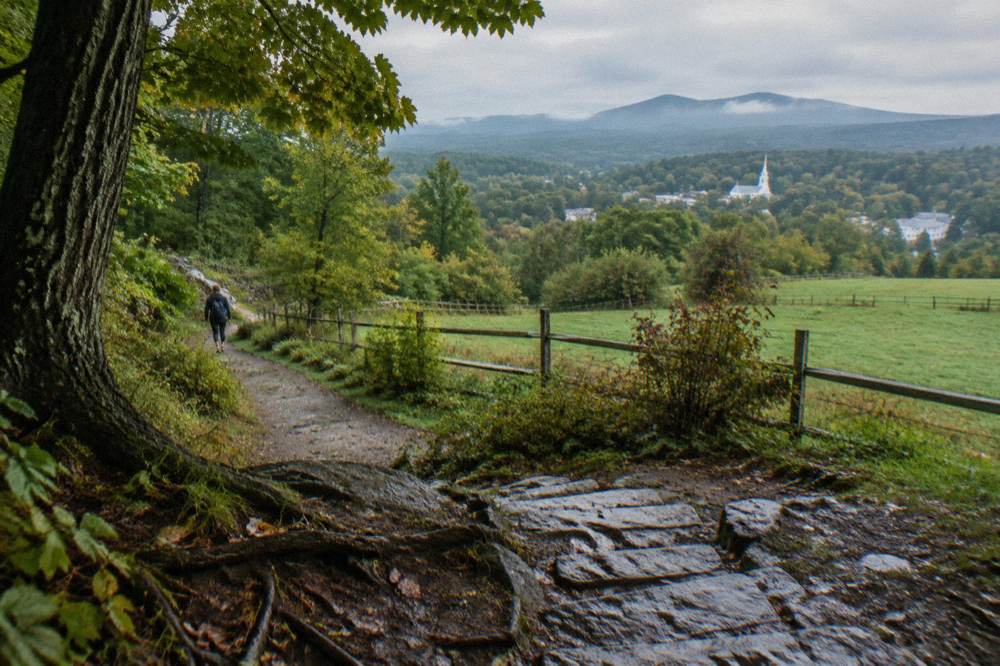
For mountain bikers, the leap from Burlington to East Burke is the classic Vermont progression: flat lakeside path on day one, 100-plus miles of singletrack on day two. Kingdom Trails runs a summer season that typically extends from May conditions to the end of October, requires passes purchased online or at the Welcome Center on VT Route 114 in East Burke, and asks riders to check the trail map and conditions page before rolling out. Our Kingdom Trails mountain biking guide covers passes, seasons and routing in full.
Riders who prefer someone else to handle luggage, maps and dinners have real options, and this is where a guided operator earns its fee. VBT Bicycling Vacations is the long-established name, bookable directly through the operator's own site; Great Bike Tours, Lamoille Valley Bike Tours and Vermont Mountain Bike Tours also serve the state and can be contacted directly. This guide does not sell or resell any of those trips, and pricing belongs on each operator's page rather than here. Choosing between supported and independent travel is its own decision, one we break down in guided vs self-guided bike tours in Vermont.
For a city base that keeps everything walkable, Hotel Vermont remains the practical pick: 0.2 miles from the path, in the lake-side downtown, with the rental center and the ferry dock a short roll away. Timing the whole state around one trip comes down to foliage. Late September to mid October is the prime window, with northern ridgelines turning a week or more ahead of the southern valleys, and the best time to bike in Vermont lays out the tradeoffs month by month.
Hotel Vermont
Burlington, 0.2 miles from the Burlington Bike Path
About 0.2 miles from the Burlington Bike Path in the lake-side downtown.
Check ratesCommon Questions About Biking In Burlington
Is Burlington, VT Bike Friendly?
Yes. The city has an eight mile paved waterfront greenway, an on-path nonprofit rental center, Class 1 e-bike access on its paths, and a causeway ride across Lake Champlain at the end of the corridor. The main cautions are the seasonal bike ferry gap and busy shared-path traffic in summer.
How Long Is The Burlington Bike Path?
The Burlington Greenway segment is about 8 miles of paved path along the waterfront. The full Island Line corridor from the Burlington waterfront to South Hero runs about 14.4 miles, including roughly 5 miles of crushed gravel causeway.
Can You Bike Across Lake Champlain From Burlington?
Partly. The causeway carries riders out into the lake, but a gap mid-causeway requires the seasonal bike ferry, which runs late May to mid October and is donation based. Outside that window, riders turn around at the gap. The ferry is currently closed for the season and returns in May.
Where Can I Rent A Bike In Burlington?
The Local Motion Trailside Center at 1 Steele Street sits directly on the path, opens daily from 9am to 6pm, and rents conventional, Class 1 e-bike, adaptive and kids bikes. Reservations are recommended, and rental proceeds support the nonprofit's trail and safety work.
Are E-Bikes Allowed On Burlington Bike Paths?
Class 1 pedal-assist e-bikes are permitted where bicycles are allowed, including the greenway and the Island Line corridor. Throttle-driven electric motorcycles are prohibited on the path. On state land, e-bikes are currently barred from non-motorized natural-surface trails but allowed on roads and multi-use paths.
Is The Burlington Causeway Ride Good For Beginners?
The paved greenway is ideal for beginners. The causeway adds crushed gravel and exposure to wind, which confident beginners on hybrid or mountain bikes handle well on calm days, but narrow road tires and small children may find it a struggle. Treat the ferry gap as a natural turnaround.